



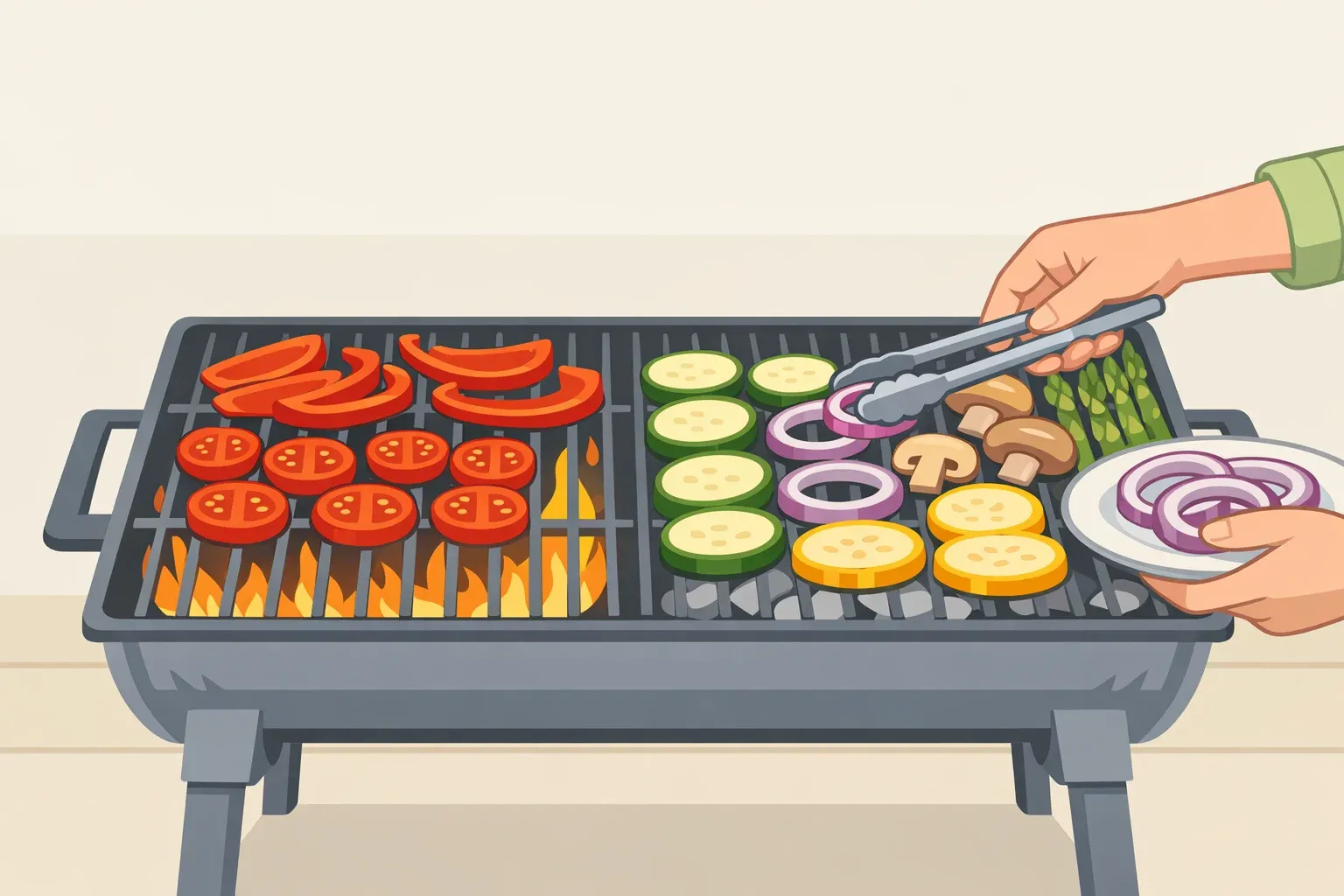
How do you grill vegetables? The best approach is usually simpler than people think: skip the overnight marinades, complicated spice rubs, and fussy prep. Great grilled vegetables come down to two things: treating each vegetable differently and dressing them right after they come off the heat.
That's what this guide teaches you to do. By the end, you'll know how to grill vegetables well, not just follow a recipe. You'll understand why zucchini and eggplant fail in different ways when treated the same, and how to adjust for any vegetable that lands on your grate.
The Maillard reaction is responsible for nearly every shade of brown on cooked food. It produces complex flavors and aromas, including umami, and it requires genuinely high heat to fire properly, as UCHealth Today explains.
When cooks apply the same cut, the same timing, and the same seasoning to everything, they guarantee mediocre results for at least one vegetable on the plate. Zucchini and eggplant behave completely differently on a grill because their water content, density, and absorbency differ significantly; treating them identically produces good results for neither.
This guide uses zucchini, eggplant, peppers, onions, and tomatoes as its case studies, walking through four decisions: cut geometry, heat setup, salting sequence, and warm finishing. The logic transfers to anything else that lands on your grill.
Prerequisites: A gas or charcoal grill, tongs, a brush for oil, and a bowl or plate for dressing. A clean, well-oiled grate is essential, addressed in Step 2.
Step 1: Cut for the grill, not for the bowl
The shape of a vegetable before it goes on the grill determines almost everything: whether it chars or steams, sticks or releases, cooks evenly or burns outside while staying raw in the center. Most grilling problems are cutting problems in disguise.
Zucchini: Cut lengthwise into half-inch planks. Coins fall through the grate or cook unevenly; wedges are too thick. At half an inch, a plank is thick enough to develop real char yet thin enough to cook through without steaming. Thinner than that, and it goes limp before it browns.
Eggplant: Cut crosswise into uniform half-inch rounds, not wedges, not thin slabs. Sliced thinner, eggplant turns leathery before the inside softens; sliced thicker, the exterior scorches while the center stays firm and bitter. Uniformity within the batch matters as much as the measurement because uneven slices cook at different rates on the same grate.
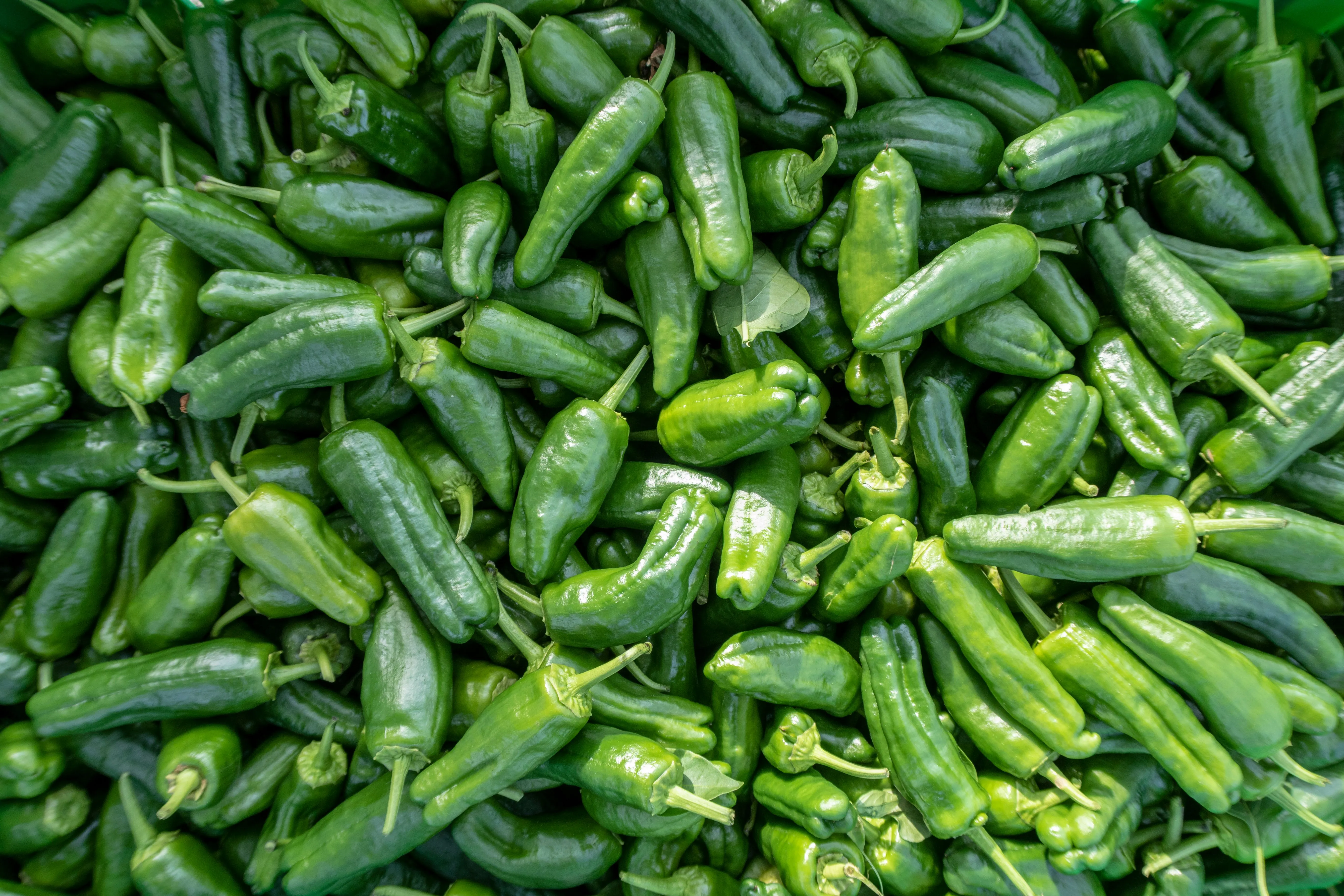
Onions and peppers: Red onions cut into half-inch rounds should be threaded through with a toothpick before going on the grill to keep the rings from separating and falling through. Bell peppers grill evenly when halved lengthwise and placed cut-side down first.
For any other vegetable: High water content needs thickness for structural integrity (zucchini, summer squash). Dense, absorbent flesh needs uniform moderate thickness for even heat penetration (eggplant, portobello mushrooms). Small or delicate items need skewers or a grill basket to stay on the grate.
Eggplant goes last: If you're prepping multiple vegetables at once, brush eggplant with oil last. It is extremely absorbent and will drink up the oil meant for everything else if you get to it first.
Quick-reference: Cut geometry
Zucchini: Cut into lengthwise planks, ½ inch thick.
Eggplant: Cut into crosswise rounds, ½ inch thick.
Red onion: Cut into crosswise rounds, ½ inch thick, and secure with a toothpick.
Bell pepper: Halve lengthwise.
Tomatoes: Halve.
Step 2: Build real heat three zones, one rule for flipping
Heat setup is what most home grillers shortchange. Pale, limp vegetables are almost always a heat problem, not a vegetable problem.
Set up three zones: one very hot zone around 600°F for initial searing, a medium zone around 350-400°F for finishing items that need more time without burning, and a third no-flame zone for managing flare-ups and pulling anything that's browning too fast. On gas, that's one burner on high, one on medium, one off. On charcoal, bank coals to one side with a sloped taper and leave one zone clear.
Clean and oil the grate before anything goes on. Sticking happens for two reasons: the grate is dirty or dry, or the food hasn't formed a sear yet. Separating those two causes matters. Half-inch eggplant rounds need to hold their shape and take a solid sear before softening — a clean, well-oiled grate is what makes sticking a timing signal rather than a surface problem.
The universal flip rule: if a vegetable resists when you try to move it, leave it. A proper sear releases naturally.
Knowing how long to grill vegetables depends on the vegetable. Zucchini planks need three to five minutes per side over direct medium-high heat before they'll release cleanly. Eggplant rounds need about four minutes per side over medium-high cover the grill on gas to hold heat and help the center cook through. Bell peppers need roughly three minutes cut-side down to start charring before being moved or flipped.
The goal is visible char real grill marks and some genuine darkening, not just heat exposure. Vegetables that come off looking pale will taste pale.
Softness is not the signal: Don't pull vegetables because they feel soft. The Maillard reaction is what you're cooking toward; tenderness without color means the flavor hasn't fully developed.
Quick-reference: Heat and timing
Zucchini: Grill over direct medium-high heat for 3–5 minutes per side, until it releases cleanly and is well browned.
Eggplant: Grill over medium-high heat, covered if using gas, for about 4 minutes per side, until char marks appear and the center yields when poked.
Bell pepper: Grill over medium-high heat, cut-side down first, for about 3 minutes to get the initial char. Look for blackened edges, then flip.
Onion: Grill over medium-high heat for 4–5 minutes per side, until the rings are caramelized with a slight char.
Step 3: Season at the right time — which depends on the vegetable
Pre-salting is conventional wisdom. It is also wrong for some vegetables and right for others. Getting this sequence correct is one of the most underappreciated variables in grilled vegetable quality.
Zucchini: skip pre-salting entirely. On a hot grill, rapid evaporation concentrates flavor and tightens texture on its own. Salting ahead of time only gives the vegetable a head start on going limp. The correct sequence: brush with oil first, then add a light sprinkle of salt right before the planks hit the grate. The oil helps the salt adhere; the grill does the moisture work.
Eggplant: oil first, then salt. Eggplant is dense and highly absorbent. Applying oil before salt gives the seasoning something to stick to and prevents the salt from drawing out too much surface moisture before grilling, which would make the slices wet and more likely to stick. The sequence looks similar to zucchini, but the reason is different.
Tomatoes: pre-salt is correct here. Salting tomatoes before grilling draws out surface moisture, which actively helps browning rather than hindering it. Tomatoes have a tough exterior that needs moisture management to develop any char at all. Same logic, opposite prescription.
Decision logic for any vegetable: High water content plus strong grill evaporation means skip pre-salting (zucchini, summer squash). Dense and absorbent means oil, then salt immediately before grilling (eggplant, mushrooms). Needs surface moisture removed to brown means pre-salt and let rest (tomatoes, some root vegetables).
Quick-reference: Salting sequence
Zucchini: Do not pre-salt. Oil first, then salt right before grilling.
Eggplant: Do not pre-salt. Oil first, then salt right before grilling.
Tomatoes: Pre-salt. Salt, let rest, then grill.
Bell pepper: Do not pre-salt. Oil and season right before grilling.
Onion: Do not pre-salt. Oil first, then salt right before grilling.
Step 4: Dress everything while it's still hot
This is the step most people skip, and it's the one that explains the flavor gap between well-made grilled vegetables and forgettable ones.
The practical reality is simple: warm vegetables absorb dressing more deeply than cold ones. Brush them while steaming, and the flavors soak in; wait until they've cooled and the dressing just sits on the surface. No exotic equipment required, no extra prep, just timing.
For zucchini, brush on a bright vinaigrette, something acidic, like a lemon-herb dressing, the moment the planks come off the grill. Brushing while the slices are still warm adds brightness and dimension without softening the char.
For eggplant, use a two-coat approach: a light brush of garlic-chile oil before grilling to aid browning, then a second, more generous coat immediately after. That second application adds gloss and depth without greasiness. Finish with yogurt sauce, a squeeze of lemon, or fresh herbs, all of which layer brightness against the smoky char.
For a mixed spread, brushing all the cooked vegetables with vinaigrette while still warm helps them absorb the dressing's flavors more deeply. The visual cue: if steam is still rising, the timing is right.
This also makes grilled vegetables practical for entertaining. They can be held at room temperature for up to six hours or be refrigerated for two days and briefly re-warmed on a hot grill before serving. Warm-dressed vegetables travel well; cold-dressed ones tend to turn.
Quick-reference: Finishing moves
Zucchini: Finish with lemon-herb vinaigrette while it is still steaming off the grill.
Eggplant: Add a second coat of garlic-chile oil, plus herbs or yogurt, immediately after it comes off the grill.
Mixed vegetables: Toss with vinaigrette while still warm.
Bell pepper: Steam in a covered bowl after grilling, then dress with vinaigrette.
How to grill vegetables you haven't tried before: diagnosing failures and reading new produce
Most grilled vegetable failures trace back to one decision. Here's how to identify which one.
Soggy zucchini: Look for a pale color and a limp texture that holds moisture. Almost always a cut problem (too thin) or a salting problem (pre-salted). Half-inch planks and last-second salt solve both. If still soft despite correct prep, the heat wasn't high enough to evaporate moisture fast enough to extend preheat time.
Leathery or spongy eggplant: Leathery means sliced too thin; spongy in the center means pulled too early. Half-inch rounds need a full four minutes per side. If the center still feels firm when poked, it's not done; the exterior's appearance doesn't tell the whole story here.
Pale, flavorless vegetables across the board: A heat problem. The Maillard reaction that builds savory flavor requires genuinely high temperatures; a grill running at medium or lower produces steaming, not searing. A very hot zone around 600°F is what drives real browning. Preheat longer and resist the urge to move things.
Sticking: Could be timing (sear not fully formed), could be grate prep (dirty or dry). Check both. Without a clean, well-oiled grate, the "sticking means it's not ready" rule becomes unreliable.
For vegetables not covered here: Three questions narrow it down fast. Is it watery or dense? Watery vegetables (summer squash, peppers) need high heat and thick cuts; dense ones (eggplant, portobello caps) need more time and patience. Is it sturdy or delicate? Sturdy goes straight on the grate; delicate goes in a basket or on a skewer. Does it cook fast or slow? Fast-cooking vegetables (thin asparagus, cherry tomatoes) spend their whole time in the hot zone; slow ones (thick eggplant, whole onions) need the middle zone to finish through. Run through those three, and the method practically tells you what to do.
The method, applied
Four steps: cut for structure, heat in zones, season by vegetable, finish warm. What ties them together isn't a single trick; it's the discipline of reading each vegetable as its own problem rather than treating the grill as one undifferentiated hot surface.
The warm-finishing step is where the payoff lands. Brushing cooked vegetables with vinaigrette while they're still warm produces deeper flavor absorption than the same dressing applied after cooling. High heat in three distinct zones gives control over searing and finishing without burning. The cuts lengthwise planks for zucchini, crosswise rounds for eggplant, fix more failures before the grill comes on than any technique applied afterward.
Master the method on zucchini and eggplant first. They're the hardest to get right, they fail in opposite ways, and once both are clicking, the three-question framework above handles most of what summer will throw at the grate.




Comments
Be the first, drop a comment!