



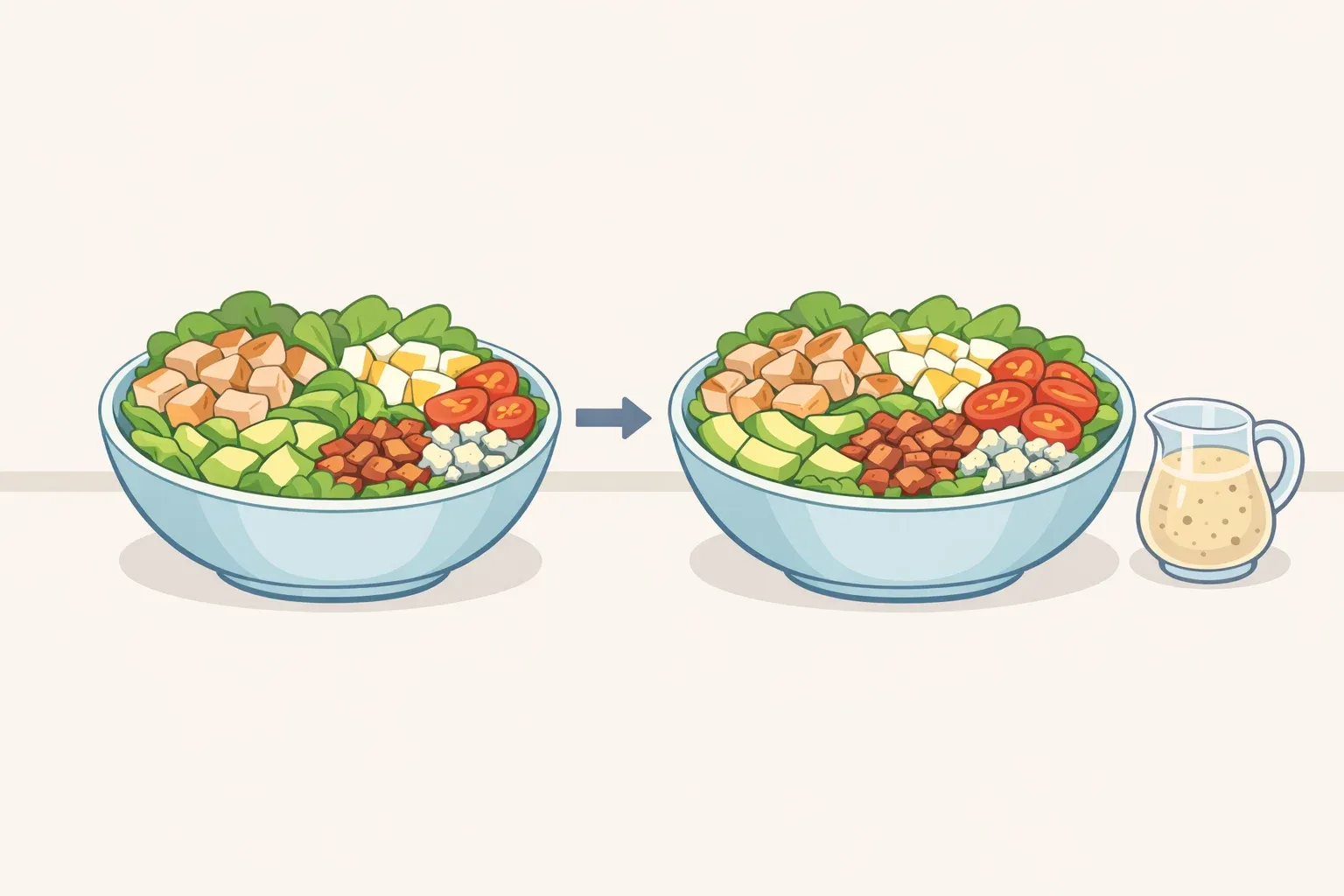
How to make Cobb salad: classic recipe and a make-ahead egg salad version
This guide covers two things: how to make a classic Cobb salad from scratch, and how to convert those same flavors into a creamy, spoonable egg salad that packs for lunch and holds in the fridge for days. By the end, you'll have both the composed original and a practical variation built from the same core ingredients.
The classic Cobb is hard to beat when you have time and a plate. Hard-boiled eggs, bacon, avocado, blue cheese, chicken, and tomatoes over crisp romaine, tied together with a tangy Dijon-vinegar dressing that calls for a full half cup of red wine vinegar specifically to cut through all that richness, per Serious Eats. What makes it recognizable isn't any single ingredient but the combination: the acid in the dressing, the smoke from the bacon, the sharpness of the blue cheese, the creaminess of the avocado.
The original was reportedly born from leftovers. Robert H. Cobb, owner of the Brown Derby in Los Angeles, is said to have pulled together whatever was in the kitchen late one night and dressed it with the restaurant's house vinaigrette, according to Serious Eats. The egg salad variation is the same logic made portable.
Before you start: For the classic Cobb, you'll need poached or roasted chicken, cooked bacon, hard-boiled eggs, romaine, cherry tomatoes, avocado, blue cheese, and ingredients for the dressing (red wine vinegar, Dijon mustard, honey, shallot, olive oil). For the egg salad version, you'll need hard-boiled eggs fully cooked and chilled, cooked bacon cooled, mayonnaise, Dijon, red wine vinegar, crème fraîche, and crumbled blue cheese.
How to make a classic Cobb salad
The composed Cobb works because each component is seasoned and dressed separately before being arranged together. That's not fussiness; it's why every bite is properly seasoned rather than the bottom of the bowl being overdressed while the top is bland, as Serious Eats notes.
Step 1: Make the dressing. Combine ½ cup red wine vinegar, 1 shallot (roughly chopped), 2 tablespoons Dijon mustard, 2 tablespoons honey, 1 teaspoon kosher salt, and ½ teaspoon black pepper in a blender. Process until smooth, about 20 seconds. With the blender running, drizzle in ⅔ cup extra-virgin olive oil until the dressing emulsifies fully, about 1 minute, per Serious Eats. Half a cup of vinegar looks like a lot. Use it anyway; it's what gives the dressing its characteristic sharpness against the bacon and cheese.
Step 2: Dress the romaine. Toss chopped romaine with about ½ cup of the dressing in a large bowl. Season with salt and pepper, then transfer to your serving platter or bowl.
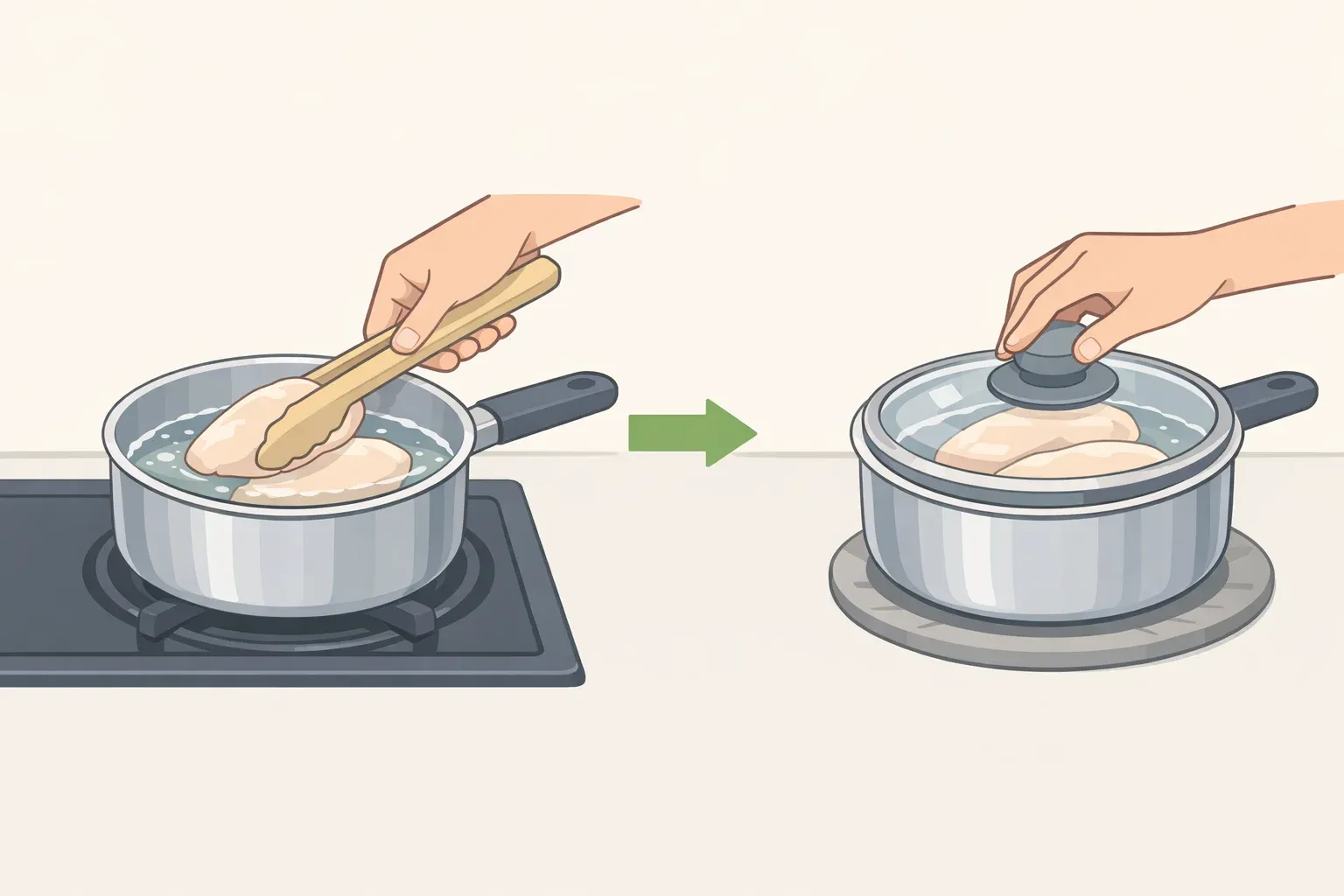
Step 3: Dress the chicken and tomatoes separately. Toss cubed poached chicken with 2 tablespoons of dressing in the same bowl. Arrange over the lettuce. In the same bowl, toss halved cherry tomatoes with another 2 tablespoons of dressing, then arrange over the lettuce alongside the chicken, per Serious Eats.
Step 4: Add the toppings. Arrange roughly chopped bacon, quartered hard-boiled eggs, chopped avocado, and crumbled blue cheese over the dressed base. Serve with the remaining dressing on the side for those who want more.
The dressing keeps in the fridge for up to 5 days. The components (lettuce, chicken, tomatoes, bacon, eggs, blue cheese) can all be prepped separately and refrigerated for up to 2 days in advance, so the salad comes together in minutes at serving time, per Serious Eats.
How to make Cobb egg salad: converting the classic into a make-ahead version
The egg salad version keeps the same flavors but changes the format entirely. No platter, no arranged rows. The tradeoff is intentional: you lose the visual contrast of the original, and you give up the textural separation between crisp romaine and distinct toppings. What you get instead is something you can scoop into a container Sunday night and eat through Tuesday.
The key decision is figuring out which Cobb ingredients survive being mixed into a creamy base and which ones undermine it.
What mixes well:
- Bacon roughly chopped, fully cooled. Works well folded into egg salad, as tested recipes confirm via Serious Eats. Delivers smoke in every bite.
- Blue cheese crumbled, added toward the end of mixing so it stays in recognizable pieces rather than dissolving into the base.
- Celery finely diced. Easy to skip, bad idea. Good egg salad depends on acidity, well-cooked eggs, and crunch, per Serious Eats. Without celery, the base goes soft and one-note once the bacon loses its snap.
- Scallions or quick-pickled red onion scallions for mild bite; pickled onion for a sharper, more assertive tang.
- Dijon mustard acts as both an emulsifier and a flavor connection to the original dressing, which uses Dijon as a core component alongside the vinegar and honey, per Serious Eats.
- Cooked shredded chicken (optional) adds protein and keeps the dish reading as a Cobb variation rather than a plain egg salad with blue cheese.
What stays off until serving:
- Avocado browns and releases water within hours. EatingWell excludes avocado from all advance prep in its make-ahead Cobb-style recipe. Add it fresh, every time.
- Cherry tomatoes too much moisture for a stored base. Halve them and add on top at serving.
One ingredient worth explaining: the classic Cobb dressing uses honey to balance a high vinegar load, per Serious Eats. A small pinch of sugar or a few drops of honey stirred into the dressing here does the same work. Without it, the acid reads as plain vinegar. With it, the dressing reads as Cobb.
Step-by-step: the egg salad method
Step 1: Break down the eggs. Place 6 chilled, peeled hard-boiled eggs in a medium bowl. Set a wire cooling rack over the bowl and press the eggs through it, or smash firmly with a whisk until whites are broken into small, irregular chunks. This integrates the yolks into the base while keeping the whites visibly chunky the right texture for something that needs to hold up on toast without going pasty, per Serious Eats. Don't overwork it.
Step 2: Build the dressing base. Add 3 tablespoons mayonnaise, 1 tablespoon crème fraîche, and 2 teaspoons Dijon mustard. Stir to combine. Crème fraîche adds a cleaner tang and slightly lighter texture than mayo alone, per Serious Eats. No crème fraîche? Sub an extra tablespoon of mayo and compensate with a bit more acid in the next step.
Step 3: Add the acid more than instinct suggests. Stir in 1 teaspoon red wine vinegar and 1½ teaspoons fresh lemon juice, plus a small pinch of sugar or a few drops of honey. The original Cobb dressing uses a full half cup of red wine vinegar to cut through the richness of eggs, bacon, and cheese, per Serious Eats. You're not replicating that volume, but the same logic applies: the acid needs enough presence to keep the base from tasting heavy.
Calibration note: the finished salad should taste slightly sharper than expected. Bread, lettuce, and avocado will all mute the acidity once you're eating it. If it tastes perfectly balanced in the bowl, it will taste flat on the plate.
Step 4: Add the mix-ins. Fold in 4-5 strips of cooked bacon (roughly chopped), ⅓ cup finely diced celery, 2 ounces crumbled blue cheese, and 2-3 tablespoons sliced scallions or 1 tablespoon minced quick-pickled red onion. If using chicken, add roughly ½ cup shredded cooked chicken here. Add the blue cheese last and fold gently distributed, not dissolved.
Watch the salt. Blue cheese varies widely in saltiness, and with both bacon and blue cheese in the mix, the base may need none at all. Taste before adding anything.
Step 5: Balance and adjust. The two failure modes here are heaviness (richness from bacon, blue cheese, and mayo without enough acid to counter it) and oversalting. If the base tastes flat or dense without brightness, add a few more drops of vinegar. If the Cobb character isn't coming through, a small amount of extra Dijon sharpens the profile without adding more acid or salt.
Step 6: Adjust texture, then serve. For a sandwich or toast, the base should be firm and scoopable. For lettuce cups or a bowl, loosen it slightly with an extra teaspoon of crème fraîche or a few drops of lemon juice so it coats rather than clumps. Spoon onto thick toasted bread, into romaine cups, or over chopped romaine. Add sliced avocado and halved cherry tomatoes immediately before serving.
Storage: what holds, what doesn't, and for how long
The base eggs, bacon, blue cheese, celery, and chicken if using keeps refrigerated in an airtight container for up to 3 days, consistent with tested egg salad storage guidance from Serious Eats. Plan to eat within 2 days for best texture; by day three, the base is still usable but noticeably softer.
On bacon: it loses its crunch in the base overnight. The flavor stays intact. If you want crunch at serving, keep the bacon separate and fold it in just before eating.
The avocado has no workaround. Add it fresh, at serving, always. EatingWell stores everything except avocado for up to 4 days in its make-ahead Cobb recipe; the same exclusion applies here, though the egg-based version is best within 2 days.
When to make which version
The composed Cobb is the right call when presentation matters: serving a group, eating at the table, or when the contrast of cold crisp romaine under distinct toppings is the point. It's a better dish for those situations.
The egg salad version is for everything else. Desk lunch, meal prep, something to eat standing at the counter. The serving options are practical rather than composed: thick toasted bread, romaine cups, or a bowl with the avocado and tomatoes on top.
For a milder take on the egg salad version, swap the blue cheese for sharp cheddar and replace the red wine vinegar with all lemon juice. EatingWell uses cheddar in place of blue cheese in its turkey Cobb variation and the dish still reads as recognizably Cobb. It won't be the same dish, but the core idea holds.





Comments
Be the first, drop a comment!