



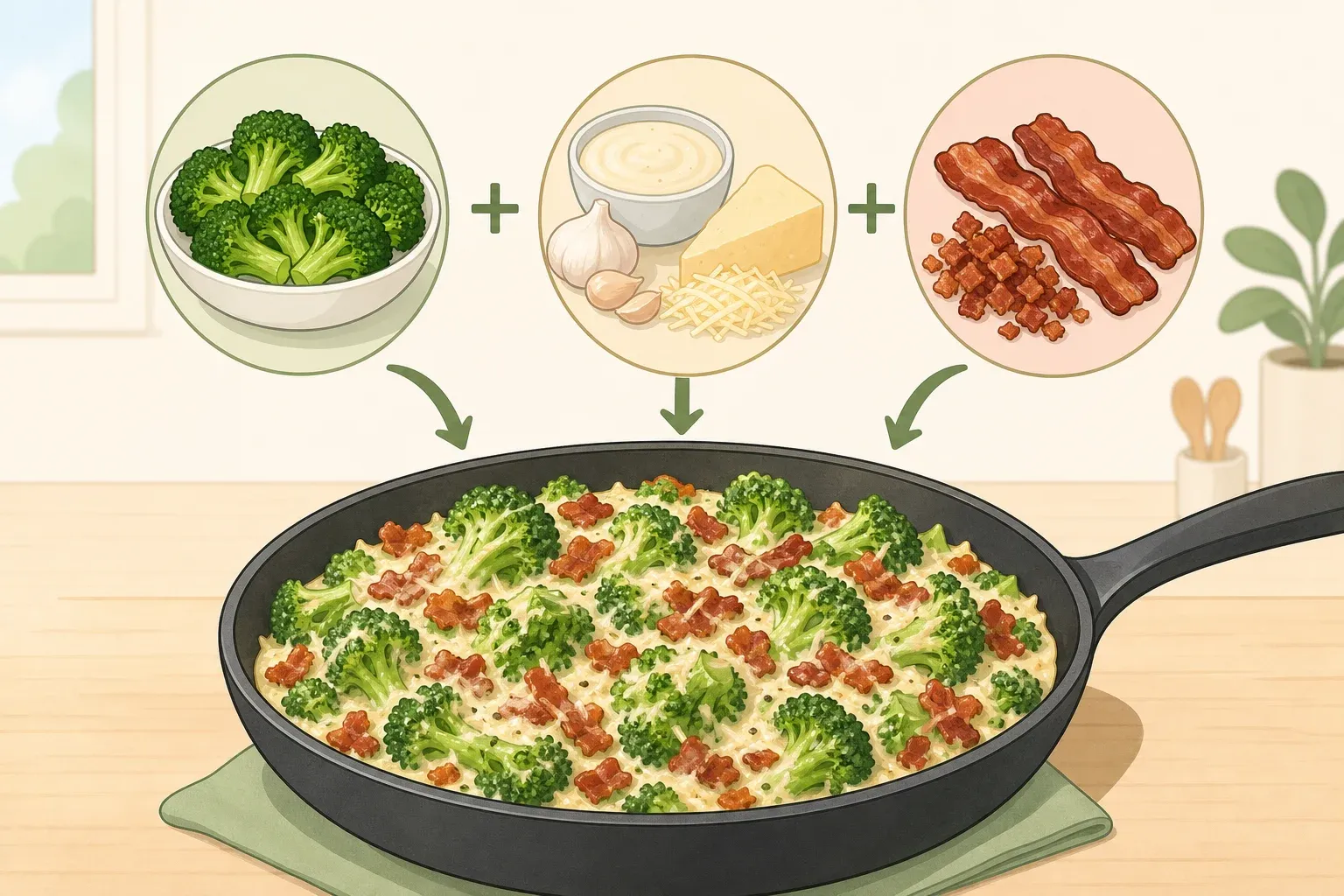
How to make creamy garlic Parmesan broccoli with bacon
Creamy garlic Parmesan broccoli with bacon comes together best when you stop treating it as one dish and cook it as three: broccoli seared then steamed until tender-crisp, bacon crisped early and held back until the last minute, and a garlic Parmesan sauce built off the boil. Cook each part on its own terms, then bring them together right at the end, and you avoid the usual traps: soggy broccoli, limp bacon, or a sauce that breaks.
The sauce is the part most likely to go wrong. Cream sauces thickened with Parmesan can seize into a grainy, separated mess if the cheese goes into a pan that's still simmering. ChefYoyo recommends pulling the pan fully off heat before the cheese goes in, which helps prevent that clumping or splitting in the first place.
Acid goes on the broccoli itself, off heat, before it ever meets the cream, not stirred into the finished sauce. More on why in step 3.
This recipe runs about 35 minutes start to finish and makes four side servings. It's a one-skillet method in the sense that the same pan gets reused at each stage, wiped clean between the bacon, the broccoli, and the sauce, so nothing carries over flavor it shouldn't. The main thing to watch is salt: bacon, Parmesan, and stock can all add substantial sodium, so extra salt waits until the dish is fully assembled and tasted.
What you'll need
Tools: a large 10 to 12-inch skillet with a lid, tongs or a spatula, a whisk, a box grater or Microplane, and a paper-towel-lined plate for the bacon.
Ingredients for 4 side servings:
- About 1.5 pounds broccoli (florets plus peeled, sliced stalks)
- 4 to 5 slices bacon
- 2 tablespoons unsalted butter
- 3 to 4 cloves garlic
- 1/4 cup low-sodium stock
- 3/4 cup heavy cream
- 1/2 cup freshly grated Parmigiano Reggiano (called Parmesan through the rest of this guide)
- Salt, pepper, and a pinch of nutmeg
- 1 to 2 teaspoons lemon juice or vinegar, for finishing
Use freshly grated Parmesan rather than the bagged pre-shredded kind. Many pre-shredded cheeses are coated with anti-caking agents that keep them from melting smoothly, which leads to a gritty, separated sauce, according to ChefYoyo. Stick with full-fat heavy cream instead of milk or half-and-half, too. Lower-fat dairy carries more water, which makes it more prone to turning watery or splitting once it hits heat, per the same source.
Default to unsalted butter here. Parmesan and stock already bring sodium to the finished dish, and bacon adds more on top of that, so the smart move is holding off on extra salt until everything is combined and you can actually taste it.
Before you start
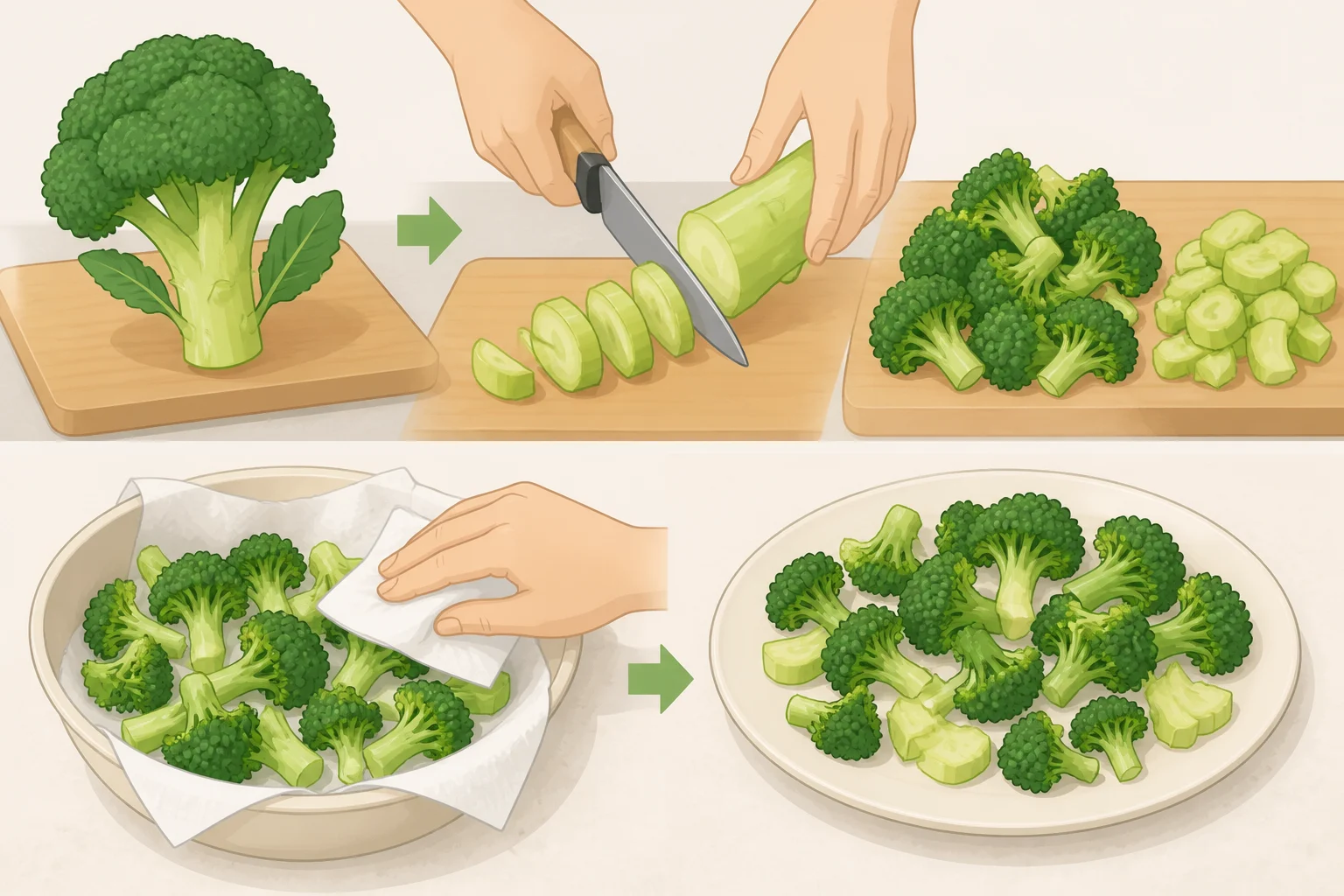
Cut the stalks thinner than the florets, about a quarter-inch thick, and peel their tough outer layer first with a vegetable peeler. Stalks take longer to cook through than florets, so slicing them thin evens out the timing and keeps you from ending up with raw centers under mushy tops.
Pat the broccoli fully dry after washing. A dry surface helps the florets pick up color when they hit the hot skillet, where wet broccoli tends to steam instead.
Grate the Parmesan before you start the sauce, not while it's simmering. Once the pan comes off heat, the cheese needs to go in quickly and steadily, and there's no good moment to stop and grate mid-step.
Have the cooked bacon, measured cream, and measured lemon juice or vinegar sitting ready before the cream simmer starts. Both the off-heat cheese step and the off-heat acid step move fast, and pausing to measure something mid-process is how sauces overcook or broccoli sits too long and turns soft.
Keep two heat rules in mind for the whole dish. Garlic scorches quickly and turns bitter if it browns, so keep it on medium-low and keep it moving, per ChefYoyo. And the sauce always looks thinner in the pan than it ends up on the plate, since it keeps thickening as it cools.
One more thing worth knowing up front: the skillet gets used three separate times. Bacon fat flavors the broccoli sear, then the pan gets wiped clean before butter goes in for the sauce base. That reset is what keeps the cream from tasting like bacon grease.
How to make creamy garlic Parmesan broccoli with bacon
-
Cook the bacon, then chop it. Lay 4 to 5 slices in the skillet over medium heat and cook until crisp, about 5 to 7 minutes, flipping once. Cooking the strips whole makes it easier to judge crispness before you cut into small pieces that could burn. Transfer to a paper-towel-lined plate, let cool slightly, then chop. Pour off all but about 1 tablespoon of the rendered fat and leave the skillet on the stove; that tablespoon is what the broccoli sears in next.
-
Sear the broccoli in the bacon fat, then steam it briefly to finish. Add the dried broccoli to the hot skillet in as close to a single layer as your pan allows, and let it sit undisturbed for 3 to 4 minutes so the edges brown. Add a splash of water, about 2 to 3 tablespoons, and cover for 2 to 3 minutes. Lift the lid and check: if there's still visible water pooling in the pan, cook uncovered another minute so it can evaporate before you move on. Check doneness with a knife tip: stalks should pierce easily while florets still hold their shape, not turn mushy. Move the broccoli to a bowl.
-
Toss the warm broccoli with acid, off heat. Add about a teaspoon of lemon juice or vinegar, toss, and taste. Add more only if it still tastes flat, and stop once it tastes brighter rather than sour. Serious Eats recommends adding acid immediately after cooking, off heat: heat dulls acidity's brightness, and letting acid linger too long during cooking can shift the broccoli's color from bright green toward a duller olive tone.
-
Wipe out the skillet and build the sauce base.
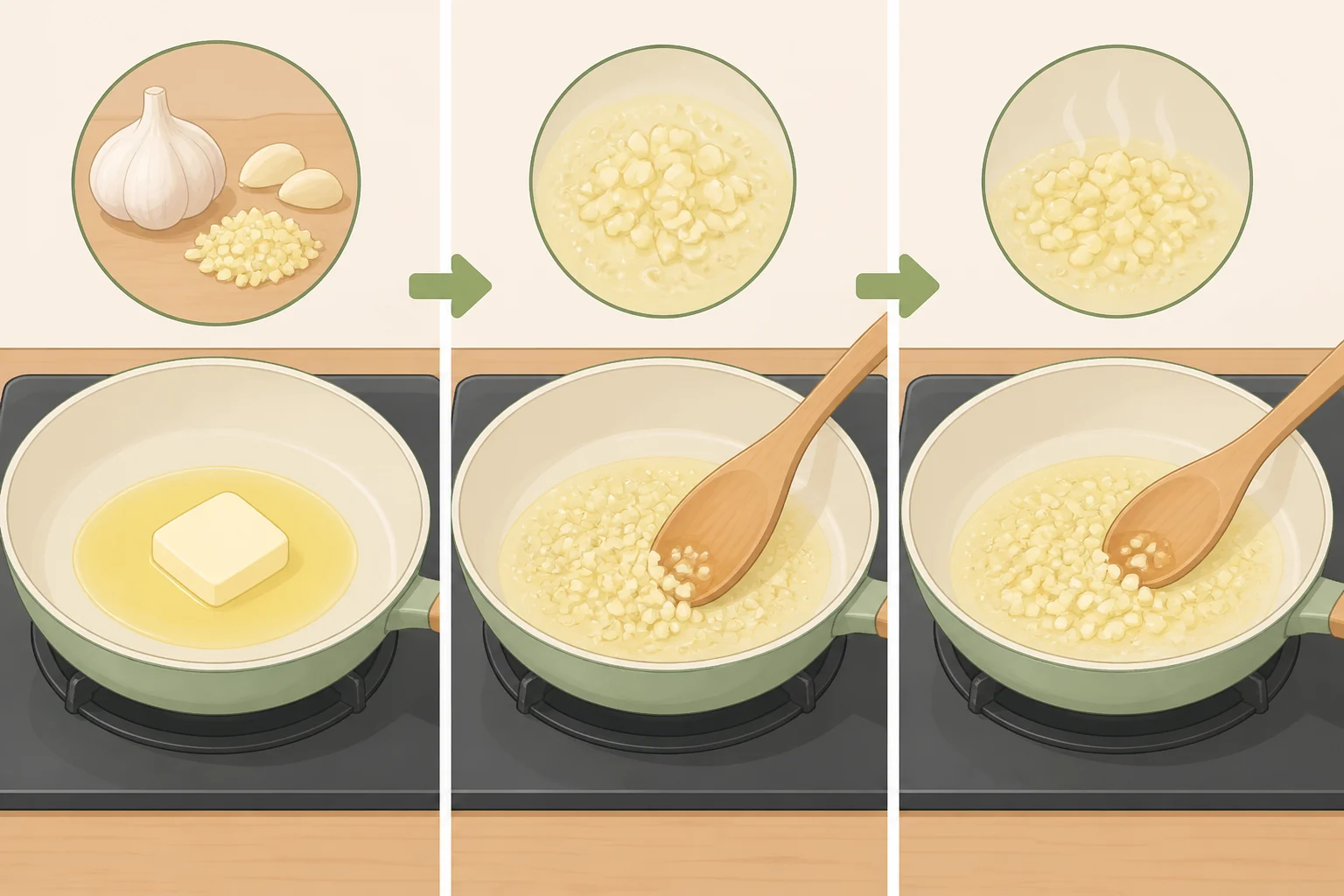
Clear out any remaining bacon fat and broccoli bits with a paper towel, then melt the butter over medium-low heat. Add the garlic you minced or grated earlier and cook gently for 2 to 3 minutes, stirring, until fragrant but not browned.
-
Reduce the stock, then simmer the cream. Pour in the stock and let it cook down by about half, roughly 1 to 2 minutes. Stir in the cream, bring it to a soft simmer with just a few bubbles breaking the surface, and let it go for 5 to 8 minutes, until it lightly coats the back of a spoon.
-
Take the pan off heat completely before adding cheese.
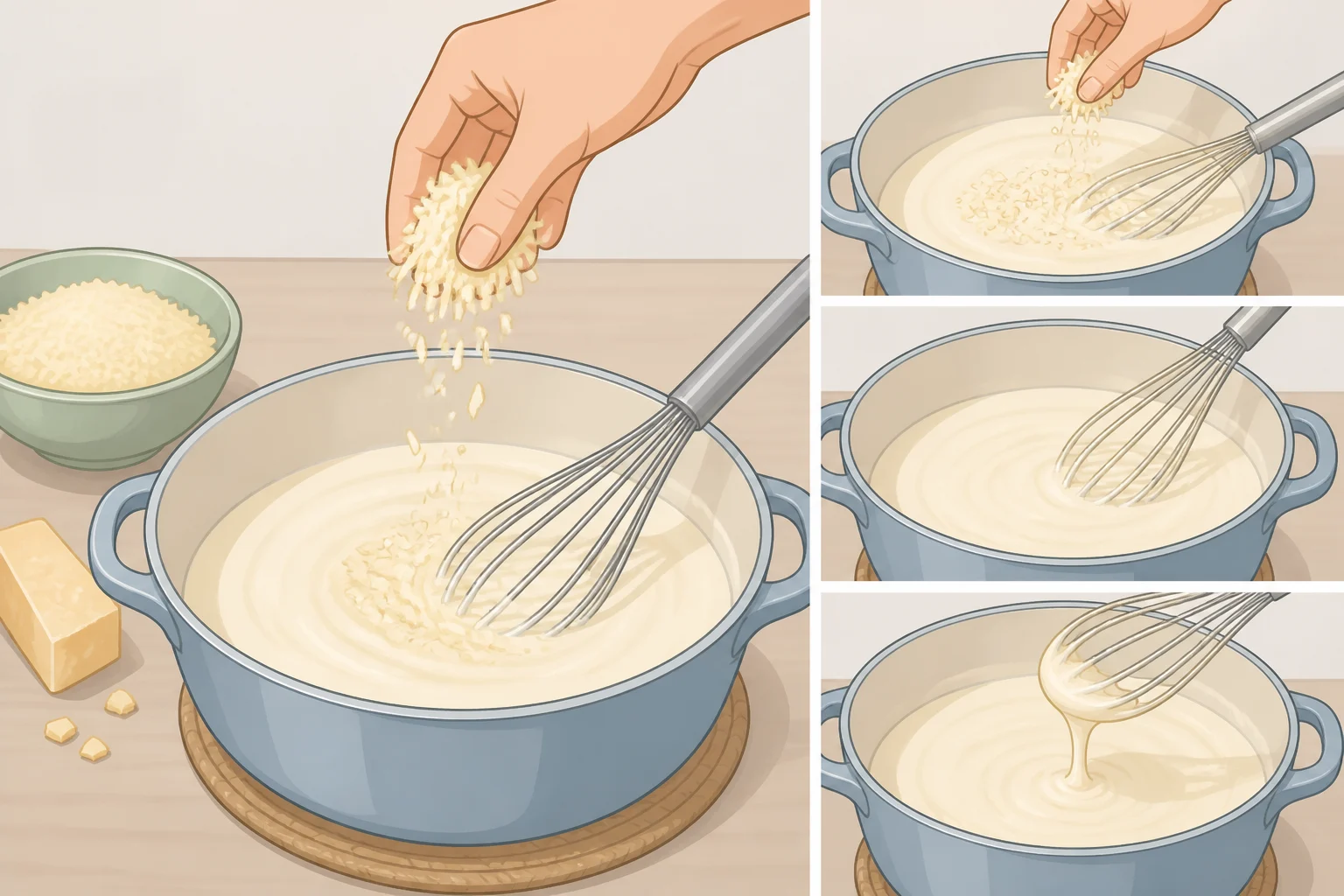
This is the step most likely to keep the sauce smooth instead of grainy. Whisk in the grated Parmesan a small handful at a time, letting each addition melt before adding more. Season with salt, pepper, and a pinch of nutmeg, tasting before adding extra salt.
- Combine off heat, then add most of the bacon. Return the broccoli to the pan and toss gently so the sauce coats it lightly rather than pooling underneath. If it looks too thick to coat evenly, loosen it with a splash of warm water before folding in the broccoli. Fold in most of the chopped bacon, holding back a small handful, about a tablespoon, to scatter on top right before serving so it stays crunchy. Get the dish to the table soon after combining; broccoli left sitting in warm cream sauce can keep softening past tender-crisp.
Adjustments and troubleshooting
Pan too crowded for a single layer: Sear the broccoli in two batches instead of piling it all in at once. A packed skillet holds in steam and makes browning harder to get, so a little extra time spent searing in batches pays off in color and texture.
Sauce looks thin right after the cheese melts in: Let it rest off heat for a couple of minutes; it firms up as it cools, per ChefYoyo. If it's still thin after that, whisk in a cornstarch slurry (1 teaspoon cornstarch mixed with 1 tablespoon cold water) and warm it gently over low heat for a minute or two, or whisk in a little more grated Parmesan while the pan stays off heat.
Sauce turns out too thick: Don't go back to the burner first. Stir in a tablespoon of warm water off heat, a little at a time, until the sauce coats the broccoli without clinging like paste.
Sauce turns grainy or visibly separates: This is a texture problem, not a safety one, and it's fixable more often than not. Pull the pan off heat right away. Whisk a fresh tablespoon of cream in a separate bowl until foamy, then slowly whisk the broken sauce into it. ChefYoyo notes this can sometimes re-emulsify the sauce, though the texture may stay a little looser than intended, and it's still fine to serve.
Choosing the acid: Lemon juice or vinegar both work in this recipe; pick whichever you already have open. Serious Eats points out that acid sharpens broccoli's sweetness by contrast and reins in bitterness without calling attention to itself, so start small, a teaspoon or two, and add more only if the broccoli still tastes flat.
Lighter dairy swap: ChefYoyo mentions whole milk plus a cornstarch slurry as a workable substitution for the sauce on its own. It hasn't been tested in this specific broccoli-and-bacon combination, so treat it as a starting point and expect a thinner result.
Finish and serve
Success looks like broccoli stalks that pierce easily but hold their shape, florets with some browned edges, a sauce that clings lightly rather than forming a puddle, and bacon on top that's still crunchy. The overall flavor should taste bright rather than heavy, thanks to that early hit of acid on the broccoli.
Serve this alongside roast chicken or steak, or spoon it over pasta for an easy broccoli bacon side dish that doubles as a topping.
Refrigerate leftovers promptly in an airtight container. ChefYoyo says its garlic Parmesan sauce keeps in the fridge for 3 to 4 days and reheats better on the stovetop than in the microwave, since rapid heat is more likely to split a cream-and-cheese sauce; that's a texture preference worth following, not a food-safety rule. Reheat gently over low heat, stirring often, and don't expect the bacon on top to stay crunchy through a reheat, since it softens in the sauce either way.
If the flavor tastes flat before serving, reach for a little more acid off heat rather than more salt or cheese. Taste once more for salt after the bacon and reserved Parmesan are folded in, since both add sodium of their own. Stop adjusting once the sauce is hot, coats the broccoli evenly, and tastes balanced, then scatter the reserved bacon on top and serve right away.


Comments
Be the first, drop a comment!