



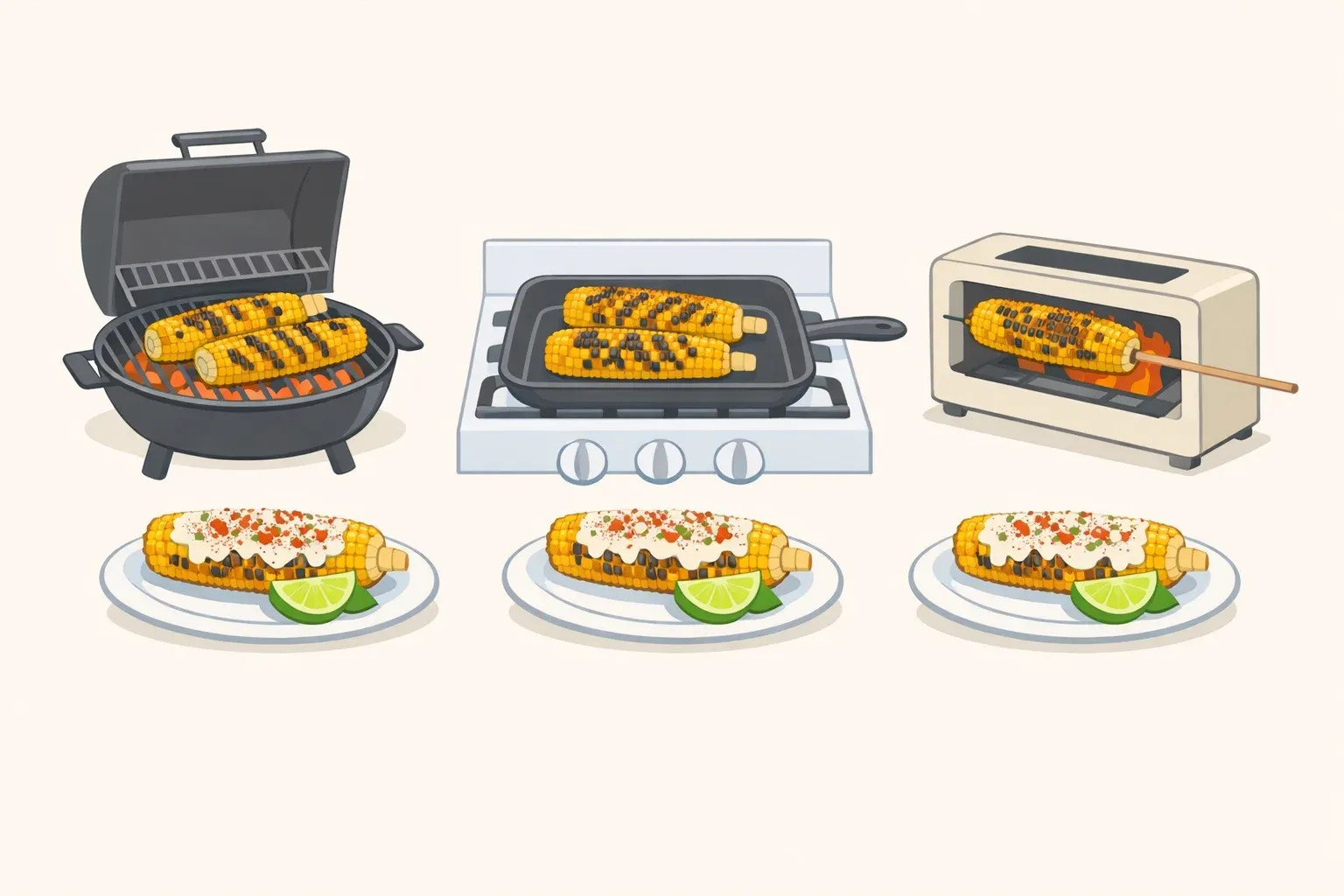
Great elotes come down to two things: char and the right topping balance. Everything else is negotiable. This guide walks through how to make elotes (corn on the cob) and esquites (the off-cob cup version) from scratch, using whatever equipment you have, to get a result that delivers the full range: sweet, smoky, salty, creamy, spicy, and tart. Both recipes are beginner-level and come together in about 20 to 25 minutes.
The modern elote cart format, with its specific combination of crema, mayonnaise, cotija, chile, and lime, became widespread in Mexican cities in the mid-20th century. The word traces to the Nahuatl elotl, meaning "tender ear of corn."
Esquites has a separate origin. The word derives from the Nahuatl ízquitl, meaning toasted corn, a pre-Hispanic preparation that predates Spanish contact by centuries. It is not a lesser substitute for elotes; it is a different dish built on the same flavor logic.
Choose your path before you start:
You have: A grill and fresh corn in season
Make: Elotes on the grill.
You have: An oven and fresh corn
Make: Elotes under the broiler.
You have: An air fryer
Make: Elotes in the air fryer.
You have: Frozen or canned corn, or you want something spoonable
Make: Esquites in a cast-iron skillet.
Ingredients: the base formula (4 servings)
For the corn:
4 ears of fresh corn, husks and silk removed (leave a few inches of stalk as a handle)
For esquites: 3 cups frozen corn kernels, thawed and thoroughly patted dry, or 2 (15 oz) cans corn, drained and dried
1 tablespoon neutral oil or melted butter (broiler and air fryer methods only)
For the sauce:
3 tablespoons full-fat mayonnaise
¼ cup (60 ml) Mexican crema substitute: sour cream thinned with 1 tablespoon heavy cream
Juice of 1 lime, plus extra wedges for serving
1 clove garlic, finely minced (optional but recommended)
Salt to taste
For the topping:
¾ cup (85 g) cotija cheese, finely crumbled, substitute: feta rinsed briefly under water, or Parmesan for a sharper note
2 teaspoons Tajín or chili powder Tajín adds chile heat plus citrus in one ingredient; plain chili powder adds earthy spice only
Cayenne pepper, optional, for extra heat
Fresh cilantro, chopped, optional garnish
Hot sauce, such as Valentina or Cholula, for serving
For esquites only (additional):
2 tablespoons unsalted butter
2 cloves garlic, minced
2 sprigs fresh epazote, or 3 tablespoons fresh cilantro epazote is the traditional herb; cilantro is a more accessible substitute with a milder result
3 tablespoons water or chicken broth
On quantities: plan on 1½ to 2 ears per person, so scale to 6 ears if appetites run large. Cotija is typically stocked near queso fresco in the dairy case; Tajín appears in the spice or snack aisle at most major supermarkets and is worth tracking down. It handles both the heat and the citrus hit in one shake.
The flavor logic: why each ingredient is there
Understanding what each component does makes substitution decisions easier and keeps the result intentional rather than accidental.
Charring corn over direct, dry heat does two things that steaming or boiling cannot: it caramelizes the natural sugars and adds a nutty, slightly bitter counterpoint that makes the sweetness more complex. Corn cooked in foil or left in its husk steams instead, with less browning, less smokiness, a fundamentally different result.
The mayonnaise-crema combination functions as both sauce and adhesive. Fat provides richness; tang from the crema cuts through it; viscosity holds the cheese and spice against the corn. Without enough of it, toppings slide off immediately. If substituting sour cream for crema, thin it enough to brush easily, but not so much that it runs.
Cotija is dry, salty, and crumbly. It does not melt, which is precisely the point. It adds texture and a salty-savory hit that wet cheeses cannot replicate, and without it, the topping loses its crunch and its salt delivery mechanism. Feta, briefly rinsed to reduce brine, is the closest substitute in both texture and salinity.
When all five elements land together creamy fat, salty cheese, spiced chile, citrus acid, and fresh herb, the result is sweet, salty, savory, nutty, creamy, and tart simultaneously. Pull any one, and the bite goes flat in a specific, identifiable way.
How to make elotes: three methods, one Mexican street corn recipe
Each method ends at the same topping step. The grill produces the deepest char and most smoky complexity; broiler and air fryer are legitimate indoor alternatives, not workarounds.
Method 1: on the grill (best char, most smoky depth, 20 to 25 minutes)
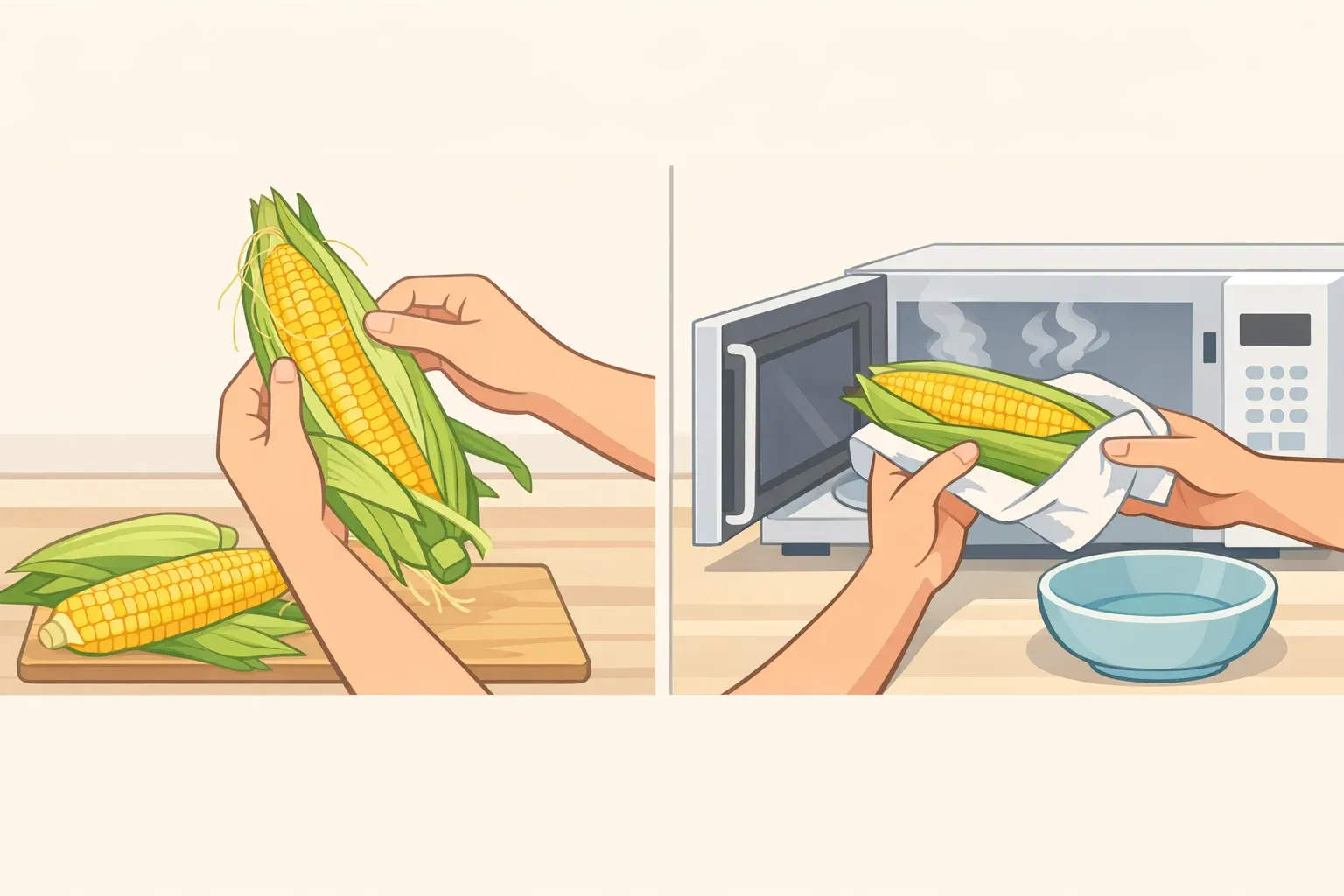
Shuck the corn completely. Remove all husk and silk. No foil wrap, no husk wrapping; direct contact with heat is the entire point.
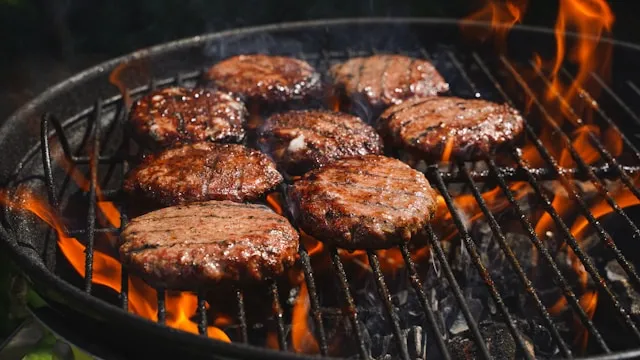
Set up a two-zone fire. On a charcoal grill, push all coals to one side. On gas, set half the burners to high and leave the other half off. Throwing shucked corn straight over a blazing-hot fire the whole way dries the kernels before they cook through, leaving them shriveled and tough. The two-zone setup fixes that.
Start on the cool side, lid closed, for 10 to 15 minutes, rotating occasionally. The kernels cook through, and their sugars begin to concentrate without any surface burn. Build sweetness and moisture here, before the char begins.
Move to the hot side for 3 to 5 minutes, rotating every 2 to 3 minutes until the corn blisters in patches on all sides. Char happens quickly over already-cooked corn that still has enough moisture to stay plump.
⚠ Gotcha: Don't linger on the hot side. Charred patches are the goal, not a fully blackened cob. If the smell shifts from caramelizing to burning, move the corn off the heat immediately.
Remove from heat and top immediately (see "Building the topping" below).
Method 2: under the broiler (no grill required, about 15 minutes active)
Set the oven rack to the middle position and heat the broiler. Line a rimmed baking sheet with foil. Brush each ear all over with a thin layer of oil.
Broil, rotating every 3 to 4 minutes, for about 15 minutes total. The corn should develop brown, charred patches on all sides. Broiler strength varies — start checking at 12 minutes.
⚠ Gotcha: Stay close. A minute too long moves from charred to burnt faster than expected. Do not wrap the corn in foil; that traps steam and kills the char.
Remove and top immediately (see "Building the topping" below).
Method 3: air fryer (fastest indoor method, 10 to 12 minutes)
Brush ears lightly with oil. Place in the air fryer basket without crowding.
Cook at 400°F for 10 to 12 minutes, rotating halfway through. Surface color will be lighter than the grill, with less smoky depth, but the result is still solid.
Remove and top immediately (see "Building the topping" below).
Building the topping (all methods)
Mix the sauce. Whisk together mayonnaise, crema, lime juice, and garlic until smooth. It should be thick enough to cling to a spoon. Do this while the corn cooks so it's ready the moment the corn comes off the heat.
Coat the hot corn immediately. Use a pastry brush or the back of a spoon. The heat loosens the sauce slightly and helps it adhere. Cold corn sheds the coating faster.
Roll or sprinkle with cotija. Press lightly so the cheese sticks. Follow with Tajín or chili powder and a firm squeeze of fresh lime.
Serve immediately. The sauce tightens as the corn cools. Set out extra lime wedges, hot sauce, and cilantro so each person can adjust.
Troubleshooting the most common problems
Char won't develop: The surface isn't hot enough, the corn is wet, or the pan is overcrowded. Dry the corn thoroughly, preheat properly, and give each ear room crowding traps steam and prevents any browning.
Toppings slide off: Sauce is too thin or the corn cooled before coating. Apply to hot corn only; check that the crema-mayo ratio isn't too loose.
Watery, flat-tasting result (broiler): Foil-wrapped ears trapped steam. Go unwrapped, directly on the sheet.
Kernels shriveled and tough (grill): Went direct-to-high heat without an indirect phase. Use the two-zone method.
Esquites: the Mexican street corn you eat with a spoon
Esquites is not a fallback for when fresh corn isn't available. It's a distinct preparation with its own identity, built on a base of butter, garlic, and epazote that the dry-grilled cob version doesn't have. Those three ingredients do real work before the topping goes on: the butter adds richness the grill method skips, the garlic builds savoriness into the corn itself, and the epazote adds a herbal depth that cilantro approximates but doesn't quite match. Choose it when you want something spoonable, easier to top evenly, or scalable for a crowd, or when it's January, and the grill is buried under snow.
Fresh summer corn will always be sweeter and more vibrant, but good-quality frozen corn makes excellent esquites. The recipe doesn't fall apart in the off-season.
Dry the corn thoroughly. If using frozen, thaw completely and spread on paper towels. Pat dry. If using canned, drain and pat dry. Moisture is the enemy of caramelization; wet kernels steam in the pan instead of charring. This step is not optional.
Heat a cast-iron skillet over high heat until a drop of water evaporates on contact. Stainless steel works too, but the same standard applies: genuinely hot before anything goes in.
Add the corn in a single layer. Do not stir. Let it sit undisturbed for 2 to 3 minutes. The bottom layer needs sustained contact with the pan to caramelize.
⚠ Gotcha: Overcrowding is the most common mistake. Piled-up kernels trap steam, and the corn boils instead of charring. Work in batches if needed.
Stir once, then add butter, garlic, and epazote or cilantro. The garlic and herbs go in now rather than at the start, so they don't burn during the dry, high-heat phase.
Add a splash of water or chicken broth and a squeeze of lime juice. This deglazes the pan and lifts any caramelized fond back into the corn. Season with salt and toss to combine.
Divide into cups. Top each with a spoonful of crema, a squeeze of mayonnaise, a heavy shower of cotija, Tajín or chili powder, and fresh lime. Eat with a spoon immediately.
Variations worth knowing
Heat calibration: Chili powder alone is mild and earthy; Tajín is a step up, adding chile plus citrus. For serious heat, add cayenne and pour hot sauce over the finished result. For a kid-friendly version, Tajín without cayenne is the standard move.
Regional variation: The formula here reflects the most common cart-style preparation, not the only one. In Mexico City, huitlacoche (corn fungus, sometimes called Mexican truffle) folds into esquites for a deeply savory result. In Oaxaca, toasted chapulines add crunch. In Jalisco and parts of the Pacific coast, tamarind replaces or supplements the lime.
Vegan adaptation: Use vegan mayonnaise, cashew crema thinned with lime juice, and substitute crumbled firm tofu or nutritional yeast for cotija. Both dishes are naturally gluten-free; check the Tajín label if that matters, as formulations can change.
Make-ahead: Grill or broil the corn up to one day in advance. Store it plain and tightly wrapped, then apply sauce and toppings just before serving to keep cotija from going soggy and crema from separating. For esquites, cook the corn and refrigerate without toppings; reheat in the skillet and top fresh.
Storage: Leftover corn keeps in an airtight container for up to 3 days. Reheat in a 350°F oven for about 10 minutes or in the air fryer; the microwave works, but softens the texture. Add fresh toppings after reheating, not before.
What to make next
The technique is the same regardless of equipment: dry corn, high heat, hold for char, build the topping while it's hot. Once that's in muscle memory, the esquites format is where the recipe gets interesting.
Fold in roasted poblano strips, and the base picks up a smoky-sweet complexity that works well as a taco filling. Swap lime for tamarind paste, and the whole topping profile shifts toward something more tart and earthy, closer to what you'd find along the Jalisco coast. Use the kernels and sauce as a grain bowl topping, and the five elements creamy fat, salty cheese, spiced chile, citrus acid, and fresh herb hold together just as well without a cob in sight.
The ratio is what matters. Once you understand it, the format adapts without losing the point.



Comments
Be the first, drop a comment!