



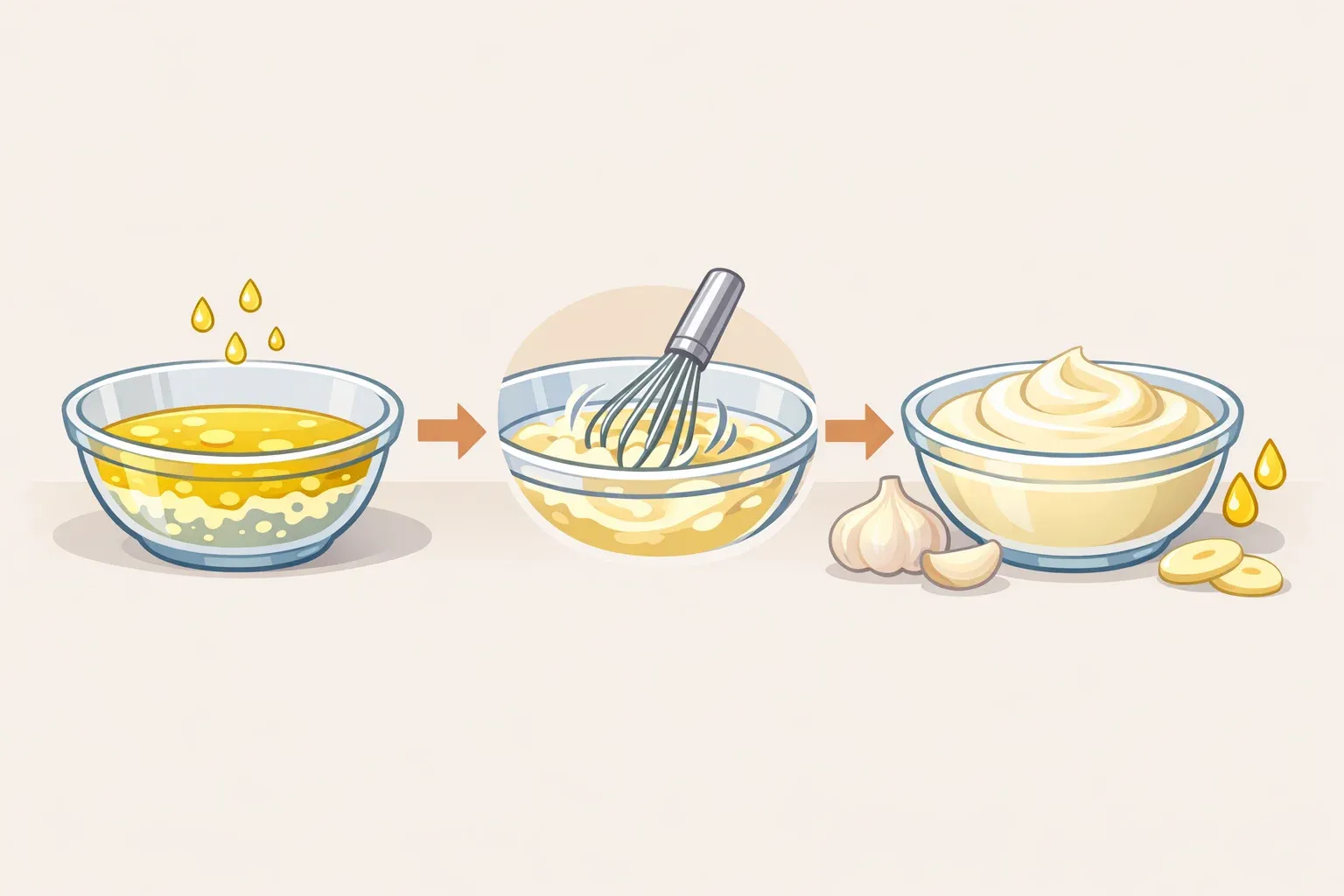
How to Make Garlic Aioli: Oil Choice, Method, and Fixes
This guide walks through making a thick, creamy homemade garlic aioli from five ingredients in about ten minutes of hands-on time. Pull your egg out now, because it needs 30 minutes at room temperature before you start, La Cuisine de Géraldine specifies. By the end, you'll know which oil to use, how to read the emulsion as it builds, and how to rescue it if it breaks.
A note on what you're making: aioli is a Mediterranean sauce associated especially with Provence and parts of Spain, including Catalonia and the Balearic Islands, where it has been a staple for centuries, as both The Mediterranean Dish and La Cuisine de Géraldine describe. Provençal purists insist the traditional aioli recipe contains no egg, just garlic pounded with olive oil, but that approach is technically demanding and prone to failure. One common modern method adds an egg yolk, which acts as an emulsifier and produces reliable creaminess, La Cuisine de Géraldine explains. That's what this guide uses.
Ingredients (serves 2, per La Cuisine de Géraldine):
- 2 garlic cloves, peeled
- 1 large egg yolk, room temperature
- ½ cup neutral oil (sunflower or rapeseed), per La Cuisine de Géraldine
- 2 tbsp extra virgin olive oil, per La Cuisine de Géraldine
- 1 tsp fresh lemon juice, per The Mediterranean Dish
- ¼ tsp kosher salt, per The Mediterranean Dish
Equipment: A wire whisk (silicone is too flexible to build the emulsion), a mixing bowl, and a measuring cup with a narrow spout for controlled pouring, per The Mediterranean Dish.
Which oil to use: decide this before anything else
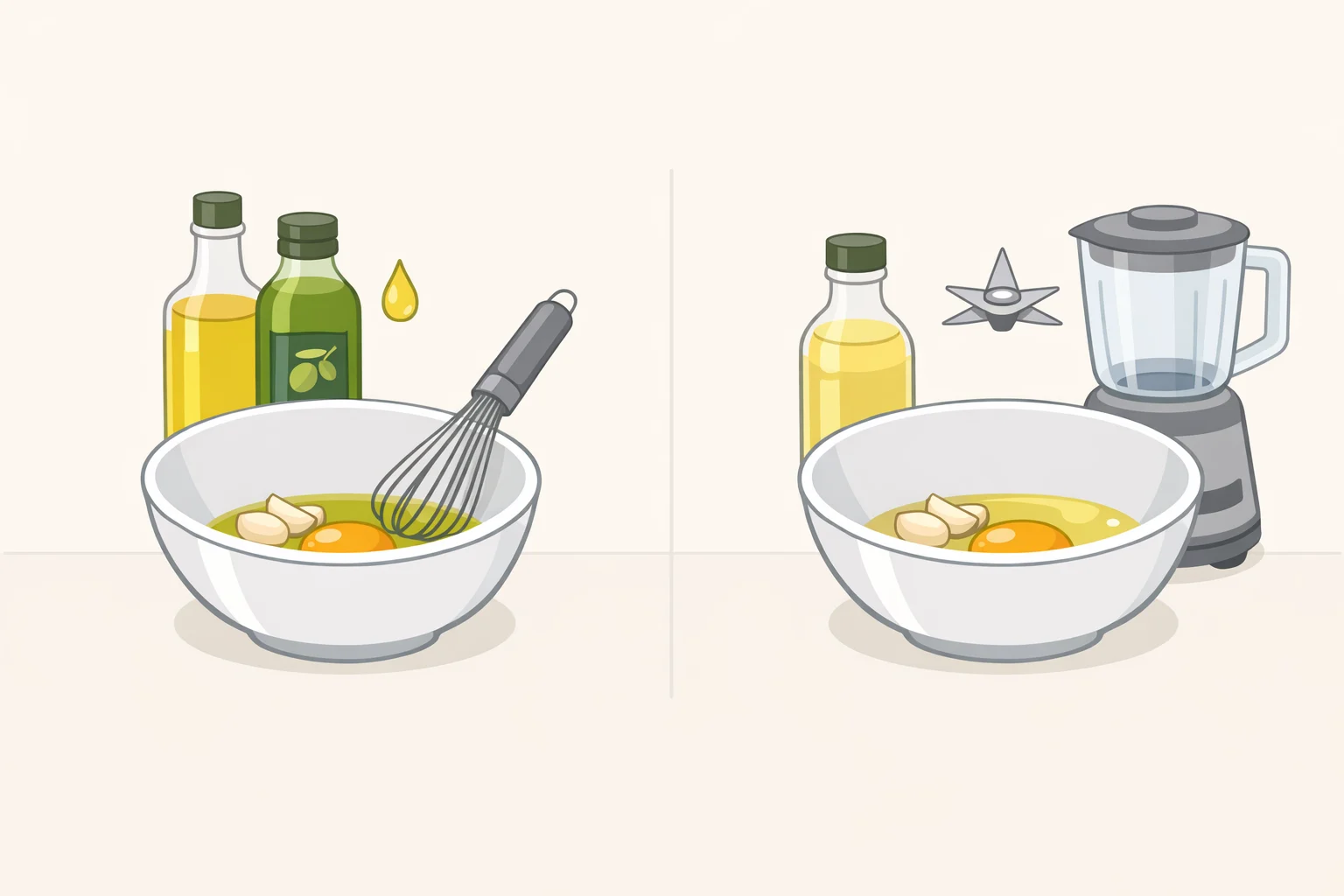
The oil choice depends on one variable: are you working by hand or by machine?
By hand (this guide's method): Provençal and Spanish versions both use olive oil as the foundation, The Mediterranean Dish notes. In practice, 100% extra virgin can taste slightly bitter when used in volume, La Cuisine de Géraldine warns. The practical default for a first attempt: roughly two-thirds neutral oil (sunflower or rapeseed) for the bulk of the emulsion, finished with two tablespoons of extra virgin olive oil at the end for flavor and character. That produces a stable, balanced sauce without the bitterness risk.
If you're using a blender or food processor: Do not use extra virgin olive oil. High-speed blades disperse the polyphenols normally coated by fatty acids, releasing bitter compounds into the sauce, The Mediterranean Dish explains. Use refined or cooking-grade olive oil instead. This is the main practical difference to watch for between hand and machine methods.
With the oil decision settled, the method comes down to three conditions.
The easy garlic aioli recipe: five steps to a stable emulsion
Before step one, confirm these three things:
- Garlic should be a paste before anything else is added, not minced, not roughly chopped
- Start the oil drop by drop
- If the kitchen is very warm, chill the bowl, whisk, and oil first, per The Mediterranean Dish
Step 1: Crush the garlic into a smooth paste.
Place the peeled cloves in a mortar with a pinch of salt and pound until completely homogeneous, no chunks, no fiber. The salt acts as an abrasive and helps break down the cell structure. No mortar: press and drag minced garlic across a cutting board repeatedly with the flat of a knife blade, or grate it directly on a microplane. Rough pieces won't integrate; they'll float in the finished sauce, La Cuisine de Géraldine cautions.
What you should see: A pale, sticky paste that holds together and smells intensely of garlic.
Step 2: Combine garlic paste, egg yolk, and salt.
Add the room-temperature yolk and ¼ tsp kosher salt to the garlic paste, then whisk until fully unified. The base needs to be a single cohesive mixture before any oil is added, La Cuisine de Géraldine specifies.
What you should see: A slightly thickened, pale yellow base with no visible separation between the garlic and yolk.
Step 3: Add the oil. This step determines the outcome.
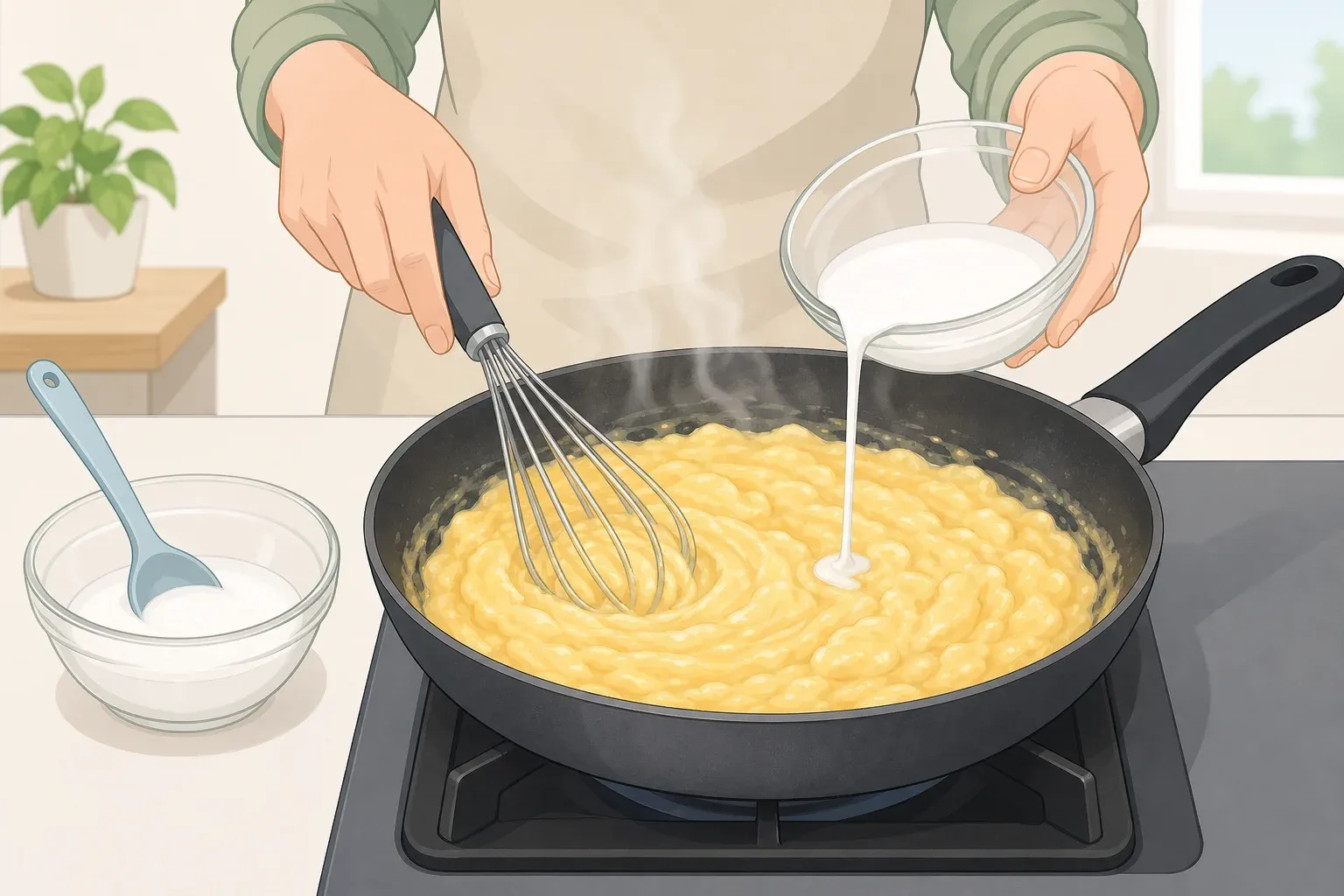
Start with drops. Add the neutral oil a few drops at a time while whisking continuously and vigorously, The Mediterranean Dish instructs. Once the mixture visibly thickens and begins to pull together, increase to a thin, steady stream. Keep whisking without interruption. Never pour freely. After incorporating all the neutral oil, whisk in the two tablespoons of extra virgin olive oil the same way.
What you should see at each stage:
- Early (first few drops): The mixture looks glossy but thin. That's correct.
- After a tablespoon or so: It should visibly thicken. If it's still loose and oily at this point, slow down.
- Finished emulsion: Creamy and opaque, holds a ribbon when you lift the whisk. Not greasy, not glossy.
Step 4: Add lemon juice and season.
Once the emulsion is thick and stable, add 1 tsp fresh lemon juice and whisk to combine, per The Mediterranean Dish. Taste. If the flavor reads as flat or dull, add more salt, The Mediterranean Dish advises. Add pepper at the end, La Cuisine de Géraldine specifies.
Step 5: Refrigerate immediately.
Transfer to a covered container and into the fridge before doing anything else. Do not leave aioli at room temperature while preparing the rest of a meal.
When it breaks: why it happens and how to fix it
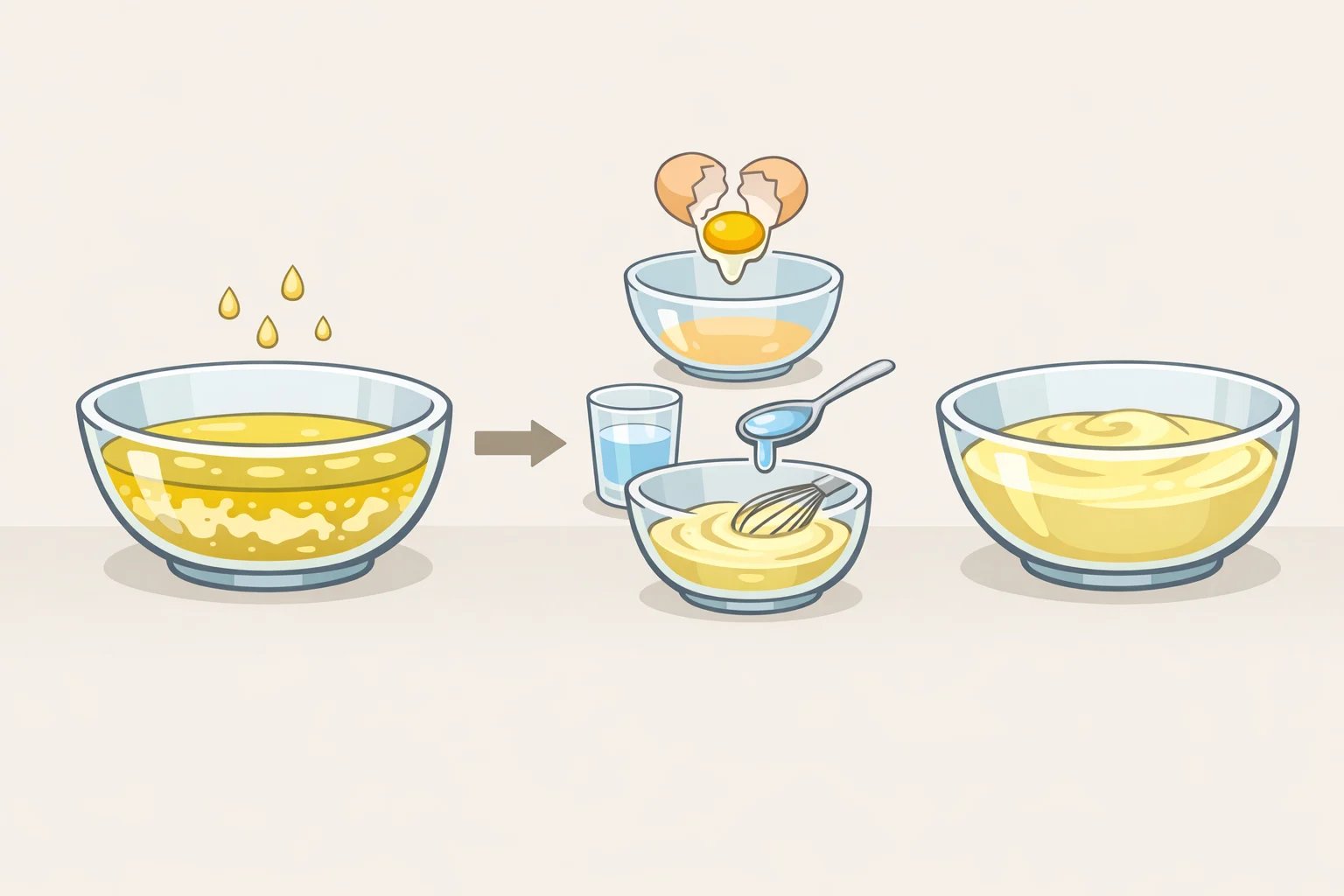
Breaking is the most common failure. The sauce turns greasy and separated instead of creamy, The Mediterranean Dish describes this as the oil and egg yolk failing to emulsify so the sauce never thickens. Once it has visibly separated, force alone usually won't bring it back together.
A thin sauce and a broken sauce are different problems. If the aioli is just loose, it may still be building. Keep whisking and adding oil more slowly. If you see greasy pooling at the surface with oil visibly split from the base, it has broken and needs intervention.
Three fixes, in order of effort:
- Whisk in a teaspoon of ice water. This can pull a mildly broken sauce back together. Try this first, per The Mediterranean Dish.
- Start a fresh egg yolk in a clean bowl. Whisk the broken mixture into the new yolk very slowly, a few drops at a time, treating it exactly as you would fresh oil. This is the standard rescue method, per The Mediterranean Dish.
- Start over. A fully broken sauce with heavy greasy pooling won't respond to the above. Make a new base from scratch.
Prevention is easier than rescue: a room-temperature egg yolk, cold tools in a warm kitchen, and a patient hand with the oil eliminate the most common causes before they happen.
How to serve it, how long it keeps, and one safety rule
Everyday use: Aioli works as a spread, a dip for vegetables or fries, a sauce alongside fish or grilled meat, or stirred into Provençal fish stew (bourride), The Mediterranean Dish notes. The hand-whisked sauce is ready immediately. That garlic aioli sauce recipe should end thick, creamy, and spoonable, not pourable.
The traditional format: In Provence, aioli is the centerpiece of a meal, not a condiment. The sauce goes in the center of a large platter, surrounded by steamed cod, cooked prawns, hard-boiled eggs, boiled potatoes, and blanched vegetables, La Cuisine de Géraldine describes. Total time including vegetable cooking runs about 35 minutes. The sauce itself is what takes ten minutes.
Variations worth making:
- Roasted garlic aioli: Substitute a paste made from one full head of roasted garlic, adding ½ tsp Dijon mustard to the yolk base. Mellower flavor, more forgiving to build, and slightly sweet, per The Mediterranean Dish.
- Extra garlicky: The base recipe uses 2 cloves; scale to 4–6 for intensity, The Mediterranean Dish suggests. Raw garlic sharpens as it sits, so a sauce that seems balanced fresh will be noticeably more aggressive the following day.
- Spicy: Whisk in 1–2 tablespoons of harissa paste at the seasoning stage, per The Mediterranean Dish.
Storage:
Because homemade aioli contains raw egg, refrigerate it immediately and use within 24 to 48 hours, La Cuisine de Géraldine specifies. Cover it tightly; it's pungent enough to affect everything nearby. Do not freeze. The emulsion breaks on thawing and the oil separates permanently, La Cuisine de Géraldine confirms.
A separate warning on garlic-in-oil:
If you're thinking about prepping garlic submerged in oil as a shortcut for future use, the storage rules are stricter than for finished aioli. Garlic has a natural pH of 5.3 to 6.3, well above the 4.6 threshold that blocks Clostridium botulinum spore germination, 123 Food Science reports. Oil creates an anaerobic environment, and kitchen temperatures fall within the bacterium's growth range. A 1985 Canadian outbreak linked to commercially made garlic-in-oil stored at room temperature hospitalized multiple people and prompted regulatory changes, according to 123 Food Science. Never store homemade garlic-in-oil at room temperature.
The University of Georgia Cooperative Extension specifies that garlic-infused oils must be refrigerated and discarded within four days unless the garlic has been acidified through a validated citric acid process. Lemon juice has not been tested as a substitute and may not produce a safe final product, the CAES Field Report states. For finished aioli used within 48 hours and kept cold, keeping it refrigerated and using it within that window reduces risk.
What a successful batch looks like
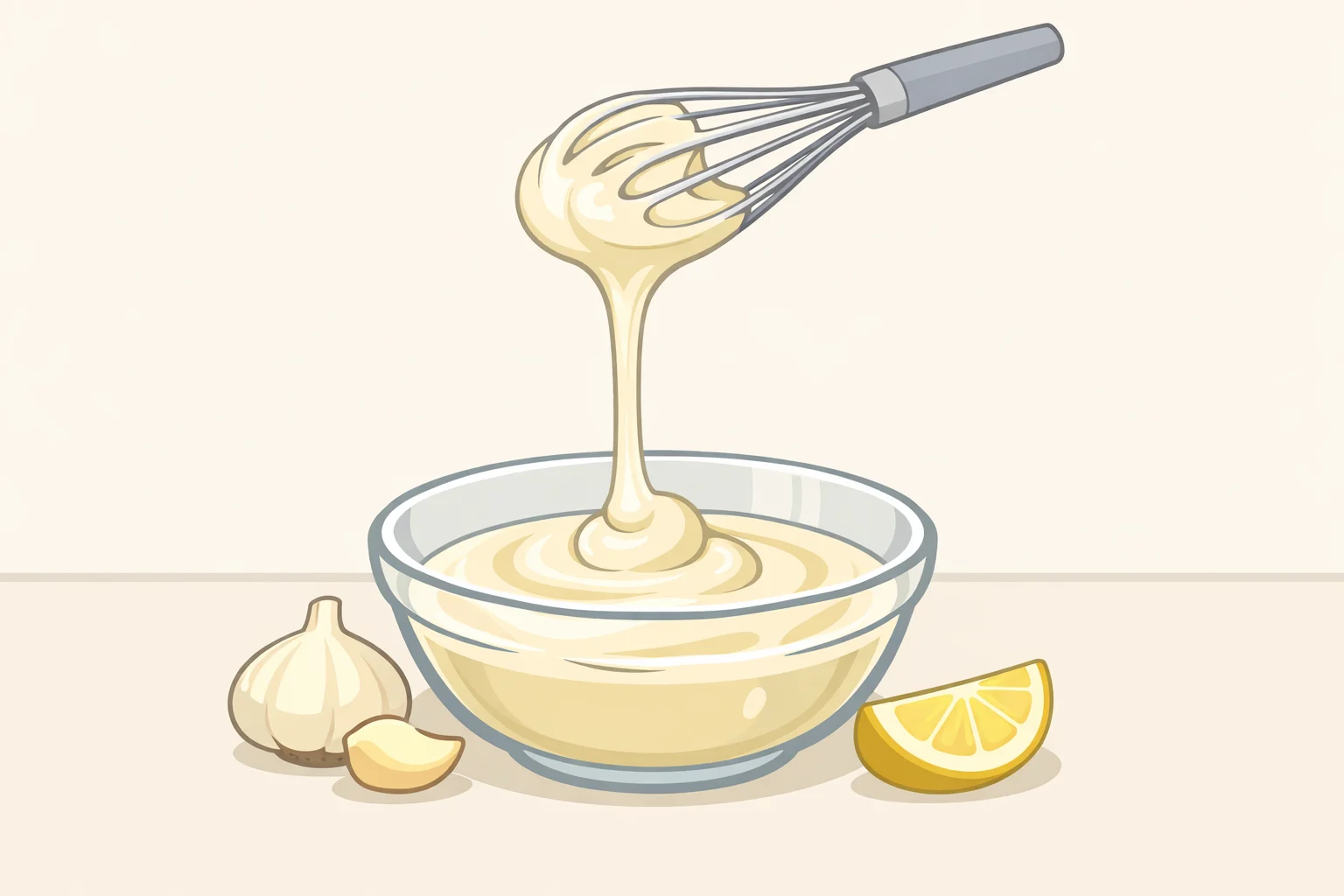
Pull the whisk out and let the sauce fall. It should ribbon, hold its shape briefly, then settle. The color is pale ivory, almost white, with a slight sheen. If it looks greasy or broken into layers, something went wrong in step three.
The hand-whisking technique is worth learning because it gives you control the machine never does. You can feel the emulsion forming, slow down when it needs it, and catch a problem before it's permanent. A blender builds the sauce faster, but it also hides the warning signs. Keep any garlic-in-oil preparation cold, refrigerate the finished sauce immediately, and the whole process from paste to plate is ten minutes, per The Mediterranean Dish.





Comments
Be the first, drop a comment!