


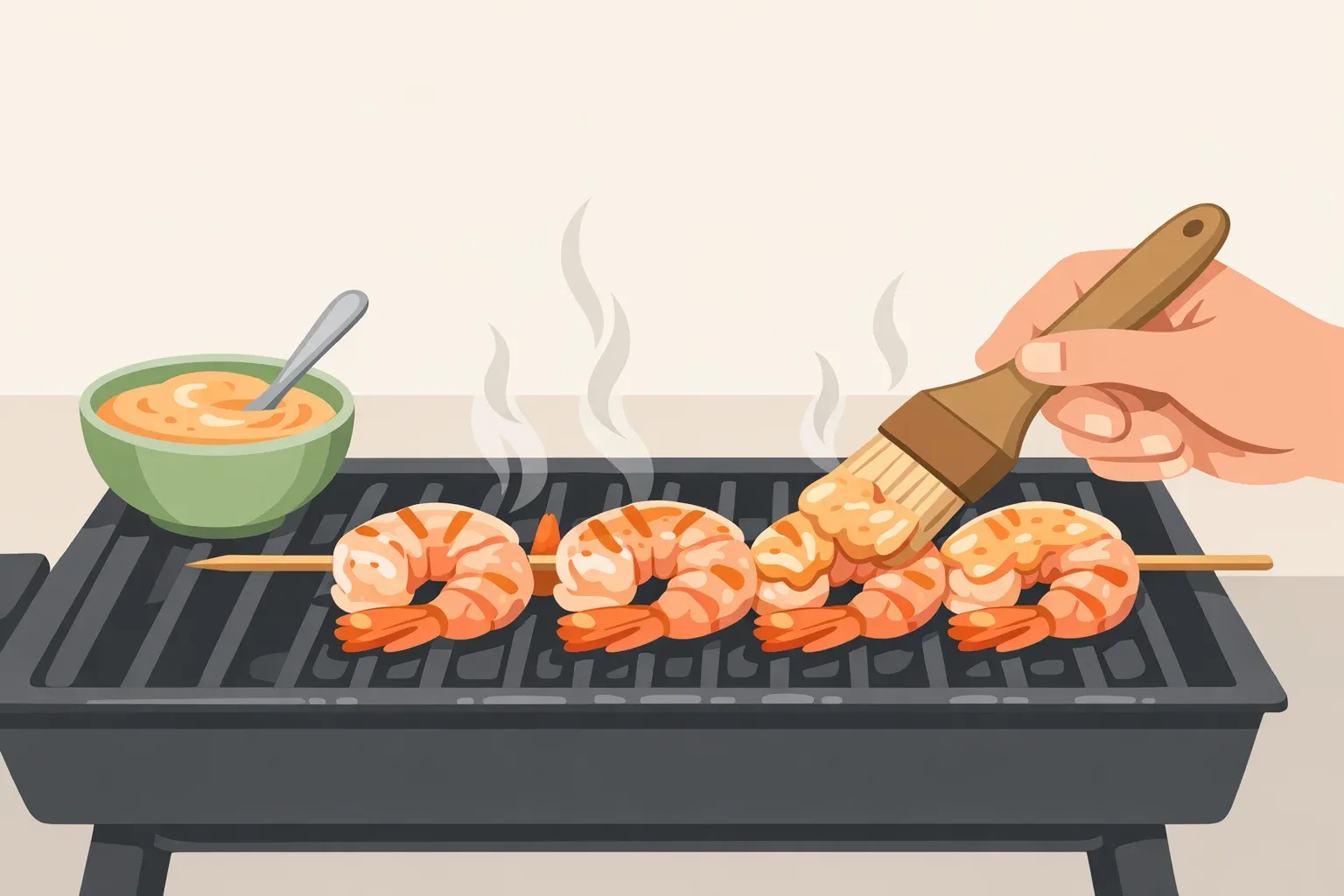
Grilled bang bang shrimp is built around the sauce, not the fryer. Creamy, spicy, slightly sweet, with enough acid to cut through the richness — the sauce is the whole point, and it doesn't need a deep fryer to land. Grilling gets you there faster, with less mess, and with shrimp that actually tastes like shrimp. This guide walks through exactly how to prep and cook grilled bang bang shrimp skewers that stay juicy under high heat, and when to add the sauce so it coats cleanly rather than slides off.
The cook window is narrow. Shrimp can go from snappy to rubbery in seconds. Over direct medium-high to high heat, the total cook time runs about five minutes. What you're trading away is the crispy coating. What you're keeping is everything else: char, snap, and a sauce-to-shrimp ratio that's easier to control than it ever is in a fryer basket.
Before you start: two decisions that determine the outcome
Choose your shrimp correctly, and most of the technique problems disappear.
Go large. Jumbo or large shrimp, sized 16/20 or 21/25 count per pound, where the smaller number means the bigger shrimp are the practical choice for skewer grilling. Larger shrimp give you more margin before the exterior overcooks while the center is still finishing. Small shrimp on a hot grill is a game of seconds you'll often lose.
Buy them frozen and thaw them at home. The "fresh" shrimp at most seafood counters has already been thawed from frozen, because virtually all shrimp is flash-frozen on the boat immediately after harvest. Buying individually quick-frozen shrimp gives you better control over freshness. For same-day cooking, a 5–10 minute rinse under cold water works. Drain and pat completely dry before moving on.
Peeled or shell-on? For bang bang, go peeled but understand the tradeoff.
Shell-on grilling has a genuine technical advantage: the shell acts as a temperature buffer, slowing heat transfer and reducing the risk of overcooking. That's why shell-on shrimp tends to stay juicier with less intervention. For this recipe, sauce coverage wins. Peeled shrimp let the bang bang sauce coat every surface. If you'd rather serve the sauce as a dip and prioritize maximum juiciness, shell-on is a legitimate choice, just account for the fact that eaters will have to peel at the table.
What you need on hand:
1 lb large shrimp, peeled and deveined
Kosher salt, baking soda, olive oil, smoked paprika, garlic powder
Skewers (metal needs no prep; soak wooden skewers in water for 30 minutes before use)
For the bang bang sauce: mayonnaise, sweet chili sauce, sriracha, fresh lime juice
How to make grilled bang bang shrimp
Step 1: Mix the bang bang sauce and refrigerate it.
Stir together ½ cup full-fat mayonnaise, 3 tablespoons sweet chili sauce, 1 tablespoon sriracha, and a squeeze of fresh lime juice. Taste it, the balance should read creamy, sweet, spicy, and bright. Adjust the sriracha up or down. Cover and put it in the fridge now, before anything else.
Keep this sauce away from the grill entirely. At the temperatures shrimp require, a mayo-based sauce will burn before the shrimp finishes cooking, so the only moment it meets the shrimp is in the bowl after. Getting it cold and out of the way first means you're not scrambling to make it while the skewers are resting.
Step 2: Brine the shrimp for 15 minutes.
Dissolve 1 tablespoon of kosher salt and 1 teaspoon of baking soda in 4 cups of cold water. Add the shrimp and soak for 15 minutes, then drain. This is a texture step, not a flavor step. Some use this salt-and-baking-soda method specifically to keep shrimp plump and juicy under grill heat. The baking soda raises the surface pH slightly, which slows protein tightening during cooking. The result is shrimp that curves into a loose C rather than snapping shut into a tight O.
Fifteen minutes is enough. Don't leave shrimp in any liquid containing acidic ingredients, such as citrus or vinegar, for more than 20 to 30 minutes, or you'll start chemically altering the proteins before any heat is applied. This brine skips acid entirely, so it's safe as written. Don't improvise lime juice into it.
Step 3: Dry, season, and air-dry.
After draining, pat the shrimp completely dry with paper towels. Toss with a light coat of olive oil, ½ teaspoon smoked paprika, ½ teaspoon garlic powder, and a pinch of salt. Spread them on a plate in a single layer and leave them uncovered in the fridge for 15 minutes.
Don't skip the air-dry. Wet shrimp on a hot grate steams rather than sears, and steamed shrimp won't take char. This step is part of the method for the best grilled shrimp. A dry surface browns; a wet surface doesn't.
Step 4: Skewer tightly.
Thread 5–6 shrimp per skewer, going through both the tail and the body so they don't spin when you flip. Pack them close together. Tightly packed shrimp slow heat transfer slightly across the cluster, giving a more forgiving cook window. It also makes flipping faster; one move handles the whole skewer.
Step 5: Heat the grill and oil the grates.
Preheat to medium-high (375°F–450°F). Oil the grates well with a high-smoke-point oil using a folded paper towel and tongs. A clean, oiled surface is the most reliable way to prevent tearing. Shrimp that sticks and tears lose moisture fast. Don't rush this step.
Step 6: Grill 2–3 minutes per side. Set a timer.
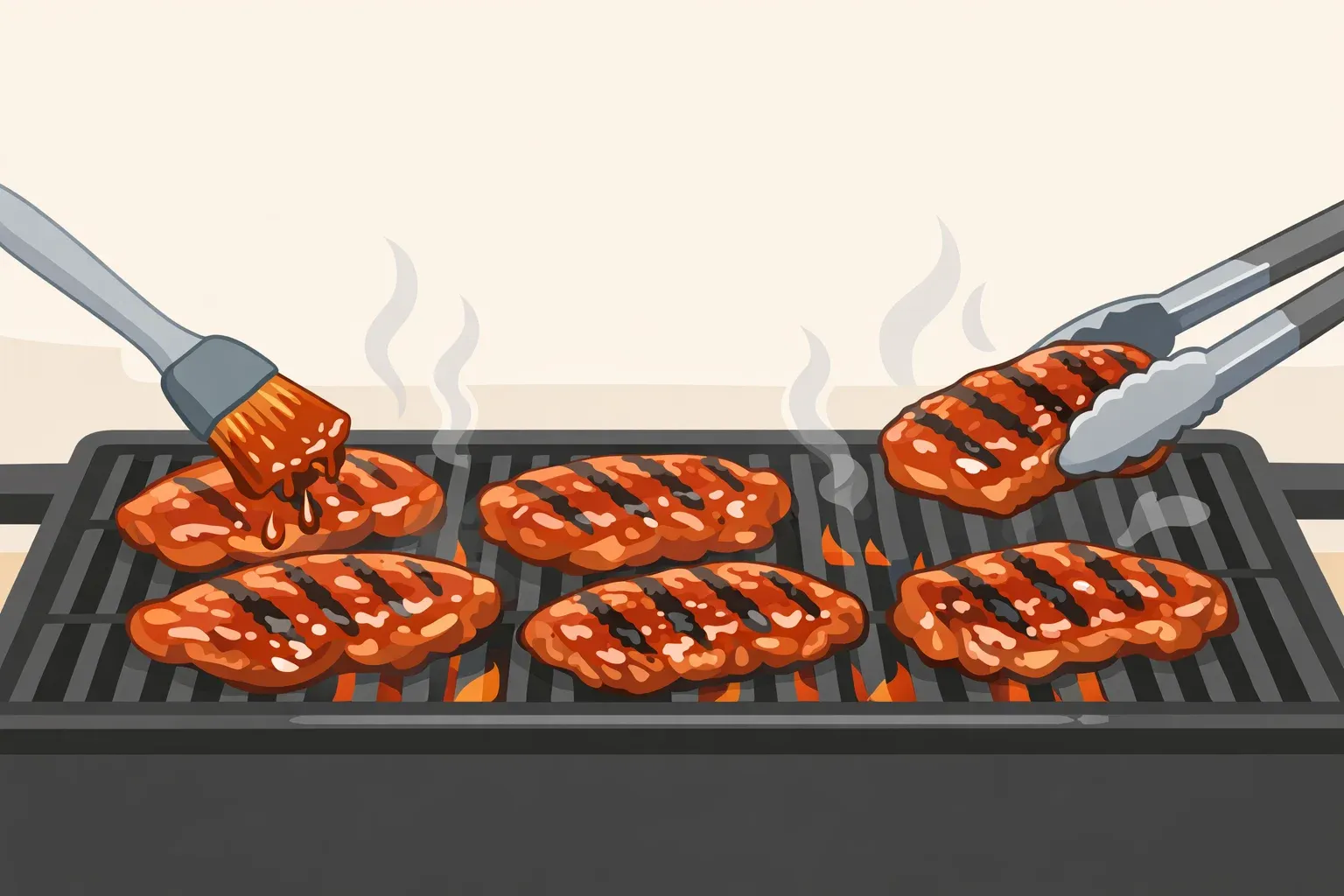
Place skewers over direct heat and don't touch them for 2–3 minutes. Flip once. Another 2–3 minutes. Pull them off. Total active cook time: 5–6 minutes.
Doneness reads visually: shrimp transitions from translucent gray to opaque pink-white. The body curves into a loose C. When you see a tight curl forming, get them off the grates. Shrimp loses juiciness if cooked even a minute too long. Don't prod or check repeatedly. Each lift interrupts the seal and lets moisture escape.
Step 7: Toss in bang bang sauce and serve immediately.
Rest skewers for 60 seconds, then slide the shrimp into a bowl. Spoon on the bang bang sauce and toss to coat. Serve right away; the texture is best in the first few minutes.
On the plate, you're looking for shrimp that's visibly glossy with sauce, lightly charred at the edges, and holds its shape rather than collapsing. The exterior should have some resistance before giving way to a juicy interior. If the sauce pools rather than clings, go back to Step 3 next time the shrimp likely wasn't dry enough before it hit the grates.
Troubleshooting, timing, and serving ideas
Shrimp sticking to the grates. Usually means the grates weren't oiled thoroughly enough, or the shrimp went on before the grill was fully preheated. If a skewer resists when you try to flip it, wait another 30 seconds shrimp often releases naturally once the sear is complete. Forcing it tears the flesh.
Sauce sliding off instead of coating. The shrimp needs to be dry before it hits the grill and hot when it meets the sauce. If you're working in batches, sauce each round right off the grill rather than waiting until all skewers are done.
Overcooked centers despite watching the clock. The grill was probably running hotter than the target range, or the shrimp were smaller than 21/25 count. Pull earlier next time, carry-over heat during the 60-second rest will finish the job.
Timing. Total time from cold shrimp to table runs about 35 minutes: a 15-minute brine, a 15-minute air-dry, and a 6-minute cook. The brine and the air-dry overlap if you plan ahead, which brings the practical window closer to the 30-minute mark.
Storage. Grilled shrimp keep for up to 3 days refrigerated in a sealed container. Store the sauce separately and add it fresh at serving. Sauce-coated shrimp stored overnight go soggy, and reheated mayo-dressed shrimp is a poor trade for the few minutes it saves.
Scale. The method scales cleanly. The recipe can be doubled and grilled in batches. Keep finished skewers warm, then sauce everything together once all rounds have rested.
Serving variations. This spicy grilled shrimp recipe works well beyond the skewer format. Slide the shrimp into corn tortillas with shredded cabbage and a lime wedge. Serve over steamed rice with sliced cucumbers for a quick bowl. Grilled shrimp stuffed into steamed buns with sriracha mayo as a tested format gives the same creamy-spicy flavor architecture in a different form. The bang bang sauce works in all of them. The format that won't work is frying: once you've timed a 6-minute grill cook against a stovetop setup, the fryer stays in the cabinet.

Comments
Be the first, drop a comment!