



How to make Hawaiian macaroni salad: technique and recipe
If you cook the pasta al dente, you're already making the wrong dish. That's the first thing to understand about authentic Hawaiian macaroni salad, and it's the instruction most people ignore. The noodles go soft on purpose. The acid goes in before the dressing. Then the whole thing sits in the refrigerator for hours. Done right, the result is the creamy, tangy side dish that anchors plate lunches across the islands, not a mainland pasta salad with a different name.
This guide walks through how to make Hawaiian macaroni salad from scratch, with a tested base recipe and the technique reasoning behind each step.
What makes this different from regular pasta salad
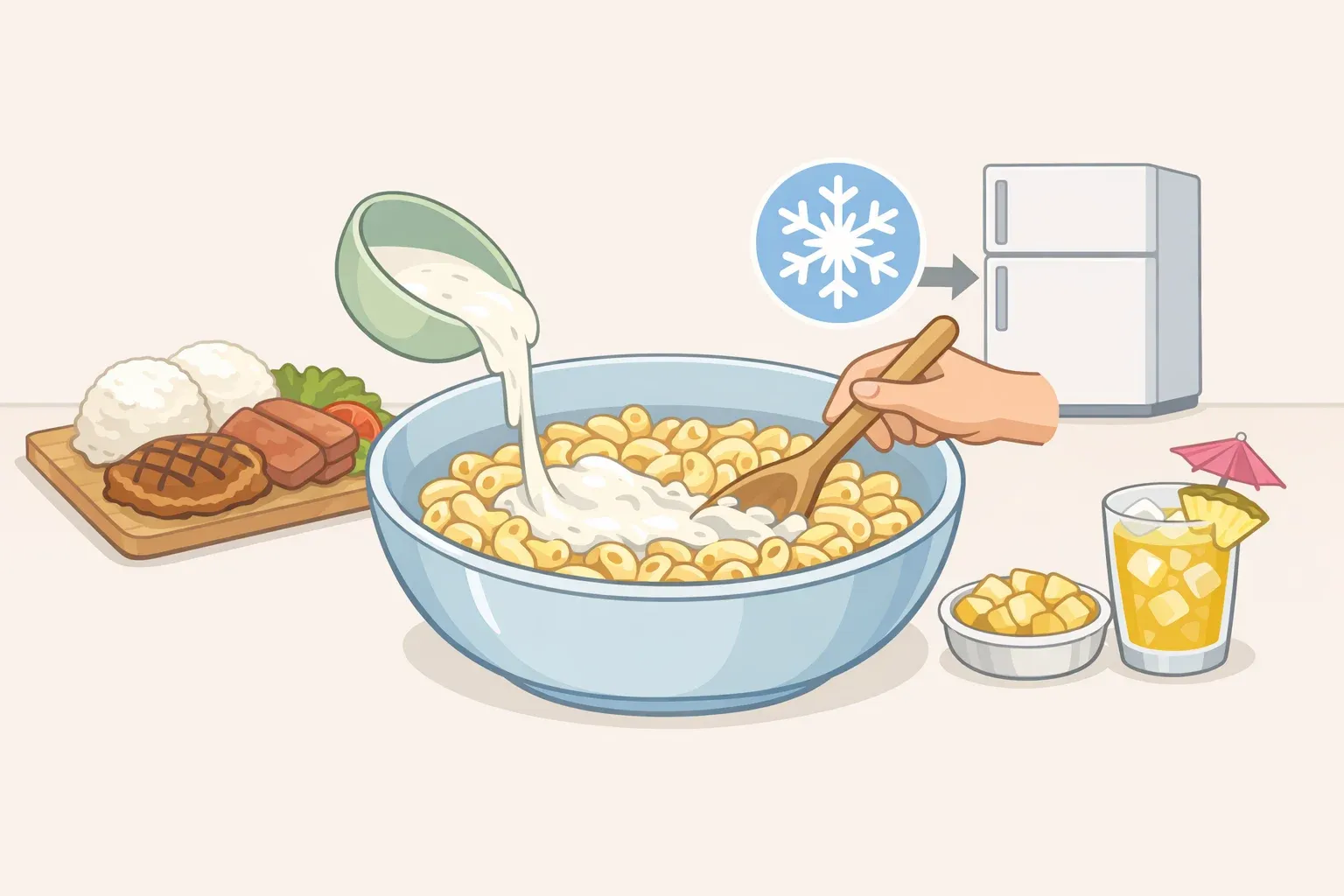
Hawaiian mac salad is widely believed to have roots in early 20th-century Hawaii, where local cooks adapted European-style potato salads using ingredients that were practical and plentiful, with macaroni proving especially durable in the island climate, per Gonna Want Seconds. It evolved into a cornerstone of the plate lunch, the islands' working meal of rice, protein, and creamy salad, and its texture is calibrated to that role. Food & Wine calls it second only to two scoops of rice as a plate lunch staple. It's served alongside local-style proteins and rice, two starches intentionally, where the mild richness of the salad offsets bold, salty mains, per The Kitchn.
The result is a dish built around richness and absorption, not brightness and crunch. No vinaigrette, no seasonal vegetables, no herbs. Food & Wine describes it, without apology, as roughly 90% mayo and starch. That's not a criticism; it's what makes it work.
One clarification before starting: the version with cubed potatoes and hard-boiled eggs is a separate dish. The Kitchn is explicit that potato mac salad is its own category. Both are legitimate Hawaiian preparations. This guide covers standard mac salad only.
What you need before you start
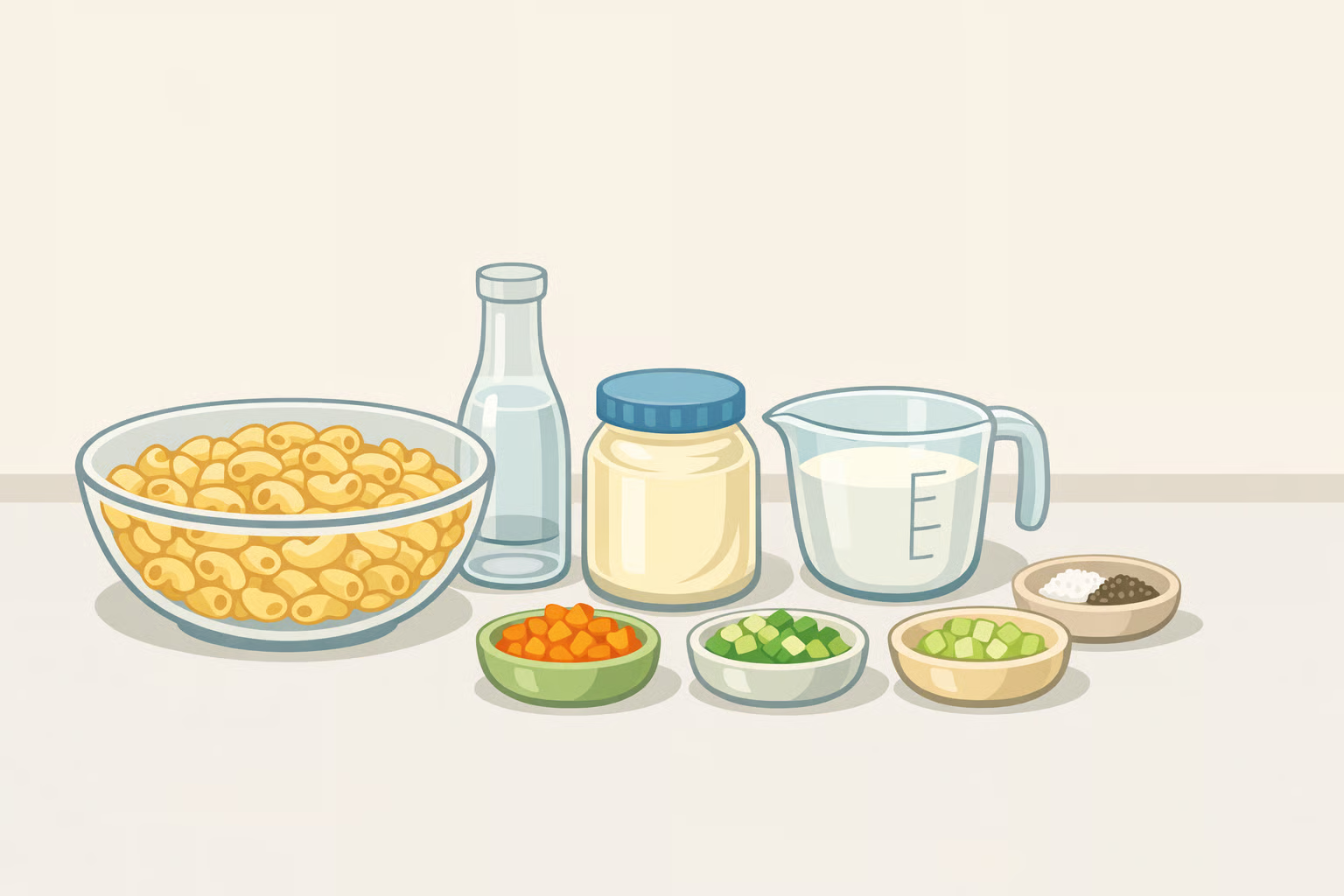
Yield: 4 servings Active time: 15 minutes Total time: At least 2 hours 20 minutes (mandatory chilling included)
Base recipe (via Simply Recipes):
- 8 oz elbow macaroni
- 2 tablespoons apple cider vinegar, applied to warm pasta
- 1 cup full-fat mayonnaise, Best Foods or Hellmann's
- ½ cup whole milk, to loosen the dressing
- 1 medium carrot, peeled and finely grated (about ½ cup)
- 1 small sweet onion, finely chopped (about ½ cup)
- 1 tablespoon granulated sugar
- ¾ teaspoon salt
- ¼ teaspoon freshly ground black pepper
Some island-style versions go heavier on mayo and vinegar. Gonna Want Seconds uses 1 lb pasta with 2 cups mayo and ¼ cup vinegar for 8 servings, which produces a richer, more intensely dressed salad. The base recipe above is a reliable starting point; scale up once you know the texture you're after.
On the mayonnaise: Best Foods (Hellmann's east of the Rockies) appears consistently across sources, not as a brand preference but as a flavor and texture baseline the dish is built around. Food & Wine and Simply Recipes both name it specifically. Use full-fat. Light mayo produces a thinner, less cohesive result.
How to make Hawaiian macaroni salad: the 3 rules that matter
Every step in this recipe enforces the same three principles: soft pasta, early acid, adequate rest. Understand those, and the rest follows logically.
Step 1: Mix the dressing and set it aside.
Whisk together the mayonnaise, milk, sugar, salt, and pepper in a small bowl until completely smooth. Having the dressing ready means you won't be scrambling while the pasta is warm and ready to absorb. Gonna Want Seconds uses a split approach: half the dressing goes in while the pasta is still slightly warm, the other half gets folded in after chilling. That method produces especially creamy results and is worth trying once you've made the base version.
Step 2: Overcook the pasta. Deliberately.
Bring a large pot of well-salted water to a full boil. Add the elbow macaroni and cook for approximately 15 minutes, about 2 minutes past the package's suggested time. You're targeting noodles that are genuinely soft and plump, yielding when you bite through, with no firm core. The Kitchn tested multiple cook times and settled on 15 minutes as the reliable mark. Food & Wine gives the same instruction: cook about 2 minutes beyond package directions until noodles are very tender but still holding their shape.
Don't pull the pasta early because it looks done. The mechanics of this dish depend on porosity. Serious Eats explains it plainly: super-soft pasta absorbs liquid better, which means the dressing can actually permeate each tube instead of sitting on top. Firm pasta deflects. Soft pasta draws the dressing inside.
Step 3: Drain, then add vinegar immediately while the pasta is warm.
Drain the pasta and rinse it briefly under cold water to stop the cooking. Transfer it to a large bowl. While it's still warm, pour the apple cider vinegar directly over it and stir until fully absorbed. Gonna Want Seconds explains that warm pasta absorbs liquid far more readily than cold, building tang from inside the noodle rather than just coating the outside. Serious Eats uses the same approach, adding vinegar directly to the hot drained pasta before any dressing goes in, and describes it as a technique effective enough to apply to any macaroni salad.
One genuine disagreement worth flagging: The Kitchn tested vinegar on the pasta versus vinegar whisked into the dressing, and found the dressing-based approach more flavorful and creamy in their version. Both methods work. Based on the absorption logic from Serious Eats, the warm-pasta method makes more technical sense, since hot, porous noodles pull in acid more deeply, but adding vinegar to the dressing instead will still produce a good result. Try the warm-pasta method first; adjust from there.
Step 4: Cool briefly, then add vegetables and dressing.
Let the vinegar-dressed pasta cool for about 10 minutes before adding the grated carrot, onion, and the full dressing. Stir until every noodle is evenly coated. Simply Recipes describes the milk's job as loosening the mayonnaise just enough to coat without becoming heavy. The Kitchn confirms the same: a small splash of milk prevents the salad from turning gluey as it chills.
Step 5: Cover and refrigerate for at least 2 hours.
This is not downtime. It's the final stage. During that window, the overcooked pasta continues absorbing the dressing, the tang from the vinegar integrates with the mayo's richness, and the whole thing becomes cohesive rather than just assembled. Simply Recipes sets 2 hours as the floor for full absorption. The Kitchn found 2 to 3 hours to be the sweet spot, with overnight also producing excellent results. Gonna Want Seconds recommends overnight as the best-case scenario for flavor and texture.
Make it the evening before. It will be noticeably better.
Troubleshooting, variations, and how to serve it
When things go wrong:
- Dressing sits on top instead of absorbing: The pasta wasn't soft enough, or the vinegar went in cold. Both problems reduce absorption at the noodle level. Next time, cook an extra minute or two and add vinegar while the pasta is still steaming.
- Salad is too thick or dense after chilling: The pasta absorbed more dressing than expected, which means the technique worked but the ratio was off. Stir in an additional tablespoon or two of whole milk before serving to loosen it back up.
- Flavor is flat: Insufficient chilling time, or vinegar added too late. The tang needs time to settle into the noodles. Taste after 2 hours; if it still reads thin, give it another hour.
Storage: Refrigerate leftovers in an airtight container. Source recommendations vary: Food & Wine suggests up to 1 day, The Kitchn gives 3 days, and Gonna Want Seconds says 4 days. Quality declines as the pasta continues absorbing dressing, so earlier is better. Do not freeze: mayo-based dressings separate when thawed, per Gonna Want Seconds.
Common optional add-ins:
Sources agree strongly on technique and diverge on mix-ins. None of these change the core dish:
- Celery: Gonna Want Seconds includes ½ cup finely chopped celery as a standard ingredient; The Kitchn lists it as optional. Add it for a little crunch; leave it out for a smoother texture.
- Pickle juice: The Kitchn uses dill pickle juice alongside apple cider vinegar, whisked into the dressing, for a brinier, deeper tang.
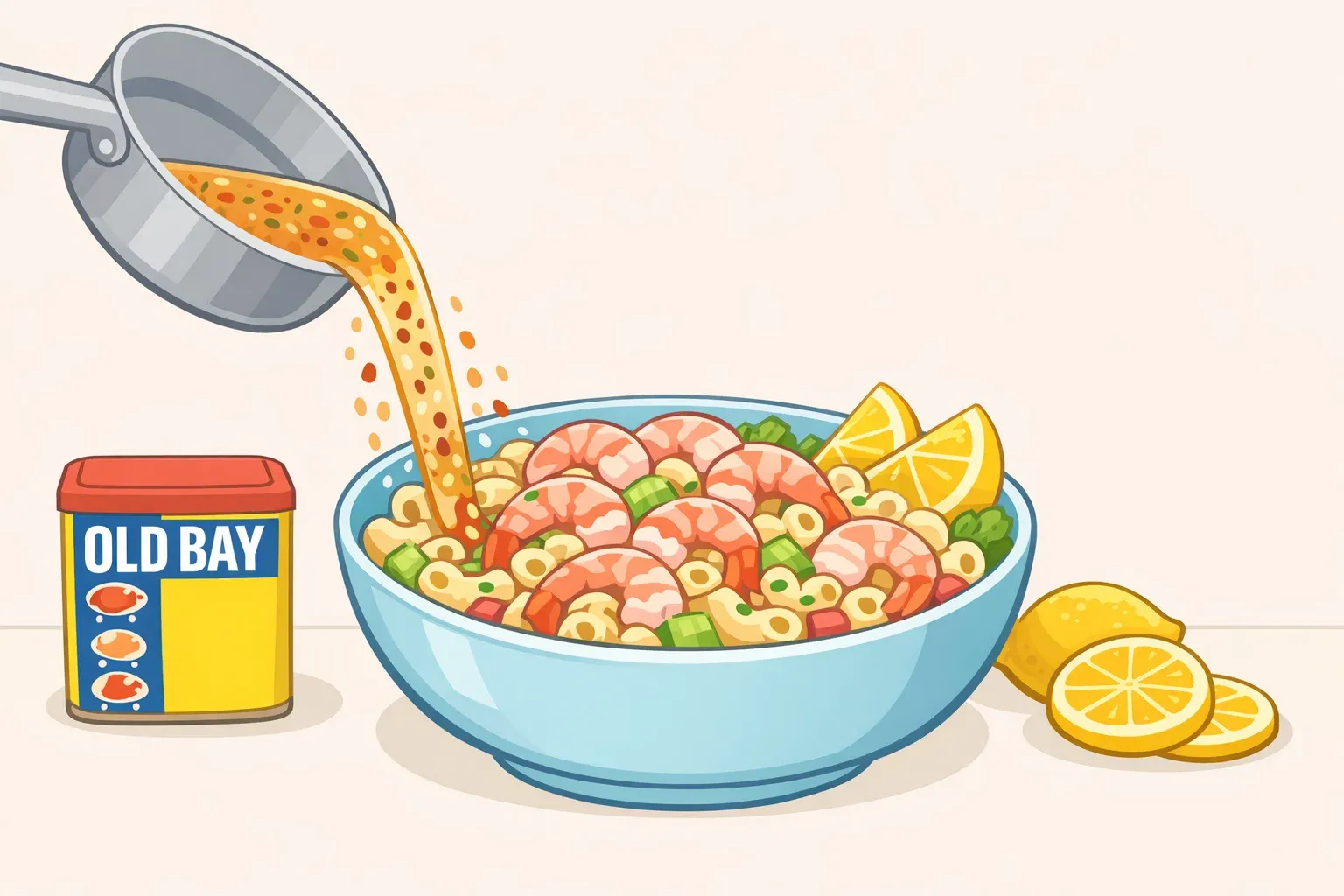
- Seafood proteins: Surimi, canned tuna, and salad shrimp are common additions for a heartier version, per The Kitchn. These shift the dish from side to meal.
How to serve it:
Hawaiian mac salad pairs with rice and a savory protein, grilled chicken, teriyaki beef, shoyu chicken, or pulled pork. The Kitchn describes the plate lunch format: mac salad alongside two scoops of rice and a local-style protein, where the creamy, mild salad acts as a counterweight to bold, salty mains. The recipe scales well. Double the batch for a cookout, make it the night before, and you're done.
The timeline that actually works
Make it tonight. Refrigerate overnight. Before serving, give it a stir and loosen with a tablespoon or two of whole milk if needed.
Soft pasta, warm vinegar, full-fat mayo, real rest time. Everything else is a variation.



Comments
Be the first, drop a comment!