



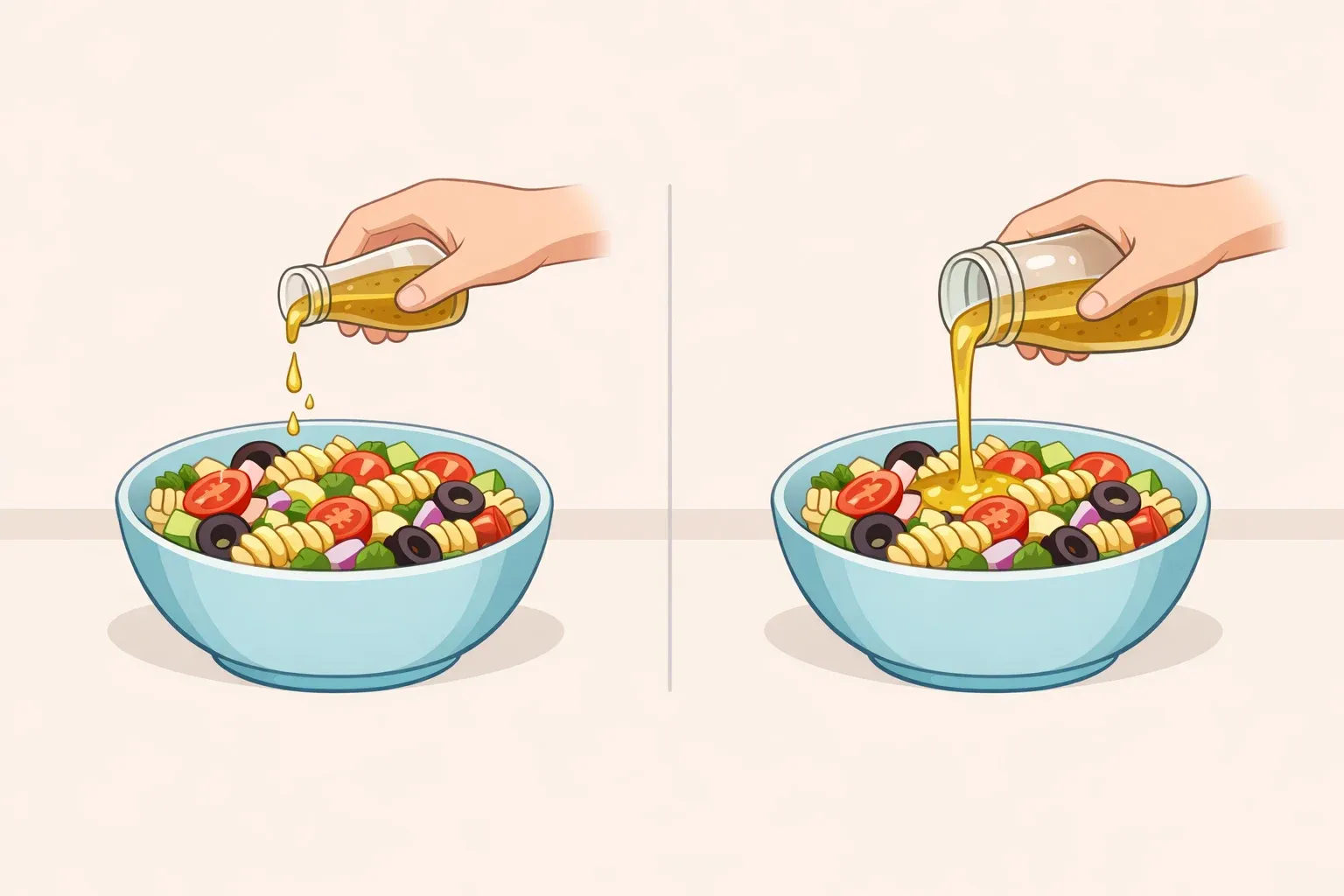
How to make pasta salad taste better: the dress-twice method
A six-method side-by-side test produced a clear winner: dressing pasta salad twice, once before chilling and once just before serving, scored a perfect 10 out of 10. Dressing everything upfront and refrigerating it scored 6/10. Dressing it warm and calling it done scored 5/10. The Kitchn ran the comparison last summer and the gap held up across chilling times and recipes.
Layered seasoning is what produces better flavor retention in cold pasta dishes. Not more dressing overall, not a different recipe, but building it in stages. The layering starts in the pot, continues through cooling, and finishes at the table. This guide walks through each stage in sequence, because the final step only delivers if the ones before it are done correctly.
By the end, you'll be able to produce pasta salad with dressing that coats rather than pools, pasta that stays tender after refrigeration, and flavor that doesn't fade the moment it gets cold.
What you'll need before starting: A rimmed sheet pan. A large pot. Your dressing made in advance and divided roughly in half. Dry short-cut pasta rotini, fusilli, or penne work well. That's it.
Timing at a glance: Boil and drain → cool on sheet pan 15 minutes → first dressing round → chill at least 3 hours → add second dressing → rest 20 minutes at room temperature → serve.
Step 1: Start with the right pasta and cook it past al dente
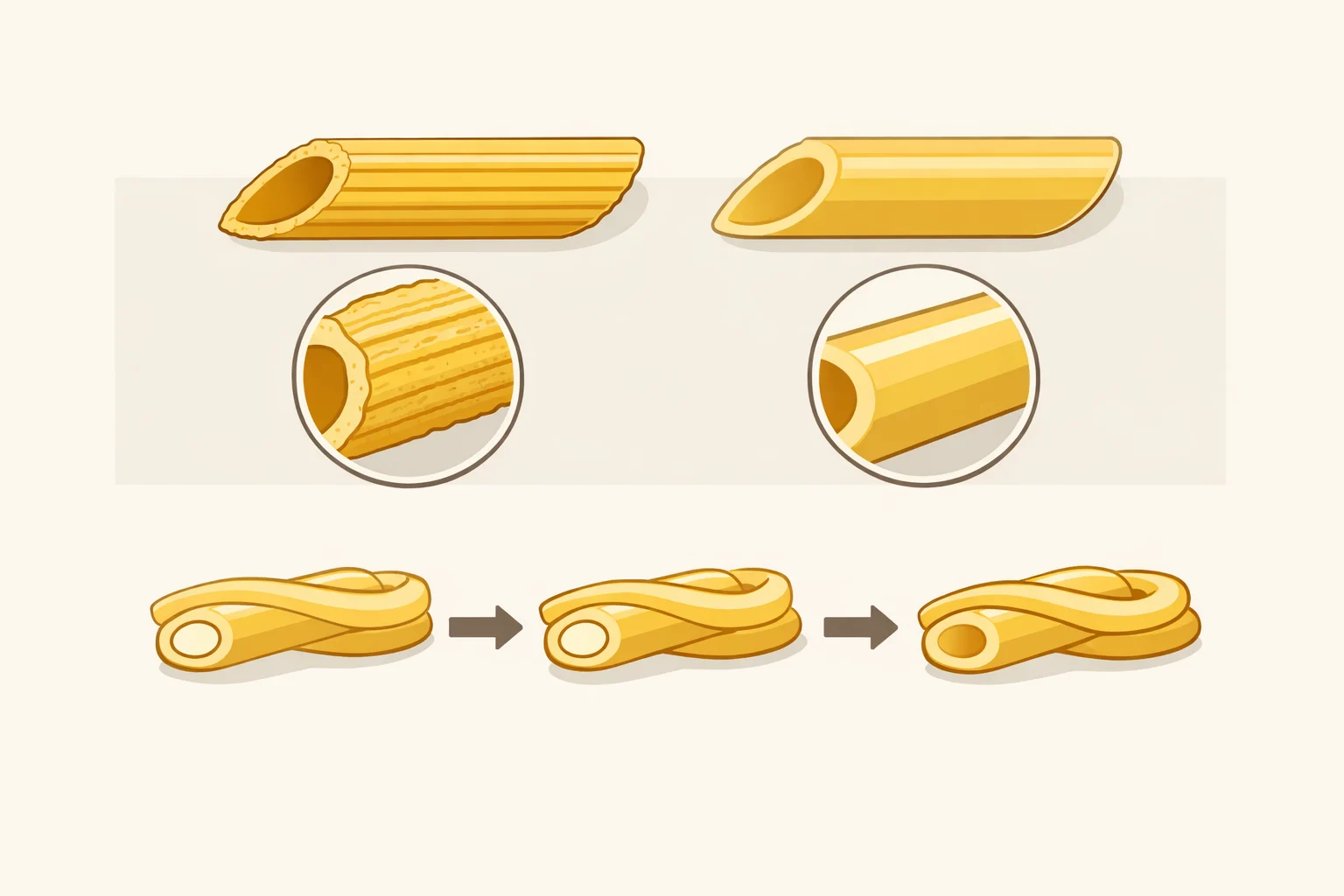
Choose a dry, short-cut pasta rather than fresh. Bronze-die-cut dry pasta, the kind with a slightly rough, matte surface, is the better choice for cold salads. That textured surface gives dressing something to grip. Fresh egg pasta is designed to be eaten hot and doesn't hold up the same way once refrigerated, according to Brandon Jennings, co-founder of Pastaria Vivi and former executive chef at Michelin-recognized Mille Fleurs, as reported by EatingWell this week.
Salt the water heavily. The goal is water that tastes noticeably salty, not vaguely seasoned. As Jennings puts it, it should "taste like the sea." Salt absorbed during cooking is the first layer of seasoning, and undersalted pasta is harder to fix at every stage that follows.
Cook the pasta past al dente. Cold pasta firms up as it chills, so pasta pulled at the traditional al dente mark will feel noticeably harder once refrigerated. Serious Eats recommends cooking about two minutes past al dente, targeting pasta that is soft throughout but still structurally intact. The upper limit is unambiguous: The Kitchn's testing showed pasta cooked three minutes past al dente scored 3/10, too mushy to recover, while pasta cooked just slightly beyond al dente went into the 10/10 winning batch.
The target: tender throughout, no chalky center, no resistance when you bite it. Slightly more done than feels right off the stove is correct.
Step 2: Should you rinse pasta for pasta salad? Usually no
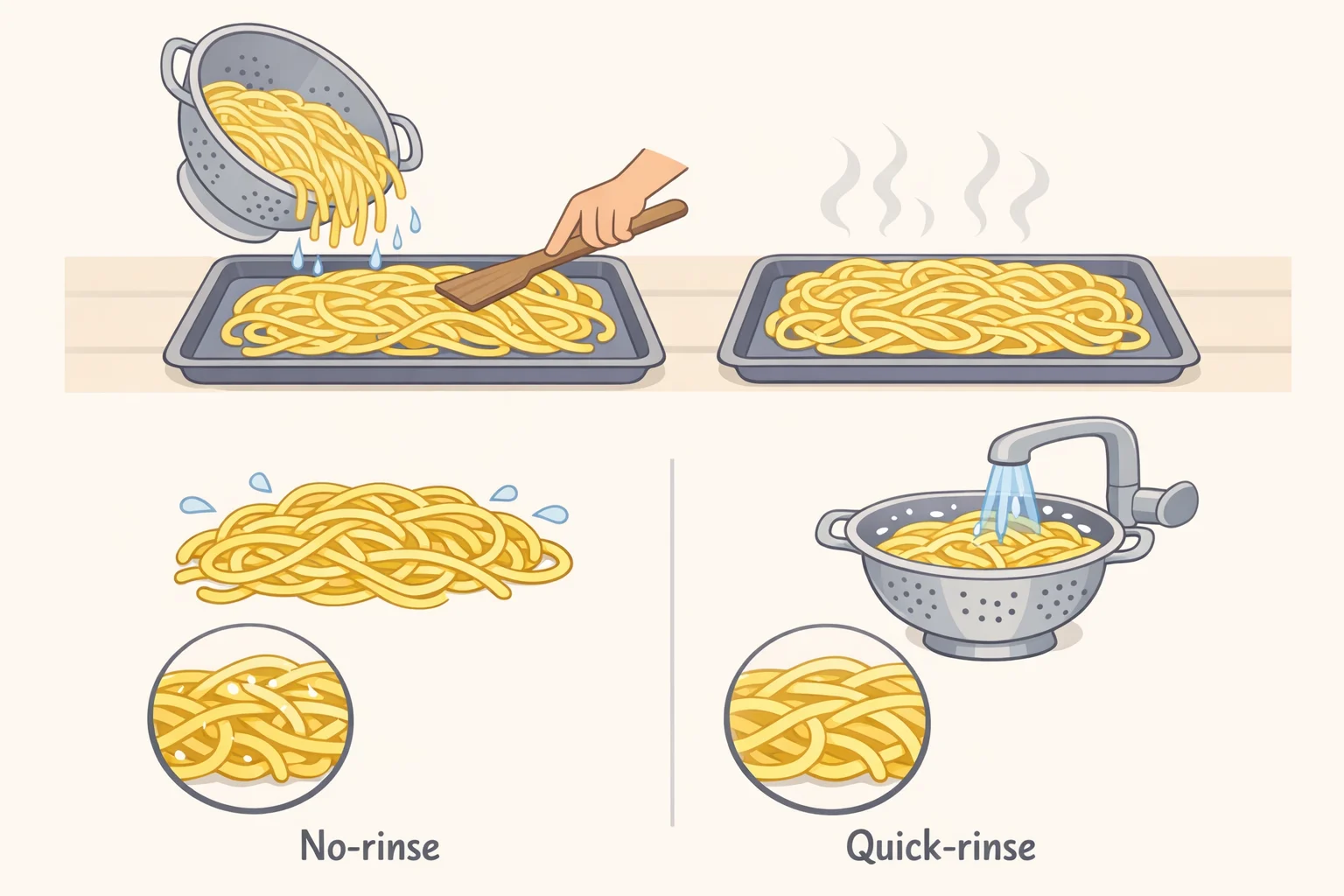
Drain the pasta, spread it onto a rimmed sheet pan in a single even layer, and drizzle it lightly with olive oil. Toss to coat. Let it sit for about 15 minutes, at which point it will be warm but not steaming, slightly tacky, and ready for the first round of dressing.
Don't pile it in a bowl. Piled pasta traps steam, moisture pools at the bottom, and that liquid dilutes the dressing before it has a chance to absorb. The sheet pan lets excess moisture evaporate instead, per Serious Eats.
Skip the rinse. Rinsing removes the starchy surface coating that helps dressing cling to the pasta, according to EatingWell. Sheet-pan cooling brings the temperature down without that trade-off, and is the recommended default.
On the rinsing exception: The Kitchn's winning method did include a brief rinse, just long enough to bring the pasta to room temperature before combining. If time is short, a very quick cool rinse is a functional workaround. The hierarchy: no rinse is better; brief rinse is acceptable as a speed exception; prolonged rinsing defeats the purpose. If you rinse, make it fast.
Once the pasta has rested 15 minutes on the pan, move directly to the first dressing round. Coating warm pasta with a portion of the dressing helps it absorb flavor throughout, per Serious Eats. Cooling and first dressing are a single continuous stage, not two separate tasks with a pause between them.
Step 3: How to dress pasta salad for maximum flavor
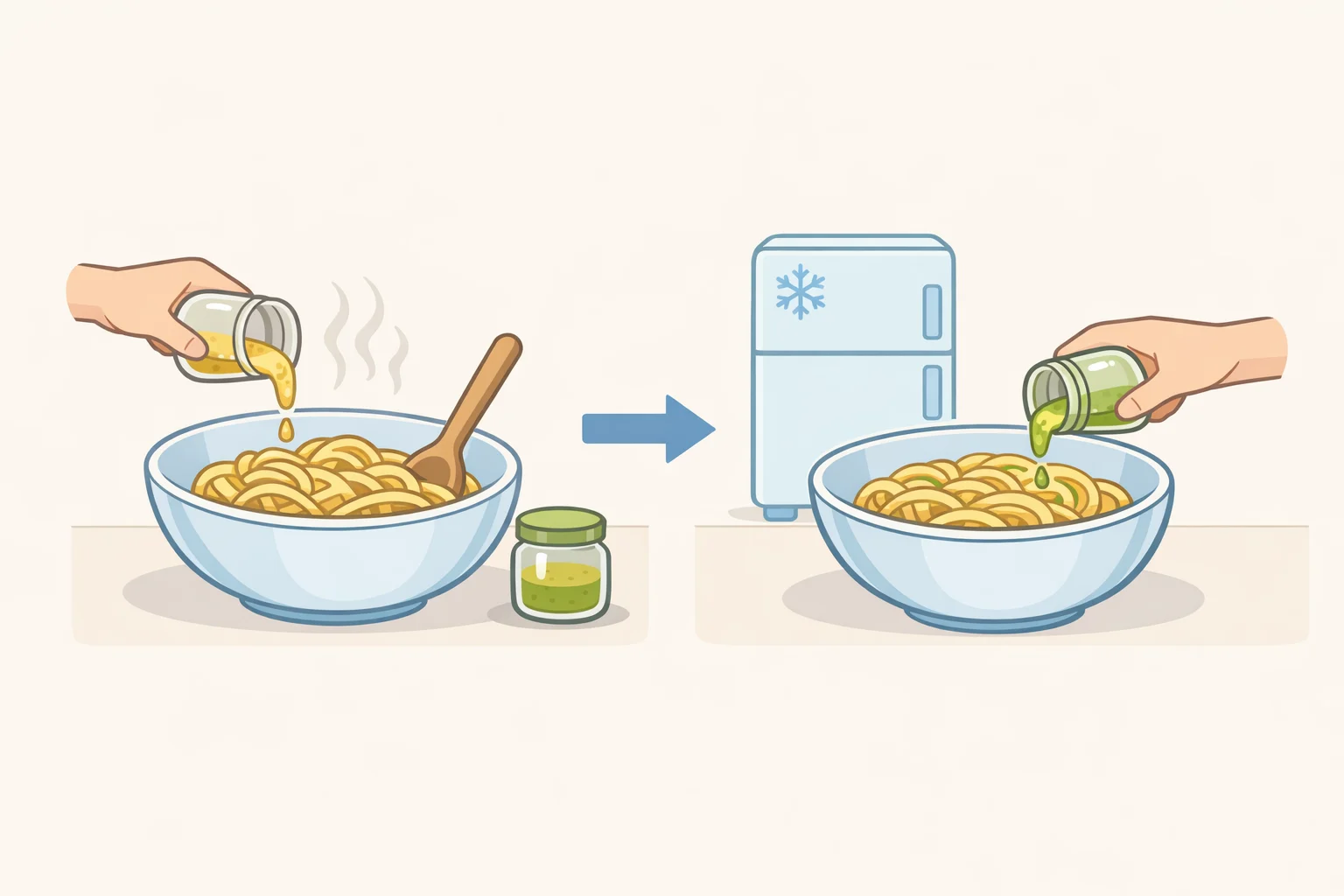
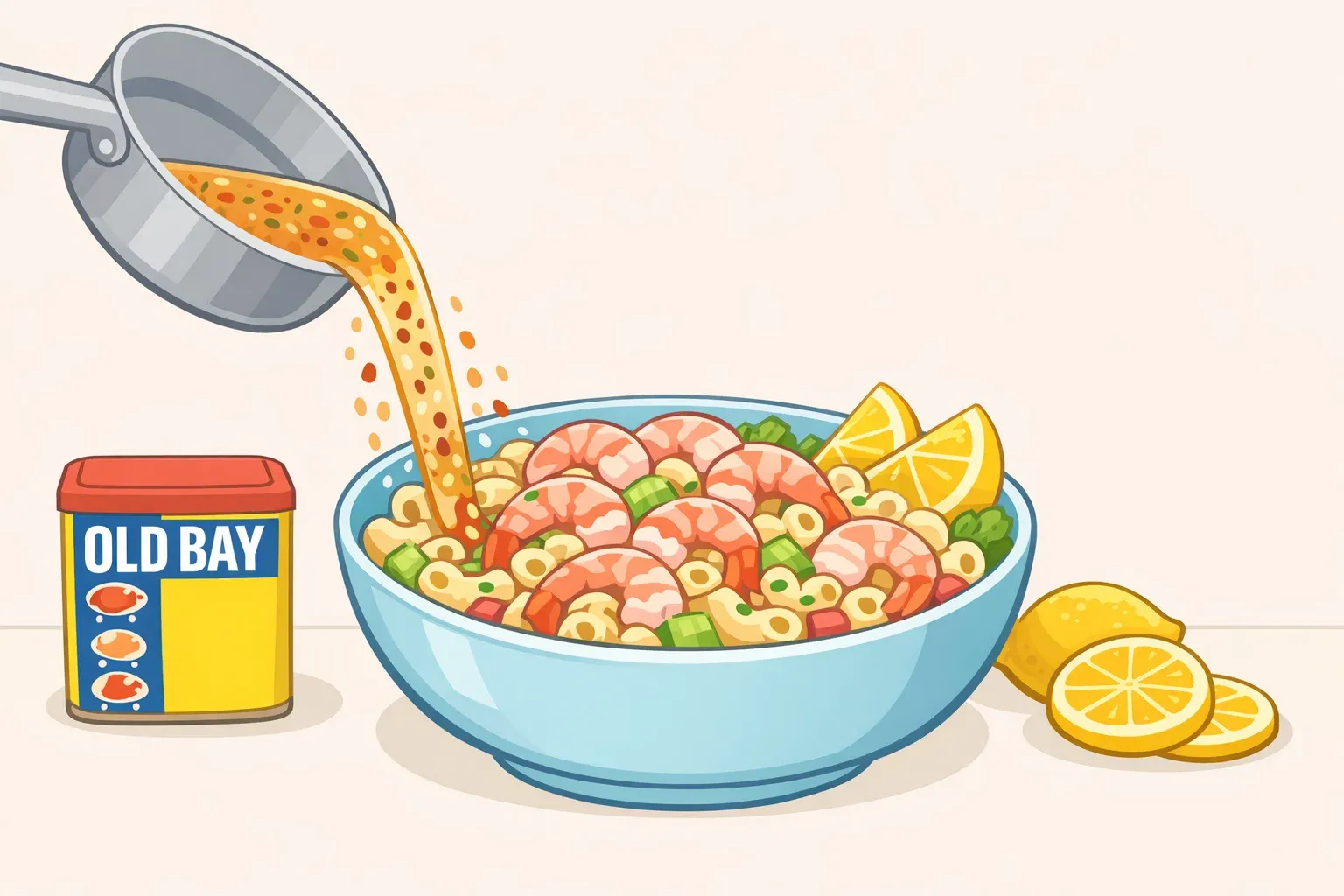
Divide your dressing roughly in half before you start. Add the first half to the warm pasta on the sheet pan or in a large bowl. Toss well to coat, then add your sturdy ingredients, bell peppers, olives, onion, hard cheese, chickpeas, anything that holds up over several hours in the fridge. Toss again, transfer to a bowl, cover, and refrigerate for at least three hours.
Serious Eats recommends adding roughly one-third of the dressing while the pasta is still warm and reserving the remainder for after chilling. EatingWell chefs advise holding back between one-third and half the total dressing for just before serving. The Kitchn's structured test made the clearest case: dress-twice at 10/10 against five alternatives, with dressed-once-upfront at 6/10 and dressed-warm-and-finished at 5/10.
Why the second round is necessary: During chilling, the pasta absorbs a significant portion of the first dressing application. The salad comes out of the fridge looking dry and tasting flat. Cold genuinely suppresses flavor perception, which means pasta salad that seems adequately seasoned at refrigerator temperature will taste more vibrant once it warms slightly. EatingWell chefs recommend pulling the bowl out 20 minutes to an hour before serving and tasting it at serving temperature, not straight from the fridge.
Round two: Pull the bowl from the fridge. Add the reserved dressing. Toss thoroughly, taste, adjust salt if needed. Then rest it 20 to 30 minutes at room temperature before serving.
The finished salad should look glossy, not dry. Pasta evenly coated. A small amount of dressing settled at the bottom of the bowl is normal. A visible liquid layer pooling beneath everything means the pasta was overcooled or rinsed too long.
Step 4: Add delicate ingredients at the right time
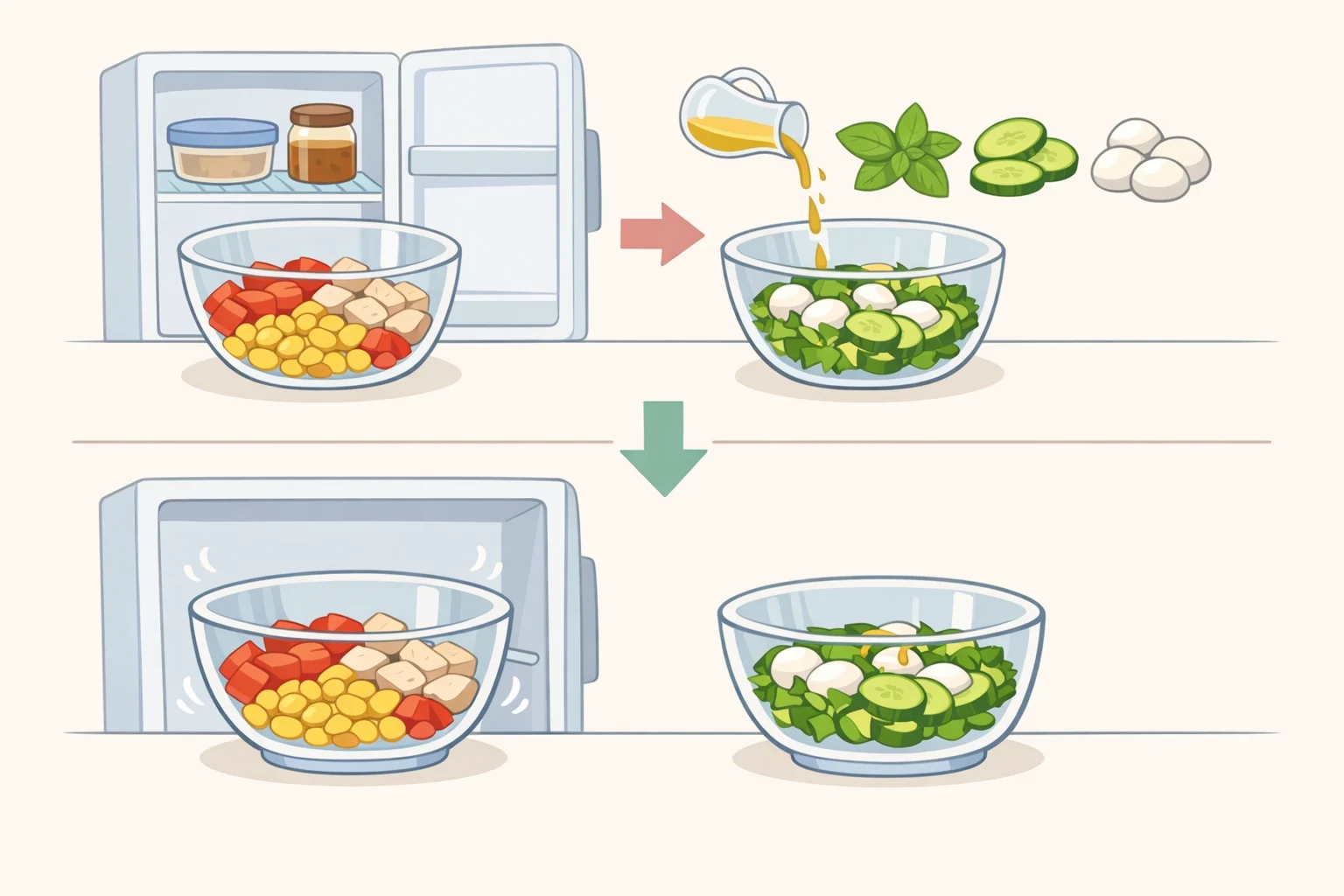
Sturdy ingredients can go in before the chill: bell peppers, olives, red onion, hard cheeses, chickpeas, roasted vegetables. These benefit from marinating in the dressing for several hours and don't lose texture in the process.
Delicate ingredients need to be added closer to serving. Tender herbs like basil, soft greens, cucumbers, and fresh mozzarella should go in with the second dressing round or just before plating. Cucumbers shed water as they sit, which dilutes the dressing and turns nearby pasta soggy. Basil bruises and blackens. Avocado oxidizes. None of these improve with three hours in the fridge.
The rule is practical: if an ingredient releases moisture, softens significantly, or discolors when left to sit, it goes in last. Everything else goes in before chilling.
Food safety for make-ahead pasta salad
The room-temperature rest before serving is good culinary practice. It has a firm limit.
The USDA classifies cooked side dishes, including pasta salad, as perishables that should not remain in the 40°F to 140°F danger zone for more than two hours total, or one hour when outdoor temperatures exceed 90°F. OSU Extension specifically names pasta salad among higher-risk moist foods and applies the same two-hour discard rule.
At a cookout, keep the bowl on ice when it's not being actively served. Count all room-temperature time, including travel, setup, and serving, toward that two-hour limit. When the clock runs out, discard what's left.
What changes next time you make it
The sequence matters more than any single ingredient. Salt the water, cook the pasta until it's genuinely tender, cool it on a sheet pan, apply the first dressing while it's still warm, chill for at least three hours, then finish with the second dressing and a short rest.
Sturdy ingredients go in before the chill. Delicate ones go in at the end. Taste before you serve, not straight from the fridge. That process, not a different recipe, is what closes the gap between pasta salad that tastes good when it's made and pasta salad that still tastes good when it hits the table.


Comments
Be the first, drop a comment!