



How to Make Peanut Butter Cookies Without Measuring Cups
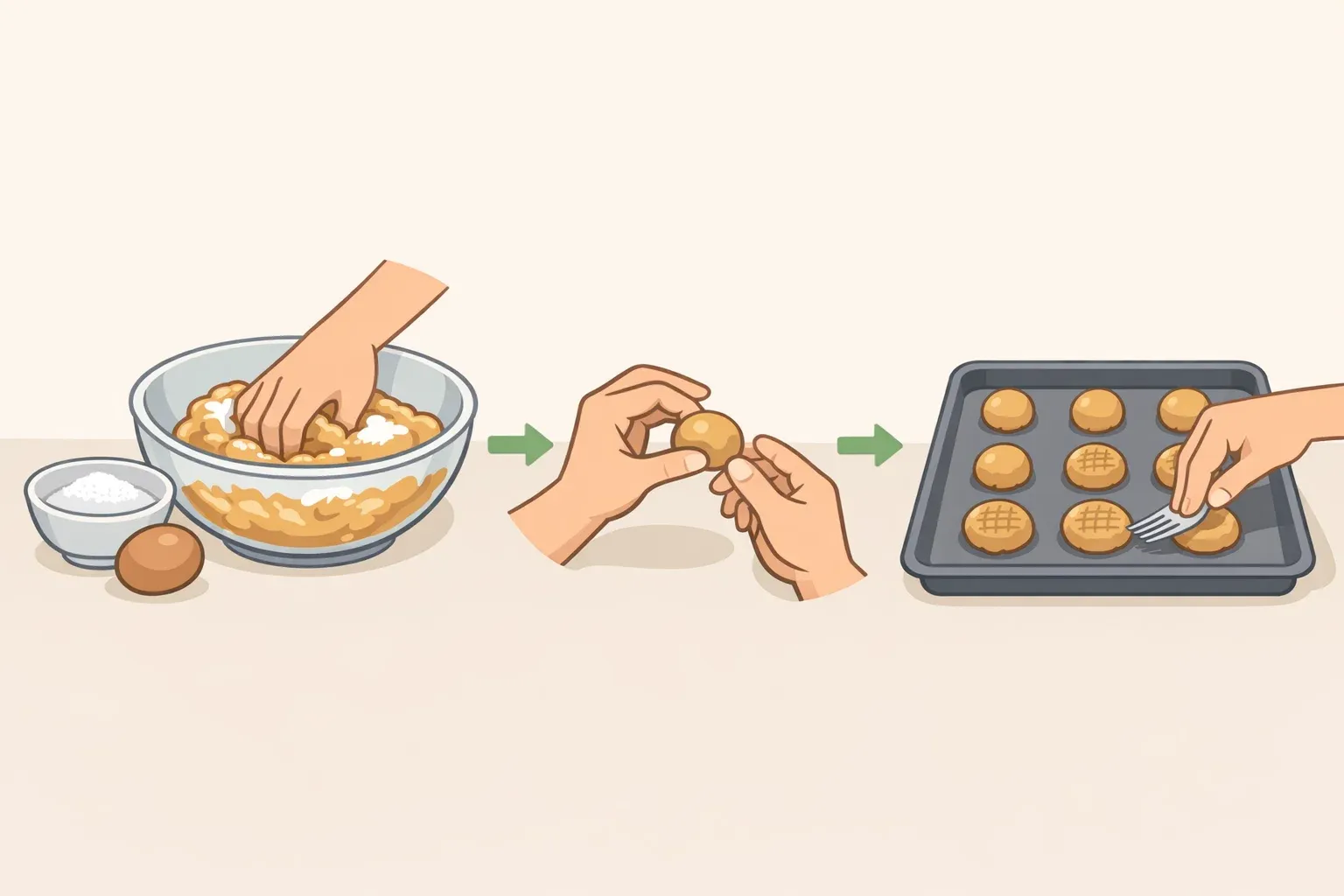
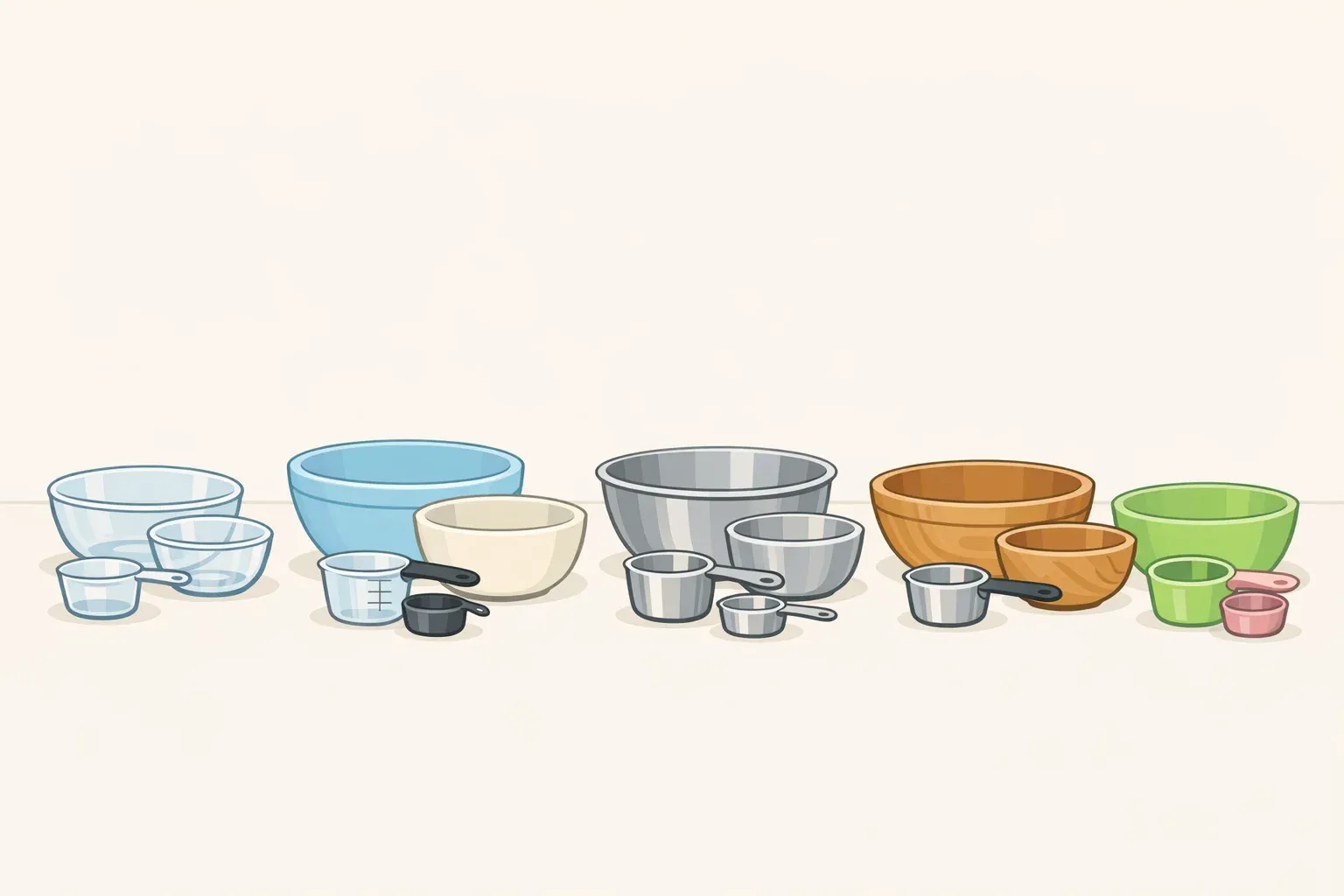
There is a legitimate peanut butter cookie that requires no flour, no butter, no mixer, and no measuring cups. Three ingredients: peanut butter, sugar, one egg. The formula has been tested across multiple sources and produces a soft, chewy, genuinely satisfying cookie in under 20 minutes. No chilling required, as Bake or Break confirms. The catch isn't precision. It's knowing what the dough is supposed to feel like.
This guide walks through how to make no-measure peanut butter cookies using visual and tactile cues at every stage, so you can course-correct in the bowl before anything goes in the oven. One baseline ratio, one texture checkpoint, one oven temperature.
The formula is forgiving, but "no measuring" doesn't mean anything goes. Start from roughly equal volumes of peanut butter and sugar, bound with one egg. From there, the dough tells you what it needs. That's the logic that runs through every step: texture over exact quantity.
Before you start, you'll need: peanut butter (type covered in Step 1), granulated or powdered sugar, one egg, a bowl, a fork, and a baking sheet. Parchment paper helps but isn't required.
Step 1: No-measure peanut butter cookies start with the right peanut butter
Peanut butter consistency is the single biggest variable in this recipe. The choice you make here determines everything that follows, so settle it first.
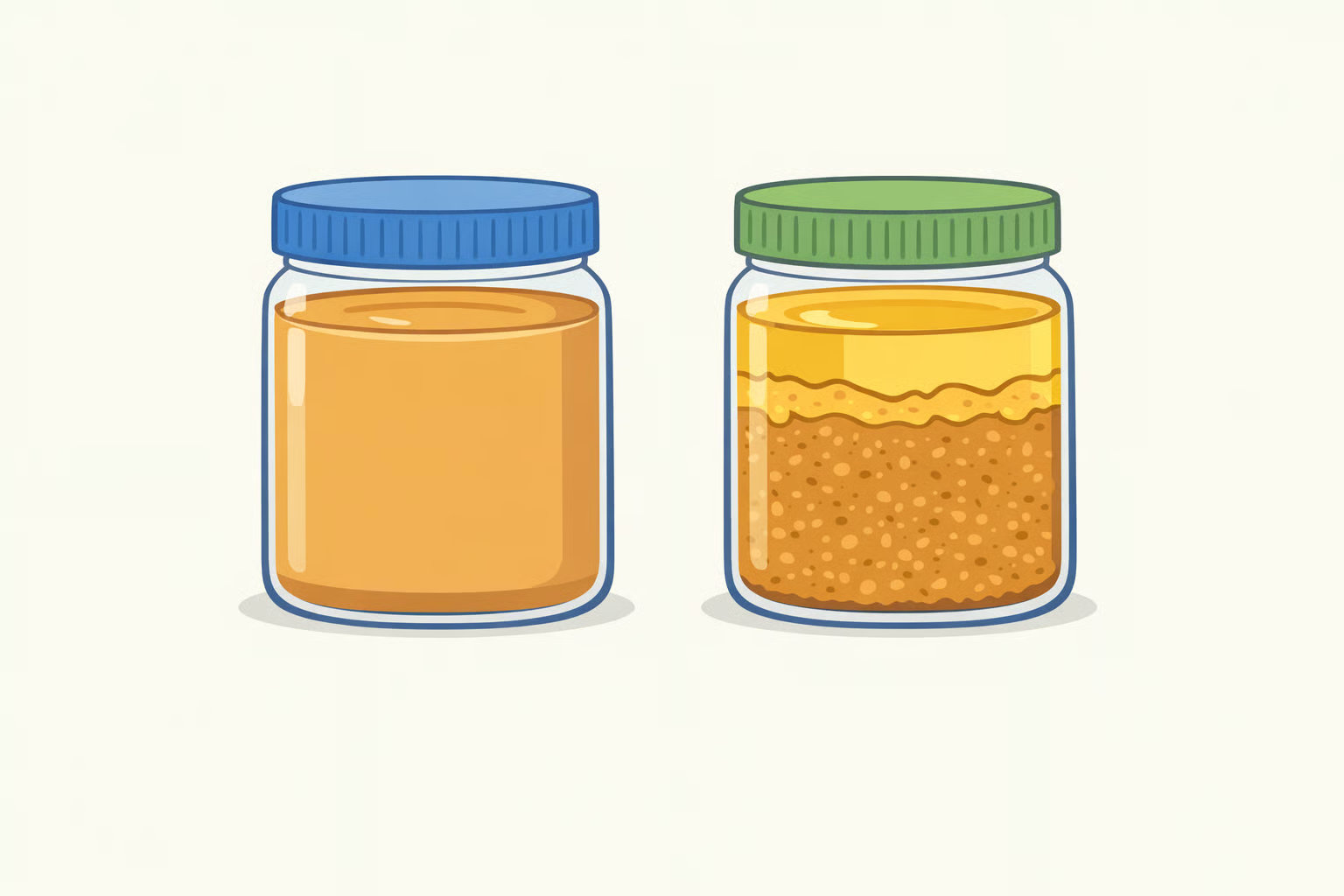
If you're using commercial peanut butter (Jif, Skippy, and similar stabilized brands), you're on the easiest path. These have a dense, uniform texture that produces predictable dough straight from the jar. Bake or Break specifies commercial peanut butter for this reason. Whatever brand you use, it should spread easily and smell fresh. PBS Food is blunt about this: stiff peanut butter produces a hard, dense puck, and rancid peanut butter ruins the whole batch.
If you're using natural peanut butter, expect to make one adjustment. Natural varieties run looser than commercial ones, and that extra oil can cause cookies to spread flat or crumble. Chowhound food writer Tara Bench puts it plainly: natural peanut butter can make cookies greasier and more crumbly. The fix is swapping some or all of the granulated sugar for powdered sugar. Budget Bytes tested this directly, finding that powdered sugar's thickening properties helped looser natural peanut butter hold its shape. Add it gradually until the dough reaches the right consistency, described in Step 2.
On the other end: if your natural peanut butter has been sitting in the jar and the oils have separated back in, leaving the solids stiff and clumped, stir in a small drizzle of canola or avocado oil before mixing. Chowhound recommends this to restore workable texture.
The baseline ratio: Equal volumes of peanut butter and sugar, plus one egg. That's the standard starting point Bake or Break uses. To freehand it, take a large spoonful of peanut butter as your unit and match it with roughly the same-looking amount of sugar.
One thing worth knowing before you mix: the equal-parts ratio produces a noticeably sweet cookie. PBS Food tested the full one-to-one ratio and found it too sweet, settling on about half as much sugar as peanut butter. If you want something closer to a traditional peanut butter cookie, start lighter on the sugar. You can go sweeter next batch; you can't pull sweetness out of a finished cookie.
Last practical note: take the peanut butter out of the fridge before you start. Budget Bytes notes that cold peanut butter makes the dough significantly harder to combine. A quick stir to loosen it up helps too.
Step 2: Mix and read the dough this is your only checkpoint
Everything that determines whether these cookies succeed happens in the bowl before they go in the oven. Read the dough here; there's no correcting it later.
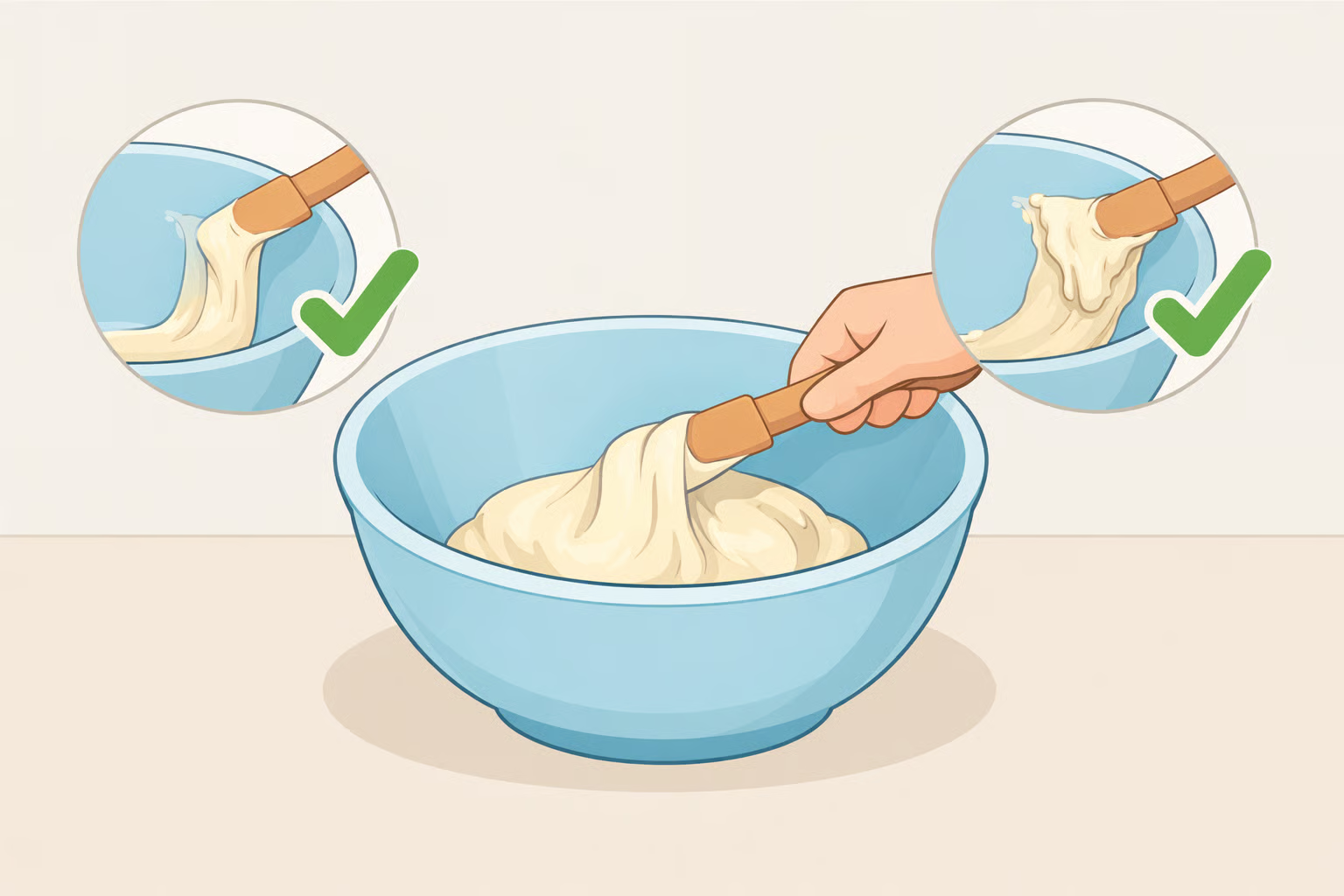
Mix until the dough is one thing. Combine peanut butter, sugar, and egg in a bowl and stir with a fork or spoon until there are no streaks of egg and no dry sugar at the bottom. No mixer needed. Averie Cooks confirms a spoon handles this without any trouble. Once everything forms a uniform mass, stop.
The texture you're looking for: Budget Bytes describes ready dough as firm enough to pull away from the sides of the bowl cleanly. That's the checkpoint. If it does that, it's ready to portion. If it doesn't, use the decision tree below.
Dough is too loose or sticky, won't hold shape: Add powdered sugar a small amount at a time, stirring between additions. This is the standard fix for natural peanut butter. Budget Bytes notes that the amount of powdered sugar may need adjusting depending on how runny your peanut butter is there's no single fixed amount.
Dough is too stiff or crumbly: The peanut butter is likely too thick. Stir in a few drops of neutral oil and work it in. Chowhound recommends canola or avocado oil for this.
Dough is sticky but the peanut butter seems fine: If the kitchen is warm, the dough may just need to cool down. Refrigerate for 15 to 20 minutes. No ingredient adjustment needed, just temperature.
Step 3: Shape and bake by visual cues, not by timer
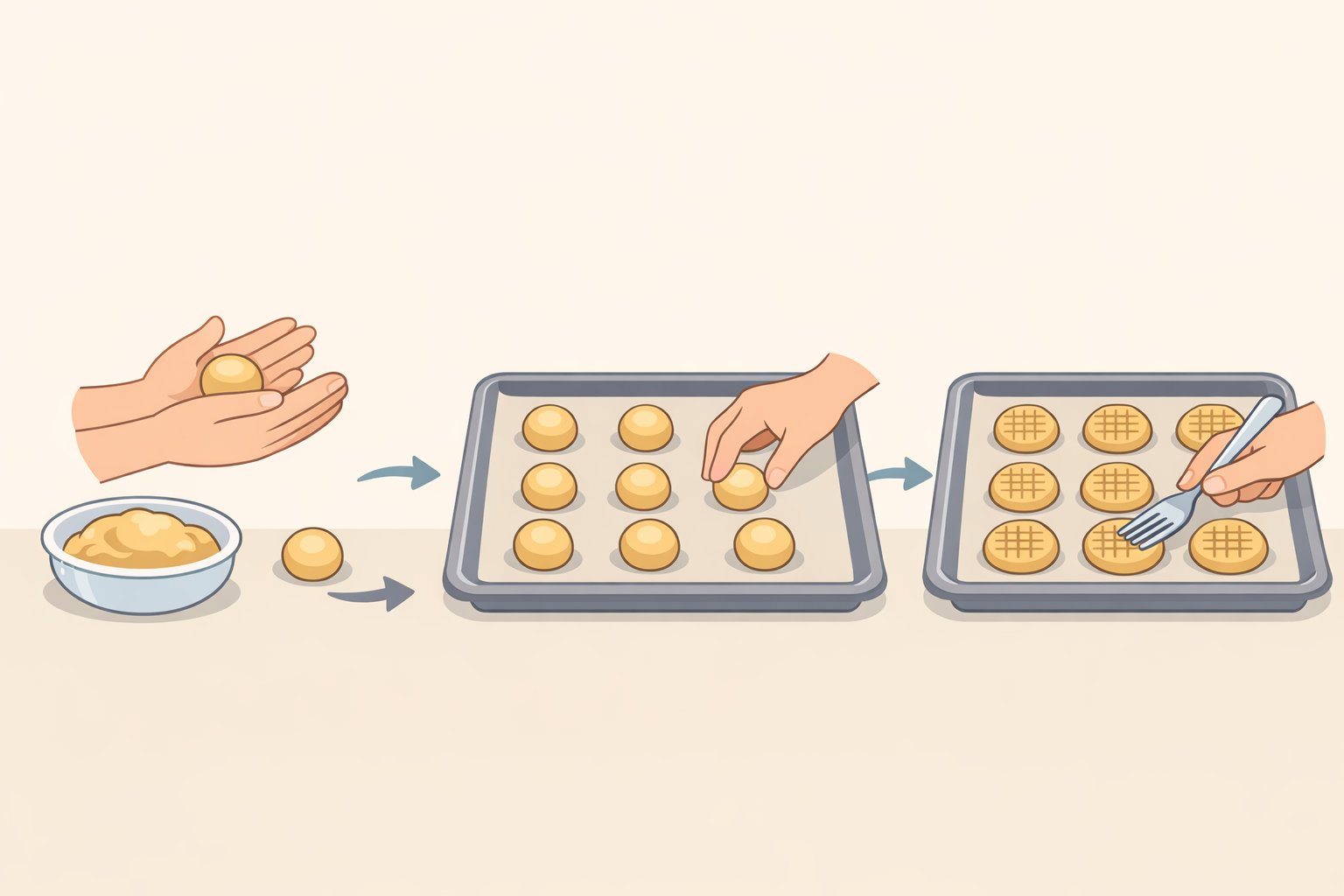
Pinch off pieces of dough and roll them into balls roughly the size of a large grape or small walnut. Place them on a parchment-lined baking sheet with a couple of inches between each one. Parchment isn't strictly necessary but makes cleanup easier and keeps them from sticking, per Bake or Break.
Flatten each ball with a fork by pressing in two perpendicular directions to make the classic crosshatch pattern. This does two things: it levels the cookie to an even thickness for consistent baking, and it's the defining visual mark of this style. Bake or Break, Budget Bytes, and PBS Food all use this method without variation.
Bake at 350°F. Every tested source agrees on the temperature. Bake time falls between 8 and 12 minutes depending on cookie size and your oven, per Bake or Break, Budget Bytes, and PBS Food. Don't anchor to the clock.
The doneness cue: Pull the cookies when the edges are lightly golden and the centers look set but not dry or cracked. They'll feel almost underdone when you open the door. That's correct. Budget Bytes flags that these cookies are too fragile to move when hot, and they're prone to breaking if transferred too soon. Leave them on the pan for at least five minutes before moving to a wire rack.
Adjusting next time and storing what you made
Once cooled, these cookies are soft and chewy with an intensity of peanut butter flavor that flour-based versions don't match. Peanut butter is the entire structure here, so it comes through on every bite.
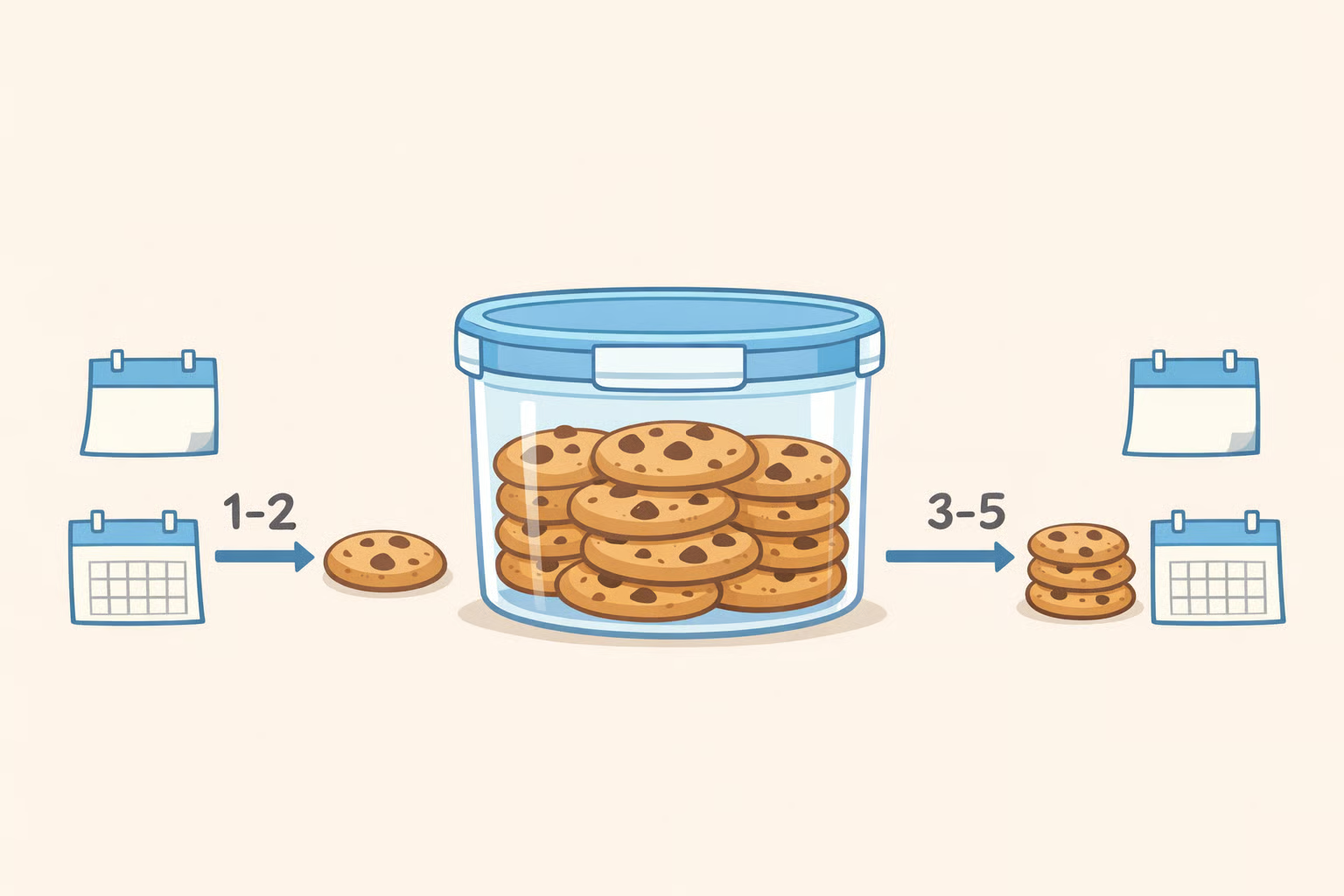
Stored in an airtight container, they keep at room temperature for four to five days per Bake or Break, or up to a week per Budget Bytes. Unbaked dough balls freeze well and can go straight from frozen to oven. Just add a minute or two to the bake time, as Bake or Break recommends.
For next batch adjustments: wanted them less sweet, use half the sugar, which is where PBS Food landed after testing. Cookies spread flat, add more powdered sugar to the dough. Came out hard and dense, the peanut butter was too stiff add oil next time or switch to a looser jar. The whole method is recoverable without a measuring cup in sight, batch by batch, by reading what the dough is telling you.

Comments
Be the first, drop a comment!