



How to Make Ranch Water: The Original Ranch 616 Recipe
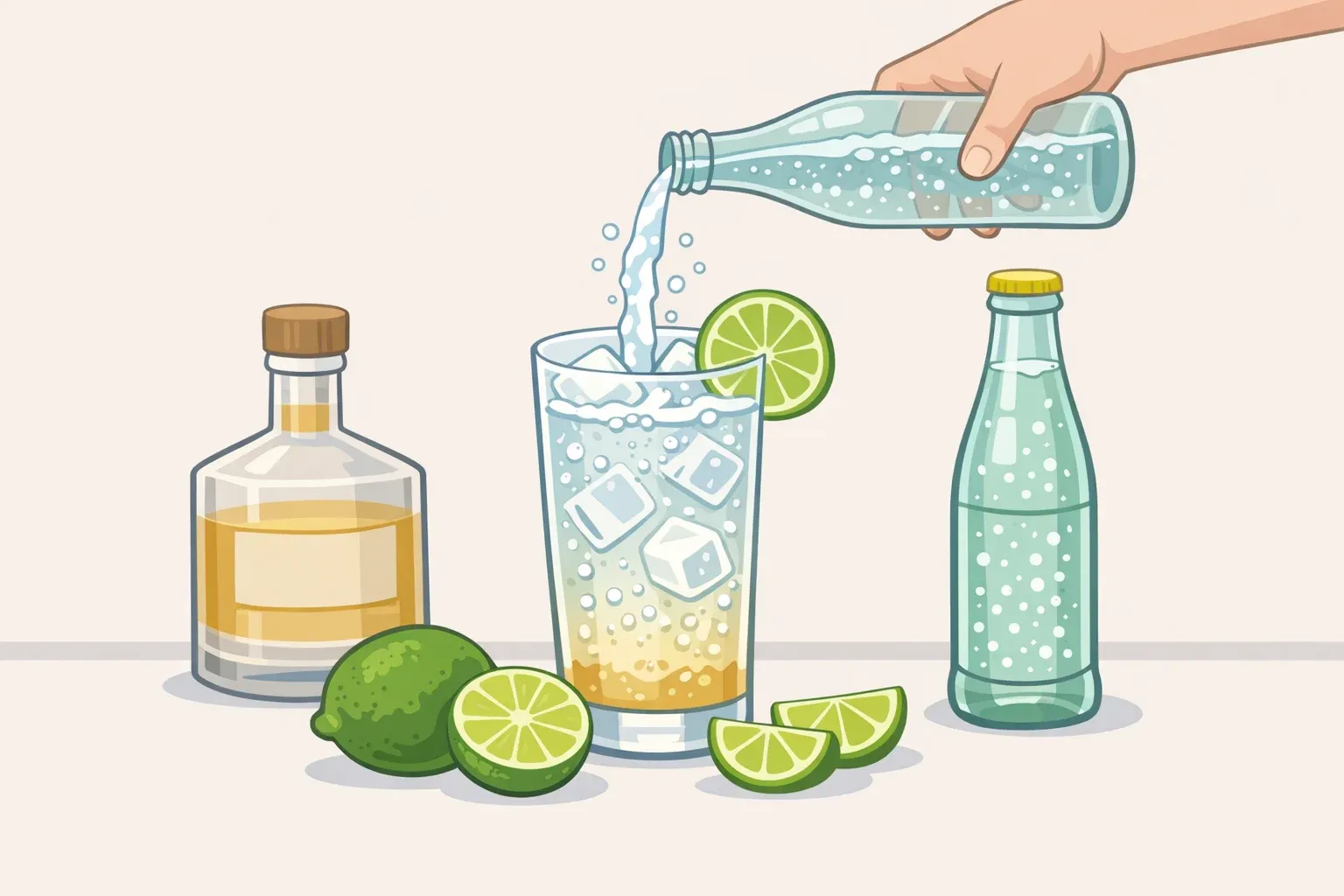
If you want to know how to make ranch water the way Ranch 616 documented it, the formula is reposado tequila, orange liqueur, fresh lime juice, and Topo Chico served cold on the side. That's four ingredients, not three and the fourth one is what most home pours and every canned version leaves out.
Here's what to buy, how to build it, and how to fix it when something's off.
Before you start, have on hand:
- A cocktail shaker with ice
- A highball or rocks glass
- A jigger or measuring tool
- Fresh limes (not bottled juice)
- One bottle of Topo Chico, refrigerator-cold
Why this version and why most Ranch Waters aren't it
Kevin Williamson founded Ranch 616 in Austin in 1998, and the drink hit the menu in February 1999, per Austin Monthly. The recipe grew out of something simpler: tequila, lime juice, and Topo Chico packed into a thermos on hunting trips with his father. What Williamson put on the menu was more considered two parts reposado tequila, one part orange liqueur, one part fresh lime juice, with a cold unopened Topo Chico on the side.
Community Impact independently confirmed the same ingredients and serving method. Both outlets drew primarily from Ranch 616 insiders, worth keeping in mind. Competing origin stories exist, including one placing the drink at the Gage Hotel in Marathon, Texas. Ranch 616 co-owner Pam Blanton says Williamson himself brought the recipe to the Gage when he was asked to revamp their menu in 2010, per Austin Monthly. Whether Williamson was the first person to mix tequila with lime and sparkling water is unverifiable. What's on record: he named it, formalized the 2:1:1 ratio with orange liqueur, and built a specific serving method around it.
The national spread changed the formula. Canned versions and bar pours typically drop the orange liqueur and substitute blanco for reposado, per Austin Monthly. That produces a real drink just a different one.
Classic ranch water ingredients: what to buy
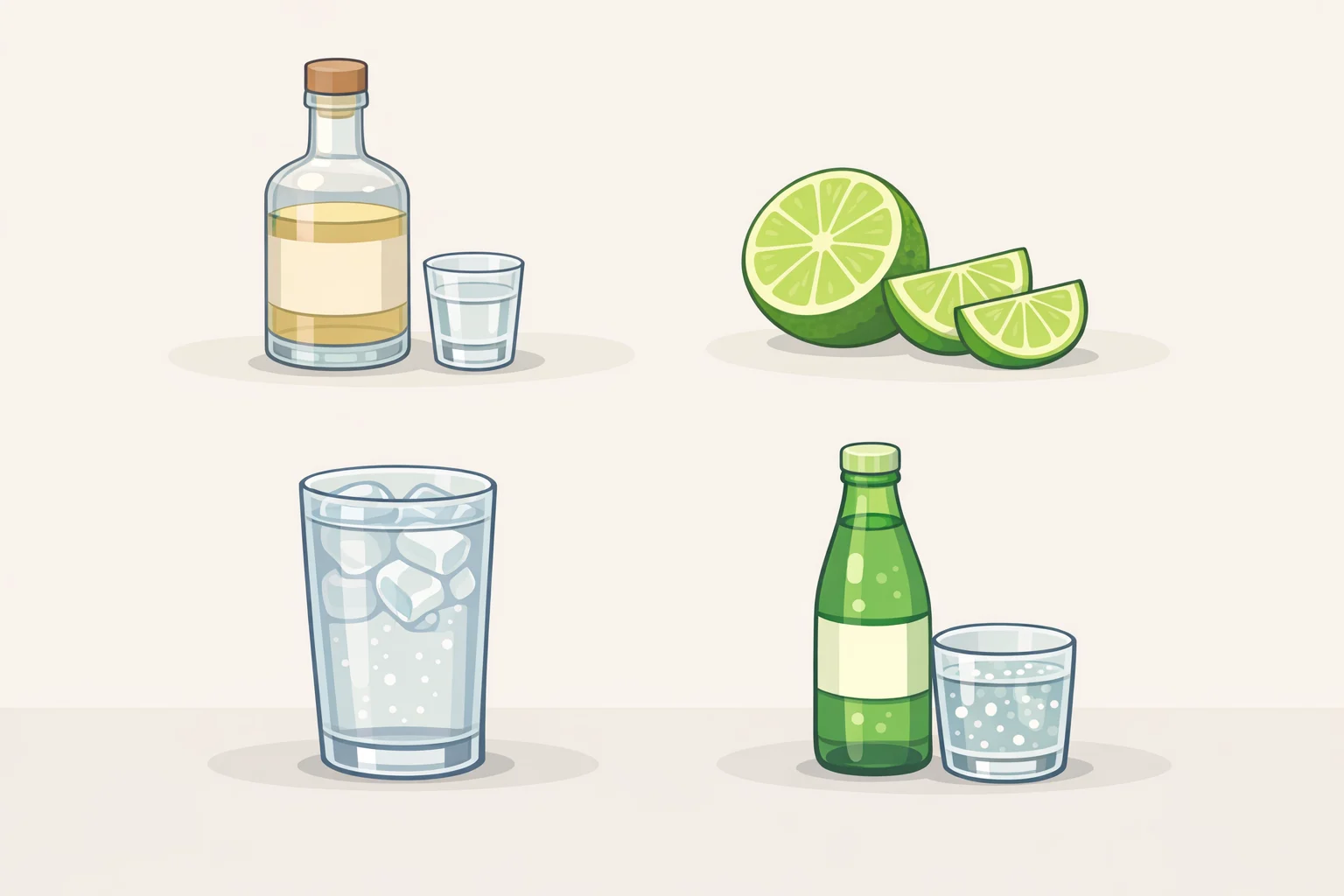
This is a short recipe, which means every component is load-bearing. Swap one and you change what lands in the glass.
Reposado tequila (2 oz). Williamson's documented formula specifies reposado. Ranch 616 uses Sauza Hornitos. Reposado sees oak aging, which rounds the spirit's edges compared to blanco; the softer character matters because the lime hits differently against a mellow base than a sharp one. Austin Monthly notes that canned Ranch Waters often substitute blanco, which produces something crisper and brighter. That's a real variation, not an upgrade. For the Ranch 616 formula, use reposado. Blanco is a coherent alternative if you want a lighter, crisper result.
Orange liqueur (1 oz). This is the ingredient that separates a Ranch Water from a tequila soda. Bar manager Jonathan Hall puts it plainly: without the orange liqueur, the lime's acidity takes over and the drink loses its balance. "You need the sweetness of the orange liqueur to soften the acid of the lime," he told Austin Monthly. Ranch 616 uses Jalisco 1562; Cointreau or another dry curaçao works at home. Avoid heavily sweetened budget triple sec it pushes the drink toward cloying. If your finished glass tastes too sweet, the orange liqueur is the first variable to check.
Fresh lime juice (1 oz). The acid the orange liqueur is there to balance. Bottled lime juice is a meaningful downgrade in brightness. Squeeze fresh, and taste the juice before you measure if the lime runs particularly tart, pulling back to ¾ oz prevents the citrus from overrunning the orange liqueur.
Topo Chico (poured to taste at the glass). Ranch 616 serves Topo Chico cold and unopened alongside the finished shaken base, rather than building it into the drink, per Community Impact. Hall calls Topo Chico non-negotiable. "Topo is simply more effervescent than any popular mineral water," he told Austin Monthly, adding that pairing a Mexican mineral water with Mexican tequila is part of the drink's identity. Other high-carbonation mineral waters are reasonable substitutes. Club soda works but lacks the mineral depth. Flavored sparkling water produces a noticeably different drink.
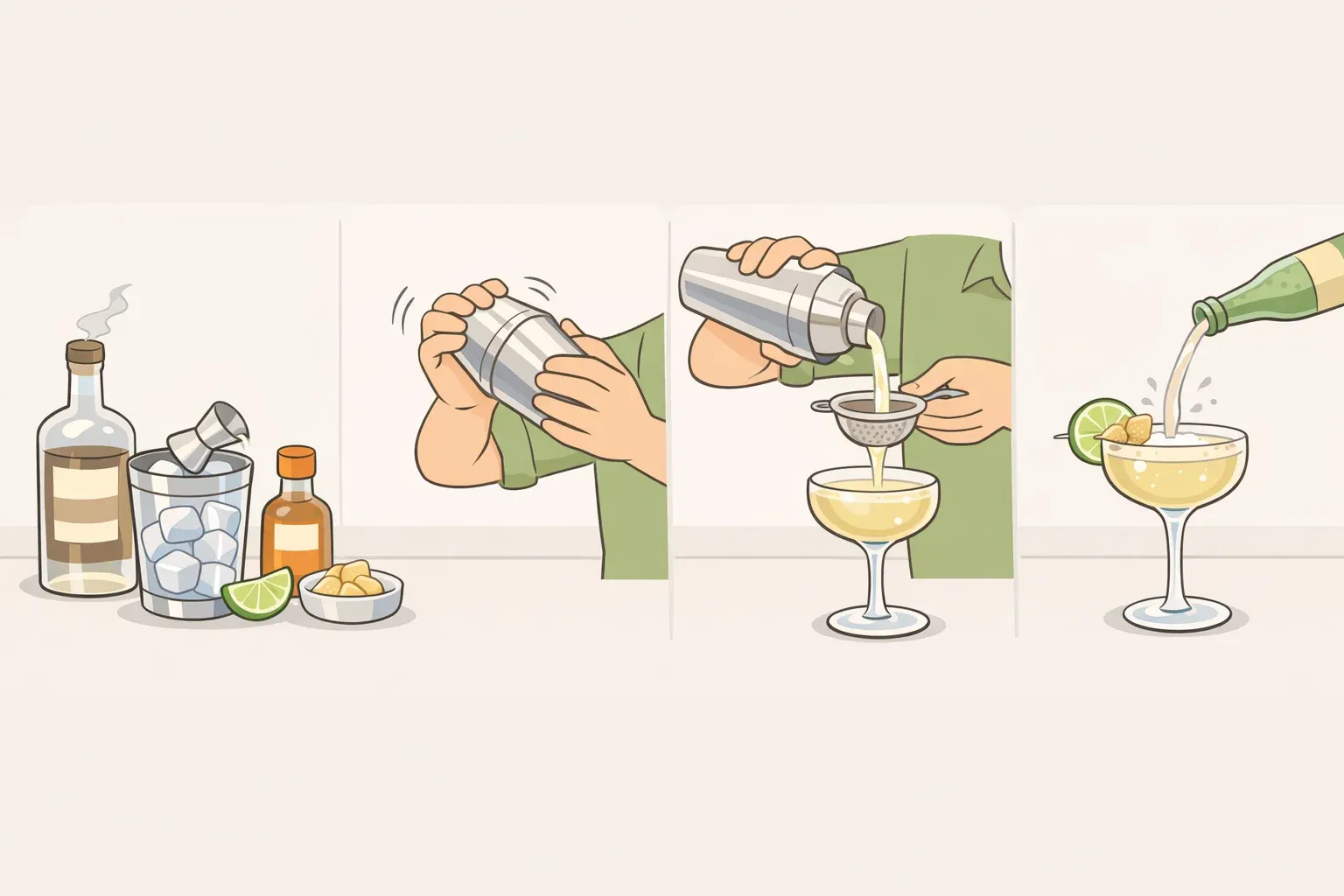
How to make ranch water: six steps
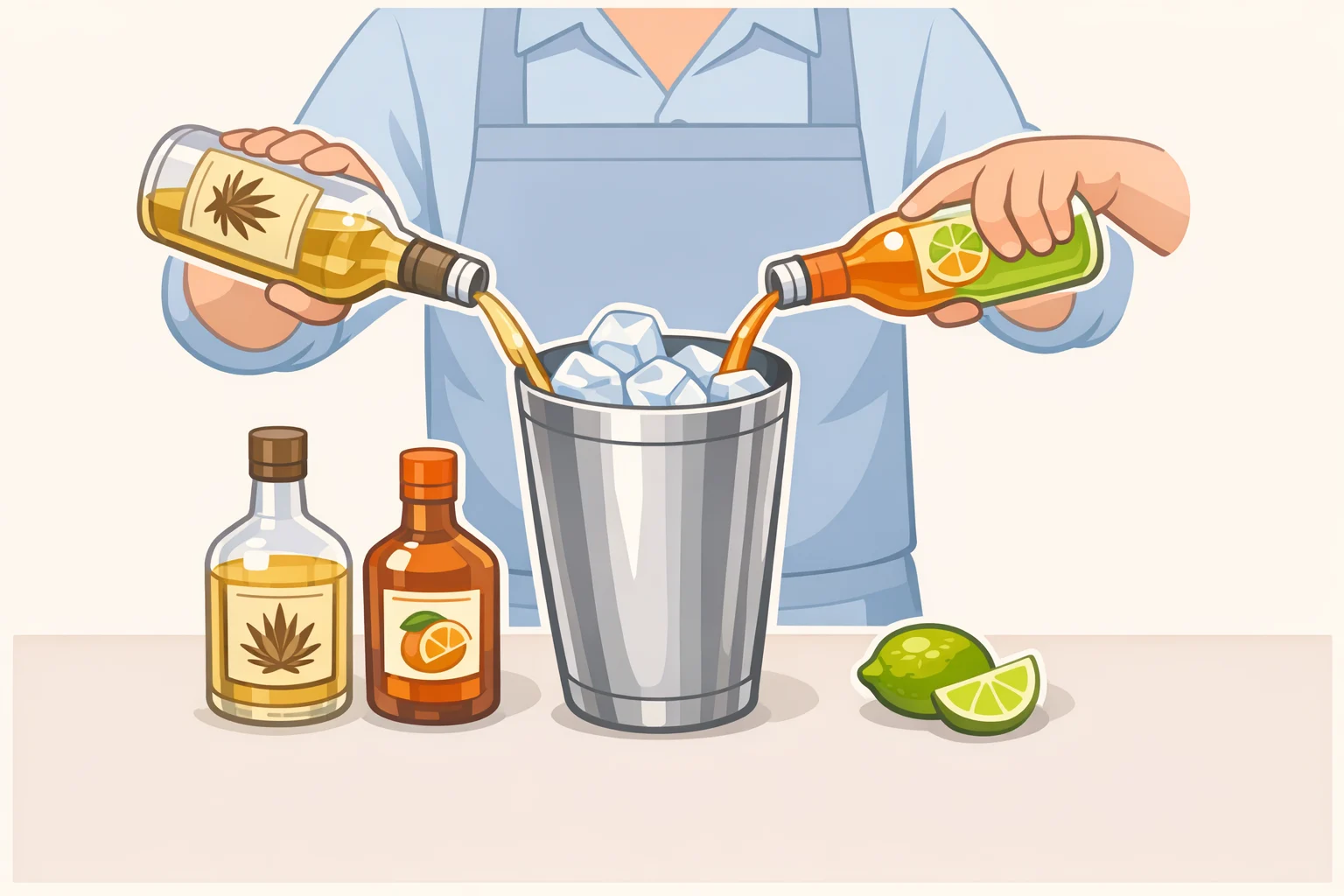
This makes one drink. For batches, scale the base proportionally but always add Topo Chico per glass at serving time. Poured in advance, it goes flat.
Step 1: Fill your serving glass with ice while you prep. A cold glass slows carbonation loss once the Topo Chico goes in. Set it aside while you build the base.
Step 2: Combine the 2:1:1 base in a shaker with ice.
- 2 oz reposado tequila
- 1 oz orange liqueur
- 1 oz fresh lime juice
This is the ratio Williamson formalized at Ranch 616, as Austin Monthly reported. Use a jigger. The balance across three ingredients one doubled, two equal is what makes this a Ranch Water rather than guesswork.
Step 3: Shake for about 10 seconds. You're chilling and combining the base, not aerating it. The Topo Chico handles the texture in the next step. Stop before the shaker is completely frosted over.
Step 4: Dump the ice from your glass, add fresh ice, then strain the base over it. Ice that's been sitting while you prepped has started to melt. Fresh ice in the glass means less early dilution once the sparkling water goes in.
Step 5: Pour Topo Chico slowly down the inside wall of the glass. Tilt the glass and pour down the wall rather than straight into the center. Start conservatively the right amount is personal.
At a smaller pour, the base reads forward: tequila and citrus are prominent and the orange liqueur provides structure underneath. More Topo Chico softens the alcohol and citrus into something longer and more sessionable, where carbonation carries the flavors rather than the base leading. Push too far and the drink goes thin, with the orange liqueur fading first. Most people settle somewhere in the middle range. Taste as you pour and stop where it works for you. That calibration is intentional it's how the drink is designed to be served.
Don't stir after the Topo Chico goes in. A single slow swirl to integrate is fine. Stirring collapses the carbonation.
Step 6: Garnish with a lime wedge and serve immediately. No salt rim that's a margarita convention, and it would compete with the mineral water. Serve the moment the glass is built.
Reading the finished drink and fixing what's off
Because dilution is left to the drinker, small ingredient variables show up more clearly than in a pre-built cocktail. Here's how to read what you're tasting.
Tastes like a tequila soda: The orange liqueur isn't pulling its weight likely under-poured or missing entirely. This is exactly the outcome Hall describes when he says "the drink ceases to be a Ranch Water," per Austin Monthly. Fix it in the next round by measuring carefully.
Too tart or citrus-heavy: Your lime is running acidic, or the orange liqueur needs more room. Pull the lime back to ¾ oz next round. If the drink is already made, adding Topo Chico gradually will stretch and soften the acidity without eliminating it.
Too sweet: Your orange liqueur is syrupy, or you've over-poured it. Switch to a drier liqueur Cointreau reads considerably drier than most budget triple sec. A small extra squeeze of lime can rebalance an already-poured glass.
Too boozy or sharp: Add more Topo Chico slowly and taste as you go. If the base itself reads harsh rather than just strong, check whether you used blanco instead of reposado the oak-softened character of reposado is the buffer.
Gone flat too fast: Topo Chico that's been open, poured with force, or dropped straight into the center of the glass loses carbonation quickly. Use a fresh bottle, pour down the wall, and build the drink just before serving. Don't pre-build Ranch Waters for guests.
What you've made
The four-ingredient version is a different drink from the stripped-down one on most bar menus: the orange liqueur holds the citrus and tequila in proportion, and the Topo Chico's job is to open the base to whatever length you want which is why it stays on the side.
Ranch 616 sold just over 20,100 Ranch Waters in 2025, averaging around 1,675 per month from a single Austin location, according to Austin Monthly. The canned versions that spread the drink nationally use blanco tequila and drop the orange liqueur, per Austin Monthly. Those are easier to produce at scale. As Community Impact notes, they're also a somewhat different drink.
Make the four-part formula at least once as a reference point. From there, adjust deliberately: blanco for something crisper, less lime if yours runs tart, more Topo Chico for a longer pour. Those are real choices with predictable results.


Comments
Be the first, drop a comment!