


How to spiral cut hot dogs and which sausages to skip
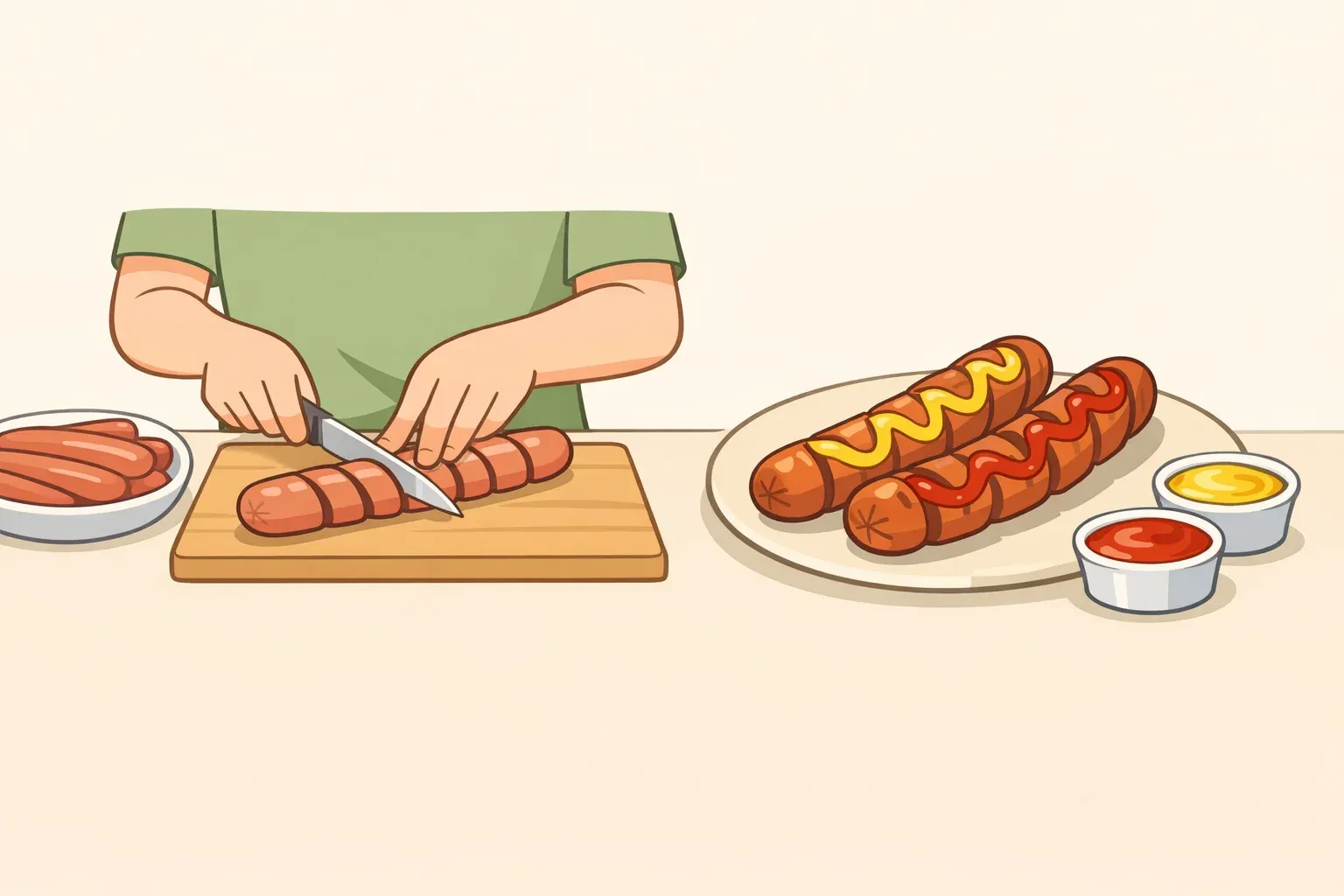
Spiral cutting a hot dog is a legitimate technique with legitimate results: crisp ridged edges, deeper browning, and grooves that grip condiments instead of shedding them into the bun. Two minutes of prep before the dogs hit the grill and you'll produce something that looks considered rather than thrown on. The part most viral content leaves out is that knowing how to spiral cut hot dogs is only half the job. The other half is knowing which sausages to leave alone.
The rule is simpler than it sounds. Spiral cutting works on precooked, skinless franks and precooked chicken sausage. On bratwurst, andouille, or Italian sausage, it causes fat loss, grill flare-ups, and a dry interior. Serious Eats ran controlled grill tests last summer, cooking five sausage types three ways each intact, shallow-slashed, and spiral-cut and the results mapped cleanly onto that one rule.
This guide covers why the technique works on precooked franks and fails on raw links, step-by-step cutting instructions, how to cook the result without undoing the prep, and a decision framework for every sausage type, including when the simpler slash is the smarter call.
Why the spiral works on precooked franks and fails on raw sausages
Skinless hot dogs are fully cooked before they reach the package. When you grill them, you're reheating something whose proteins have already bound and whose fat is distributed evenly from edge to center. There's no raw structure left to protect, no moisture-sealing process left to interrupt. Cutting into them only changes texture. Serious Eats noted in earlier grilling coverage from the same summer that because the hot dog is already cooked, there's no raw structure left to firm up or trap juices a spiral cut opens no meaningful pathway for moisture to escape that wasn't already there.
Raw sausages are a different problem. Andouille, Italian sausage, and bratwurst all contain emulsified fat and raw protein that need to coagulate during cooking to seal in moisture. Cutting into them before they hit the grill opens channels for that fat to render out early. In direct testing, fat wept from slashed and spiral-cut andouille and caused grill flare-ups; each time the coil was moved to the cool side, it became looser and more fragile. Spiral-cut Italian sausage cooked faster than the intact version but tasted, in the tester's words, "as dry as a cornflake." Serious Eats was unambiguous: don't cut raw links.
Bratwurst is a partial exception worth understanding. The spiral-cut version lost noticeable moisture compared to the intact brat, but shallow slashing came close to matching the intact link's juiciness while slightly reducing cook time a sensible middle ground, per Serious Eats testing. That's not a green light for spiraling, but a case for a shallow slash over low heat if you want to cut it at all.
Natural-casing hot dogs sit in a gray area the spiral-cut testing doesn't fully resolve. That research focused on skinless franks. Based on separate Serious Eats grilling coverage, natural-casing franks use sheep intestine as an outer membrane that retains moisture and buffers heat the same property that makes them more forgiving on a hot grill, but also prone to bursting under pressure if blasted over high heat. The cautious approach: treat them like a cased sausage and use a shallow slash if you want to score them at all.
How to spiral cut hot dogs step by step
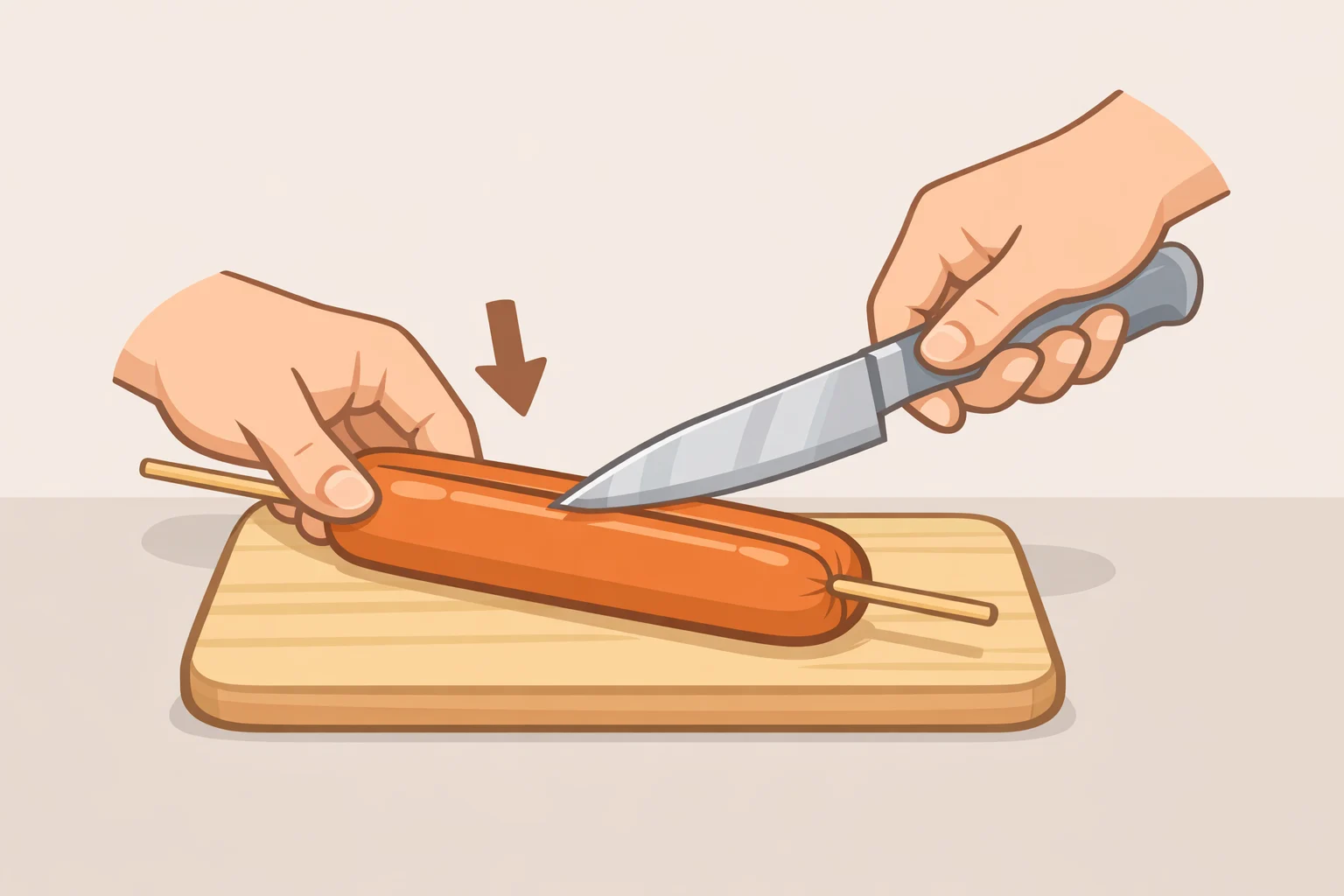
What you need: A thin wooden or metal skewer long enough to run the full length of the hot dog. A sharp paring or chef's knife. Skinless precooked hot dogs or precooked chicken sausage.
Step 1: Skewer the frank lengthwise through its center.
Push the skewer straight through from end to end, running down the middle not along the side. This is your depth guide. The knife stops when it hits the skewer, which keeps the coil in one piece. Without it, you'll cut through and get two halves.
Step 2: Position your knife at an angle near one end and cut down to the skewer.
Hold the blade at roughly 45 degrees to the length of the frank. Press down until you feel the skewer stop the blade. Don't force it further.
Step 3: Rotate the frank away from you while holding the knife angle constant.
This is the whole technique. Slow, steady rotation with a consistent blade angle produces evenly spaced coils think of peeling an apple in one continuous strip. Per Serious Eats, the motion needs to be deliberate; rushing creates uneven gaps that weaken the coil.
The most common mistake: changing the knife angle partway through. Uneven spacing makes the coil more likely to separate on the grill. If it happens, the dog will still cook fine just handle it more carefully with tongs.
Step 4: Slide out the skewer.
The frank should look like a telephone cord, a single continuous helix. Minor partial separations are fine. The coil doesn't need to be perfect to deliver the texture benefit.
How to grill a spiral-cut frank without undoing the prep
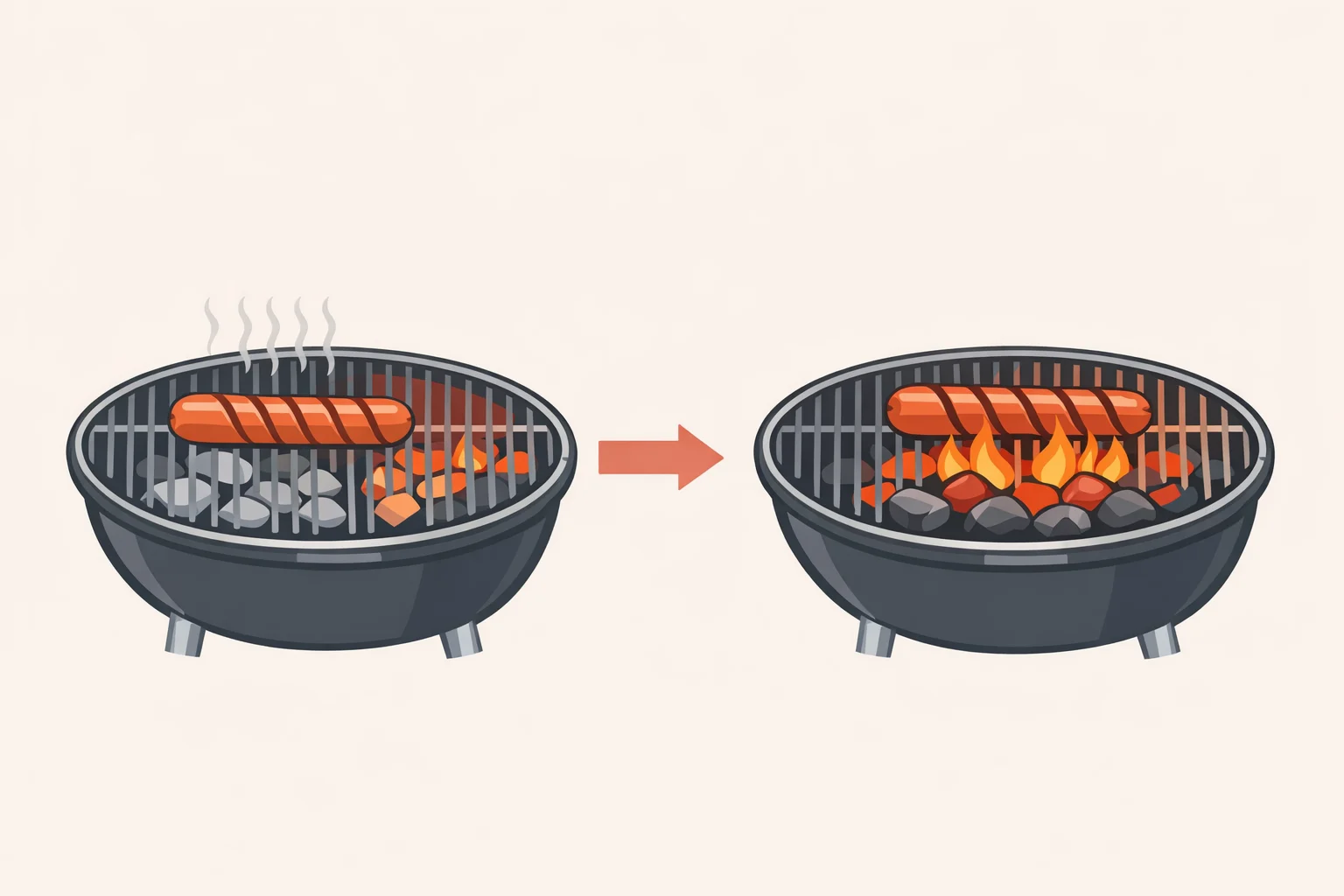
Direct high heat is specifically what ruins skinless hot dogs, cut or uncut. Because skinless franks have no outer membrane, aggressive heat dehydrates the exterior fast the outer proteins contract, squeeze out moisture, and the frank deflates off the grill. A spiral-cut frank has significantly more exposed surface area, which means that effect accelerates. Serious Eats identified direct high heat as the primary culprit behind leathery, shriveled franks, which is also why scoring hot dogs for grilling in any form needs to be paired with proper heat management to pay off.
Set up a two-zone grill and keep the hot side under 350°F. Start the frank on the cooler side to warm through, then finish briefly over direct heat for color. This is the exact setup used in the Serious Eats controlled tests last summer.
Place the spiral frank parallel to the grates, nestled between them rather than lying across them. Barbecue expert Meathead Goldwyn's positioning method, cited by Serious Eats, keeps the coil stable and prevents it from rolling unpredictably when you go to turn it.
On temperature: the USDA recommends reheating fully cooked hot dogs to 165°F or until steaming throughout. Use a thermometer. With a two-zone setup and a spiral-cut frank, the coils will open slightly as heat builds, the exposed ridges will brown more deeply than any intact frank can manage, and the tips will develop light char. The surface texture comes out visibly uneven in the best way rough, grippable, and ready for toppings.
Spiral vs. slash: when the simpler method is the better call
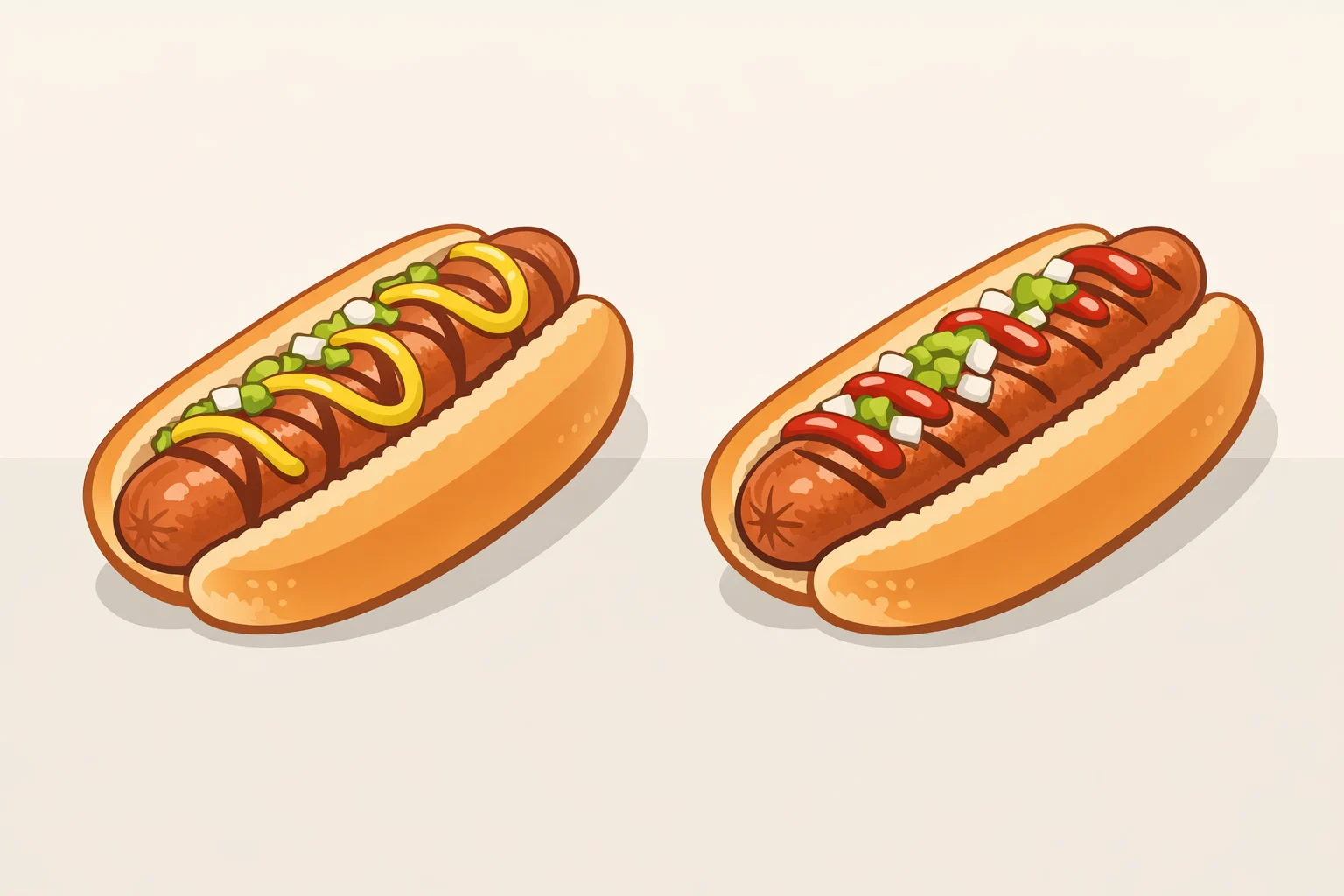
Shallow diagonal slashing a few cuts on opposite sides of the frank before grilling produces many of the same benefits with significantly less effort. The slashes expand during cooking, distribute heat more evenly through the frank, prevent shriveling, and create additional surface area for browning. No skewer required. Serious Eats called the simple slash "quicker, foolproof, and just as tasty" for standard grilling.
The spiral wins on two specific dimensions: the total volume of browned surface and visual impact. A spiraled frank develops more Maillard browning than a slashed one, and it holds toppings noticeably better because the ridges create actual channels rather than slight indentations. The tradeoff is proportional. The spiral is easier to overcook, demands more attention on the grill, and requires the skewer step. Serious Eats flagged this directly: the spiral adds surface area for browning, and with it, the risk of overcooking.
A practical way to choose: if hot dogs are a side element at a larger cookout, the slash is the right call. Faster, forgiving, and meaningfully better than doing nothing. If the hot dogs are the main event and there's time to work the grill with intention, the spiral earns its extra two minutes of prep.
Neither method helps if the heat is wrong. Keep the hot zone under 350°F regardless of which cut you use, and rely on indirect heat to warm through before finishing over direct flame. The cut only amplifies what the heat is already doing.
Decision guide: what to do with each sausage type
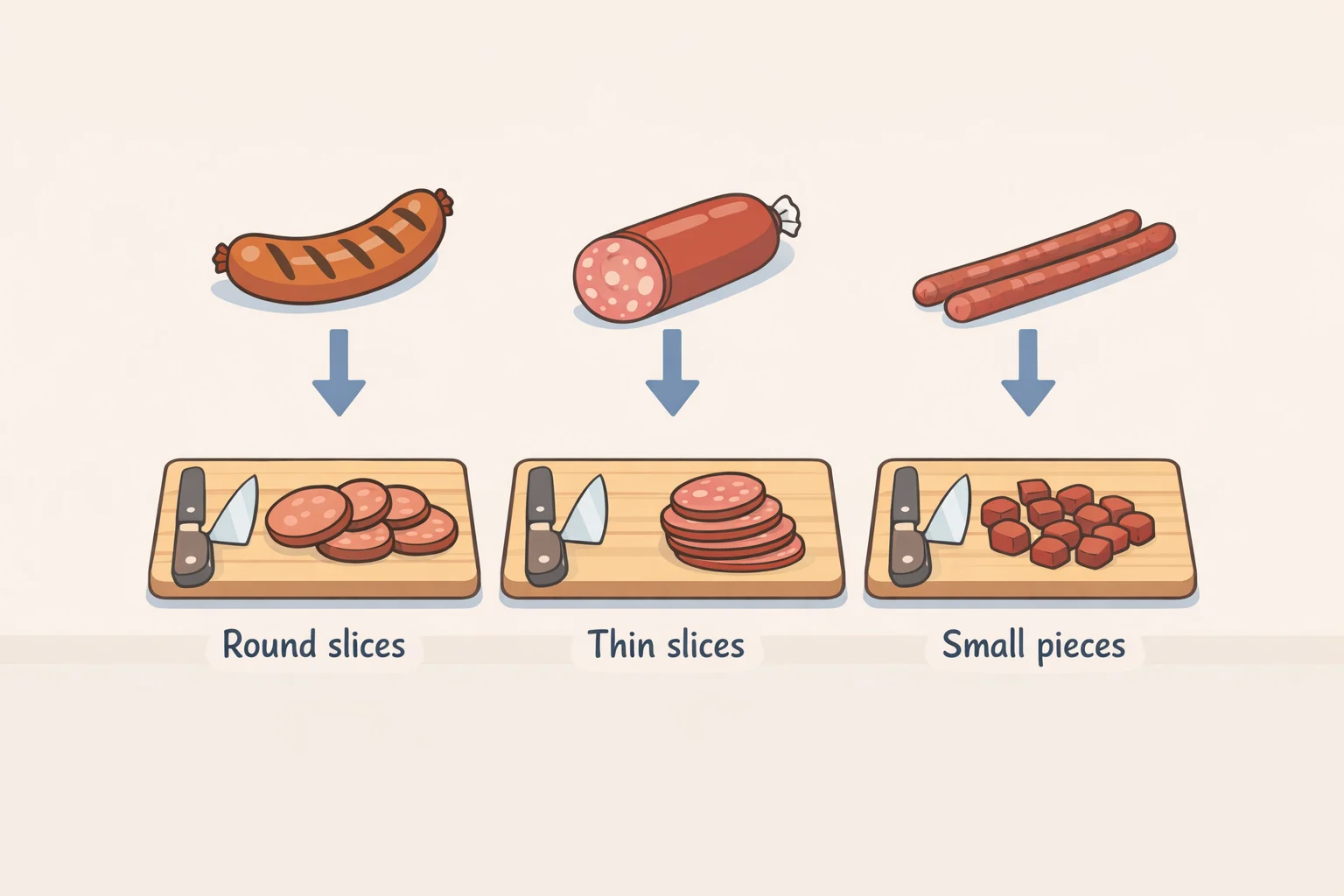
Based on Serious Eats test results from last summer, here's how to handle the most common options before you reach the grill:
- Skinless precooked hot dogs spiral cut for maximum browning and condiment grip; shallow slash if you want the faster, nearly-as-good version
- Precooked chicken sausage spiral cut; held together identically to skinless franks in testing
- Natural-casing hot dogs shallow slash only; spiraling creates pressure and handling issues the research doesn't fully characterize
- Bratwurst shallow slash over low heat only; spiral cutting loses moisture noticeably
- Andouille leave intact; cutting causes fat loss, flare-ups, and a coil that falls apart during handling
- Italian sausage leave intact; any cutting produces dry results regardless of method
The short version: precooked and structurally uniform spiral or slash. Raw links of any kind, put the knife down.



Comments
Be the first, drop a comment!