



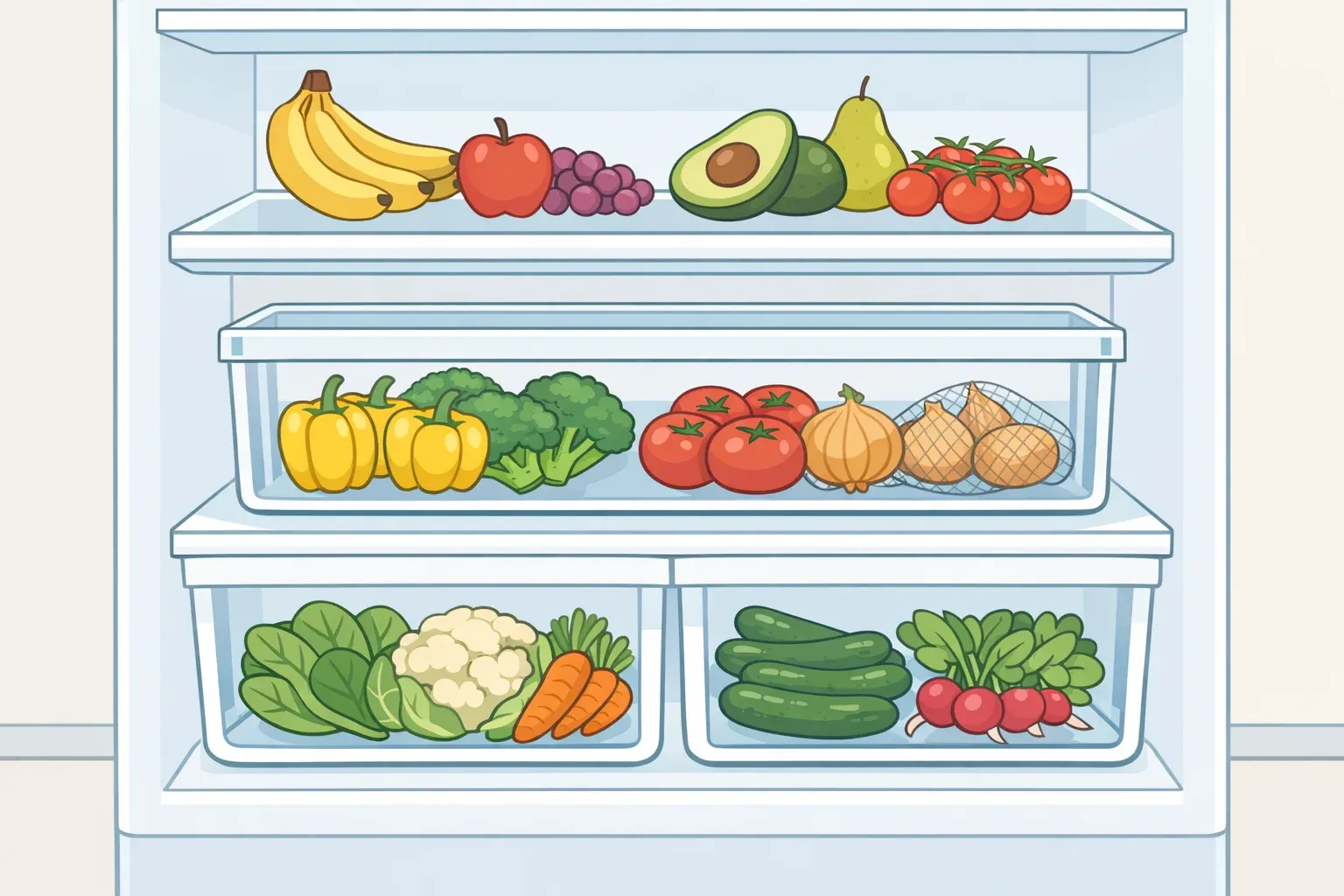
The produce isn't dying on the counter because it was old at the store. Most of the time, it dies because it went into the wrong place, got washed too soon, or ended up next to something that accelerated its decline.
This guide walks through the three variables that determine how long fresh produce lasts: temperature zone, moisture management, and ethylene separation. Get these right, and the payoff is less food waste, better flavor, and lower risk once produce is cut and the food safety clock starts running.
Shelf life starts at the point of purchase, not when you get home. Perishable items like strawberries, leafy greens, herbs, and mushrooms should go into the refrigerator as soon as you're home. Pre-cut or peeled produce needs refrigeration for safety, so only buy it if it was kept on ice or refrigerated at the market. On a hot day above 90°F, perishables have only one hour before bacteria multiply to unsafe levels, CDC guidance warns.
Three variables drive the rest:
Counter, crisper, or cool pantry? Most produce losses start with a wrong answer here.
Wash now or just before use? Moisture is the fastest route to rot.
Store near fruit or away from it? Ethylene gas silently shortens shelf life.
The sections below address each in order, with a default rule at the end of each one for when you're not sure.
Proper produce storage starts with the right temperature zone
The single biggest decision is where something lives after you bring it home. Three zones apply: the counter, the refrigerator crisper, and a cool, dry pantry. Putting something in the wrong zone most commonly, refrigerating things that should stay on the counter degrades texture, kills flavor, and in some cases stops ripening entirely.
Tomatoes are the clearest illustration of why this matters. Fresh ripe tomatoes should not go in the refrigerator. Store them at room temperature, away from direct sunlight; only cut tomatoes, or ones you're actively trying to stall from ripening further, should go cold.
Garlic, onions, potatoes, and sweet potatoes need cool, dry, dark conditions with airflow. Dry storage runs ideally between 60°F and 70°F; refrigerating these items changes their texture and, in the case of potatoes, converts starches in ways that affect cooking. Citrus fruits and tropical varieties like bananas and pineapples are also counter items; cold temperatures can cause chilling injury that damages texture and flavor. Winter squash, potatoes, and onions belong in that same category.
Some items need a middle step: ripen at room temperature first, then refrigerate. Peaches, pears, plums, avocados, and kiwi should ripen on the counter before going cold; refrigerating them early slows ripening without improving the end result. Once ripe and moved to the crisper, avocados, kiwi, peaches, pears, and plums are best used within 1 to 3 days; nectarines, peaches, and pears specifically hold up to 5 days in plastic bags.
Many other common items go straight to the crisper: leafy greens, berries, broccoli, peppers, carrots, beets; no counter time needed. Strawberries last 2 to 3 days refrigerated; remove any crushed or spoiled berries before storing the rest, and leave the green tops on until use.
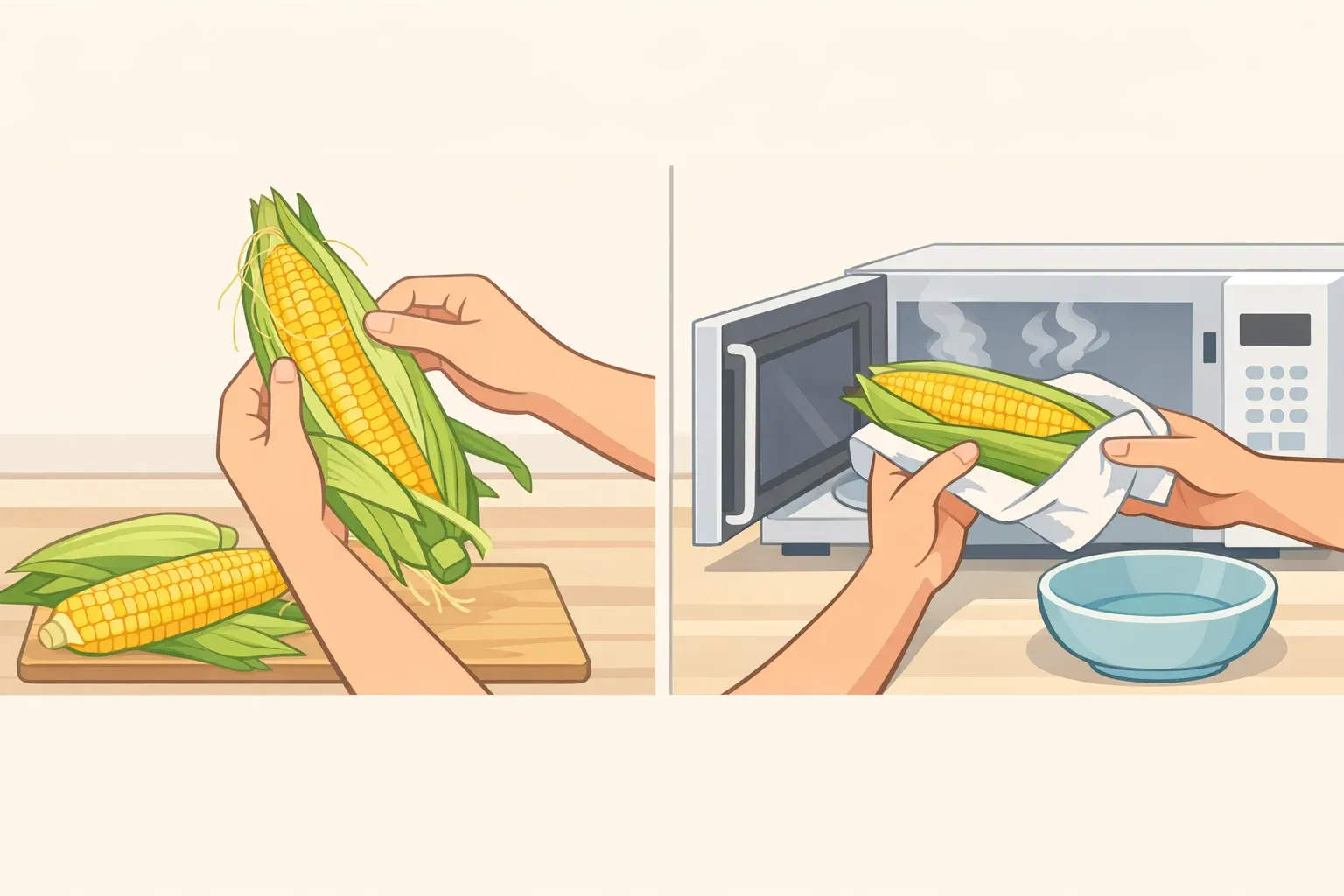
Two items worth flagging specifically because expectations routinely exceed reality: corn holds only 1 to 2 days in the crisper even in husks, and eggplant lasts just 1 to 2 days at best quality. Both are worth cooking immediately if possible.
Quick reference: where does it go?
This is the fastest way to apply Rule 1 without second-guessing every item.
Store on the counter (do not refrigerate):
Tomatoes, bananas, mangoes, pineapples, citrus fruits
Garlic, onions, potatoes, sweet potatoes, winter squash
Ripen on the counter, then refrigerate:
Avocados, kiwi, peaches, pears, plums, nectarines, whole melons
Refrigerate right away:
Leafy greens, berries, broccoli, carrots, beets, peppers, green beans, corn, eggplant, herbs, mushrooms
Never store together (more on this in Rule 3):
Cucumbers, apples, or tomatoes
Onions and potatoes
Default rule for temperature: When in doubt, check whether it's tropical, a root vegetable, or something with intact skin that hasn't been cut. Those categories cover most counter-storage items. Everything else, particularly leafy, flowering, or already-ripe produce, goes cold.
Rule 2: Control moisture from packaging to the crisper drawer
Moisture management works at three levels: when you wash, how you package things, and which crisper settings you use. Getting any one of these wrong undermines the others.
Step 2a: Don't wash before storing (with one exception)
Washing produce before storage adds surface moisture that accelerates decay. The effect is fastest on delicate items; green beans stored wet develop black spots and decay quickly. Washing everything at unpack time is one of the most common mistakes people make with fresh produce.
When it's time to wash, plain running water is sufficient. Commercial produce washes and detergents are unnecessary and should be avoided.
The one exception: head lettuce and leafy greens should be washed before refrigerating, then spun or patted thoroughly dry. The moisture retained in the leaf structure, not pooling on the surface, keeps them crisper longer. Heartier greens like collards benefit from wrapping in a lightly damp paper towel and sealing in a bag, which extends storage to 4 to 5 days.
Step 2b: Use the right packaging
Fully sealed plastic bags trap moisture and promote rot. Perforated or partially open bags allow airflow while preventing dehydration, the right call for most vegetables. Broccoli, peas, and cucumbers specifically benefit from loose perforated bags in the crisper. Herbs can go either in a loosely covered plastic bag or upright in a glass of water with stems submerged; both approaches hold for 2 to 3 days.
For root vegetables like carrots, beets, and parsnips: remove the green tops before bagging. The tops draw moisture from the root. Stored in plastic bags in the crisper after topping, these vegetables typically hold for 1 to 2 weeks.
Step 2c: Use crisper drawers correctly
Crisper drawers maintain humidity levels that open shelves can't replicate. Use them rather than leaving produce loose in the main fridge compartment. High humidity for anything that wilts: leafy greens, kale, spinach, herbs. Low humidity, meaning more airflow, for citrus. Mid-range for most other produce, including apples and grapes.
Fridge placement also matters. Temperatures range from colder at the back to warmer near the door; items sensitive to chilling do better positioned toward the front.
Default rule for moisture: Store dry, wash late. Leafy greens are the only produce that benefits from pre-washing, and only when thoroughly dried first. Everything else stays unwashed until preparation.
Rule 3: Keep ethylene producers away from sensitive produce
Certain fruits release ethylene gas as a natural part of ripening. When ethylene-producing items share space with ethylene-sensitive vegetables, the gas accelerates deterioration and causes texture and flavor changes the other produce didn't need. Separation prevents avoidable losses.
Store ethylene-producing fruits as far as possible from sensitive produce in the refrigerator, as the gas continues to affect neighboring items even at cold temperatures. Common producers include apples, avocados, cantaloupe, honeydew, watermelon, mangoes, peaches, pears, plums, nectarines, and tomatoes. The vegetables most sensitive to their effects include broccoli, Brussels sprouts, cabbage, carrots, cauliflower, cucumbers, corn, green beans, leafy greens, peppers, spinach, and summer squash.
One pairing deserves specific attention: cucumbers should not be stored alongside apples or tomatoes.
Onions and potatoes are a special case that doesn't fit the standard fruit-ripening pattern. Ethylene released by onions can cause potatoes to sprout; if sprouts appear, remove them before eating, but discard the potato entirely if it's gone soft or shriveled.
The most reliable approach in the refrigerator is also the simplest: fruit in one crisper drawer, vegetables in the other. This achieves separation without requiring item-by-item tracking. In dry storage, keep onions and potatoes in separate bins with their own ventilation rather than a shared bowl or basket.
Default rule for ethylene: Fruit drawer, vegetable drawer. Onions and potatoes in separate containers. Everything else follows from those two habits.
When the three rules change: cut and cooked produce
The temperature, moisture, and ethylene framework is about quality. Once something is cut, peeled, or cooked, the problem shifts to food safety and clock time.
Any cut, peeled, or cooked fruit or vegetable should be refrigerated in a clean covered container within 2 hours of preparation, and used within 3 to 4 days. That window drops to 1 hour if the ambient temperature is above 90°F.
Items that were previously counter-stable change category once cut. A whole melon sits on the counter until ripe; cut melon goes into a covered container in the refrigerator immediately. Keep all produce whole or cut away from raw meat, poultry, and seafood, stored in separate sealed containers on separate shelves. Bruised or damaged produce is worth flagging too: broken skin provides a foothold for bacterial growth.
If you only change two things
The quick reference table above handles temperature. But if the full framework feels like too much to implement at once, two changes produce the biggest immediate payoff.
First, get the counter items right. Tomatoes, bananas, citrus, potatoes, onions, and winter squash do not belong in the refrigerator. Refrigerating them doesn't extend their life; it degrades it. This single correction eliminates the most common and most damaging mistake most households make.
Second, separate fruit and vegetables into their own crisper drawers. This handles ethylene separation automatically, without tracking individual items. It also sets up the humidity controls correctly by default, since most refrigerators assign different humidity ranges to each drawer.
The washing rule and the packaging details matter, but they're refinements. Get placement right first.
A quick fridge audit takes about five minutes: pull out anything from the crisper that belongs on the counter, move fruit and vegetables into separate drawers, and check that nothing is stored wet. One spoiling item accelerates everything around it, so pull anything that looks bad while you're in there.
Wilted greens that haven't gone bad can often be brought back with a short soak in ice water. Overripe fruit still earns its place in smoothies, sauces, and baked goods. Neither is wasted yet. The fruit and vegetable storage tips here don't require buying anything new, just using what's already in the kitchen more deliberately.


Comments
Be the first, drop a comment!