


Make-Ahead Pecan Pie Bars: How to Bake for Thanksgiving
By Thanksgiving morning, the oven is already spoken for. Make-ahead pecan pie bars solve that problem by design: baked one or two days before the table is set, cooled overnight, served without a pie dish, a pie server, or any last-minute coordination.
That's not editorial spin. King Arthur Baking describes the bars as "faster and simpler to make than classic pecan pie" and "perfect for baking in advance of the big day." The recipe's structure reinforces this. The bars must cool completely before they can be cut cleanly, which makes overnight prep the natural workflow rather than a workaround.
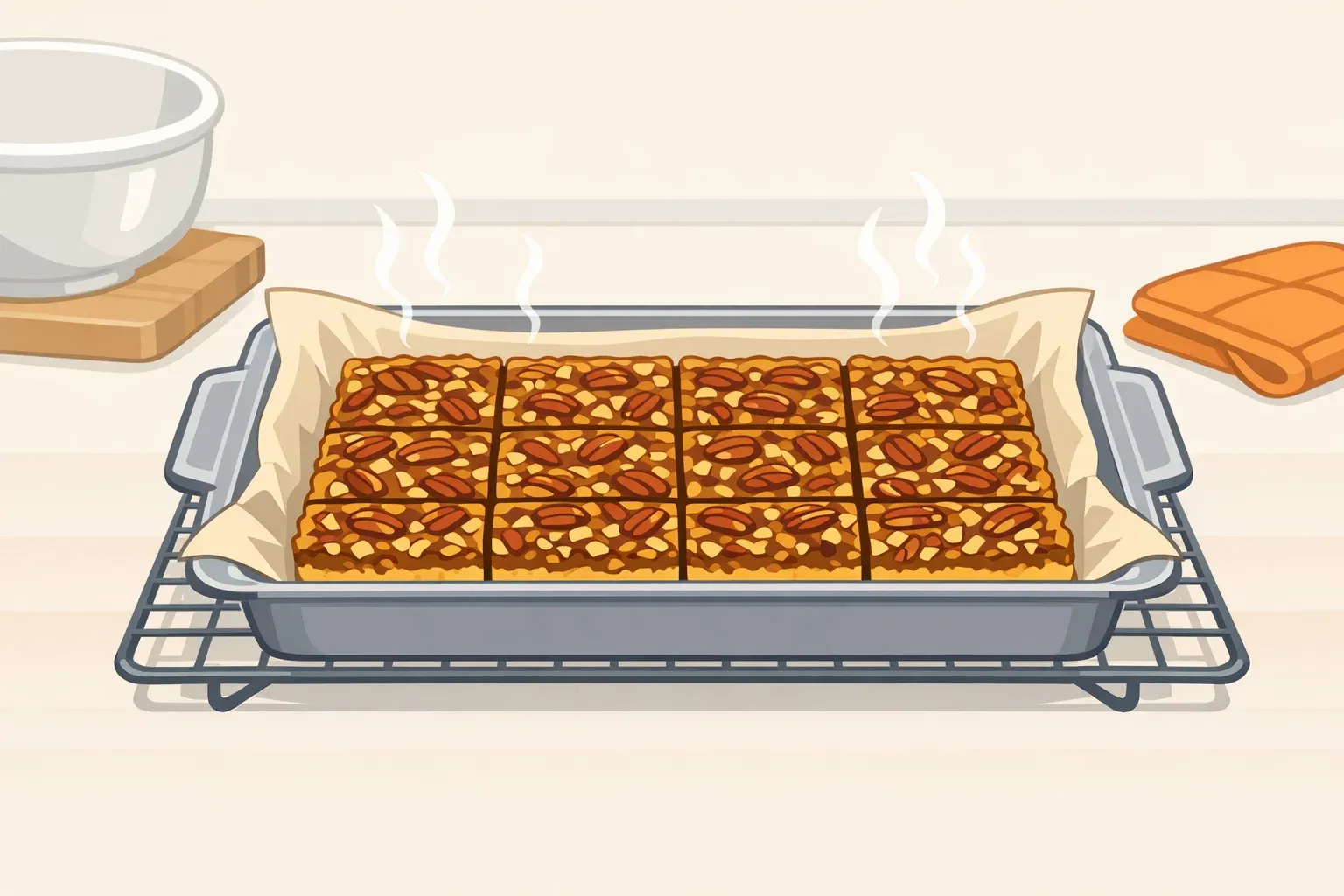
A single 9x13 pan yields 2 dozen bars in roughly 1 hour and 20 minutes total, with only 20 minutes of hands-on prep, per King Arthur Baking. Finished bars store well-wrapped at room temperature for several days, or in the freezer for longer.
This guide covers pan setup, crust, filling, doneness cues, and a practical schedule for Thanksgiving and other gatherings.
Why bar format beats pie for holiday hosting
The bar format changes more than serving geometry. Several friction points that make classic pecan pie difficult to batch and transport simply don't apply here.
The crust is a press-in shortbread. No rolling pin, no chilled disk, no careful transfer to a pie plate: mix it, press it into the pan, bake it. The pan is lined with parchment that overhangs two opposite sides, forming a sling; once cooled, the entire slab lifts out in one piece for cutting. No prying, no pie server, no crumbling wedge edges. One pan produces 2 dozen bars, per King Arthur Baking and the recipe is explicitly designed to serve a crowd.
For transport, the payoff is concrete: no pie plate to protect, no dome lid to keep the filling from smearing, no fragile crust edges to guard in transit. Cut bars stack in a shallow container and arrive intact. For anyone bringing dessert to a gathering rather than hosting, this removes a genuine logistical problem.
Baking a pie day-of means competing for oven space, monitoring a filled custard crust, and waiting long enough for it to cool before anyone's ready for dessert. With bars, that whole sequence happens the night before.
Step-by-step: how to make the bars
What you need before starting:
9x13 baking pan
Parchment paper (enough to overhang two opposite sides)
Large saucepan or pot
Oven preheated to 325°F
Step 1: Set up the pan
Lightly grease the pan, then press parchment paper into it so it extends up and over two opposite sides like handles. This is the sling that lifts the cooled slab out cleanly, per King Arthur Baking. Flatten the paper into the corners so the crust bakes evenly against the sides.
Don't skip the parchment. Without it, you're cutting and prying bars out individually, which damages edges and makes clean portioning significantly harder.
Step 2: Press in the crust
Mix the shortbread crust and press it evenly across the pan bottom. If the butter softens in a warm kitchen and the dough starts sticking to your hands, slide the pan into the refrigerator for 5 to 10 minutes, then continue pressing, as King Arthur Baking recommends. In a busy holiday kitchen, this is common. Expect it and it's a brief pause; be surprised by it and it throws off your rhythm.
The corners and edges tend to pile up. Take an extra pass there to keep the thickness even across the pan.
Step 3: Bake the crust
Bake at 325°F until the surface is lightly golden, 28 to 32 minutes, per King Arthur Baking. Use color as your primary cue. Ovens vary, and the clock range is a guide rather than a guarantee.
Start the filling while the crust is in the oven. It keeps the workflow tight and means the filling is ready to pour the moment the crust comes out.
Step 4: Cook the filling
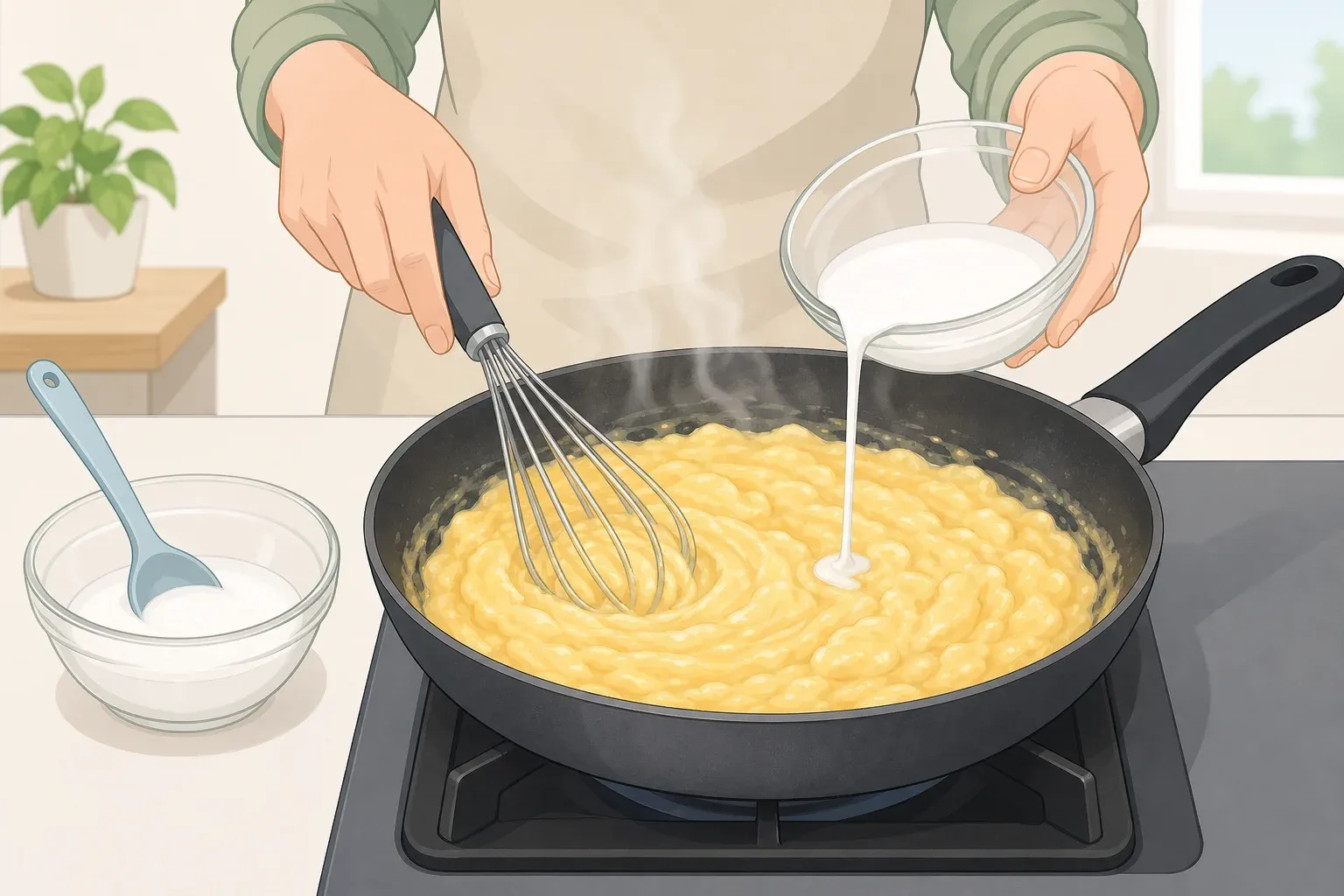
Combine all filling ingredients in a large saucepan or pot over medium-high heat. Stir regularly until the mixture is completely smooth and has just come to a boil, about 2 to 3 minutes, per King Arthur Baking. Don't step away. Sugar-heavy mixtures scorch quickly, and the window between "just boiling" and "cooked too long" is short.
Once it boils and smooths out, take it off the heat. It's ready to pour.
Step 5: Fill and bake
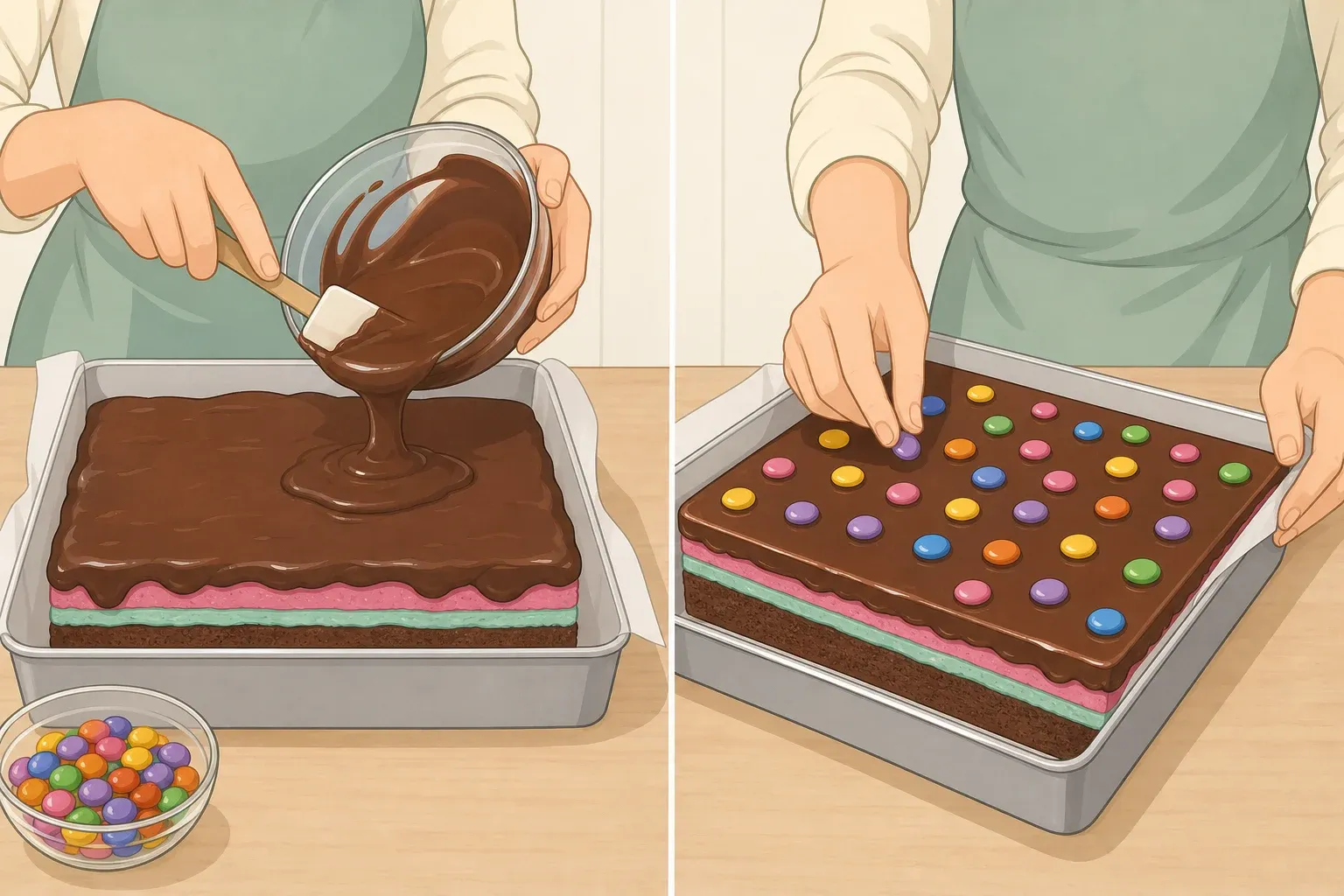
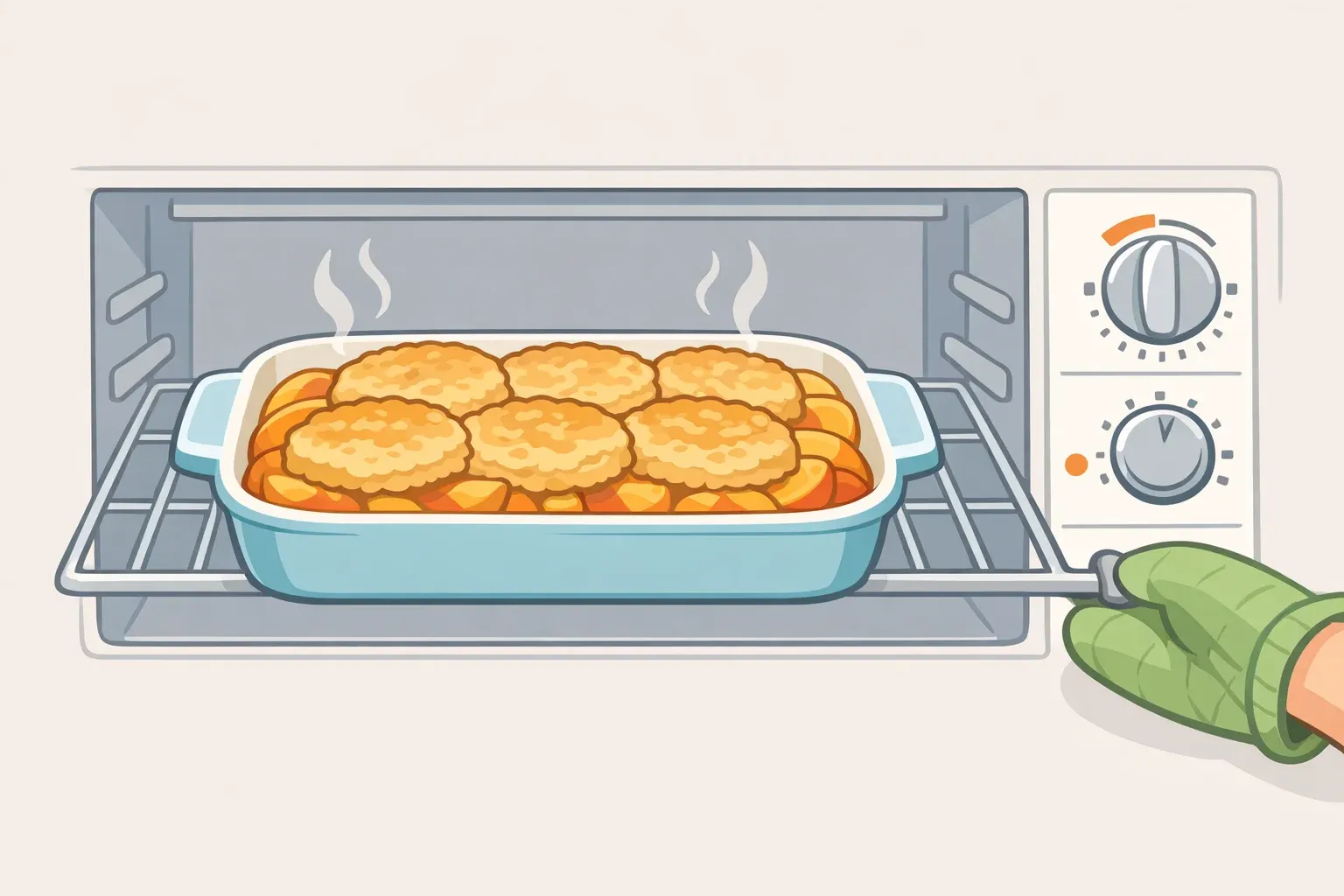
Pour the hot filling evenly over the pre-baked crust. Return the pan to the oven and bake until the filling is bubbling across the entire surface, 25 to 30 minutes, per King Arthur Baking. Edge-only bubbling means the center hasn't fully set. Wait for full-surface activity before pulling the pan.
The filling looks set before it is. This is the doneness check that most home bakers rush.
Step 6: Cool completely before cutting
Leave the bars in the pan until they reach room temperature. Cutting them warm collapses the filling, per King Arthur Baking, and produces bars that won't hold their shape. This step is the clearest argument for baking the night before: a full overnight cool removes the temptation to cut early, and the bars are better for it.
Once fully cool, use the parchment sling to lift the slab onto a cutting board, then slice into 24 bars.
Make-ahead pecan pie bars: the Thanksgiving schedule
This is where the pecan pie bars recipe proves its value on a holiday prep list.
Two days before: The low-stress option. Bake, cool overnight, cut the next morning, store bars in an airtight container at room temperature. They're ready to plate, stack, or pack well before the holiday arrives, with nothing left to do on the day itself, per King Arthur Baking. Getting dessert off the list 48 hours out frees up both oven time and mental bandwidth when it counts most.
One day before: The practical sweet spot. Bake the evening before, cool overnight, cut in the morning. The bars are fresh, the timing is comfortable, and the sequence takes roughly 80 minutes of total time with only 20 minutes of active work.
Same day: Possible, but tight. The bars need to reach full room temperature before cutting a rushed cool produces unclean cuts and filling that smears. Same-day baking works for casual occasions; for a holiday table where presentation matters, the night-before schedule is the safer call.
Freezing: For longer lead times, King Arthur Baking recommends wrapping bars well and freezing, then thawing at room temperature before serving. The source doesn't detail any texture changes post-freeze, so if presentation is a priority, freeze a single test bar before committing the whole batch.
Scaling: One batch yields 2 dozen bars from a single 9x13 pan, per King Arthur Baking. The recipe is designed to serve a crowd; for larger gatherings, a second pan runs the same process from the start.
These hold up just as well as make-ahead dessert bars beyond Thanksgiving: potlucks, holiday exchanges, any event where transporting a whole pie creates more logistics than the dessert warrants.
Bars vs. pie: a practical comparison
Classic pecan pie isn't going anywhere. If your table expects it, bars may not be the right swap a whole pie sliced at the table carries a visual weight that a container of bars doesn't replicate. For gatherings where that moment is part of the occasion, the format difference is real.
Where bars have the clearer advantage is in serving size and transport. One 9x13 pan yields 2 dozen bars, per King Arthur Baking, which stretches considerably further at a large table than a single pie. A pie needs a carrier and careful handling to arrive intact; cut bars in a shallow lidded container need neither. For anyone driving dessert across town, that's a structural advantage, not a minor convenience.
The flavor argument is the simplest one. King Arthur Baking describes these as the bar-format equivalent of pecan pie at Thanksgiving the same taste profile, with a press-in crust that's easier to execute and a format that travels cleanly.
The three things that determine whether the bars succeed
The parchment sling is structural: skip it and you lose the clean-release advantage that makes bars worth the effort over a pie you'd have to pry out in pieces. The doneness cues require patience a golden crust and full-surface bubbling on the filling before the pan comes out. And cooling completely before cutting is non-negotiable, per King Arthur Baking: cut them warm and you've undone the setup.
Everything else is forgiving. The press-in crust doesn't require the precision of a rolled pie crust. The filling cooks fast and signals clearly when it's ready. The bake times have enough range built in to accommodate different ovens. Those three checkpoints are where attention pays off; the rest of the recipe handles itself.

Comments
Be the first, drop a comment!