



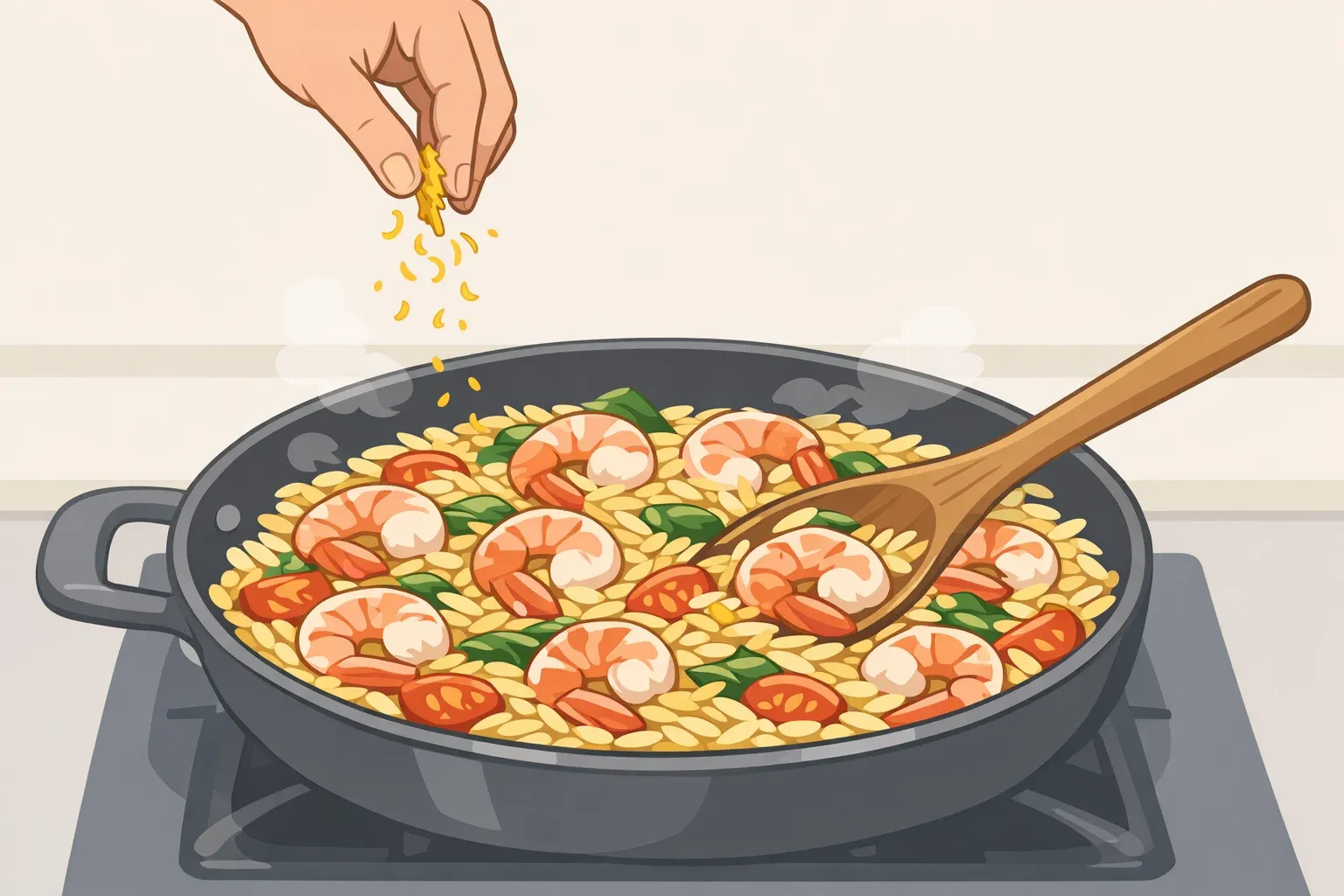
One Pan Lemon Butter Shrimp Orzo: Techniques, Tips, and Variations
This guide walks through making one-pan lemon butter shrimp orzo from scratch: the exact sequence that keeps the pasta flavorful and the shrimp from turning rubbery, two execution paths depending on your priorities, and how to steer the dish toward three distinct results using the same base ingredients.
Before starting, have these on hand:
- Equipment: one large, deep skillet or sauté pan (a Dutch oven works equally well)
- 1 lb large shrimp (16–20 per pound), peeled and deveined
- 1 cup dry orzo
- 2.5 cups low-sodium chicken or vegetable broth
- 3–5 cloves garlic, minced
- 2–3 tablespoons butter or olive oil
- One lemon, for juice and zest
Why sequence is the real hack here
Most weeknight pasta-and-protein dinners fail in one of two places: the starch is bland because it cooked in plain water, or the protein is overcooked because it went in too early. One-pan lemon butter shrimp orzo solves both problems without extra equipment, but only if the timing is right.
The sequence is: toast the orzo in fat first, simmer it in broth until nearly done, then add shrimp at the very end. That's the whole formula. Everything else, from the fat to the add-ins to the richness level, is adjustable.
What makes orzo the right vehicle here is its shape. It's a rice-shaped pasta that absorbs liquid directly in the pan as it cooks, which is why the single-pan format works at all, per Kathleen's Cravings (January 2024) and Cooking Taste (March 2025). Spaghetti or penne would need a separate pot. Orzo behaves more like a risotto grain. Cook it entirely in seasoned liquid and it soaks up every bit of flavor along the way.
Active cook time runs about 15 minutes, with total time landing between 25 and 30 minutes depending on method, per Allrecipes (February 2026), TechieCycle (July 2025), and Cooking Taste (March 2025). That timing holds up across the sources reviewed.
The baseline formula for an easy shrimp orzo recipe
Baseline formula: 1 cup dry orzo, 1 lb large shrimp, 2.5 cups broth, 2–3 minutes to toast, 8–12 minutes to simmer, 2–5 minutes to finish shrimp. Serves four as a main. This produces roughly 380–410 calories per serving with 27–28g protein, per Kathleen's Cravings (January 2024) and Cooking Taste (March 2025).
One note on shrimp quantity: Allrecipes (February 2026) uses only 8 ounces for four servings, which works as a lighter portion but feels thin as a standalone main. One pound is the right baseline if this is the whole dinner.
Step 1: Season the shrimp and set aside
Toss shrimp with a tablespoon of olive oil, the juice and zest of half a lemon, minced garlic, red pepper flakes, salt, and pepper. Set aside. This doubles as a short marinade while the orzo gets started, per Kathleen's Cravings (January 2024).
Pat the shrimp dry before seasoning. Wet shrimp steam in the pan rather than sear and won't take on any color, a practical note confirmed across NYT Cooking (February 2025) and TechieCycle (July 2025). Frozen shrimp work fine as long as they're fully thawed and well dried first, per TechieCycle (July 2025).
Step 2: Toast the orzo
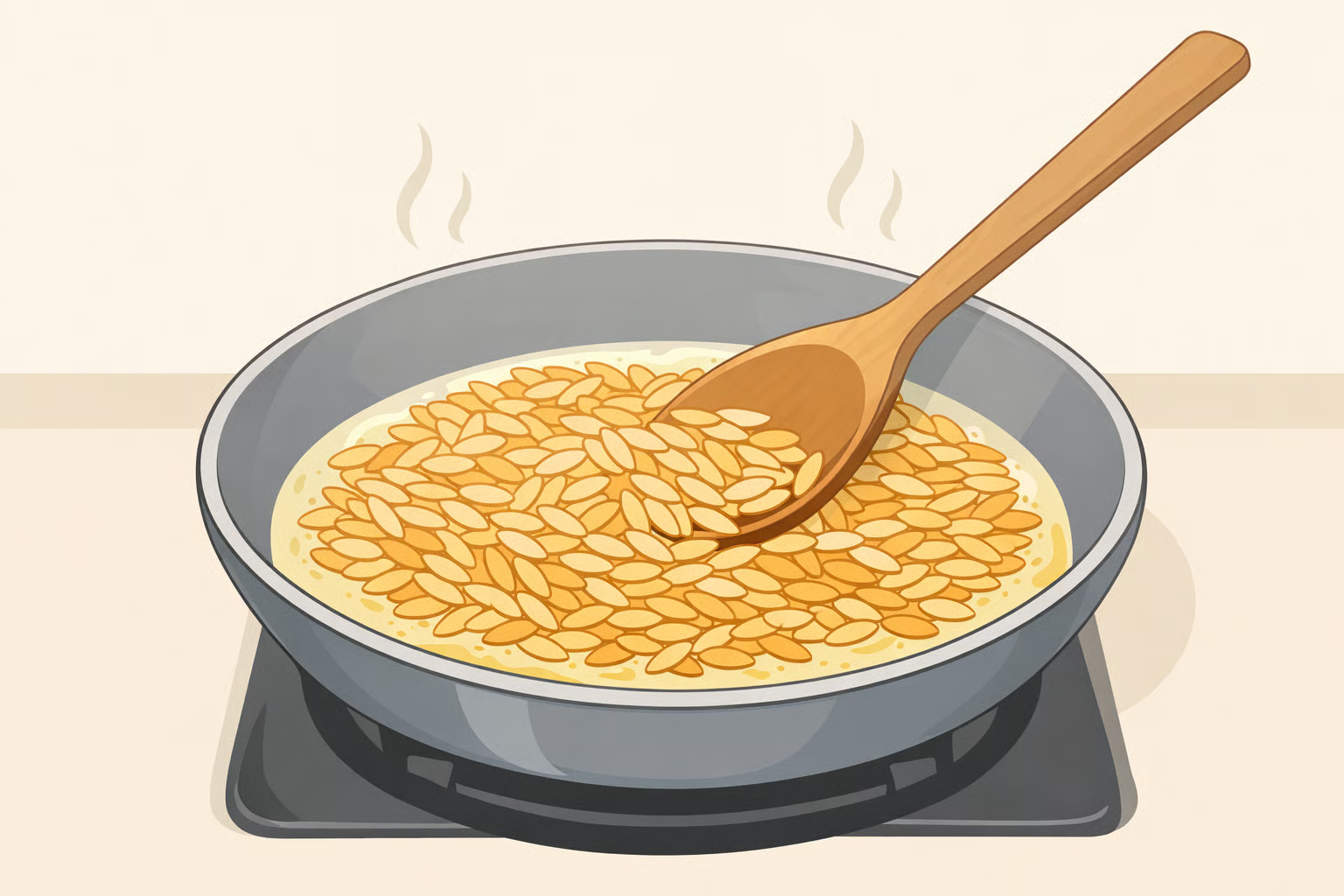
Melt butter (or heat olive oil) in the pan over medium heat. Add dry orzo and stir for 2–3 minutes until lightly golden and faintly nutty-smelling. The orzo should look a shade darker than raw, not deep brown.
Add garlic after the orzo is toasted, not before. Garlic goes in for about 30 seconds, until fragrant but not colored. Adding it earlier risks burning before the liquid goes in, a sequencing note that appears consistently across Allrecipes (February 2026) and TechieCycle (July 2025).
Step 3: Add broth and simmer until nearly done
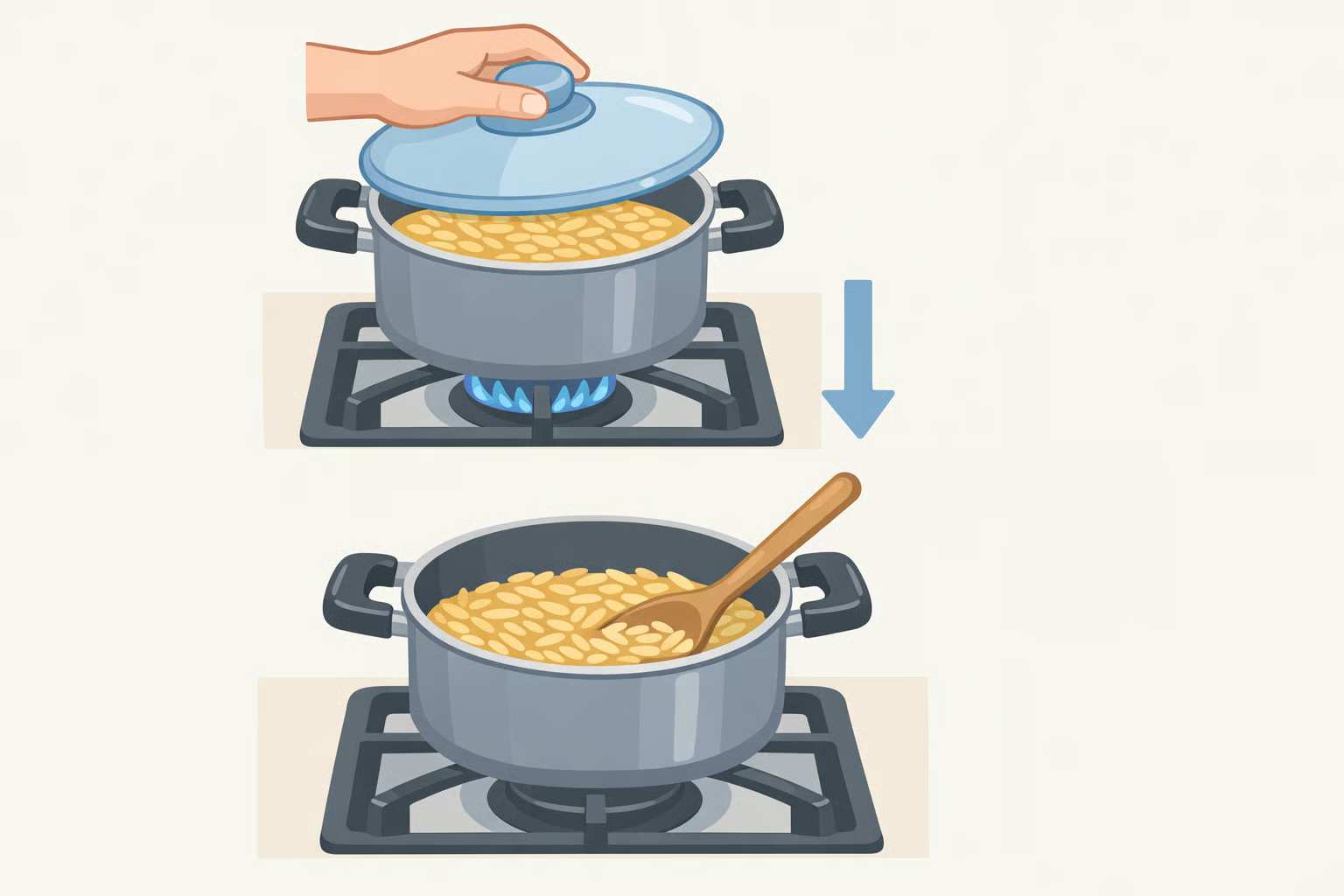
Pour in 2.5 cups of broth, bring to a boil, then reduce to a steady simmer. Cover and cook for 8–12 minutes, stirring every few minutes, until the orzo is just shy of al dente and most liquid is absorbed. Both Kathleen's Cravings (January 2024) and Cooking Taste (March 2025) use this 2.5-to-1 ratio of broth to dry orzo as the standard working proportion.
The orzo will look slightly underdone at this point. That's intentional. It finishes cooking with the shrimp.
Texture troubleshooting:
- Orzo looks dry before it's tender: add broth in 2-tablespoon increments and stir
- Still soupy after 12 minutes: uncover and let liquid reduce for 1–2 minutes before adding shrimp
- Sticking to the bottom: reduce heat and stir more frequently; Kathleen's Cravings (January 2024) specifically flags this as the main thing to monitor throughout
Step 4: Add the shrimp choose one of two methods based on priority
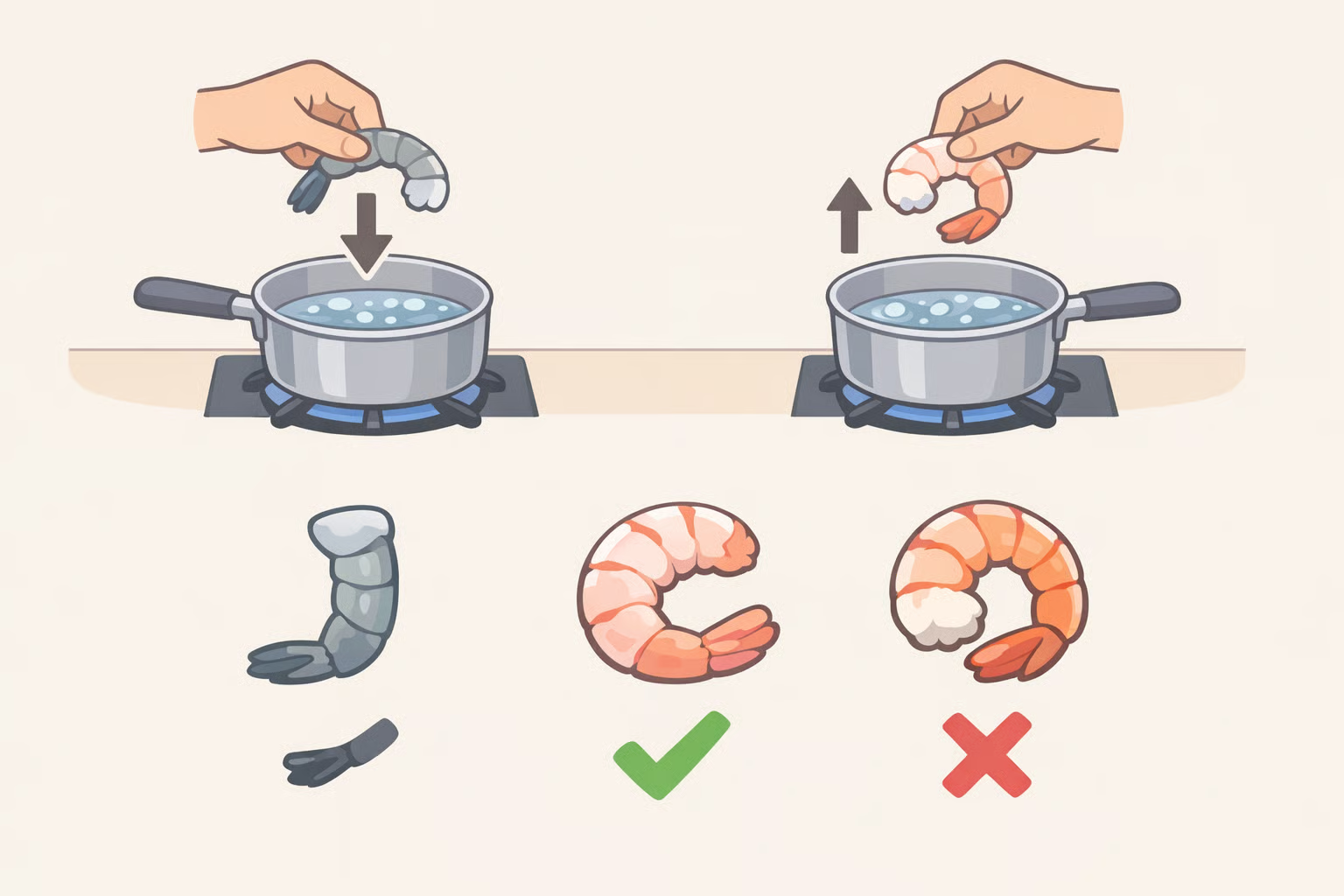
Use Method A for convenience. Use Method B for better browning and texture. Both produce a complete 30-minute shrimp orzo in one pan.
Method A, in-pan (lower effort, adequate texture): Nestle the seasoned shrimp directly into the orzo. Cover and cook on low for about 5 minutes, stirring every couple of minutes, until shrimp are pink, opaque, and curled into a loose "C" shape. This is the simpler path, used by Allrecipes (February 2026) and Kathleen's Cravings (January 2024).
Method B, sear then return (better shrimp color and texture, still one pan): Before building the orzo, sear the seasoned shrimp in the same pan for 1–2 minutes per side until just golden, then set aside. Proceed through Steps 2 and 3, then stir shrimp back in during the final minute of cooking. Here's Your Bite (March 2025) and TechieCycle (July 2025) both use this approach.
The critical warning for both methods: Shrimp cook fast and turn rubbery quickly. Cooking Taste (March 2025) states plainly that they become rubbery if left too long. Watch for color and shape, not the clock. Gray and translucent means raw; pink, opaque, loose "C" means done; tight "O" curl means overcooked, per Kathleen's Cravings (January 2024). If shrimp are cooking faster than expected, pull them out, finish any remaining sauce, then return them briefly. NYT Cooking (February 2025) advises that a single minute is enough to reheat without overcooking.
Add lemon zest now, not earlier. Zest loses its brightness when cooked; added at the finish, it stays sharp and aromatic, per Cooking Taste (March 2025). Stir in spinach or other tender greens at the same stage, off the heat if needed to prevent wilting into mush.
How liquid and fat determine the finished dish

Before choosing a variation, it's worth understanding what each component actually does to texture. This is what separates a deliberate result from a lucky one.
Broth quantity controls looseness. The 2.5-to-1 ratio produces orzo that's just coated, not soupy. Pull back to 2 cups and it tightens further; add a third cup and the dish stays brothy enough to spoon rather than fork.
Butter emulsifies as it melts into the residual starch from the orzo, creating a glossy, slightly clingy sauce without any cream. The more butter at the finish step, the richer that coating gets. Two tablespoons is noticeable; three is the sweet spot for the classic lemon butter version.
Cream and Parmesan together thicken fast and hold heat poorly. The sauce goes from silky to tight within a few minutes of standing, which is why the creamy version needs to go straight from pan to bowl.
Understanding these mechanics means the three variations below aren't arbitrary each one is pulling a specific lever.
Three meaningful forks: brothy, buttery, or creamy
Brothy and light: Keep fat minimal, olive oil instead of butter, one tablespoon of Parmesan stirred in at the end, and spinach for body. Allrecipes (February 2026) uses this approach, arriving at roughly 240 calories per serving with 24g protein. The difference from butter-forward versions comes mainly from reduced fat, not smaller portions.
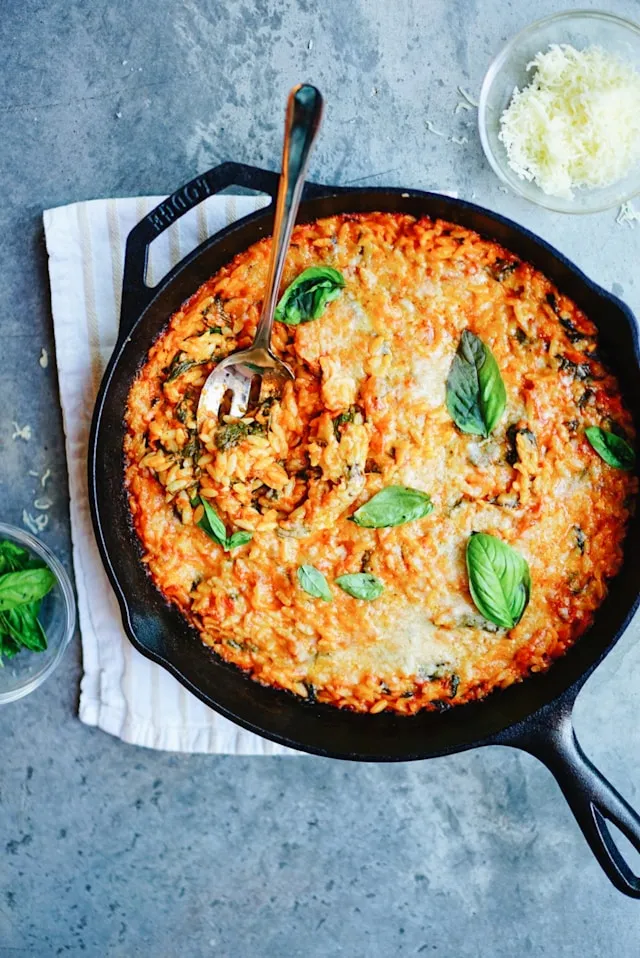
Classic lemon butter: Split 3 tablespoons of butter between toasting the orzo and finishing the dish. Add lemon juice and remaining zest just before serving. Kathleen's Cravings (January 2024) uses this format, and among the recipes sampled, the lemon-butter combination is the most common richer version. The butter emulsifies into the starchy orzo liquid to produce a glossy, lightly sauced result without any dairy additions. Solid weeknight choice when the goal is satisfying without fussy.
Creamy lemon shrimp orzo: Once the orzo is nearly cooked, reduce heat to low and stir in half a cup of heavy cream. Simmer two minutes to thicken, then finish with a cup of Parmesan and lemon juice. Here's Your Bite (March 2025) also deglazes with half a cup of dry white wine, Sauvignon Blanc or Pinot Grigio, before adding the broth, which introduces an acidity that balances the cream well. Serve immediately. The sauce tightens significantly as it cools, and leftovers will have a noticeably denser texture after refrigeration.
Mediterranean add-ins (compatible with any of the above): halved cherry tomatoes, crumbled feta in place of Parmesan, Kalamata olives, artichoke hearts, smoked paprika, or Calabrian chili, per TechieCycle (July 2025). Add tomatoes and olives with the broth so they soften into the orzo. Feta goes on at the table.
Storage, reheating, and a final note on the formula
Leftovers keep for up to three days in an airtight container in the refrigerator, per both TechieCycle (July 2025) and Kathleen's Cravings (January 2024).
Reheat on the stovetop over low heat with a splash of broth or water to loosen the orzo. Avoid high microwave heat; shrimp reheated aggressively turn tough. A few seconds on low power is acceptable per Kathleen's Cravings (January 2024), but stovetop with added liquid is more reliable and more forgiving.
The formula itself is short enough to internalize after one cook: toast the orzo in fat, simmer in broth until nearly done, add shrimp at the end and watch for the color change. The pan, the sequence, and the timing are what make this one pot lemon garlic shrimp orzo reliable week after week. The fat, add-ins, and richness level are all genuinely optional. That's the actual point.





Comments
Be the first, drop a comment!