



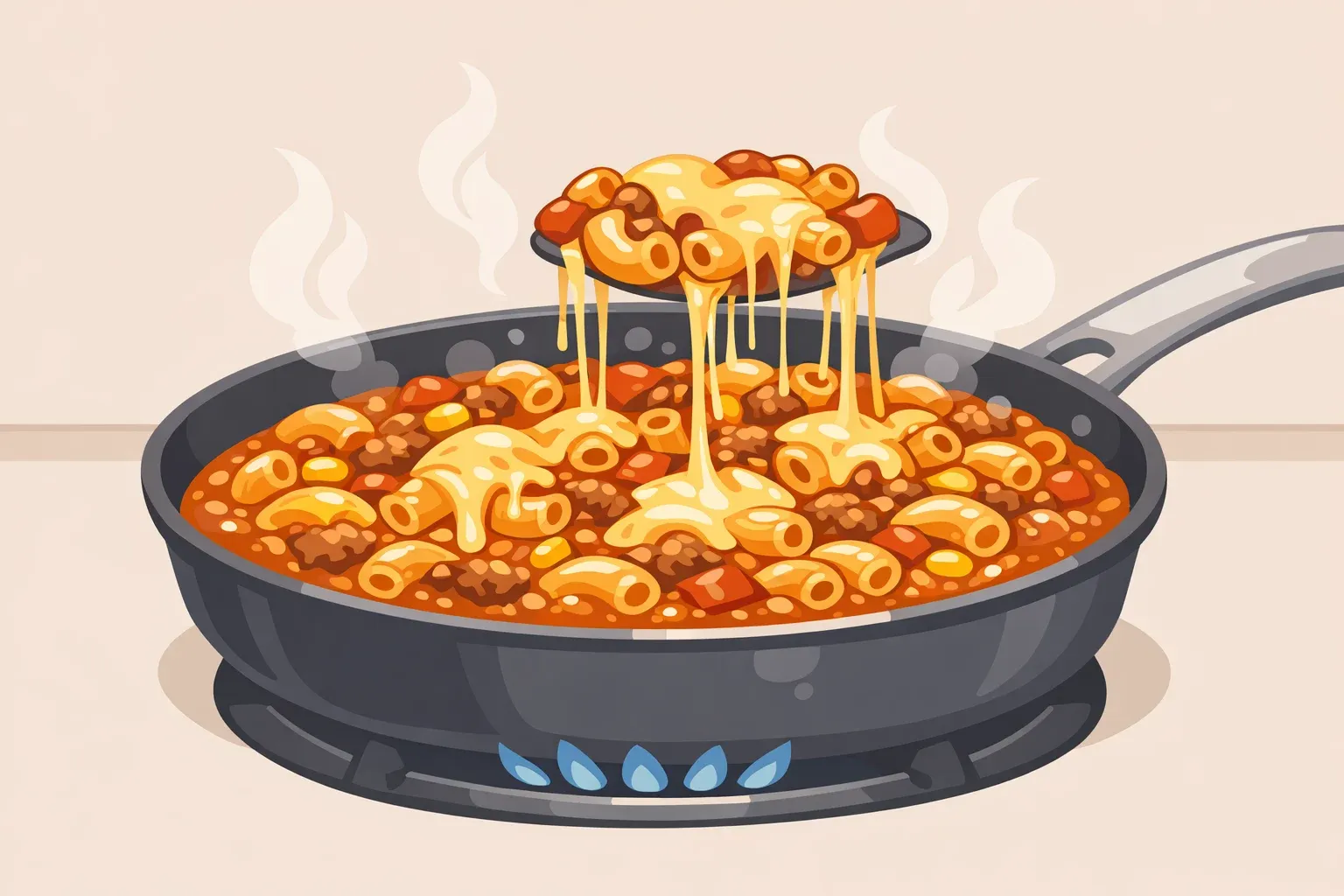
This guide walks you through making one-pot cheesy taco pasta from scratch, with a specific baseline formula that produces a glossy, cohesive sauce. Not a greasy skillet dump or an upgraded box of Hamburger Helper. Boxed versions rely on processed cheese powder and pre-cooked pasta; this recipe builds flavor in layers, cooking dry pasta directly in seasoned beef broth, then finishing with real cheese melted off the heat.
Every tested version of this recipe lands in one pot and takes roughly 30–35 minutes total. Plan for somewhere in that range. The dish yields four to six servings from pantry staples: ground beef, taco seasoning, a can of Rotel, short pasta, beef broth, and cheese. No boxed pasta mix, no second pan.
This is the answer for the table where half the family wants tacos, and the other half wants pasta. The toppings keep it honest.
What you need before starting: A large, deep pot or high-sided skillet, at least 4-quart capacity. Block cheese and a box grater. That's it.
One-pot cheesy taco pasta: the base formula
The exact ingredients and the decision points before you start
Follow it first; adjust it later.
The default build (4–6 servings):
1 lb ground beef, 85% lean
1 small onion, diced
2–3 garlic cloves, minced
1 oz packet taco seasoning
2 tablespoons tomato paste
1 can (10 oz) Rotel diced tomatoes with green chilies, undrained
2 cups beef broth
8 oz short pasta (shells or rotini)
½ cup heavy cream
1 cup shredded cheddar + ½ cup shredded Monterey Jack, shredded from the block
Why tomato paste belongs here: Two tablespoons of tomato paste, stirred in after the seasoning, concentrate the sauce and add a savory depth that broth and Rotel alone don't produce. Don't skip it.
The pasta choice: Short, sauce-catching shapes hold up best. Elbow macaroni works fine if that's what's in the pantry; bow tie works too. The common guidance across sources is that short pasta performs better here, since it cooks more evenly in the broth and holds the sauce in its ridges or curves.
The dairy layer: The creaminess comes from two sources working together: heavy cream stirred in before the cheese, and freshly shredded block cheese folded in over low heat. Some build the body differently, splitting the cooking liquid between beef broth, chicken broth, and whole milk before adding cheddar, Monterey Jack, and Velveeta on low. Both work. The consistent thread is dairy added in stages over controlled heat, not dumped all at once over a high flame.
The one substitution worth knowing: Cream cheese (8 oz, cubed) can replace heavy cream for a thicker, tangier result. You can use this approach, simmering the cream cheese with salsa over low heat until the sauce pulls together. It produces a denser, more stable texture. It also changes how leftovers behave, which matters for the freezer question at the end.
Gotcha: Freshly shredded block cheese melts more smoothly than pre-shredded. Shred from the block for a smoother sauce. The practical difference shows up in the final texture; bag cheese tends to resist melting and leaves the sauce grainy.
Step-by-step: the one-pot method
Step 1: Brown the beef and onion
In a large, deep pot over medium heat, cook 1 lb of ground beef with a diced onion. Break the meat into crumbles as it cooks. After 6–8 minutes, the beef should be fully browned with no pink remaining. The internal temperature should reach 160°F to confirm doneness. Drain the excess grease before the next step. Leaving it dulls the final sauce.
Step 2: Bloom the seasoning and tomato paste
Add minced garlic, the taco seasoning packet, and tomato paste. Stir constantly for about 60–90 seconds over medium heat until the spices smell toasty and the paste has darkened slightly. This step locks flavor into the base before any liquid goes in. Don't rush it.
Step 3: Add the liquid, Rotel, and dry pasta
Pour in 2 cups of beef broth, then add the undrained can of Rotel. Add 8 oz of dry pasta and stir to submerge most of it. Bring to a boil.
Step 4: Simmer until the pasta is just shy of tender
Reduce to a steady simmer and cook uncovered, stirring every 2–3 minutes, for 10–14 minutes. The pasta keeps cooking after the heat goes off, so pulling it a minute early is worth it. Most of the liquid should be absorbed by the time it's done. If the pot looks dry before the pasta is ready, add broth in ¼-cup increments.
Step 5: Add the cream, then the cheese, off the heat
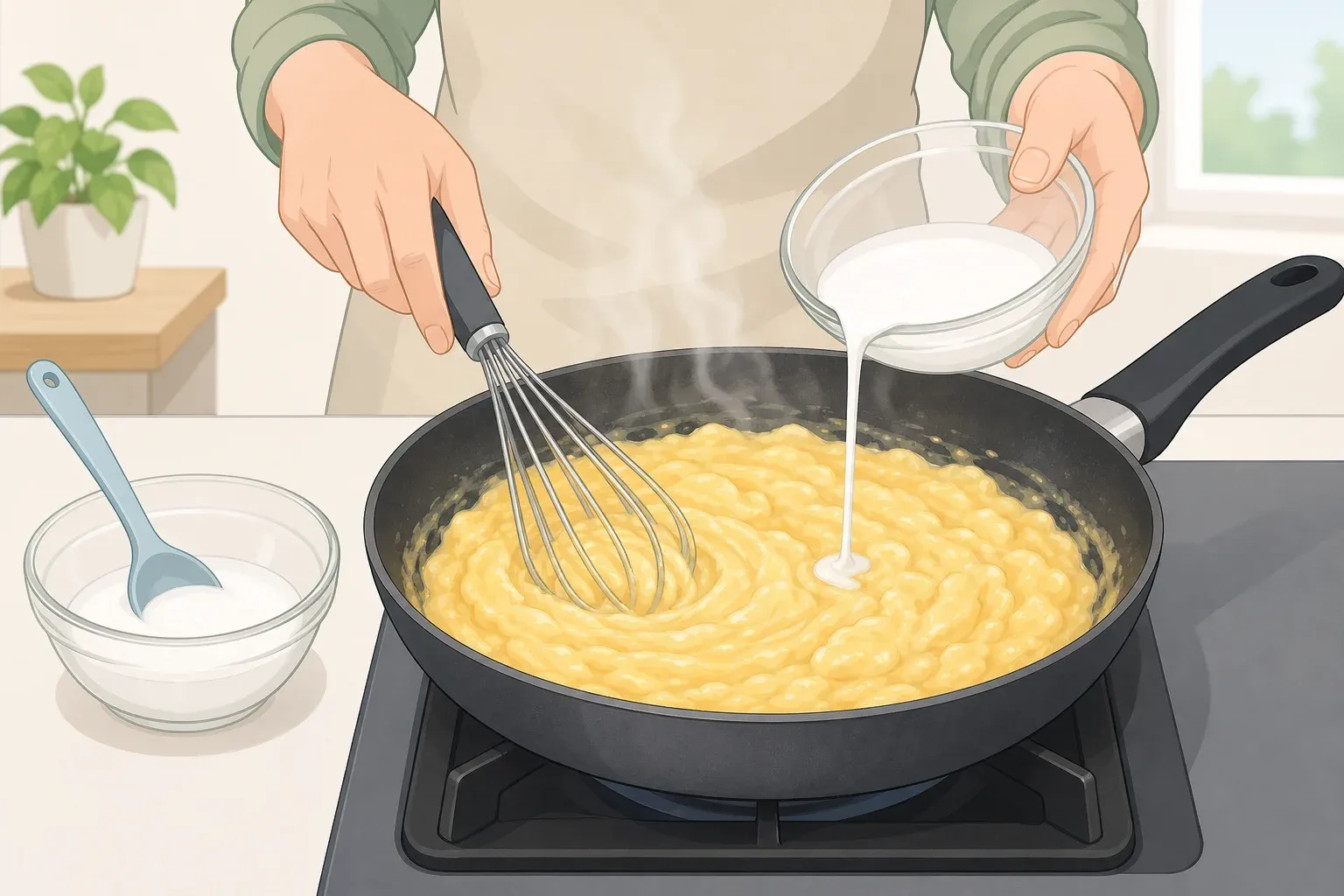
Turn the burner to low and stir in the heavy cream. Then turn off the heat entirely. Fold in the shredded cheese in two additions, stirring between each. You can also add cream and cheese together on reduced heat; either approach works, but getting the burner down before the dairy goes in is the non-negotiable part. Cheese added over high heat tightens up and turns the sauce grainy rather than smooth.
Within 60–90 seconds, the sauce should shift from brothy and loose to cohesive and glossy.
Step 6: Taste, season, and serve
Taco seasoning packets carry significant sodium, so taste before reaching for the salt. Adjust with pepper. Serve immediately; the pasta keeps absorbing sauce as it sits.
Why the method works: The dry pasta cooks directly in the seasoned broth rather than plain water, so every piece picks up the taco flavor as it hydrates. The cream goes in at the end over low heat, which produces a sauce that stays cohesive when the cheese folds in. That's the mechanism, and it's what separates this from a skillet pasta where the cheese gets added too hot and breaks.
The most common failure point: Adding cheese while the heat is still high. Lower the burner before the dairy goes in, every time.
Adjusting on the fly: sauce consistency, salt, and scaling
These aren't optional edge cases. Pasta absorbs liquid at different rates depending on shape and brand, so the sauce consistency at the end of Step 4 can vary. Here's how to handle it.
If the sauce is too thick: Add broth or a splash of milk in small amounts, stirring between additions, until it loosens to the consistency you want. Keeping extra broth nearby for exactly this reason is helpful. Don't add water; it thins the flavor along with the texture.
If the sauce is too loose: Let the pot sit on the lowest heat setting for another 2–3 minutes before adding the dairy. The pasta will keep absorbing. The sauce tightens considerably once the cheese goes in.
Managing salt: A standard taco seasoning packet contains enough sodium that additional salt is often unnecessary. Taste after Step 5, before adding anything. If the heat level feels flat rather than salty, a pinch of cumin or a dash of hot sauce does more than salt alone.
Scaling up: The baseline serves four to six. To stretch it to six to eight, increase the pasta to 12 oz and the broth to 3 cups. Keep the beef at 1 lb or increase to 1.5 lb depending on preference. The dairy amounts can stay the same; adding more cheese at the end is an easy way to compensate if the sauce looks thin after scaling.
The cream cheese version: If using cream cheese instead of heavy cream, cube it cold and add it in Step 5 with the heat on low rather than off entirely. Cold cubes melt more evenly. Stir until fully incorporated before folding in the shredded cheese. The result is noticeably thicker and slightly tangier, which some tables prefer.
Toppings, leftovers, and the freezer question
Toppings: set up a bar, not a garnish
Put toppings on the side and let people build. The essentials: sour cream, fresh cilantro, sliced jalapeños, green onions. One addition worth calling out specifically: crushed tortilla chips. The base recipe has no crunch; the chips fix that without changing the dish. Diced avocado or fresh tomato works well on top if you have them.
Refrigerator storage
Leftovers keep for 3–4 days in a sealed airtight container. Reheat on the stovetop over low heat with a splash of milk or broth to bring the sauce back. The pasta absorbs liquid in the fridge overnight, and without adding some back, the reheated result is dry and dense.
Freezing: the honest answer
If freezer-friendliness matters, the cream cheese version is the more practical place to experiment. For the heavy-cream formula, refrigerate and eat within four days.
What comes next
Once the baseline is locked in, there's one change that gives full control over the whole dish: homemade taco seasoning. A packet works, but it's a fixed sodium and spice load. A simple blend of chili powder, cumin, garlic powder, onion powder, smoked paprika, and a pinch of cayenne can be mixed in about two minutes and dialed to any heat level. Homemade taco seasoning can be a direct swap for the packet in their version. That single adjustment lets the cook tune salt, heat, and depth independently, without changing anything else about the method.
The protein is also easy to swap. Ground turkey or chicken can be direct substitutes. The technique stays identical; only the fat content changes, which means slightly less grease to drain in Step 1.
The one-pot method holds regardless of what goes into it. That's the part worth keeping.





Comments
Be the first, drop a comment!