


Overnight Bananas Foster French Toast Casserole: 3 Key Decisions
This guide walks you through making an overnight bananas foster French toast casserole that comes out custardy inside, golden on top, and finished with a glossy caramelized banana sauce, all with about 10 minutes of active work the night before and five minutes of stovetop cooking in the morning.
Three decisions determine whether this works. The bread gets dried before soaking. The casserole soaks overnight, not for an hour. And the Bananas Foster topping is made separately on the morning of serving, never baked into the casserole. Get those right and the rest is just following steps.
Stovetop French toast is hard to serve to a crowd. America's Test Kitchen put it plainly in December 2025: you're standing at the stove flipping individual slices while the first batch goes cold. The baked casserole format solves that. The Bananas Foster element, a New Orleans classic of bananas caramelized in butter, brown sugar, and rum, makes it feel like more than a convenient workaround.
Before you start, you'll need:
- 9×13-inch baking dish
- Large mixing bowl and whisk
- Deep skillet (for the topping)
- At least 8 hours of refrigerator time, so plan to assemble the night before
Ingredients at a glance
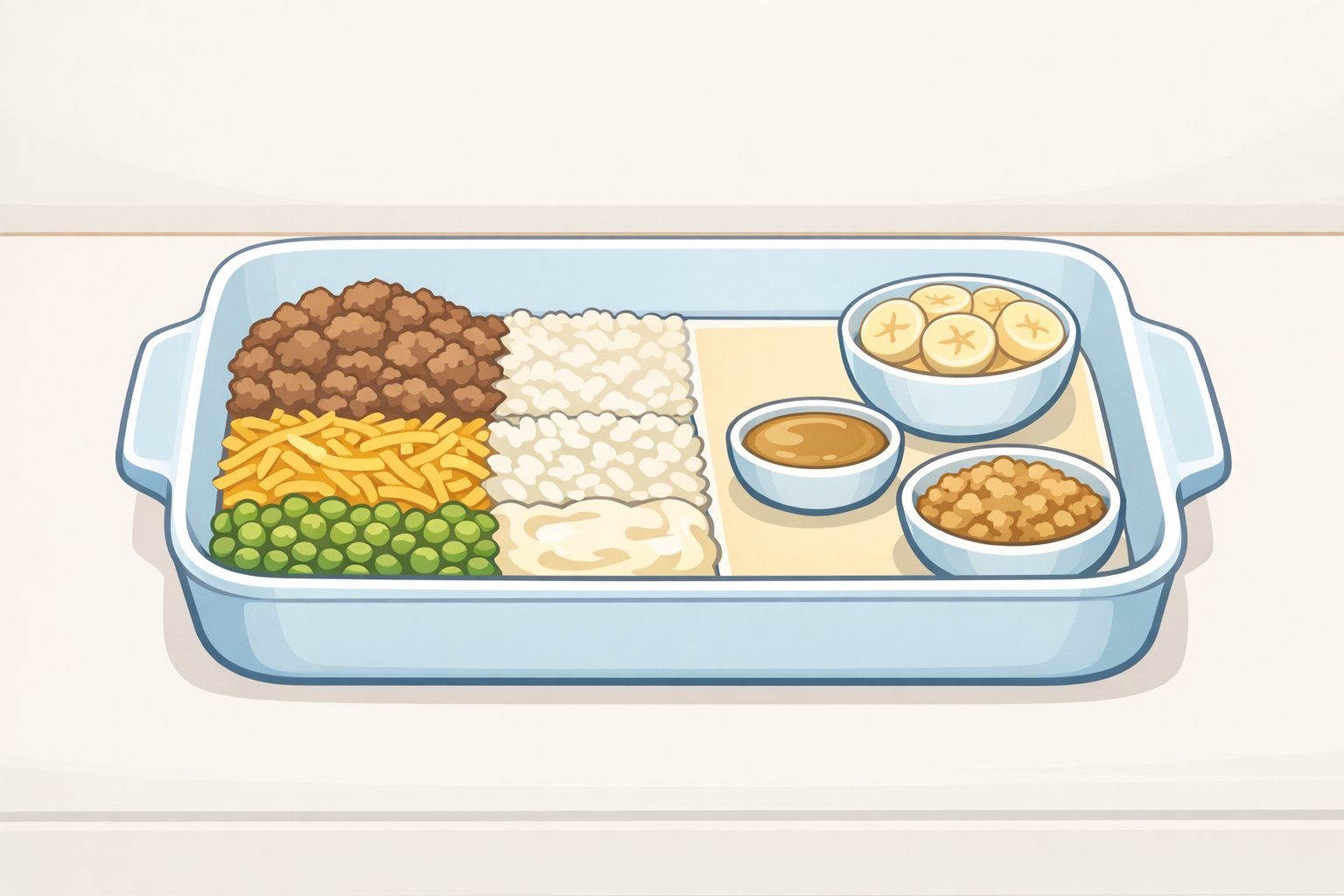
For the casserole:
- 10 oz challah or brioche, sliced 1 inch thick
- 7 large eggs
- 1½ cups whole milk (fat-free Fairlife works as a lighter swap; standard skim does not, explained below)
- 1½ tsp vanilla extract
- ½ tsp cinnamon
- ¼ cup sugar (or monk fruit sweetener)
- ¼ tsp salt
- 1 tsp rum or rum extract, optional
For the Bananas Foster topping (made morning-of):
- 1 tbsp butter
- ½ cup brown sugar
- 1 tsp cinnamon
- 1 tsp vanilla
- 1 tbsp rum or 1 tsp rum extract, optional
- 4 medium ripe bananas, sliced
Quantities sourced from Skinnytaste (March 2026), with technique cross-referenced against Serious Eats (February 2025) and America's Test Kitchen (May 2025).
The three decisions that prevent soggy casserole and mushy bananas
Before the step-by-step, it's worth naming the failure modes this method is designed to avoid, because each of the three key decisions is a direct response to a specific way this dish goes wrong.
Decision 1: Dry the bread first. Soft, fresh bread is already holding moisture. Pour custard over it and the bread can't absorb much, leaving a wet layer on top and dry bread underneath, or worse, a dense gummy interior after baking. Both America's Test Kitchen (May 2025) and Well Plated (updated 2025) treat oven-drying as essential, not optional, specifically because dry bread absorbs maximum custard evenly. ATK dries slices at 325°F for about 25 minutes; Well Plated uses 350°F for 8-10 minutes. Either works. The goal is a surface that feels dry to the touch without any browning.
Decision 2: Soak for the full 8 hours minimum. Less time means the custard hasn't fully penetrated the bread. America's Test Kitchen specifies 8 hours as the minimum for the right consistency, with up to 24 hours being safe per USDA guidelines cited by 101 Cooking for Two (October 2025). Serious Eats (November 2024) sets the minimum at 1.5 hours for a same-day version, but for the overnight method, 8-12 hours is the target window.
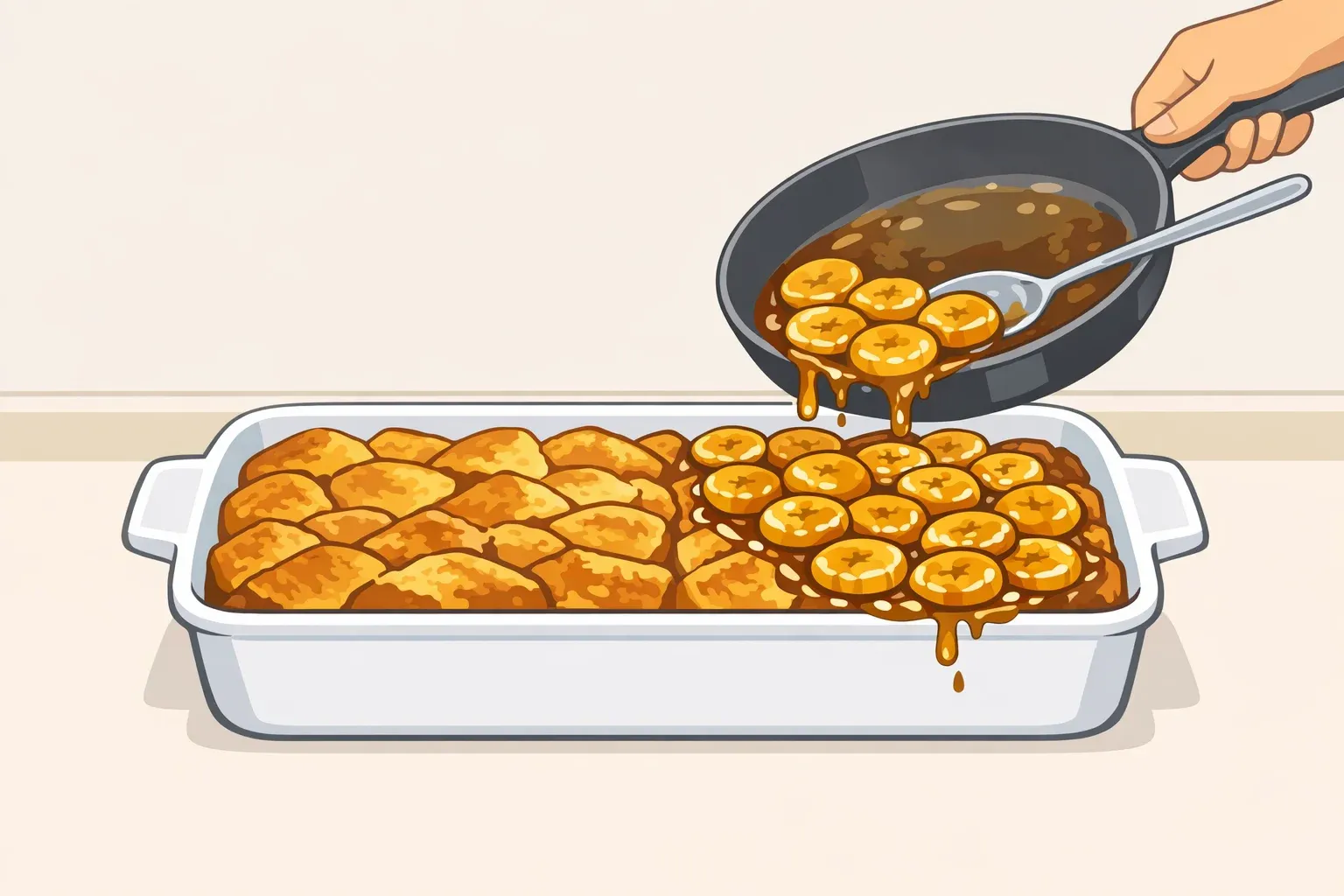
Decision 3: Make the banana topping separately, at serving time. Bananas cooked inside a casserole for 40 minutes go soft, brown, and indistinct. The flavor muddles into the custard rather than sitting on top as a distinct caramel layer, which is what makes this a bananas foster french toast bake rather than just banana bread pudding. Skinnytaste (March 2026) builds the topping entirely on the stovetop while the casserole bakes. Seasoned Kitchen (February 2024) takes the same approach, caramel sauce made separately, spooned over at serving. Butter & Baggage (April 2023) builds a brown sugar and butter layer into the bottom of the casserole dish before refrigerating, which achieves a similar effect but trades some control over banana texture.
The stovetop method is simpler and keeps the bananas intact. Five minutes of work, added per slice at serving.
Two small choices that change the final texture
This is a make ahead french toast casserole that works well regardless of which bread you use, but challah and brioche behave differently. Challah is slightly denser, with a tighter crumb, so it holds its shape cleanly through a long soak and comes out with more defined slices. Brioche is richer, with higher butter content, and produces a more custardy, almost bread-pudding texture once baked. Both work. If you want clean slices that hold together at the table, challah is the better call. If you want something closer to a spoonable baked custard, brioche gets you there.
The other variable is sweetness level. The custard here, with just ¼ cup sugar, is mildly sweet on its own, similar to regular pan-fried French toast, per Foodess (November 2025). It's designed to be served with the banana-caramel topping doing most of the sweetness work. That's the right balance for this recipe. Skip the topping and it'll taste underseasoned. Serve it as written and the contrast between the lightly sweet custard base and the glossy caramel on top is what makes it work.
Night before: assemble the casserole (10 minutes active)
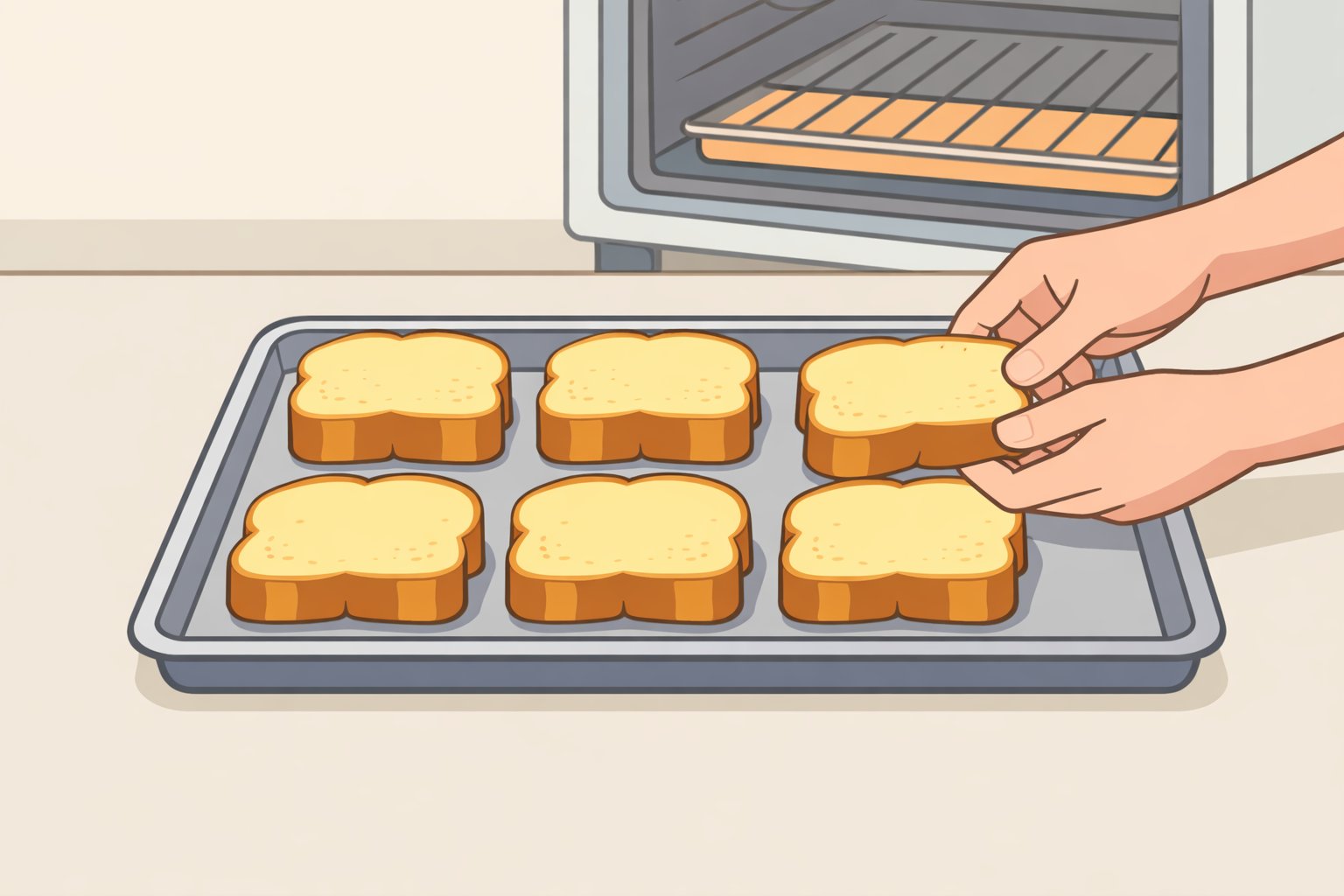
Step 1: Dry the bread. Slice challah or brioche into 1-inch-thick pieces. Arrange on a baking sheet and place in a 350°F oven for 8-10 minutes, until the surface feels dry to the touch but no browning has started. Let cool completely before moving to the dish. Day-old bread left out on the counter also works, but oven-drying is faster and more consistent.
Step 2: Build the custard. Whisk together eggs, milk, vanilla, cinnamon, sugar, salt, and rum extract (if using) until fully smooth with no streaks of yolk remaining. On milk: America's Test Kitchen explicitly advises against standard low-fat or skim milk in baked casseroles, noting that fat content affects custard texture (May 2025). Skinnytaste's lighter version uses fat-free Fairlife, which has higher protein content than standard skim and behaves differently; it's a workable swap if you're reducing calories. Standard whole milk is the more reliable default.
Step 3: Soak and refrigerate. Spray or butter the 9×13 dish and arrange the dried bread in an even layer. Pour the custard evenly over the top, then press the slices down gently so the liquid begins soaking in from above as well as below. Cover tightly with plastic wrap.
Refrigerate for at least 8 hours, up to 24. The 8-hour minimum isn't approximate; it's the threshold for full saturation and the right final texture.
⚠️ Thermal shock warning: Don't pull the dish from a cold fridge and slide it straight into a hot oven if you're using ceramic or glass. Either let it sit at room temperature for 20-30 minutes first, or place it in a cold oven and preheat together. Foodess flags this specifically (November 2025).
Morning of: bake, make the topping, serve
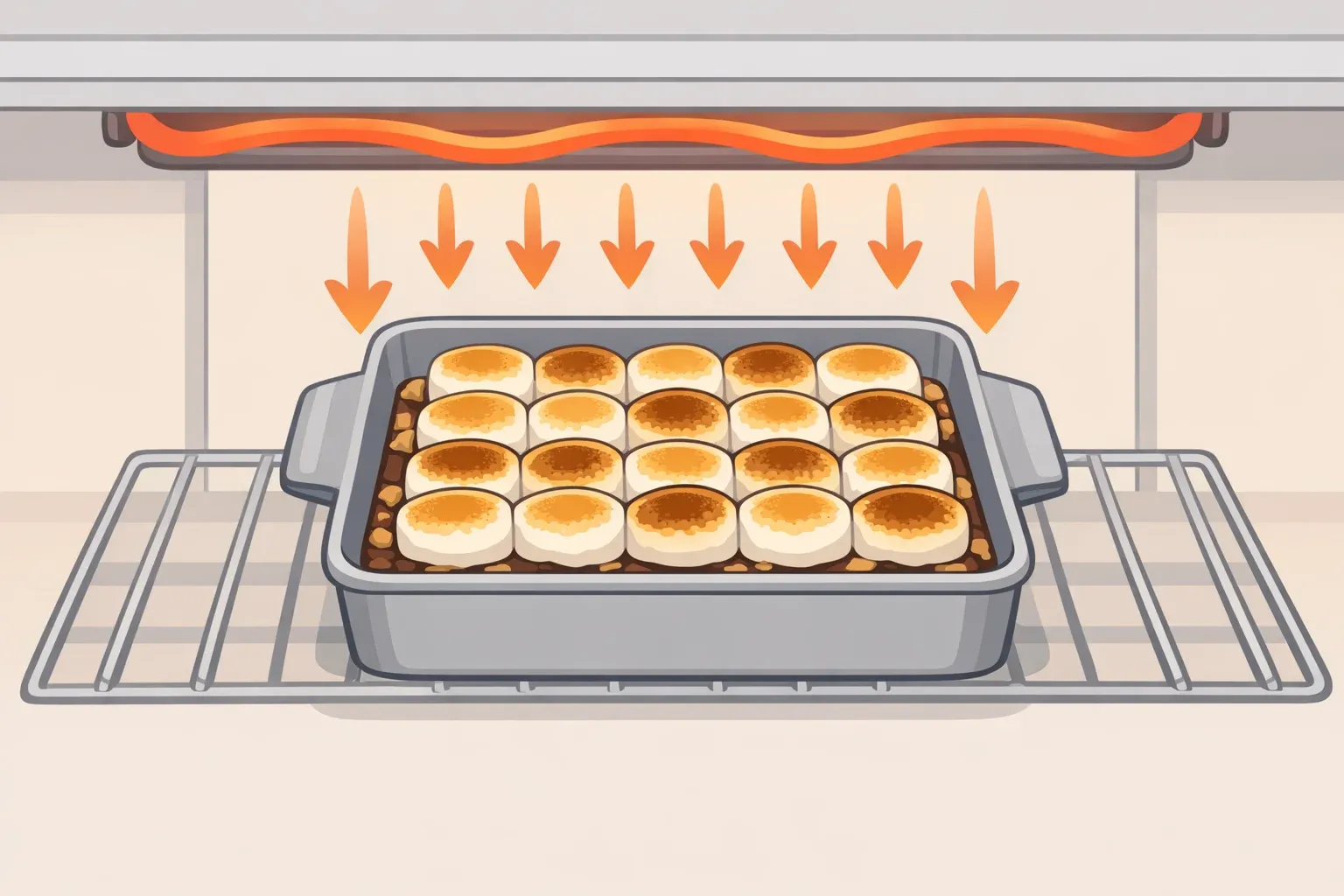
Step 4: Bake the casserole. Remove the dish from the refrigerator and let it rest at room temperature while the oven preheats to 350°F. Bake uncovered, on the center rack, for 40-45 minutes. The casserole is done when the top is puffed, the edges are pale golden, and no liquid seeps out when the center is lightly pressed.
For a more reliable read: the custard is fully set at an internal temperature of 175-185°F on an instant-read thermometer, per Foodess (November 2025). Note that 165°F is the food-safety minimum for egg-based dishes per USDA guidance cited by 101 Cooking for Two (October 2025). The casserole is safe at that point, but the texture may not yet be fully set. Aim for 175-185°F for the best result.
Let the casserole rest 5-10 minutes before cutting. The custard firms up as it cools slightly, which helps slices hold together cleanly.
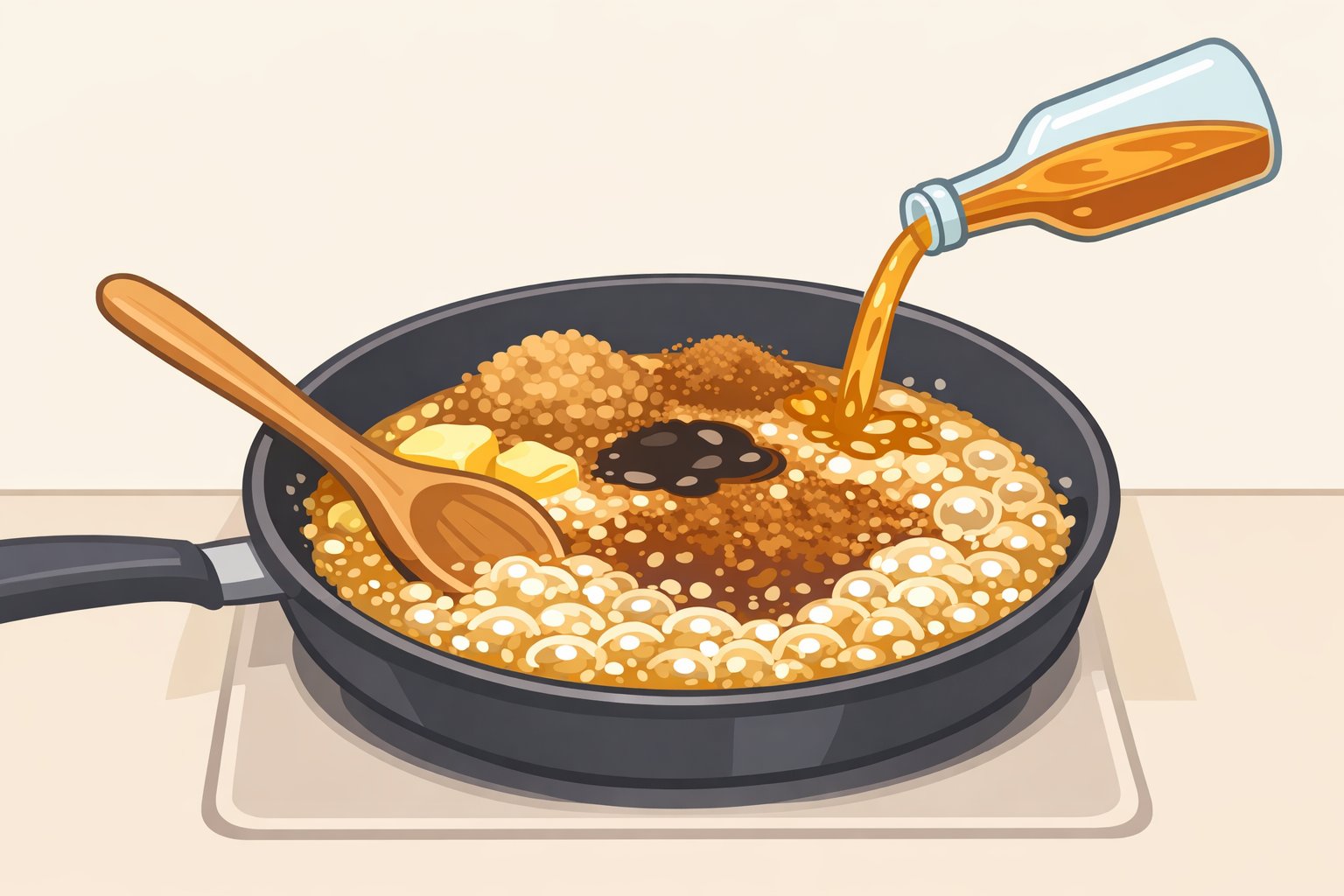
Step 5: Make the Bananas Foster topping. Start this about 10 minutes before the casserole comes out of the oven.
- Melt 1 tablespoon butter in a deep skillet over low heat.
- Add brown sugar, cinnamon, vanilla, and rum (or rum extract) if using. Stir until the sugar dissolves. Add a few drops of water if needed.
- Simmer 2 minutes until the sauce thickens slightly.
- Add sliced bananas and cook just 1 minute. Remove from heat, keep covered.
Serious Eats uses the same essential approach: butter, brown sugar, rum, bananas cooked about 3 minutes total (February 2025). Keeping the cook time short preserves the banana shape and keeps the sauce distinct, which is what creates the clean contrast against the baked custard below.
On the rum: Rum extract gives the flavor without alcohol, useful for family brunches. Omitting it entirely is also fine; Butter & Baggage (April 2023) notes the brown sugar and cinnamon carry the Bananas Foster identity without it.
Step 6: Serve. Cut the casserole into 8 pieces and spoon the banana-caramel topping over each slice individually at the table. Don't pour the sauce over the whole dish if you're not serving everything at once. The sauce softens the top quickly and doesn't reheat as well once it's been absorbed.
If something goes wrong: quick troubleshooting
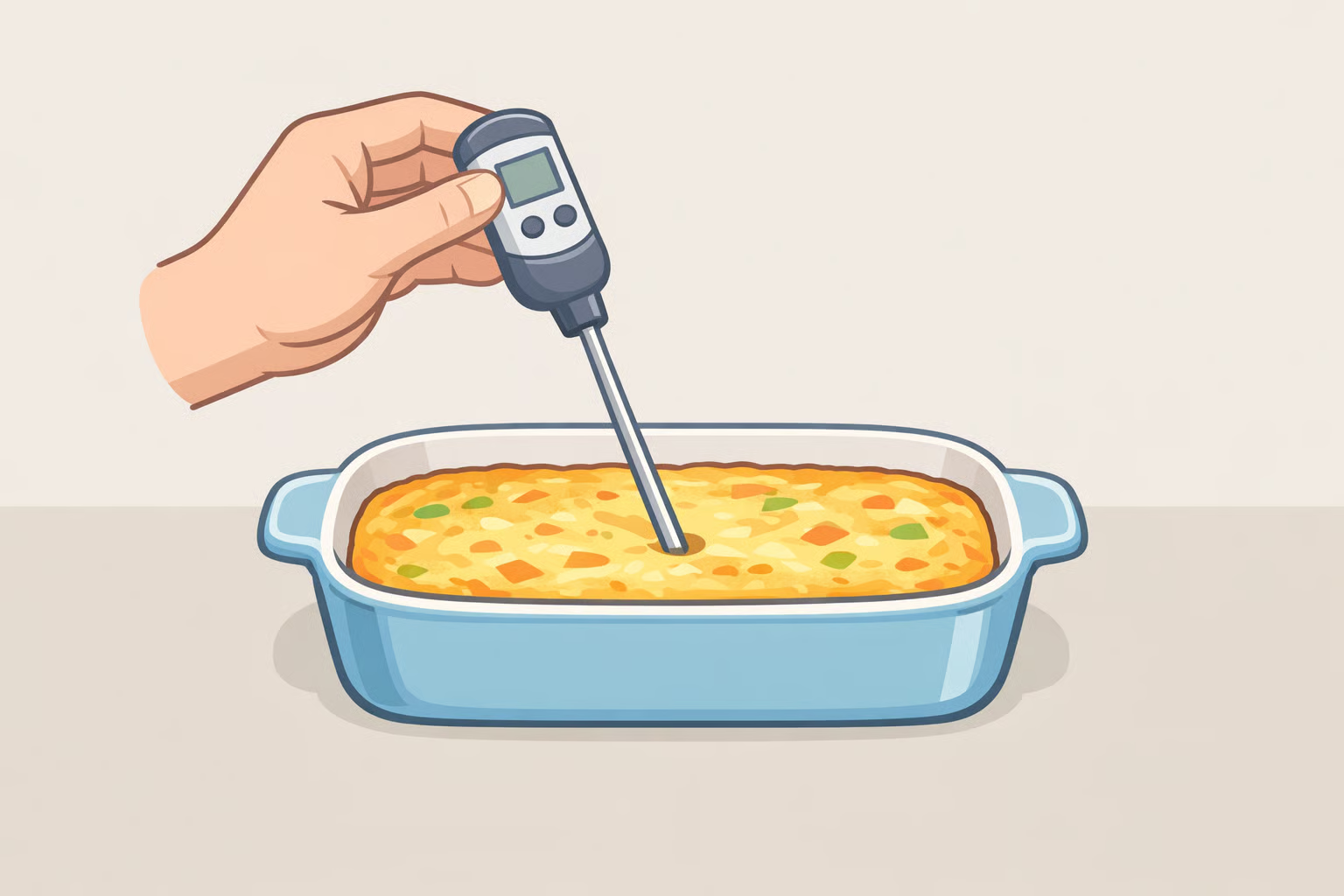
- Center looks loose after 45 minutes: Cover loosely with foil and return to the oven for 5-10 more minutes. The edges cooking faster than the center is common in glass dishes. Use the thermometer, not just visual cues.
- Top is browning too fast: Tent loosely with foil at the 25-minute mark and continue baking uncovered for the final 10-15 minutes to set the center.
- Bananas going soft before the casserole is done: Pull the pan off heat and keep covered. They'll stay warm and hold their texture for 10-15 minutes. Don't let them keep cooking.
Leftovers: what holds and what doesn't
Store baked casserole slices covered in the refrigerator for 3-4 days (Skinnytaste, March 2026). The banana topping should be stored separately, or made fresh, since it doesn't reheat cleanly once it's soaked into the bread.
For reheating, the oven beats the microwave for texture: Foodess recommends 300-325°F covered, then briefly uncovered to re-crisp the top (November 2025). 101 Cooking for Two notes that microwave reheating works but makes the casserole go soft, acceptable for a quick weekday breakfast, not ideal if texture matters (October 2025).
Baked slices freeze well for up to 3 months wrapped individually and stored in an airtight container (Skinnytaste, March 2026; Well Plated, 2025). Thaw overnight in the refrigerator and reheat at 350°F for about 20 minutes. Make the banana topping fresh.

Comments
Be the first, drop a comment!