



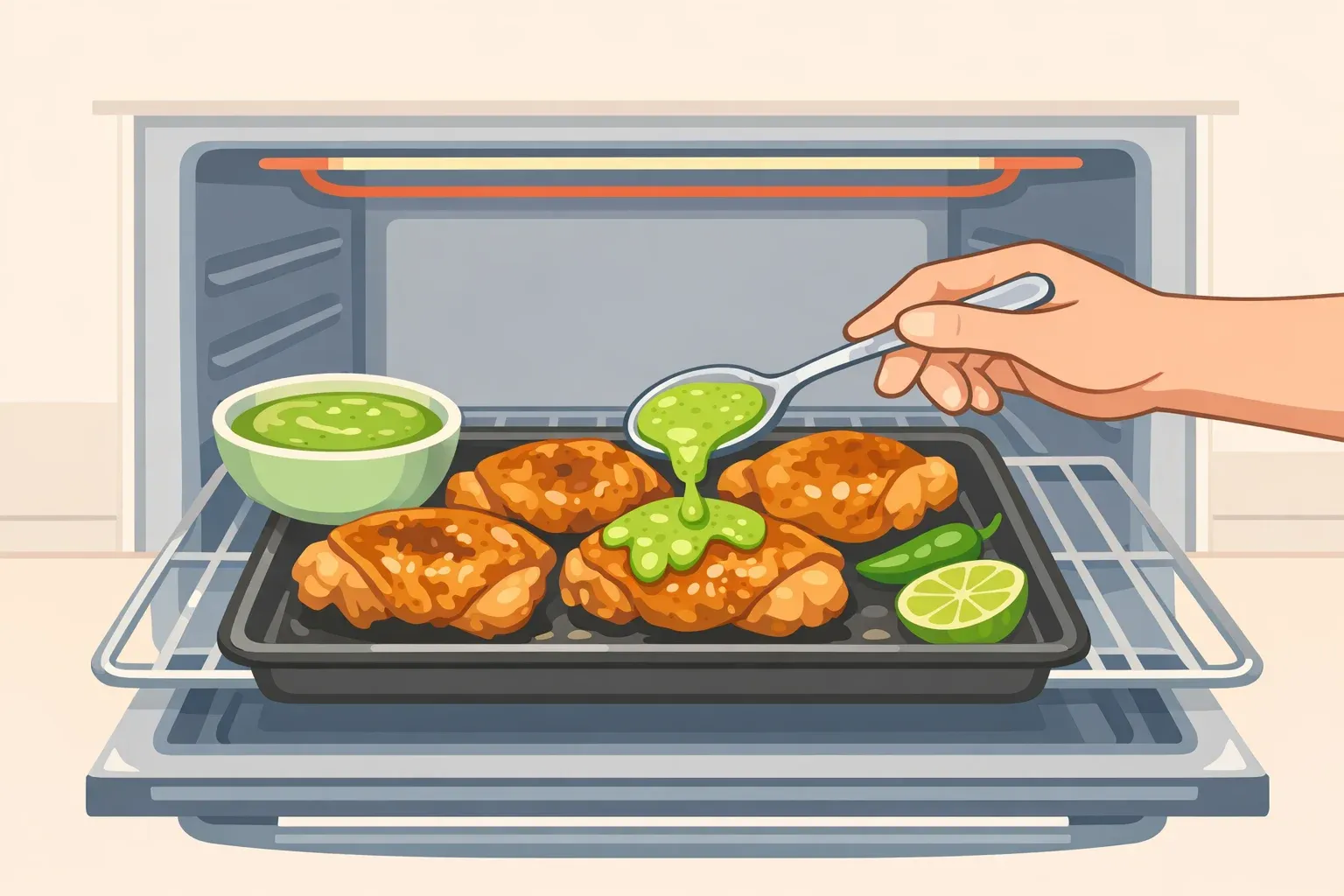
This guide walks you through a complete home-oven version of pollo a la brasa, Peru's famous spit-roasted chicken, using bone-in, skin-on thighs instead of a whole bird. By the end, you'll have a working Peruvian chicken with green sauce recipe on the table in about 80 minutes total, with roughly 15 minutes of active work. The thighs roast in 25 to 35 minutes at 450°F and require nothing beyond a standard oven setup.
The chicken is the main event. The aji verde, a jalapeño-cilantro sauce that's bright, creamy, and built for spooning over everything on the plate, is what makes it Peruvian rather than just well-spiced roast chicken. You'll make both.
One specialty ingredient ties the whole thing together: aji amarillo paste, a fruity Peruvian chile paste found at Latin grocery stores or online. It goes into both the marinade and the sauce. If you can't source it, leave it out. The jalapeño in the sauce still delivers fresh, vegetal flavor without it. What the omission costs you is aji amarillo's particular sweetness and depth, which jalapeño doesn't replicate. Buy it if you can; skip it cleanly if you can't.
What you need before starting: A rimmed baking sheet, a blender or food processor, and an instant-read thermometer. On dark meat coated in deep spices, color is an unreliable doneness signal. The thermometer is not optional.
Ingredients for 4 servings
For the chicken and marinade:
2½ lb. bone-in, skin-on chicken thighs
2 tbsp. extra-virgin olive oil
1 tbsp. distilled white vinegar
3 garlic cloves, grated or finely chopped
2 tsp. smoked paprika
1 tsp. ground cumin
1 tsp. kosher salt
½ tsp. freshly ground black pepper
1 tsp. aji amarillo paste (optional)
For the aji verde:
2 jalapeños, seeded and finely chopped
1 garlic clove, peeled
1 cup fresh cilantro leaves with tender stems
Zest and juice of 2 limes, plus wedges for serving
1 tsp. aji amarillo paste (optional)
1 tsp. honey
½ tsp. kosher salt, or more to taste
¼ tsp. freshly ground black pepper
¼ cup extra-virgin olive oil (or substitute ¼ cup mayo or Greek yogurt as the creamy base)
2 saltine crackers (for emulsion stability, if needed)
Step 1: Mix the marinade and coat the chicken
The marinade has two jobs: flavor the meat and build the lacquered, deeply colored skin that distinguishes this roasted Peruvian chicken recipe from a generic weeknight bird.
Why thighs? Bone-in, skin-on thighs cook faster than a whole bird and are more forgiving at high heat. The fat content keeps the meat moist through the full roasting window, which matters when you're running the oven at 450°F. A whole bird at that temperature risks dry breast meat before the thighs finish; individual thighs don't have that problem.
Mix. Whisk together the olive oil, vinegar, grated garlic, smoked paprika, ground cumin, kosher salt, black pepper, and aji amarillo paste if using. The marinade should taste assertive: savory, a little smoky, with a noticeable acidic edge. If it tastes flat, add more garlic or a small splash of vinegar. Cumin provides a warm, earthy foundation; smoked paprika adds smokiness and color; the vinegar keeps the overall profile from going heavy.
For a more traditional marinade, include aji panca paste alongside aji amarillo. Aji panca is a smoky, dark dried chile that adds another layer of depth; if you can find both pastes, use them.
Coat. Work the marinade under the skin with your fingers, not just over the surface. Marinade on top flavors the skin; marinade underneath flavors the meat. Cover and rest at least 30 minutes at room temperature, or up to 2 hours refrigerated.
Longer is genuinely better: Marinate overnight for maximum flavor and juiciness. The 30-minute version is entirely workable on a weeknight, but if you're planning ahead, start the marinade the night before.
30 minutes before roasting, pull the chicken from the refrigerator. Taking it out early promotes even cooking by letting the meat come closer to room temperature before it hits the oven, per EatHealthy365. Use this window to make the sauce.
Step 2: How to make Peruvian chicken's aji verde green sauce
The sauce takes about 10 minutes and keeps for up to a week in the refrigerator, per EatHealthy365. Make more than you need for tonight.
Dry the cilantro first. Wash it, spin it dry, then blot with paper towels. EatHealthy365 identifies wet cilantro as the main culprit behind thin, watery aji verde: excess moisture prevents a proper emulsion regardless of everything else you do right.
Blend. Combine the seeded jalapeños, garlic clove, cilantro (leaves and tender stems), lime zest and juice, aji amarillo paste if using, honey, salt, and black pepper. For the creamy base, start with mayo; it produces a stable, rich emulsion that's hard to break.
Greek yogurt works as a direct one-for-one swap and cuts the richness if you prefer a lighter result, per Lemons + Anchovies earlier this year. With the motor running, drizzle in the olive oil slowly if you're going the oil-emulsified route rather than mayo or yogurt.
The recipe here is simplified compared to more elaborate versions. Lemons + Anchovies includes green onions and Parmesan or cotija cheese; those additions are legitimate, but they're not necessary for a sharp, well-balanced sauce on a weeknight.
Blend on high for 1 to 2 minutes until the sauce is smooth and uniformly green.
Adjust. If the sauce tastes grassy or flat, add more salt and lime juice. A grassy flavor usually means the balance is off, and what it needs is acid and salt to bring cilantro's flavor into focus; without enough of both, you get herb paste rather than sauce. If the texture is still too thin despite dry cilantro, blend in 2 saltine crackers. The starch stabilizes the emulsion without affecting flavor.
Rest. Refrigerate for at least 30 minutes before serving. The sauce sharpens considerably with a short rest. It keeps 5 to 7 days in an airtight container. Don't freeze it; the emulsion breaks on thawing.
Step 3: Roast, baste, and rest
Why 450°F? High heat is what drives the spiced marinade toward that lacquered, caramelized finish. Lower temperatures produce cooked chicken, not the deeply colored skin that makes this dish visually and texturally distinct. The center of the thigh catches up fast because bone-in dark meat retains heat efficiently. At this temperature, 25 to 35 minutes is the realistic window, per Delish.
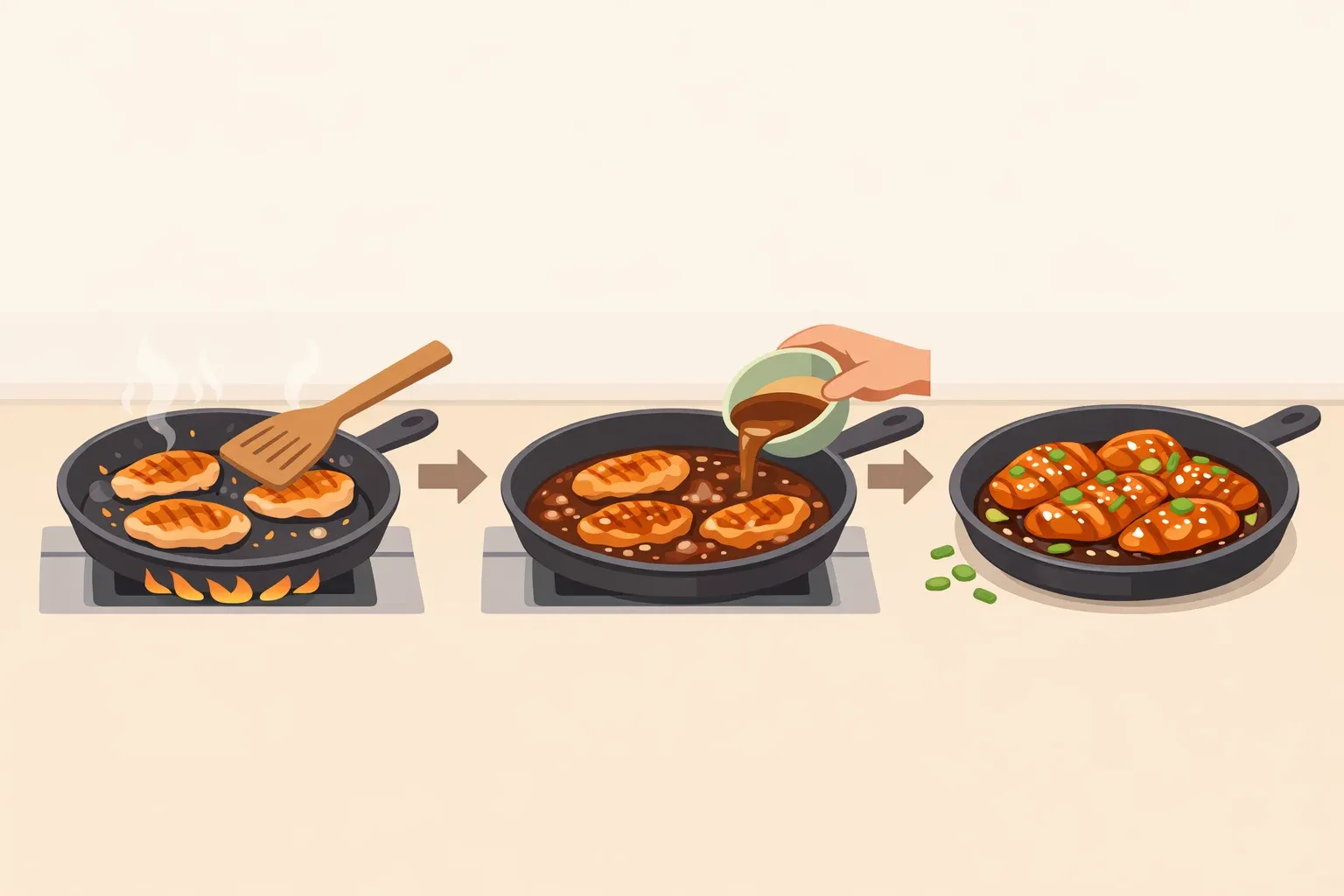
Roast. Preheat to 450°F with the rack in the center. Arrange thighs skin-side up on the baking sheet with space between them. Crowded pieces steam instead of roast, and steaming will collapse the skin you've worked to build. Roast until an instant-read thermometer inserted into the thickest part reads 165°F, roughly 25 to 35 minutes. The skin should be deep golden brown. If it looks pale at the 25-minute mark, give it more time regardless of elapsed minutes. Trust the thermometer for doneness; trust your eyes for the skin.
If the skin isn't crisping, work through this checklist: Did the pieces have enough space on the pan? Were they straight from the refrigerator? Was the oven fully preheated before the pan went in? If the thighs hit 165°F before the skin looks right, run them under the broiler for 2 to 3 minutes. Watch closely. Spiced skin goes from caramelized to burned faster than plain skin, and there's no recovering it.
Baste. For a more lacquered finish, brush the chicken once or twice with marinade that was set aside before the raw chicken ever touched it. The Washington Post notes that basting is the move for deeply burnished skin. Never reuse marinade that contacted raw meat unless it has been brought to a full boil first.
Rest. Let the chicken sit 10 to 15 minutes before serving. Tent loosely with foil; tight wrapping traps steam and softens the skin. EatHealthy365 recommends the same approach: loose foil keeps the chicken warm without undoing the crust. Slicing too early means the juices drain onto the board rather than staying in the meat.
How to serve it tonight, and what to do with the leftovers
Total elapsed time on a weeknight is about 80 minutes: mix the marinade, coat the chicken, make the sauce during the marinating window, then roast.
For a complete plate with almost no extra effort, cut potatoes into wedges, toss them in olive oil and salt, and lay them flat on the baking sheet before placing the chicken on top. They roast in the drippings and come out tasting like the fries typically served alongside pollo a la brasa at Peruvian restaurants. Rice and beans work just as well. Both are better with extra aji verde spooned over.
Make a larger batch of sauce than the chicken requires. It works well on rice and beans, tostones, fried yucca, and sweet plantains; Lemons + Anchovies describes it as a zesty, creamy condiment suited to grilled or fried meat and seafood. The point is it's versatile enough to justify a double batch on the first run.
Leftover chicken keeps up to 3 days refrigerated and reheats well in an oven or microwave, per Sip and Feast. Once you have the marinade and sauce dialed in, the same method scales to chicken legs or a spatchcocked bird. The timing changes; the technique doesn't.




Comments
Be the first, drop a comment!