



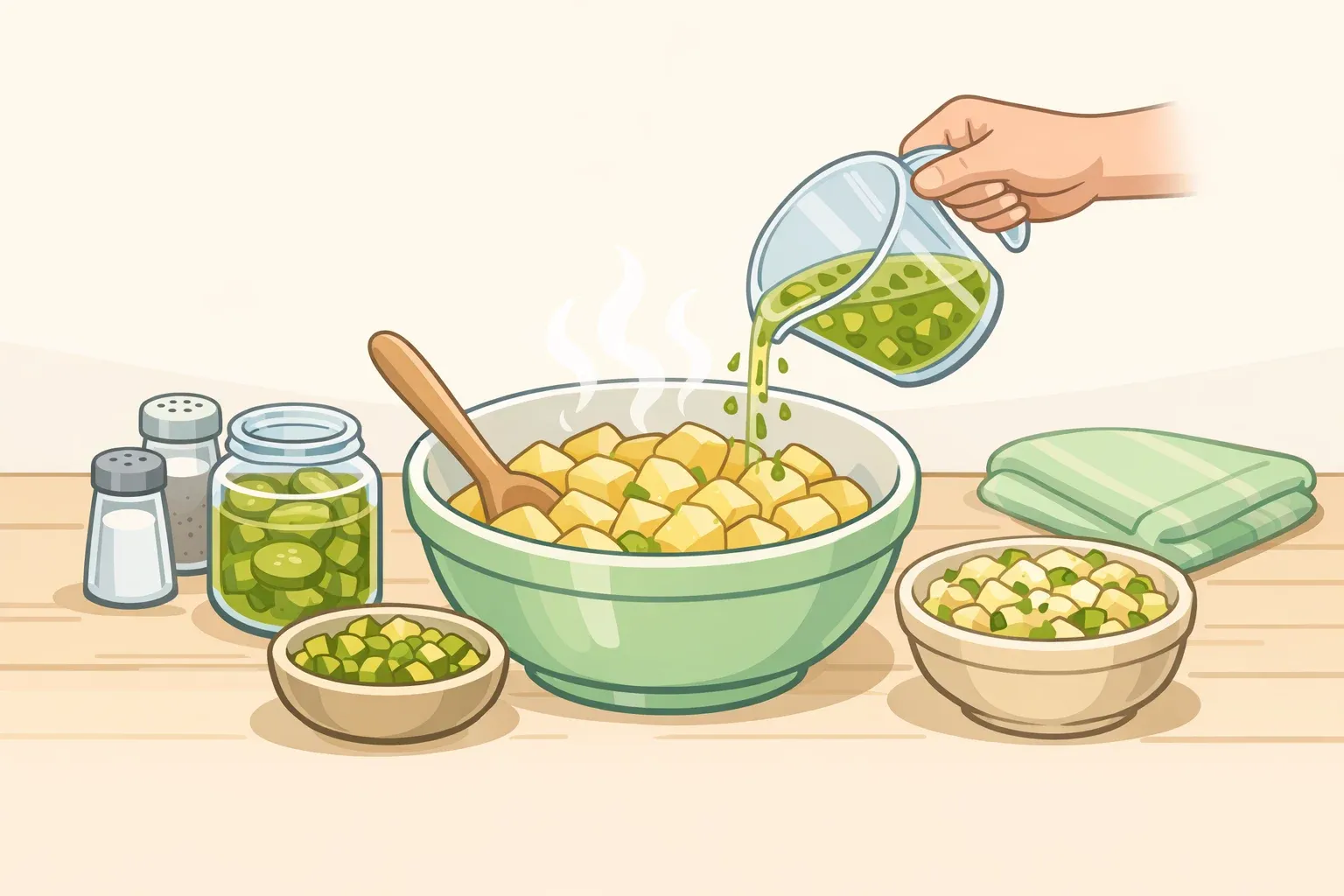
Most bland potato salad has the same problem: the dressing tastes seasoned, but the potatoes do not. In a side-by-side test published June 10, 2026, Food & Wine found that adding a few tablespoons of pickle brine to freshly boiled potatoes gave the finished salad a brighter, more seasoned flavor than the same recipe made without it.
The trick works because the potatoes are seasoned before they cool. Instead of relying on mayonnaise or dressing to carry all the flavor, you give the potatoes a chance to absorb salt, acid, and aromatics while they are still hot.
Quick method: Boil cut potatoes until just fork-tender, drain them, and immediately sprinkle with 3 tablespoons of dill pickle brine per pound of potatoes. Toss gently, rest for 5 to 10 minutes, cool completely, then add the dressing. Taste before adding more salt, vinegar, mustard, or extra pickle juice.
Season the potatoes before the dressing
In many mayo-based potato salads, all the seasoning lives in the dressing. By the time cold potatoes meet cold mayo, the potato flesh has firmed up, and most of the tangy flavor stays on the outside. The result can look creamy and well mixed while still tasting bland underneath.
Adding brine right after draining fixes that problem. Hot potatoes absorb liquid more readily than cold ones, a point echoed by chefs quoted by Simply Recipes in a guide to why warm potatoes absorb flavor better. A small splash of pickle brine at this stage seasons the potato itself before the creamy dressing goes on.
Pickle brine also does more than plain vinegar. It brings acid, salt, and aromatics — often dill, garlic, bay, or red pepper — from the jar in one ingredient. Used carefully, it adds brightness without turning the whole bowl into pickle salad.
Why pickle brine works better warm
Freshly boiled potatoes are at their best for seasoning right after they come out of the pot. Add the brine while the potatoes are still steaming and it can soak in; wait until they cool and more of that seasoning stays on the surface.
The goal is not to make the salad taste aggressively pickle-forward. Used in a small amount, the brine seasons the potato itself so the finished salad tastes brighter and more balanced, not just coated in a tangy dressing.
The logic is not new. Warm German-style potato salads rely on a similar principle: potatoes absorb seasoning better when they meet a vinegar-based dressing before they cool. The pickle-brine version applies that same idea to creamy, mayo-based potato salad, where the final dressing is cold and cannot do as much flavor work on its own.
How to use pickle brine in potato salad
Start with waxy or medium-waxy potatoes. Red potatoes hold their shape firmly, while Yukon Golds are slightly creamier but still sturdy enough for this method. Allrecipes recommends waxy potatoes for classic potato salad because they hold their shape after cooking; Yukon Golds are a reliable middle option if you want a softer bite without the potatoes falling apart.
Use dill pickle brine as the baseline. Bread-and-butter brine will make the salad sweeter, and spicy brine will add heat, so use those only if they fit the rest of the recipe. Taste the brine first: it should be tangy, salty, and pleasant enough that you would want it in the finished salad. If it tastes harsh on its own, choose another jar or start with less.
Start potatoes in cold, salted water.
Cover cut potatoes with cold water by about an inch before turning on the heat. This helps them cook more evenly from edge to center. Salt the water, but remember that the brine will add more salt later. If your pickle brine tastes very salty, go lighter here.Cook until just fork-tender, then drain.
Simmer until a paring knife slides in with little resistance, usually 10 to 15 minutes depending on cut size. Drain as soon as the potatoes are done. Overcooked potatoes can turn mushy once they are tossed with liquid and dressing.Spread the potatoes out while hot.
Transfer the drained potatoes to a wide bowl, sheet pan, or cutting board while they are still steaming. If your recipe calls for a slightly mashed texture, press each piece lightly with a fork to open the surface; that gives the brine more places to land.Add 3 tablespoons of brine per pound of potatoes.
Sprinkle the brine evenly across the hot potatoes rather than pouring it into one spot. Start with 3 tablespoons per pound. If your brine is especially salty or sharp, use 2 tablespoons first, then taste after the potatoes rest.Rest for 5 to 10 minutes.
Let the potatoes sit undisturbed until the surface no longer looks wet. Once they reach room temperature, they are ready for dressing.Adjust the dressing before adding it.
The brine has already added salt and acid, so taste a piece of potato before mixing in the dressing. If your usual recipe calls for vinegar, extra pickle juice, or a lot of mustard, start with less than usual. The dressing's job now is to add creaminess and depth — not repeat the seasoning work the brine already did.Chill before serving.
Chill the dressed salad for at least one hour before serving. The rest helps the flavors settle and gives you one last chance to taste for salt, acid, and creaminess before it goes on the table.
Food safety note: Keep potato salad refrigerated until serving. For cookouts or picnics, keep the bowl on ice or in a cooler at 40°F or below. The FDA says cold perishable foods should not sit out for more than two hours, or more than one hour when outdoor temperatures are above 90°F, in its guidance on handling food safely while eating outdoors.
How to fix briny, bland, or flat potato salad
Even a good method can go sideways if the brine is too strong, the potatoes cool too much, or the dressing is not adjusted afterward.
If the salad tastes too briny or sharp: Stir a spoonful of plain mayo into the dressing to soften the acidity. A small pinch of sugar can also help balance a harsh brine. Do not add more vinegar or pickle juice.
If the potatoes still taste under-seasoned: The brine may have gone on too late, or the brine itself may have been too mild. For the current batch, season the dressing more assertively. Next time, add the brine immediately after draining.
If the salad tastes flat after chilling: Cold dulls salt and acid. Taste the salad cold, then adjust salt first. If it still needs brightness, stir a small splash of brine into the finished salad, not directly onto the potatoes.
When to use this trick
This method works best in creamy, mayo-based potato salads that tend to taste starchy or flat after chilling. It is especially useful for make-ahead cookout salads because the potatoes have time to absorb flavor before the dressing settles.
It is also a natural fit for recipes that already include chopped dill pickles, mustard, celery, scallions, hard-boiled eggs, fresh dill, or sour cream. The brine reinforces flavors that are already there instead of adding something that feels out of place.
Vinaigrette-style potato salads are different. German-style potato salad already builds the warm-seasoning step into the recipe by dressing the potatoes while they are still warm. Pickle brine is most useful when the final dressing is cold and creamy.
The extra effort is about 30 seconds. Use refrigerated brine from a pickle jar that still smells and tastes fresh. Good Housekeeping notes that leftover pickle juice can be useful in dressings, marinades, sauces, and quick pickles, but reused brine should be treated carefully. Discard brine that smells off, looks unusual, or has already been reused for other foods.
Once the potatoes are seasoned before the dressing goes on, the finished salad tastes brighter without needing much extra work.




Comments
Be the first, drop a comment!