




Reviewed by: Y. Garcia
This guide walks through making a complete pineapple jalapeño marinade from scratch, explains the 2-hour ceiling that makes or breaks it, and gives you cut-specific timing so you know exactly when to pull the protein.
The practical summary up front: this marinade takes under 10 minutes to assemble, works on pork, chicken, or beef, and can be made up to 3 days ahead, per Delish. Keep it in contact with raw meat for at least 1 hour and no more than 2. That window is the one number to hold onto.
Quick reference
Ingredients (serves 4, via Delish):
2 cups coarsely chopped fresh pineapple
1 small jalapeño, finely chopped
4 garlic cloves, grated
2 tablespoons maple syrup
2 tablespoons olive oil
1 teaspoon kosher salt
Prep time: 10 minutes Marinating window: 1 to 2 hours (refrigerated) Best proteins: Flank steak, boneless chicken thighs, boneless pork chops or cutlets Key warnings: Fresh pineapple only. Never exceed 2 hours. Reserve a basting portion before any raw meat touches the marinade.
Why fresh pineapple changes how this marinade works
The functional ingredient is bromelain, a protease enzyme found in raw pineapple. It doesn't behave like lemon juice or vinegar. Acid breaks down protein gradually through pH changes; that's why standard acid-based marinades require anywhere from 2 to 24 hours to do meaningful work on chicken, steak, or pork, according to the University of Florida's IFAS extension program (IFAS, earlier this year). Bromelain skips that mechanism and targets connective tissue collagen directly, per Cooking Techniques Authority (earlier this year).
For bromelain to be present at all, the pineapple must be raw. Heat and processing deactivate the enzyme, which is why canned pineapple or bottled juice won't tenderize anything. Fresh is the only option.
How to make pineapple jalapeño marinade: step-by-step
Prerequisites: A blender; a resealable plastic bag or glass container with a lid; a small separate jar or bowl with a lid; 2 pounds of flank steak, chicken thighs, or boneless pork portions. Read the protein guide below before selecting your cut, since it affects timing.
Step 1 Blend the pineapple. Add 2 cups of coarsely chopped fresh pineapple to a blender and pulse to a chunky purée. Stop before it turns fully liquid; visible texture is what you're after. Transfer to your bag or container.
Step 2 Add the remaining ingredients. Mix in the finely chopped jalapeño, grated garlic, maple syrup, olive oil, and kosher salt. The mixture should smell sharp and fruity.
Step 3 Reserve a basting portion before any meat touches the marinade. Spoon out roughly a quarter of the mixture into a separate sealed container and refrigerate it. That becomes your basting liquid during cooking. Any marinade that has contacted raw meat must be discarded once the meat is removed; it cannot go back onto a cooking protein, per IFAS (earlier this year). The source recipe implies this step rather than spelling it out. Reserve first, marinate second.
Step 4 Add the protein, seal, and refrigerate. Submerge the meat in the marinade, turn it to coat all sides, seal the container, and refrigerate. Flip the bag or turn the container once halfway through, per IFAS (earlier this year). Do not marinate on the counter.
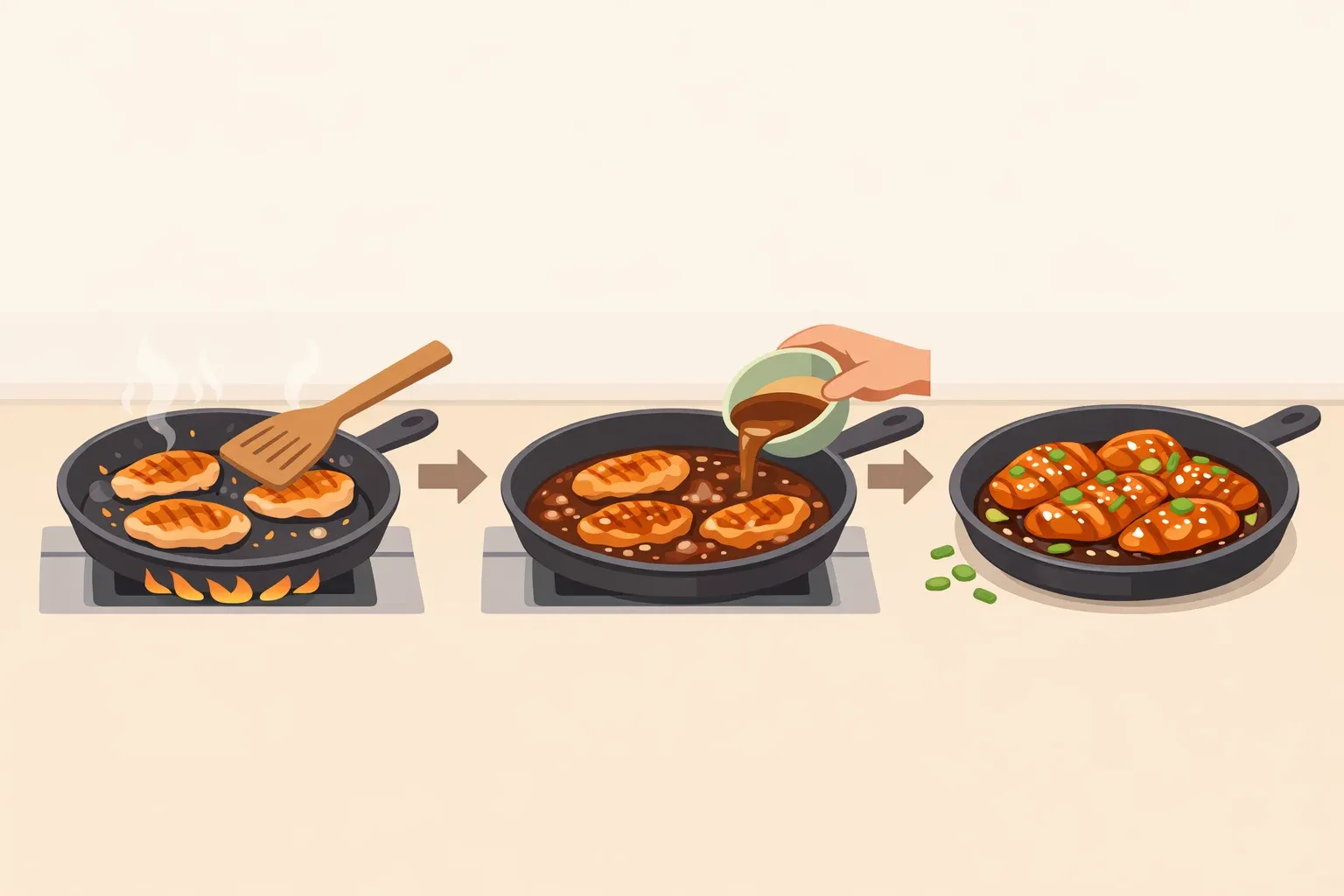
Step 5 Wipe, then cook. Remove the protein and discard all marinade that held raw meat. Pat the surface with a paper towel to remove excess purée before the protein hits any heat. Cook over medium heat.
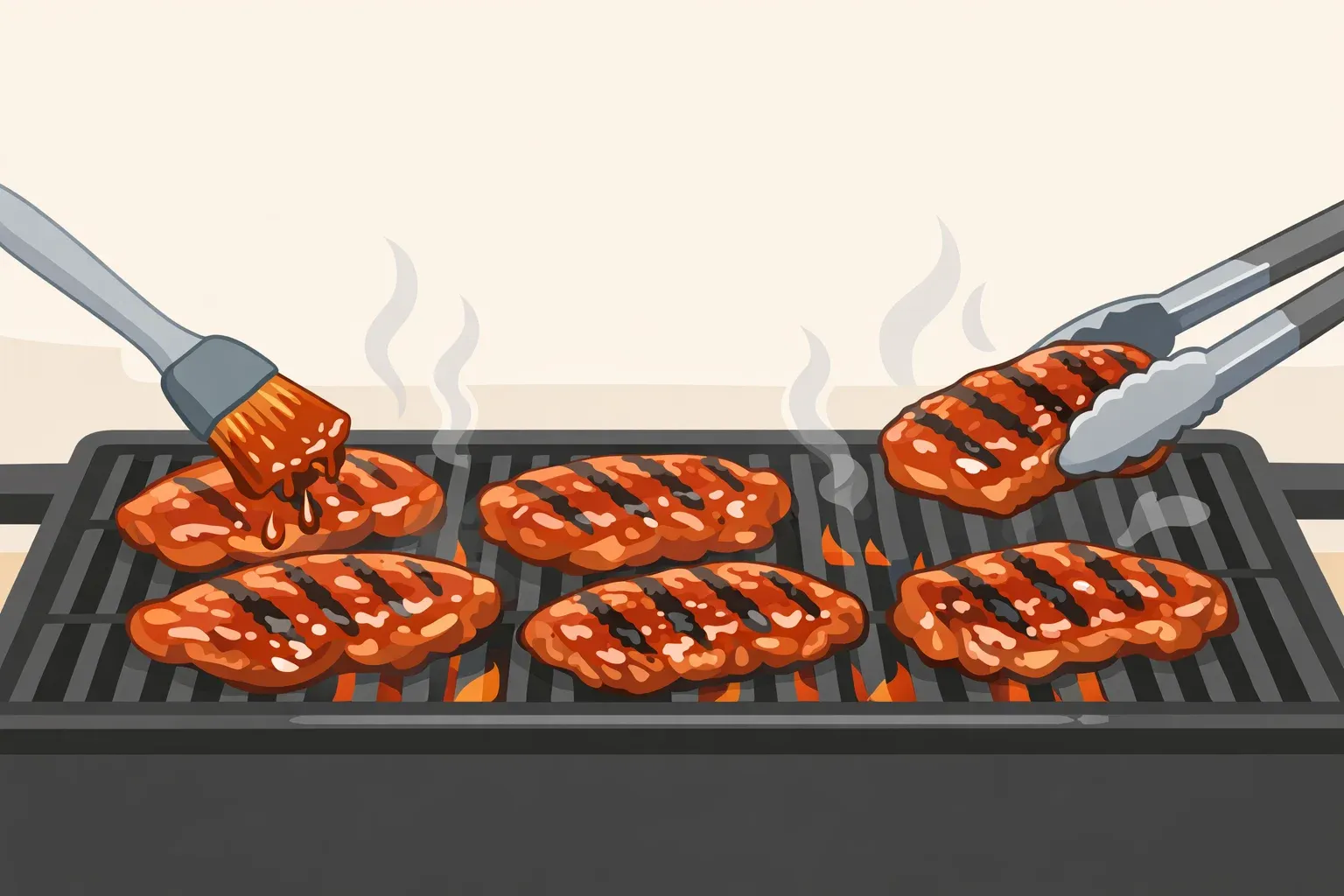
Step 6 Baste once per side using the reserved portion. Apply the clean marinade once to each side during cooking. The sugars caramelize quickly. If the surface is coloring faster than the interior is cooking, reduce the heat.
Marinating times by protein
Bromelain doesn't stop when the surface looks done; it keeps working as long as it's in contact with raw meat. Go past 2 hours and the outer layer of beef or pork can become structurally compromised, overly soft and unable to hold its shape when sliced, according to Cooking Techniques Authority (earlier this year). Set a timer. The sourced instruction from Delish is clear: refrigerate at least 1 hour and no more than 2.
One thing to understand about marinade penetration: IFAS notes that marinades typically reach only about a quarter inch into the surface, so timing here is primarily about surface tenderization, not reaching the center of a thick cut. If a piece of over-marinated meat feels spongy on the outside but normal inside, that's the enzyme at work on the surface layer. Pull earlier next time.
The cut-specific guidance below works within the sourced 1 to 2 hour range and reflects practical inferences from cut thickness, not independently sourced rules:
Flank steak: Start checking at 1 hour. This is a relatively thin cut, and bromelain acts on the surface quickly. Running closer to 2 hours risks over-softening the exterior; pulling early is the safer call if the steak is under an inch thick.
Chicken thighs (boneless, skin-on or skinless): 1 to 1.5 hours. Thighs have denser muscle than breast meat and benefit from the fuller window. For thinner boneless thighs, stay closer to 1 hour.
Pork, boneless and portioned: Up to the full 2 hours, but only for cuts already portioned into chops, cutlets, or strips around an inch thick. Whole pork shoulder is a slow-cooking cut that doesn't suit a fast marinate-and-grill approach. If shoulder is what's available, slice it into 1-inch steaks before marinating.
What if you only have canned pineapple? Use a different marinade. Canned pineapple has been heat-processed, which deactivates bromelain entirely. The flavor will still be present, but the tenderizing mechanism won't. An acid-based citrus or vinegar formula is the better call.
For context on how compressed this timeline is: standard acid marinades require 2 to 24 hours for chicken and up to 24 hours for both steak and pork (IFAS, earlier this year). The enzyme accounts for the difference.
When to choose this over a standard acid marinade
A lemon or vinegar marinade is forgiving on timing. A few extra hours won't wreck the texture; the acid just keeps slowly working. This pineapple jalapeño marinade runs on a tighter schedule, and the trade-off for that constraint is speed and a more complex flavor profile.
Chicken thighs and thin pork cuts are where this recipe performs best. Flank steak is close behind. Thick whole cuts like pork shoulder, or anything that needs to sit overnight, are better served by an acid-based formula. This sweet and spicy pineapple marinade is the right call when the protein is going on the grill or into a pan within a couple of hours.
The marinade itself can be made up to 3 days ahead and refrigerated in a sealed container (Delish). Make it Sunday, marinate Tuesday. The prep and the cook don't have to happen on the same day, and the reserved basting portion stores alongside it in its own jar, ready to go.










Comments
Be the first, drop a comment!