


Raspberry Shrub Mocktail Recipe: Make a Batch, Drink All Week
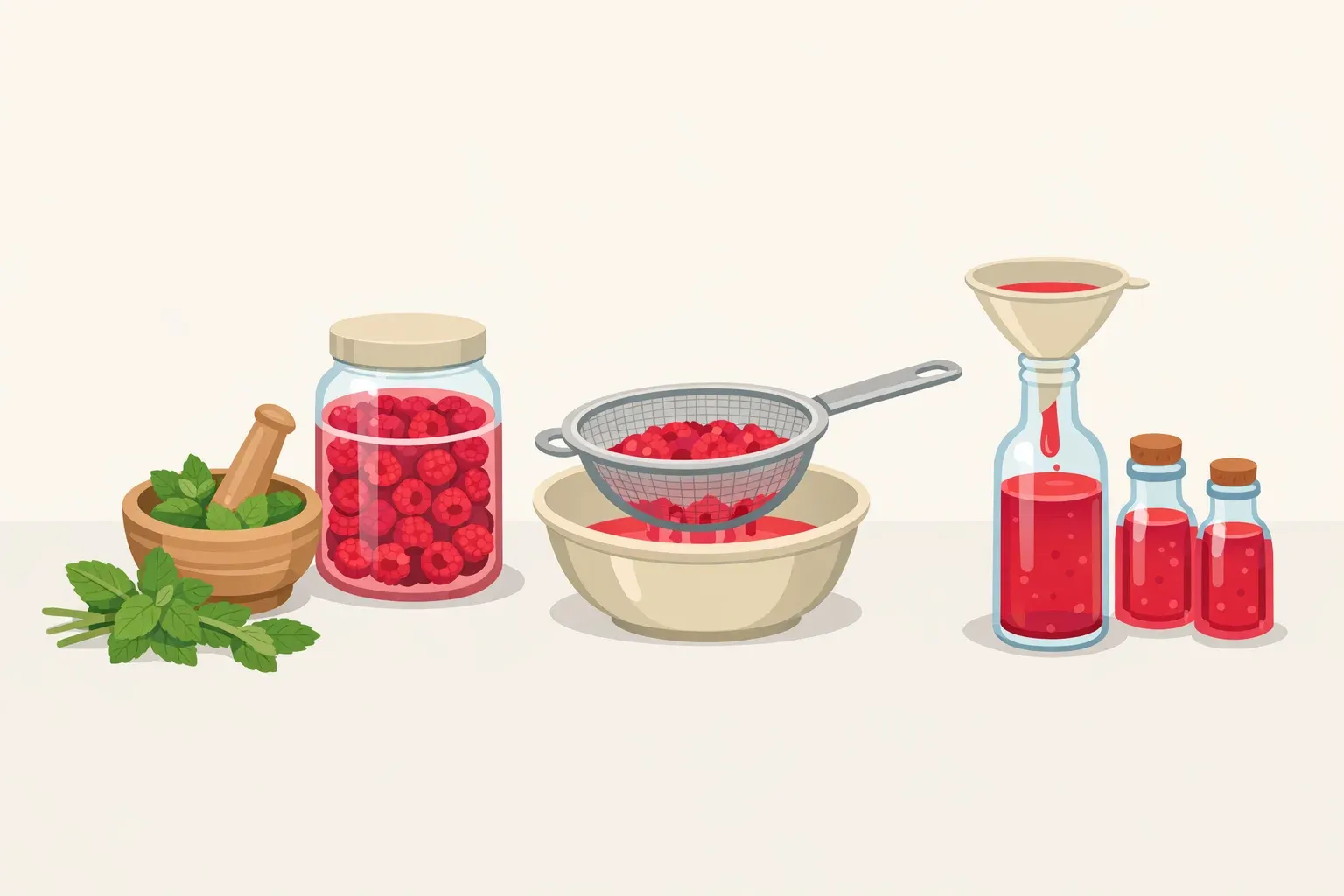
This guide walks you through building a cold-process raspberry shrub concentrate. Ten minutes of hands-on prep, no heat, no special equipment. The finished concentrate keeps refrigerated for up to four weeks and assembles into a sparkling raspberry shrub mocktail in under two minutes. Mint finishes the drink at serving time: a bruised sprig dropped in just before you pour, not steeped into the base.
Make the concentrate once. Every drink after that takes two minutes.
Before you start, you'll need: A glass jar with a lid, a fine-mesh strainer or cheesecloth, a bowl, and 8 hours of refrigerator time.
Three things worth knowing before you begin:
- Without heat, the aromatic compounds that make fresh raspberries smell the way they do stay intact. Cold-process extraction produces a concentrate that is simultaneously sweet, sharply acidic, and more complex than a cooked raspberry syrup (NotSoOrdinaryCooking published last month)
- Raspberries rank among the most flavorful fruits for vinegar-based preparations, and mint is a natural pairing; chopping or bruising fresh herbs before use helps release their flavor (OSU Extension, revised last December)
- Shrubs date back at least to 18th-century America, where vinegar preserved fruit before refrigeration existed. Chefs and bartenders revived the format in the 2010s, and it has since become a practical method for building non-alcoholic drinks with genuine complexity (A Foodcentric Life, last November)
What vinegar actually does in this drink
A shrub is a concentrated base: fruit, vinegar, sweetener. Topped with sparkling water, it becomes a raspberry shrub fizz. The vinegar doesn't announce itself in the glass. It contributes backbone, a sharper and more layered quality than citrus alone can produce, and the result is a genuinely complex non-alcoholic drink that a commercial mixer can't replicate (CocktailFYI, earlier this year).
That's the context you need. On to the recipe.
Ingredients
Shrub base, makes 4 servings:
- 250g fresh or frozen raspberries
- 120g granulated sugar
- 120ml white wine vinegar
- Zest of 1 lemon
Added after straining:
- 45ml fresh lemon juice (see storage note in Step 4)
To serve, per glass:
- 80–85ml shrub concentrate
- 125ml chilled club soda
- 1–2 fresh mint sprigs, bruised
- Fresh raspberries and a lemon slice to garnish
Ingredient notes:
Vinegar: White wine vinegar is the clearest match for raspberry. Mild enough not to dominate, acidic enough to extract and preserve. Apple cider vinegar gives a more rustic edge; ready-made raspberry vinegar works as a shortcut, covered at the end. Balsamic adds depth but darkens the color significantly (A Foodcentric Life).
Sugar ratio: Equal parts sugar and vinegar by weight and volume is deliberate. The base comes out neither cloying nor sharp (NotSoOrdinaryCooking).
Fresh vs. frozen raspberries: Use fresh when they're in peak season. Out of season pale, firm, flavorless frozen is the better call. Freezing ruptures cell walls, releasing more juice during maceration and often producing a more intensely colored concentrate (OSU Extension). Add frozen berries straight from the freezer; no thawing needed.
Scaling up: The ratios scale directly. For 8 servings: 500g berries, 240g sugar, 240ml vinegar, zest of 2 lemons, 90ml lemon juice after straining.
Lemon juice goes in after straining, not during maceration. When you add it determines your storage window. Step 4 covers that decision.
How to make a raspberry shrub mocktail
Step 1: Combine the ingredients
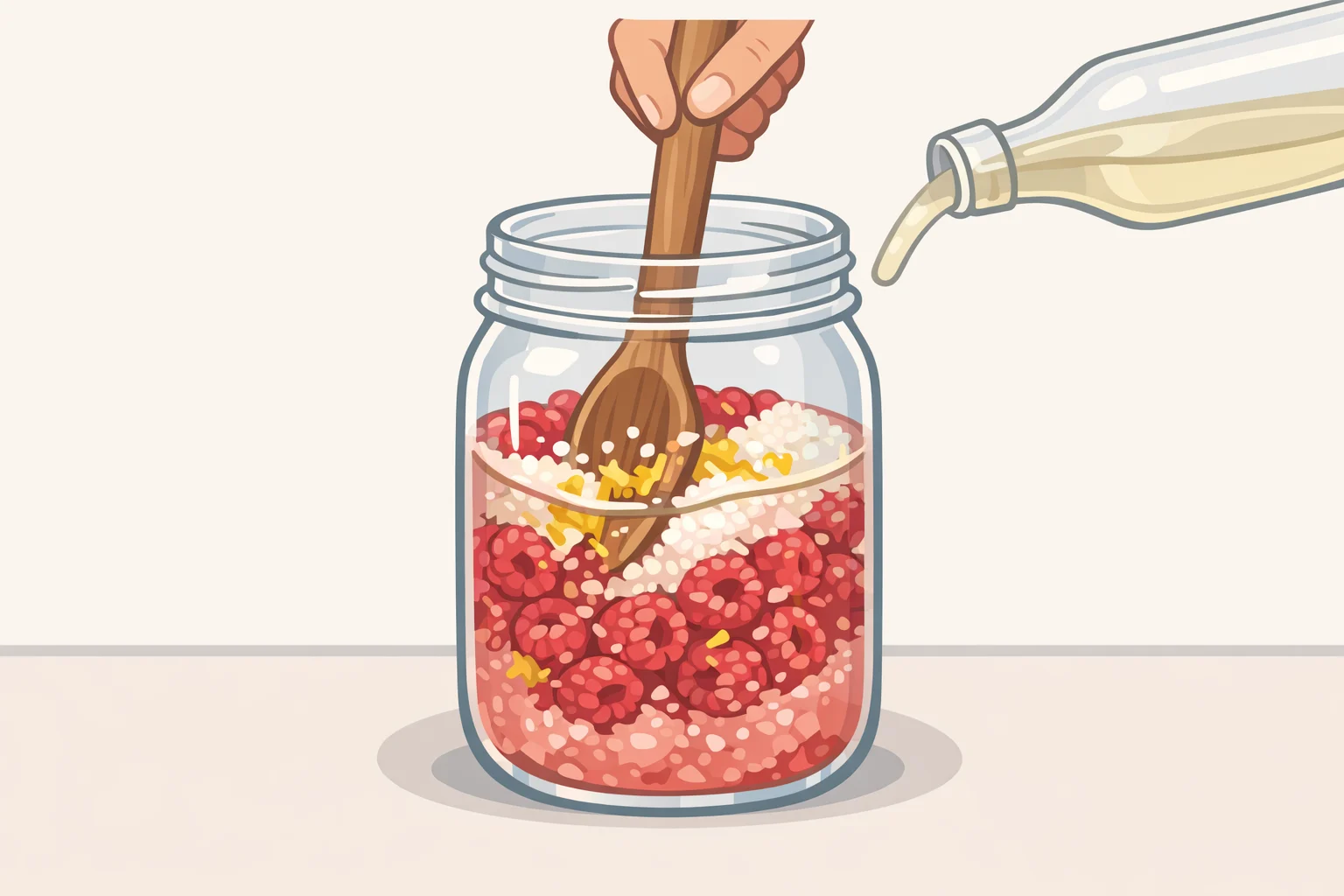
Add 250g raspberries, 120g sugar, the zest of one lemon, and 120ml white wine vinegar to a jar. Stir once to coat everything. Cover and refrigerate.
Step 2: Macerate for at least 8 hours, up to 48
Overnight is the practical target. The sugar draws liquid from the berries through osmosis; the vinegar extracts flavor compounds and preserves the mixture. After 8 hours, expect collapsed, spent-looking raspberries, fully dissolved sugar, and a deep ruby-magenta liquid with an intensely fruity, sharply acidic aroma more complex than fresh raspberry juice alone (NotSoOrdinaryCooking).
Extending to 48 hours adds more depth, as the vinegar continues extracting throughout (NotSoOrdinaryCooking). Worth noting: the 3-to-4-week conditioning timelines recommended for plain infused vinegars apply to unsweetened preparations. In a sweetened cold-process shrub, sugar accelerates extraction considerably (OSU Extension).
Step 3: Strain into a clean jar
Pour through a fine-mesh strainer or cheesecloth into a bowl. Press the fruit gently to extract all the liquid, but don't force the solids through or the concentrate will cloud. Transfer to a storage jar.
Step 4: Decide when to add lemon juice
This is the one decision point that controls how you use the batch:
- Drinking today or tomorrow: Stir all 45ml of fresh lemon juice into the concentrate now. Best flavor; use within two weeks.
- Batching for the week: Hold the lemon juice entirely. Add a fresh squeeze per glass at assembly. Without lemon juice, the base keeps refrigerated for up to four weeks (NotSoOrdinaryCooking).
Squeezing half a lemon over a glass takes five seconds. For most people, that trade is worth an extra two weeks of shelf life.
Step 5: Assemble the raspberry lemon shrub mocktail
Fill a tall glass generously with ice. Add 80–85ml of shrub concentrate. If holding lemon juice per-serving, add a squeeze now. Pour 125ml of chilled club soda slowly down the inside wall of the glass, not straight down, to preserve carbonation. Firmly clap a mint sprig between your palms once before dropping it in; this helps release its flavor (OSU Extension). Add fresh raspberries and a lemon slice. Serve immediately (NotSoOrdinaryCooking).
Assembled drinks don't keep. Pour and serve.
What the finished shrub should look and taste like
Knowing what you're aiming for makes it easier to spot a problem before it reaches the glass.
After maceration (pre-strain): The raspberries should be fully collapsed, almost spent-looking, as if the color has been pulled out of them. The liquid surrounding them should be a deep, brilliant ruby-magenta. The aroma at this point is the real indicator: intensely fruity and sharply acidic, noticeably more layered than fresh raspberry juice (NotSoOrdinaryCooking). If it smells flat or predominantly of vinegar without much fruit behind it, the berries may have been low-quality or under-ripe. Frozen berries tend to produce stronger color and extraction.
After straining: Clear and vividly deep pink, with no cloudiness. If it's murky, fruit pulp pushed through the strainer still fine to drink, but strain through a tighter cloth next time.
The finished concentrate, tasted straight: Sweet, acidic, and deeply fruity simultaneously. The vinegar should be present but not dominant. If it tastes flat, a short maceration or pale out-of-season berries are usually responsible. If it tastes aggressively sour with little fruit behind it, the berries were under-ripe.
In the glass: The drink should be bright, fizzy, and noticeably more complex than a fruit squash or simple sparkling juice. The mint doesn't blend into the drink so much as it floats above it aromatically. That's the point.
Storage: the two-week vs. four-week split
The storage window is determined entirely by when lemon juice enters the batch.
The vinegar's acidity prevents microbial growth, which is what makes the concentrate shelf-stable for up to four weeks in the fridge (NotSoOrdinaryCooking). Lemon juice is more perishable than the vinegar-sugar base, so adding it to the full batch shortens the window. Once stirred in, use within two weeks. For the best result, the source recommends adding lemon juice just before serving or no more than 24 hours in advance (NotSoOrdinaryCooking).
For most people making this on a Sunday to cover the week ahead, the practical approach is clear: hold the lemon juice at the batch level, squeeze per glass. Five seconds per drink, full four-week shelf life.
Troubleshooting and taste adjustments
Fix these at the glass level, not the batch level:
- Too tart: Reduce shrub to 60–65ml per glass, or increase the soda pour
- Too sweet: Use less shrub, or cut the soda to concentrate the vinegar edge
- Not enough raspberry flavor: Next batch, extend maceration to 48 hours or switch to frozen berries for more extraction
- Concentrate is cloudy: Too much fruit pulp pushed through the strainer. Perfectly fine to drink; strain through a tighter cloth or a double layer of cheesecloth next time
- Mint isn't landing: Clap it firmly rather than resting it on top. Old or refrigerator-wilted mint won't release much regardless of technique. Fresh makes a real difference here.
The quick version, and where to go from here
No shrub base on hand? Combine 2 tablespoons of ready-made raspberry vinegar over ice with a few drops of liquid stevia or a small pour of simple syrup, top with sparkling water, and finish with a bruised mint sprig and fresh raspberries (A Foodcentric Life). That version comes in around 10 calories (A Foodcentric Life), versus roughly 110 for the cold-process recipe (NotSoOrdinaryCooking). It's faster and lighter. The cold-process base has considerably more depth. Use whichever fits the situation.
The cold-process method transfers cleanly to other fruit. Blackberries, blueberries, and strawberries all work at the same ratios; OSU Extension lists all four among the most flavorful fruits for vinegar-based preparations. Apple cider vinegar in place of white wine vinegar pushes the profile earthier. Swap the fruit, keep the method.

Comments
Be the first, drop a comment!