



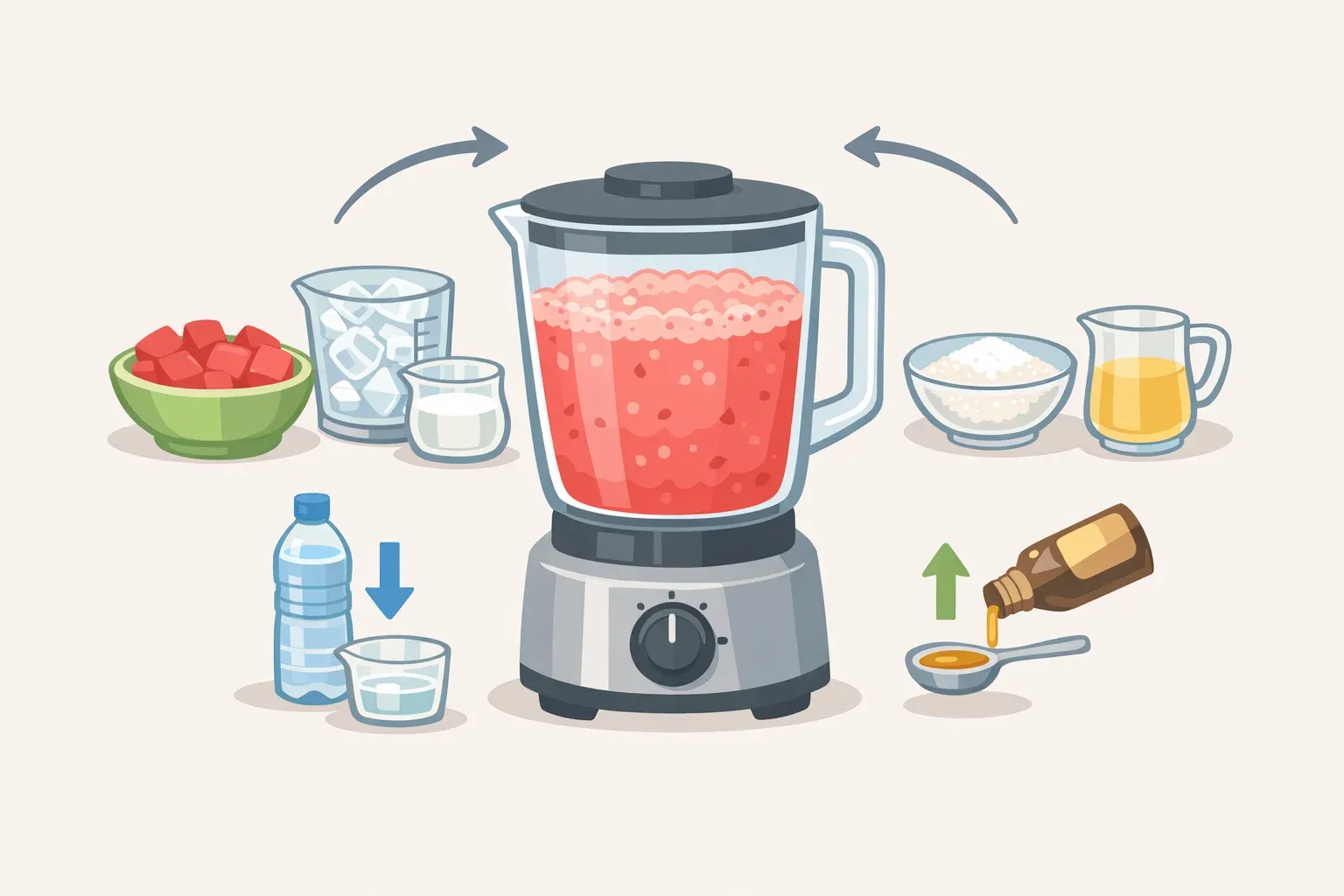
This watermelon agua fresca recipe takes about 15 minutes and requires no cooking. The method is simple; the judgment calls are what matter: how sweet, how thick, and how concentrated the drink should be. Get those right, and the result tastes fresh and balanced instead of thin or overly sweet.
Agua fresca, literally "fresh water," is a traditional Mexican nonalcoholic drink made by blending fruit with water and sweetening it to taste. Unlike juice, which is extracted from fruit without added water, agua fresca is intentionally diluted so it stays light and refreshing. The watermelon version, agua de sandía, fits naturally into that format.
Ingredients for watermelon agua fresca
The starting formula, about 6 servings:
Approximately 2 pounds seedless watermelon flesh, cubed, rind removed
4 cups cold water
Juice of 1 to 2 limes, optional but recommended
Sugar, agave, honey, or simple syrup, to taste
Pinch of sea salt, optional
This formula follows Mexican Made Meatless' watermelon agua fresca recipe, which uses 2 pounds of watermelon flesh and 4 cups of water for a light, refreshing drink. For a stronger watermelon flavor, start with less water and add more after blending. A more concentrated batch works better when the watermelon is mild or when the drink will be served over a lot of ice.
According to the USDA's SNAP-Ed watermelon guide, watermelon is a summer crop that is more than 90% water. The same guide recommends choosing a watermelon with a yellow field spot that feels heavy for its size. Those cues are not guarantees, but they are useful starting points.
Before cutting, rinse the whole melon under running water. The FDA's produce safety guidance also recommends scrubbing firm produce, including melons, with a clean produce brush and drying it with a clean towel. Even though you do not eat the rind, cutting through an unwashed melon can transfer dirt or bacteria from the surface to the flesh.
Go seedless if possible. It usually eliminates the need to strain out seeds, though you can still strain the drink for a smoother texture.
With a very ripe watermelon, no sweetener may be needed at all, especially if you skip the lime. Taste the fruit first. If it is already very sweet, hold the sugar until after tasting the finished drink. When lime is in the mix, a small amount of sugar, agave, honey, or simple syrup can balance the tartness without masking the fruit. Add sweetener to the blender instead of stirring it in afterward so it incorporates evenly.
A pinch of sea salt is optional, but it helps sharpen the watermelon and lime without making the drink taste salty. Use a light hand.
Off-season fruit can still work, but it usually needs more adjustment at the tasting step. Plan to use more lime and keep the sweetener handy.
How to make watermelon agua fresca
Step 1: Cut the watermelon.
Remove the rind completely and cube the flesh. Weigh or measure after removing the rind; the recipe weight applies to the flesh only. Cut watermelon can be refrigerated for up to five days, so this step can happen the night before if needed. Keep cut watermelon refrigerated, and refrigerate the finished drink when it is not being served.
The rind is edible, too. It can be pickled, stewed, or stir-fried instead of discarded.
Step 2: Blend the watermelon with lime juice, sweetener, and salt.
Add the watermelon cubes to the blender with the lime juice, any sweetener, and the salt if using. Add only a small splash of cold water if needed to get the blender moving. Blend on high until smooth, about 30 seconds in most blenders. Work in batches if the blender is small, then combine everything in the pitcher.
One common mistake is adding too much water to the blender to get things moving, then adding the full amount of water later. The drink ends up over-diluted. Use as little water as possible in the blender, since ripe watermelon usually releases enough liquid on its own.
Step 3: Decide whether to strain.
A Serious Eats guide to agua fresca recommends straining for a smoother drink, diluting gradually, and adding ice to glasses instead of the pitcher. If you are using seedless watermelon and a powerful blender, you can still skip straining for a fuller, slightly pulpy drink. For a lighter texture, strain it through a fine-mesh sieve. Press the pulp firmly against the sieve to extract as much liquid as possible before discarding the solids.
Strained agua fresca is clearer and smoother. Unstrained agua fresca is cloudier and fuller-bodied. Choose the texture you prefer.
Step 4: Add the remaining cold water and stir.
Pour the blended watermelon mixture into a large pitcher. Add the cold water gradually and stir well. Stop when the drink tastes refreshing but not weak.
Step 5: Taste before adding ice.
The drink is still fully adjustable at this stage. Ice will dull the fruit slightly and dilute the batch as it melts, so make corrections first.
Too bland or flat: Add lime juice in small increments. A pinch of salt can help, too.
Too tart: Add sweetener a teaspoon at a time, stirring fully before tasting again.
Too concentrated or intense: Add cold water, a quarter cup at a time.
Too thin or watery: Add more lime to brighten the flavor. Next time, reduce the water slightly and skip the blender splash.
Too pulpy: Strain it through a fine-mesh sieve before serving.
Step 6: Serve very cold.
Serve watermelon agua fresca over plenty of ice. Cold temperature makes the fruit taste brighter; room-temperature agua fresca tastes flat. Garnish glasses with mint sprigs, lime slices, or both.
The finished drink can be made the night before and stored covered in the refrigerator without ice. Stir before serving, then add ice to the glasses rather than the pitcher so the whole batch does not get watered down. For the brightest flavor and color, make it the day you plan to serve it. If you are making it overnight, keep the lime juice; it helps the drink taste fresher.
Easy watermelon agua fresca variations
Mint or jalapeño simple syrup: Bring equal parts sugar and water to a boil, then remove from heat. Add mint leaves or a halved jalapeño while the syrup cools, then strain before using. This spreads the flavor evenly through the pitcher instead of leaving herbs or pepper slices floating in the drink.
For a jalapeño version, steep for about 10 minutes for mild warmth or closer to 30 minutes for stronger heat. Start small and taste as the syrup cools.
Optional cocktail version: Add tequila only to a separate pitcher or individual glasses. Keep the nonalcoholic batch clearly labeled if serving a mixed group.
Agave or maple syrup: Agave has a mild flavor and dissolves easily. Maple syrup also works, but it brings a stronger flavor that can compete with delicate watermelon if used too heavily. Start with less than you think you need, then taste before adding more.
Party batch: The recipe doubles cleanly: 2 pounds of watermelon to 4 cups of water is a ratio, not a fixed formula. For a larger batch, blend in rounds and combine everything in the pitcher. Adjust lime, sweetener, and water gradually, tasting after each addition.
Serve it cold and adjust before pouring
Peak-season watermelon needs the least help. A ripe summer melon often tastes sweet enough on its own, especially if the drink is served cold and balanced with lime.
The recipe yields about 6 servings and comes together in 15 minutes. For a less sweet drink, skip the sweetener and let the fruit carry the flavor; the correction guide handles the rest. Make the agua fresca close to serving time, keep it cold, and add ice to glasses rather than the pitcher.









Comments
Be the first, drop a comment!