



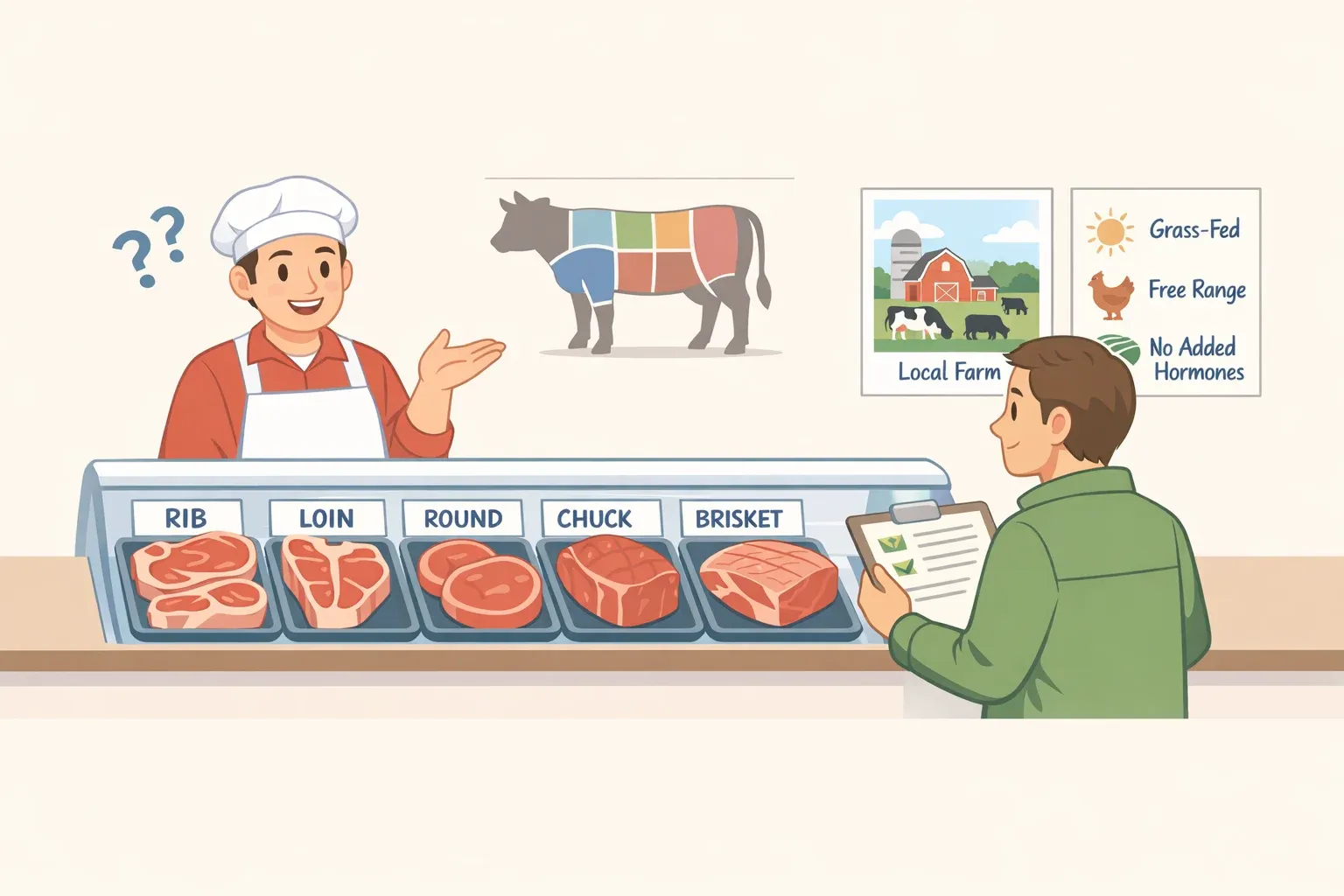
What to Ask Your Butcher Before Buying Beef: 3 Key Questions
Most people walk up to a butcher counter and ask about price or grade. Both are reasonable questions. Neither is the right first question. If you want to buy beef with confidence rather than guesswork, here's what to ask your butcher before buying beef: Where did this beef come from, and how was the animal raised?
That's the starting point recommended by butcher and meat expert Oleksiak and if the person behind the counter can't answer it, the advice is to move on and find someone who can, as Chowhound reported late last year. The answer does more than satisfy curiosity. It tells you how the animal was fed and finished, which shapes flavor and cooking behavior, and it tells you whether the butcher actually has a relationship with their supplier or is working off a commodity invoice.
This guide walks through three questions in sequence: where the beef came from, how the animal was fed, and when and how the meat was cut. A fourth thread runs through all of them which cut fits what you're actually planning to cook. Get those right and the rest of the decisions at the counter take care of themselves.
Step 1: Ask where the beef came from and listen to how the butcher answers
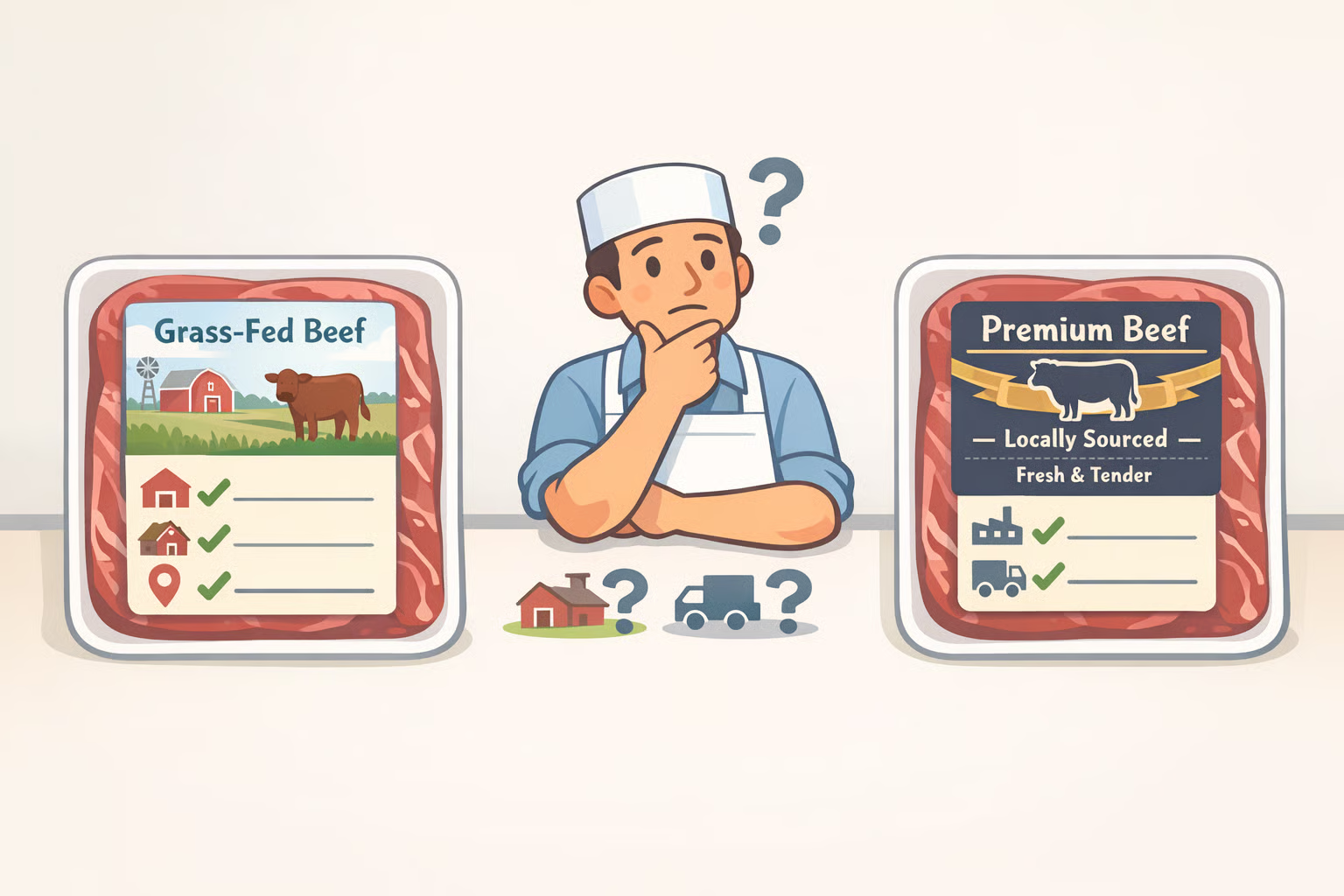
The question is simple: "Where does this beef come from, and how was the animal raised?" The answer tells you whether you're dealing with a butcher worth returning to.
A good answer has specifics. A farm name, a region, a named supplier, some detail about how the cattle were raised. Rancher-focused sources frame this as knowing the "terroir" of beef the land, the feed, the management decisions that collectively determine what ends up on the plate, as Meat Dudes noted last fall. Source isn't a moral category; it's practical information that lets the butcher explain what you're buying.
A vague answer is also information. Oleksiak is direct: "If the answer is a feedlot, I recommend moving on," per Chowhound. The concern isn't grain finishing as a practice it's the anonymity. A butcher connected to their supplier can explain how the cattle were raised. One who can't answer beyond a distributor name likely can't help you with the follow-up questions either.
If the butcher engages the question describes the supplier, explains the raising approach, volunteers details about finishing you've found someone worth buying from. The best filter for any of this is a short conversation, as Meat Dudes puts it: ask "Why do you do it this way?" and listen for a real answer.
To make this concrete: "Where does this ribeye come from?" answered with "It's from a ranch in Nebraska, grass-raised and grain-finished for the last several months" tells you the diet, the finishing approach, and that the butcher has an actual supplier relationship. "It comes from our distributor" tells you nothing useful. Both answers are data.
Step 2: Questions to ask your butcher about source and feed
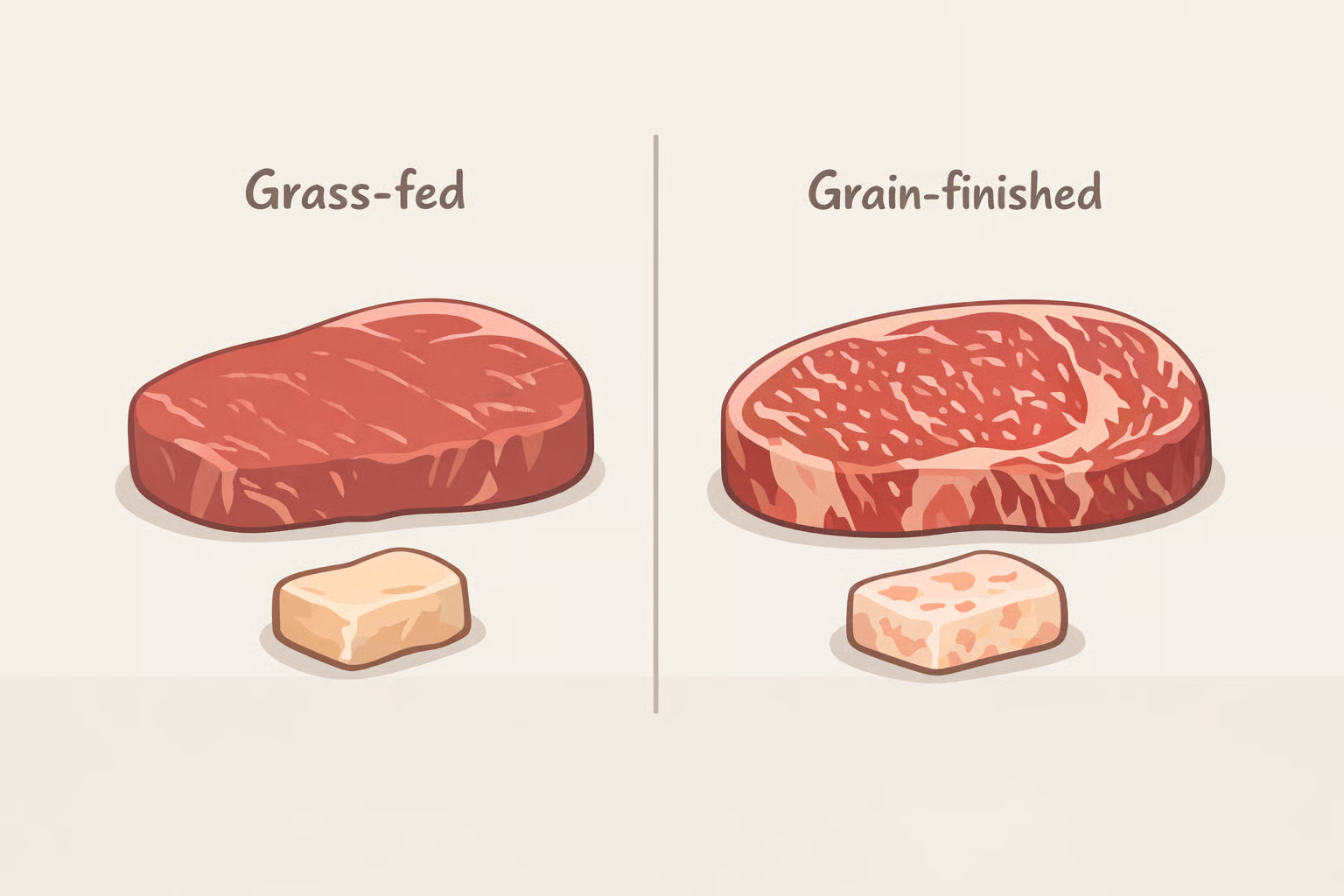
Once you know the source, ask about diet. What a cow eats shapes how the beef tastes and how it behaves in the pan, as Chowhound and Barbecue Bible both note. That's not an abstraction it's the difference between a steak that rewards high heat and a steak that punishes it.
Grass-fed cattle produce leaner meat with a more assertive beef flavor. Oleksiak describes it as "very beefy" and "more on the lean side," per Chowhound. Grass-fed beef is also less fatty and more nutrient-dense than grain-fed. That leanness is not a defect, but it does require adjusted technique. Cook a grass-fed steak the same way you'd cook a well-marbled grain-fed ribeye and it will likely come out drier and tougher than you wanted, as Barbecue Bible describes. Grain-fed beef develops more intramuscular fat, which produces the richer mouthfeel associated with most restaurant steaks.
A common compromise, used by many ranchers, is to raise cattle on grass for most of their lives and then finish them on grain for roughly the final six months before processing, as Barbecue Bible explains. A butcher who knows their supplier should be able to tell you which approach their beef reflects.
Where USDA grades fit in. Grade is worth understanding, but it doesn't replace the sourcing conversation. USDA quality grades Select, Choice, Prime measure marbling and predict eating satisfaction, with each step up delivering more consistent results, according to Texas A&M AgriLife. About 72% of feedlot cattle grade Choice and roughly 11% grade Prime, Texas A&M AgriLife reports which means two Choice steaks from very different operations carry the same stamp. Grade tells you the marbling score. Source tells you how that marbling got there and what else came with it.
One label worth scrutinizing: "organic." Organic beef comes free of the growth hormones, antibiotics, pesticide residues in feed, and other chemicals associated with feedlot livestock, according to Barbecue Bible. Organic cattle are generally raised more humanely, which the source suggests may enhance the eating experience, and organic beef may tend toward more flavor though that doesn't hold universally, and it often doesn't mean more tenderness. Know what the premium is actually buying before it registers on the receipt.
Step 3: What to ask for at the meat counter cut, freshness, and thickness
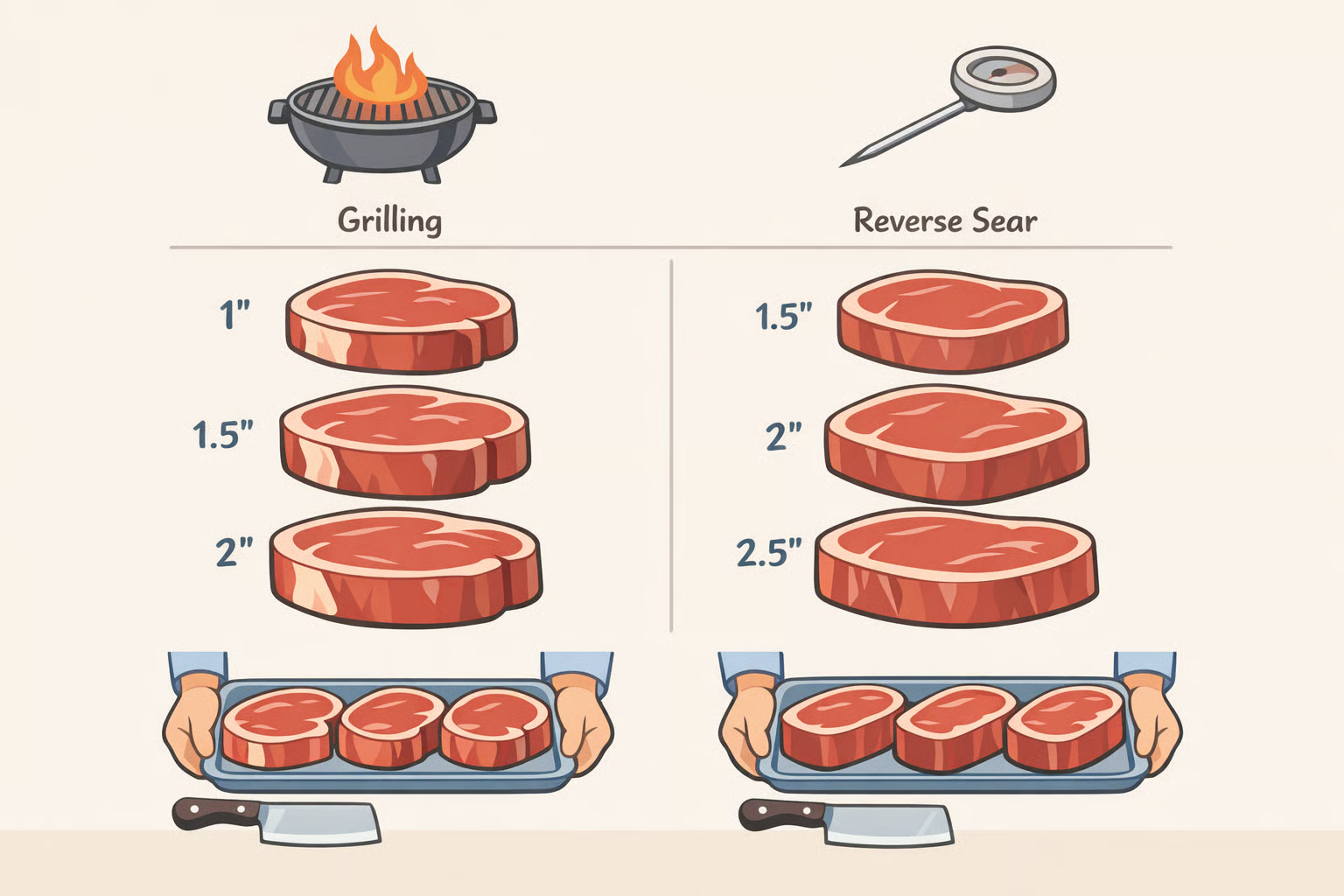
Provenance and diet tell you what kind of beef you're getting. These questions determine whether you actually get to cook it the way you intended.
Ask when it was cut. Raw beef should be cooked and eaten within three to five days, according to Foodsafety.gov as cited by Chowhound. Knowing when the meat was cut tells you how much of that window remains which matters if you're buying Thursday for a Saturday dinner.
Ask whether it was cut in-house. If the answer is yes, you have real options. Thickness, weight, and fat trim level all become negotiable. As Oleksiak explains via Chowhound, cut-to-order means more control over how the steak will ultimately taste. Pre-packaged cuts may have been vacuum-sealed for some time before reaching the case Barbecue Bible notes that wet-aged beef is stored vacuum-sealed in its own juices, sometimes for days or weeks so asking directly is more reliable than reading the packaging.
Ask for the thickness your cooking method requires. This is specific: for reliable grilling, order steaks at least 1¼ inches thick; for a reverse sear, 1½ to 2 inches. A ¾-inch steak goes from rare to overcooked before you've had time to react, according to The Butcher's Handbook. A competent butcher handles these requests without hesitation. Ask for "1¼ inches, trimmed to ¼-inch fat cap" and see whether that lands cleanly. If basic specifications cause confusion, The Butcher's Handbook suggests formal butchery training likely isn't in the picture in which case, a dedicated butcher shop will serve you better than most grocery meat counters for custom work.
One free service worth requesting if you need a faster cook from a thick cut: butterflying. That's slicing a thick piece almost in half horizontally and opening it like a book, creating a thinner, more even surface that cooks faster. Available at most shops at no charge and takes about 15 seconds, per The Butcher's Handbook.
How to talk to your butcher about which cut suits what you're cooking
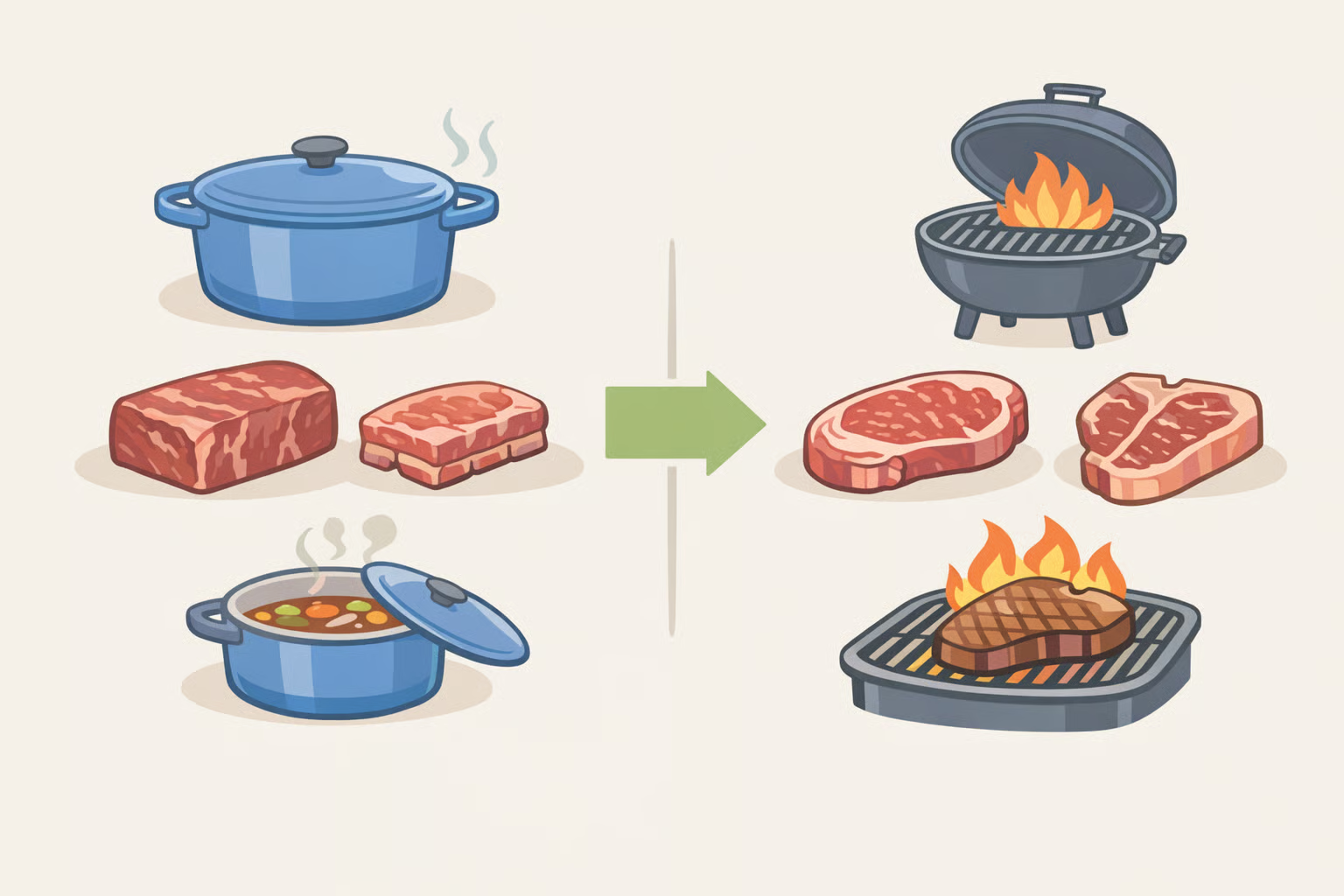
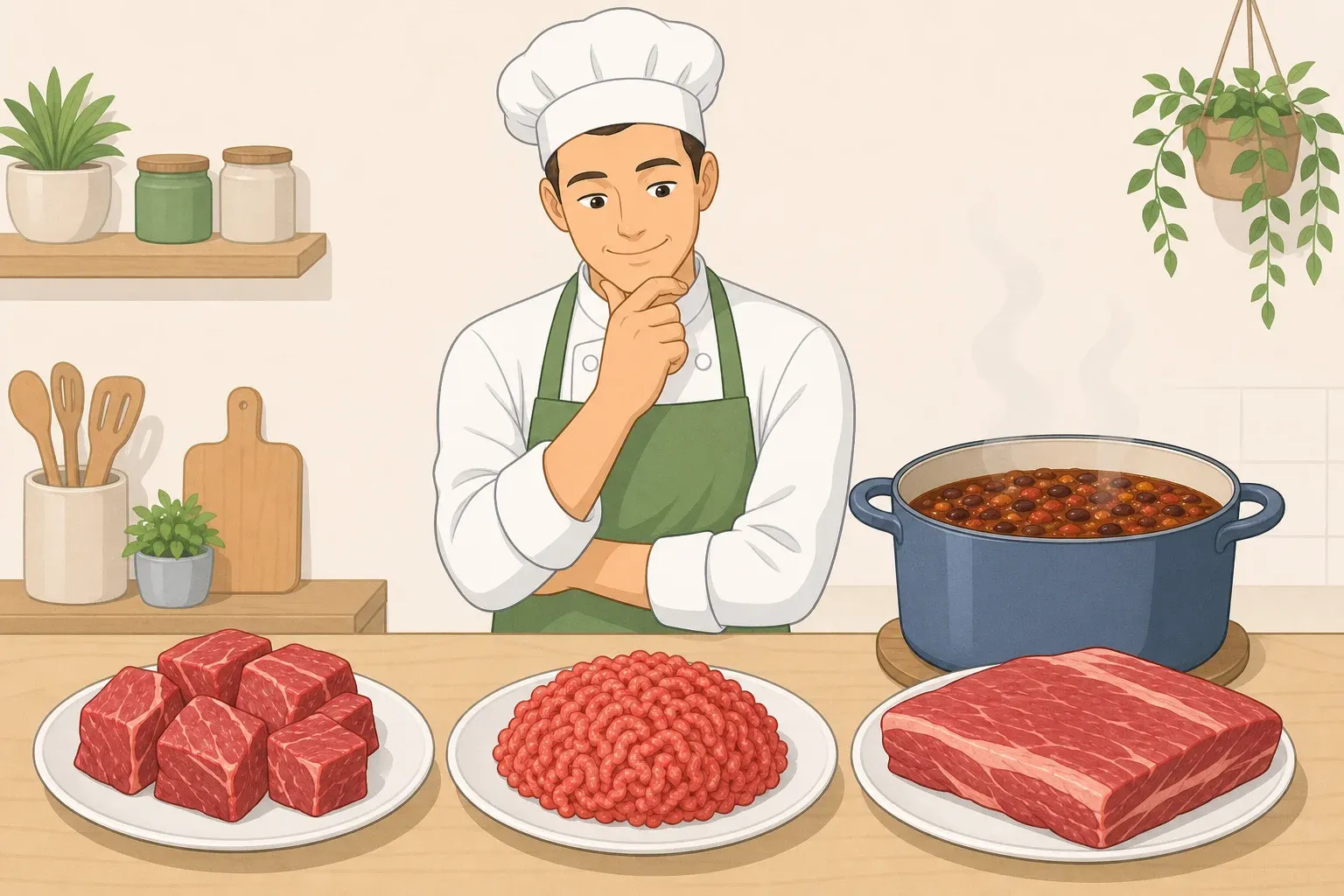
This is the question many buyers skip, and it's the one a good butcher most wants to answer. Oleksiak puts it directly: ask what cooking method suits a specific cut, as cited by Chowhound. A ribeye and an eye round are not interchangeable for braising their muscle structure doesn't support it the same way, Oleksiak notes.
The practical version: "I'm planning to braise this which cut should I be looking at?" or "I want to grill over high heat what do you have that's going to work?" A butcher who answered the sourcing question confidently can now translate your dinner plan into the right cut. That's the full conversation, and it's worth having.
What the grade stamp doesn't tell you
Grade is a floor, not a ceiling. USDA quality grading evaluates marbling and expected palatability, and there's real information in it. But tenderness isn't part of the quality grade calculation at all there's currently no practical way to assess it at the point of purchase, so restaurants often base their buying decisions on quality grade as a proxy instead, according to Mississippi State Extension.
That gap is why the sourcing conversation matters more than the grade stamp. Grade tells you what the USDA grader measured. A knowledgeable butcher tells you what the grading system doesn't capture: how the animal was raised, what it ate, and how the meat was handled afterward.
The butcher's willingness to engage these questions is the signal. Not every shop will know every answer, but one who engages honestly explains what they know and flags what they don't is worth coming back to. Find that person, and a five-minute conversation at the counter starts delivering consistently better results at the table.





Comments
Be the first, drop a comment!