



Best beef cut instead of ribeye: chuck eye explained
Butchers and cattlemen have known about chuck eye for decades. The steak hasn't changed. The information just hasn't traveled far enough most shoppers walk past it without a second look, which is part of why it stays cheap.
The core claim, stated plainly: chuck eye is a credible candidate for the best beef cut instead of ribeye, for shoppers willing to spend thirty seconds at the meat case. It comes from the boundary between the shoulder and the rib section, shares the same two primary muscles as ribeye, including the spinalis (the rib cap), and tends to cost less at retail. Whether it tastes as good as a specific ribeye depends on the steak and how it's cooked. Whether it can taste like one is anatomically grounded, not food-media spin, as Simply Recipes reported earlier this year.
Chuck eye is not ribeye. It's more variable, less forgiving to select, and requires more attention at the meat case. For a shopper willing to look at what they're buying before committing, it offers a genuinely ribeye-adjacent experience at a meaningfully lower price. This piece covers what the cut is, why the comparison holds up anatomically, where it falls short, and how to select and cook one so it actually delivers.
What chuck eye is and why the ribeye comparison has a real basis
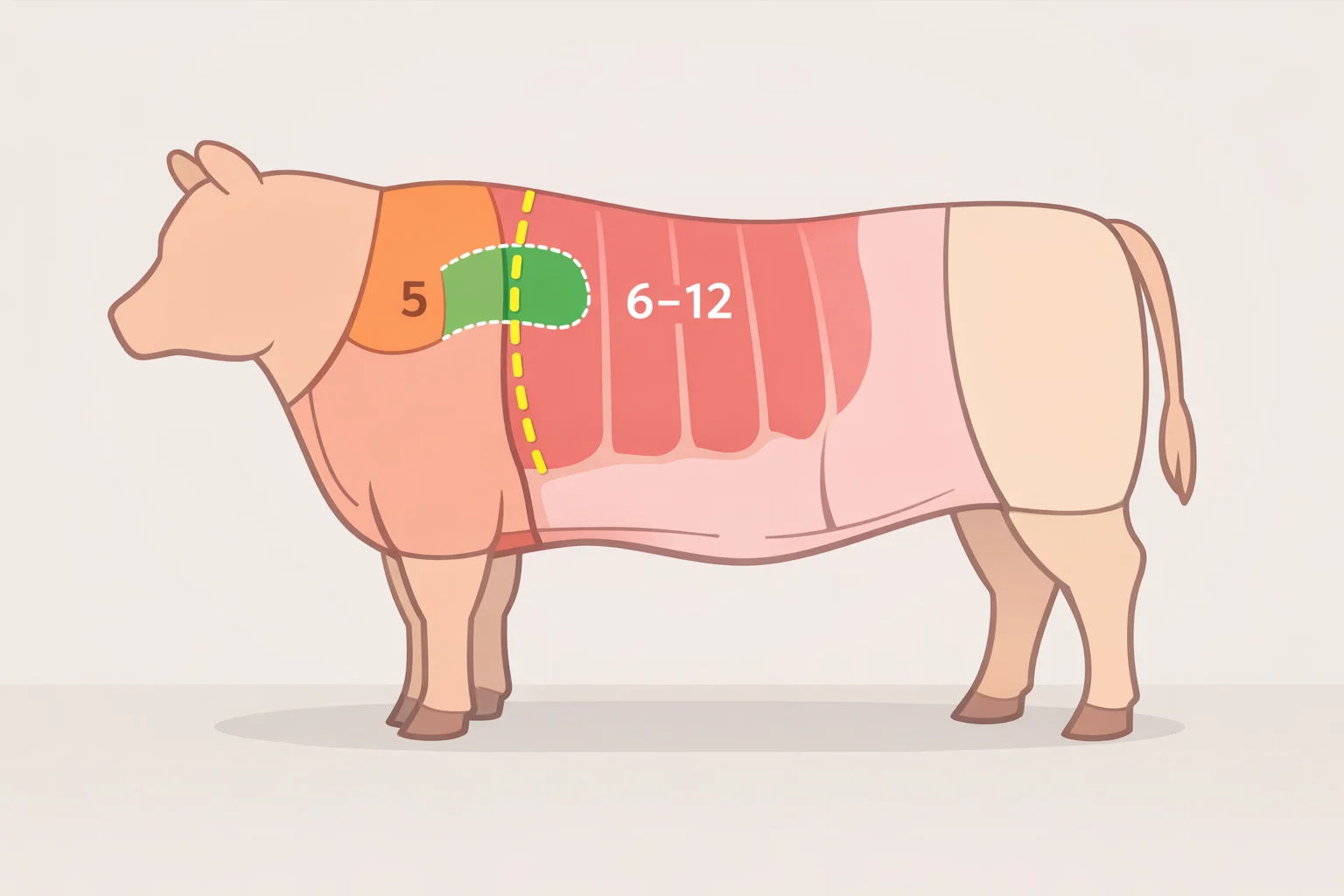
Chuck eye is a steak taken from the far edge of the shoulder section, specifically from rib five, right where the shoulder ends and the rib section begins. The chuck runs along ribs one through five; ribeye comes from ribs six through twelve. Chuck eye sits at the hinge point between those two sections, which is why it shares structural properties with its more expensive neighbor, as Simply Recipes detailed earlier this year.
Think of the rib section as a road with a name change at a certain intersection. The pavement is the same on both sides. Chuck eye is the last block before the sign changes: same structure, different label, different price.
The muscle overlap is the central argument. Chuck eye contains the same two primary muscles as ribeye, including the spinalis, or rib cap, which Simply Recipes describes as the prized muscle of the rib section. The flavor similarity isn't aspirational marketing. It follows from the anatomy. Anyone who breaks down beef for a living reads a carcass this way: where a cut sits relative to the primal boundaries tells you more about how it eats than its label does.
This is what separates chuck eye from most other value-cut recommendations. Flat iron, flank, and skirt are genuinely different eating experiences they ask the buyer to accept a different texture profile, different fat distribution, different cooking requirements. Chuck eye asks for a slightly different address on the same block. That distinction matters when evaluating it as a cheaper alternative to ribeye rather than simply a budget steak.
The price advantage and the flavor question: what's supported and what isn't
On price
Chuck eye tends to carry a lower retail price than ribeye. The informal name "poor man's ribeye" refers to cost, not quality, as Simply Recipes noted earlier this year.
Exact savings vary by market, grade, and week. The USDA Economic Research Service Meat Price Spreads dataset publishes monthly national average retail prices for Choice-grade beef cuts tracked from farm through wholesale to retail. Last updated in June 2026 and drawing on Bureau of Labor Statistics retail price data, it's a useful national baseline for what ribeye commands before comparing it to what chuck eye costs locally.
The "one-third the cost" figure that circulates in food media is directionally plausible in favorable markets but not uniformly supported across all regions and grades. Treat it as a floor for what's possible, not a number printed on every price tag.
On flavor
A rancher cited by Simply Recipes earlier this year described chuck eye as having a "deeper, beefier flavor than ribeye," a characterization that's plausible given the denser, more heavily worked shoulder musculature surrounding it. Whether that reads as "better" is personal preference. What it doesn't read as is lesser.
Chuck eye is not identical to ribeye in flavor or texture. The honest framing: it's a ribeye-adjacent steak with a credible case for richer beef flavor, typically priced below what the eating experience tends to command.
The real trade-off: consistency
Chuck eye's actual limitation isn't flavor. It's variability. Unlike a center-cut ribeye, chuck eye steaks can differ noticeably from one another in fat distribution, connective tissue presence, and overall texture. Two steaks from the same display case can cook up quite differently.
Size compounds this. Chuck eye steaks tend to run smaller than ribeyes and are often cut thinner. The cut doesn't always surface in self-service retail cases, which means a full-service butcher counter is usually the more reliable place to find it.
This variability is the one genuine reason ribeye is sometimes still worth the premium. When you need a consistent result without having to evaluate the cut first, ribeye removes the guesswork. Chuck eye rewards attention; ribeye tolerates inattention.
What beef cut to buy instead of ribeye: how to find, select, and cook chuck eye
Finding it in the case
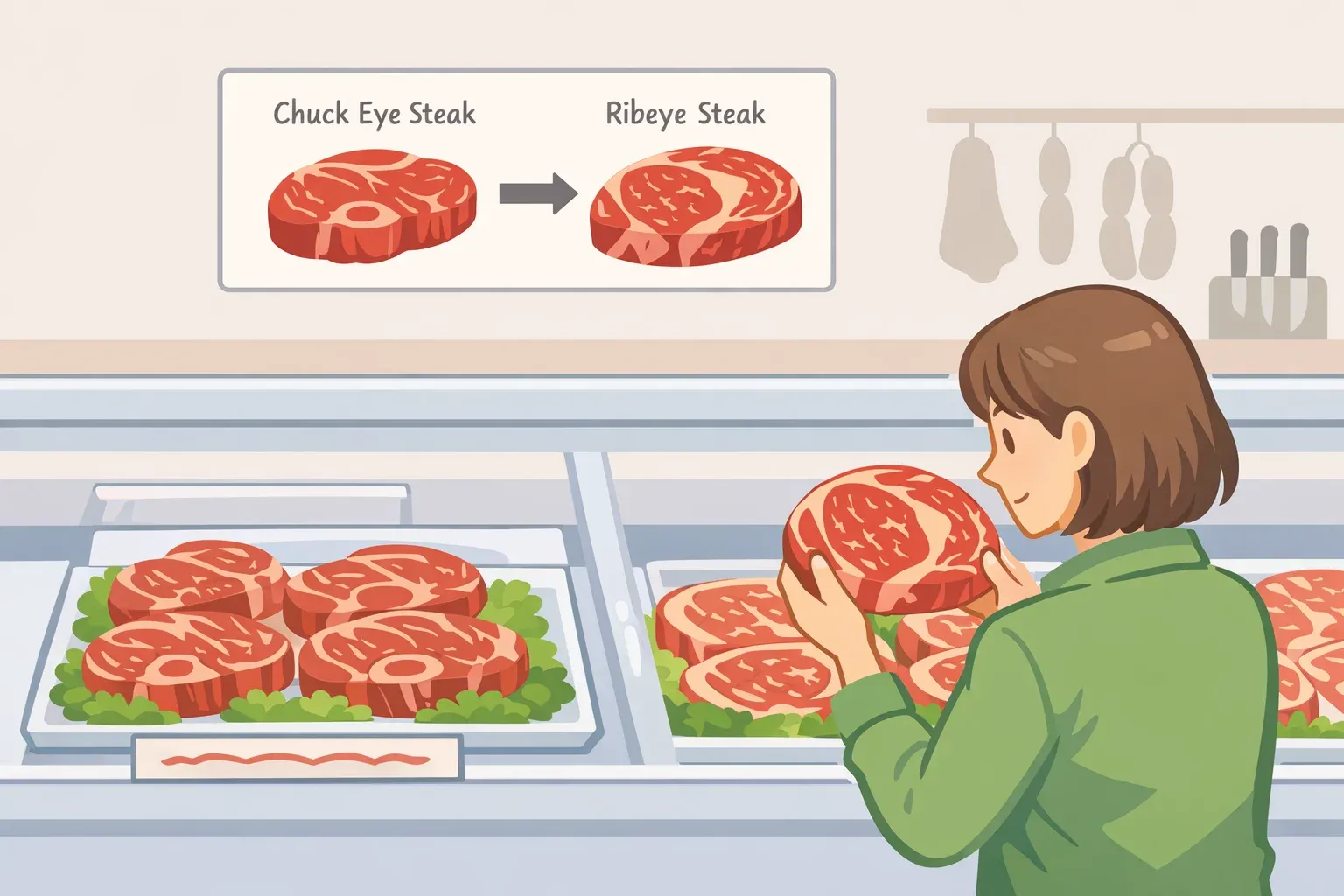
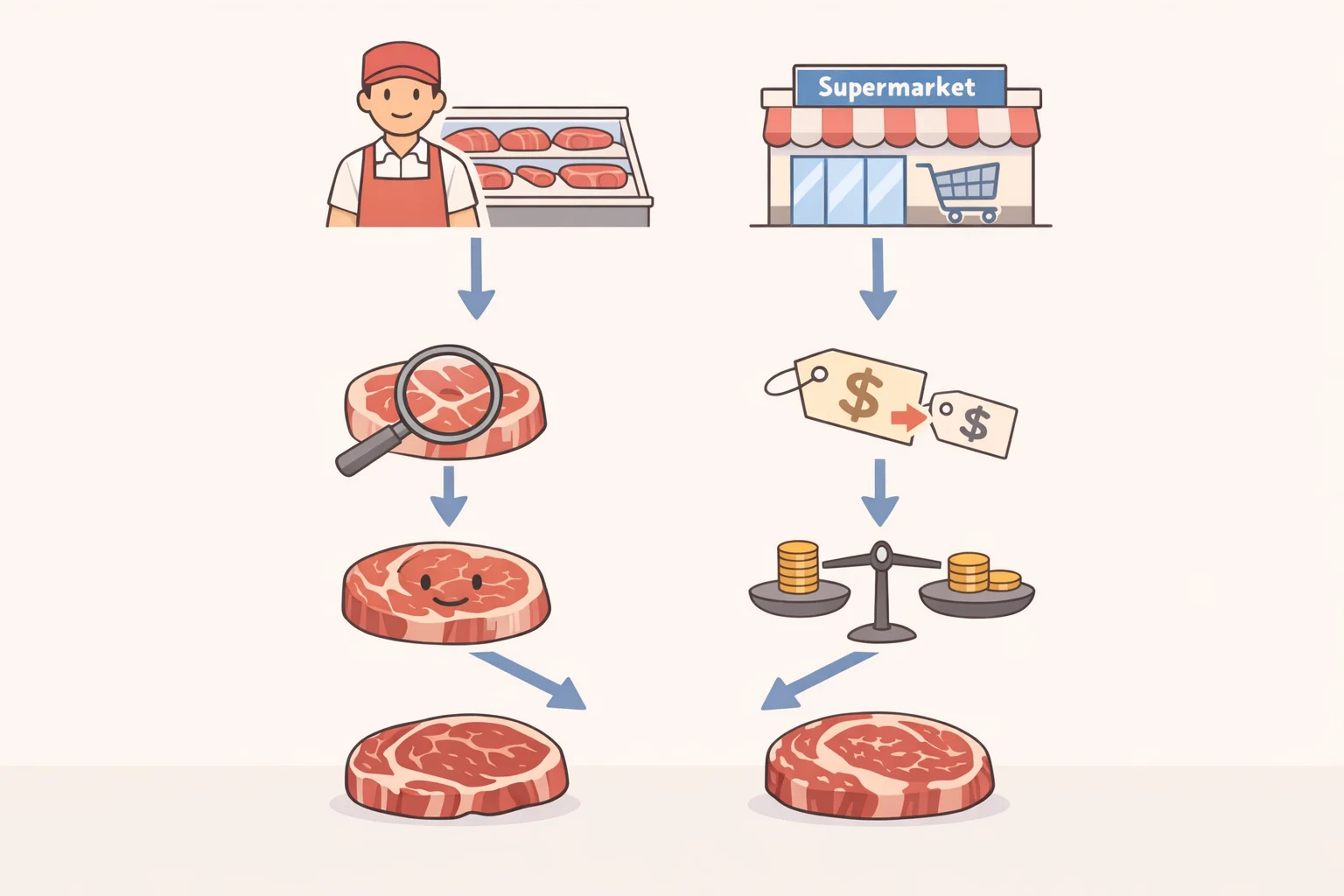
Chuck eye may not be labeled by name. Ask the butcher for "chuck eye steak" or "chuck roll steak." At a full-service counter, the question almost always surfaces the cut, per Simply Recipes. Self-service supermarket cases are less reliable the cut doesn't always get dedicated signage or a consistent spot in the display.
Don't confuse it with other shoulder cuts. Chuck roast, flat iron, and Denver steak all come from the chuck but require different handling. Chuck eye is the one cut from that section built for high-heat cooking at steak temperatures; the others need either low-and-slow methods or different targets to perform well.
What to look for, and what to walk away from
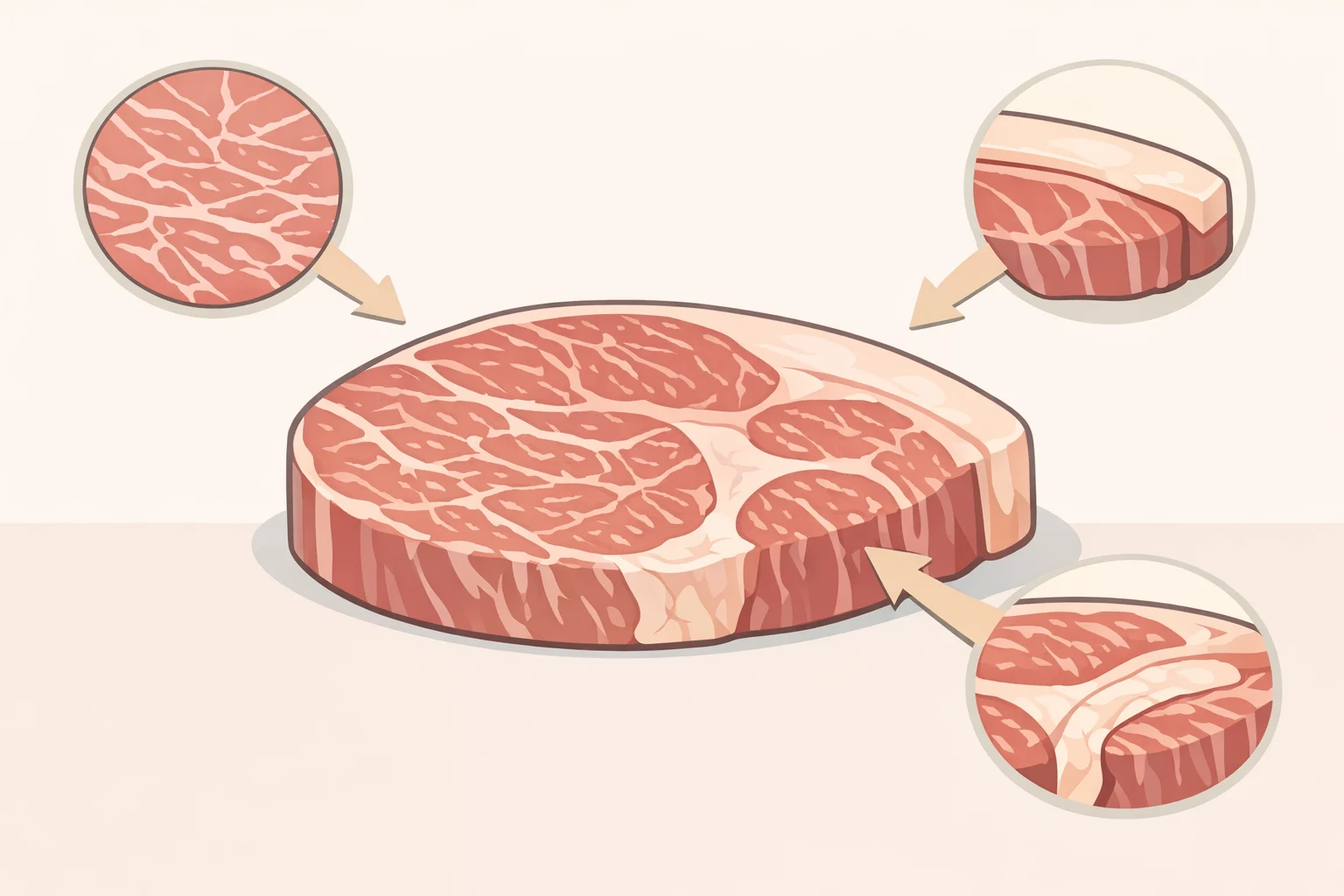
Marbling is the single most reliable selection signal for this cut. Look for small white fat flecks distributed evenly throughout the lean, not concentrated at the outer edges, as Simply Recipes advises. That intramuscular fat renders during cooking and delivers the flavor. Edge fat doesn't accomplish the same thing.
Thickness matters too. A steak cut thinner than three-quarters of an inch will overcook before a good crust develops over high heat. Aim for at least an inch when possible; if the case only has thin cuts, ask for a thicker one or skip it entirely.
Pass on any steak with large, hard fat deposits or a visible band of connective tissue running through the center. That connective tissue it looks like a white, rubbery streak rather than fine marbling doesn't soften at steak-cooking temperatures regardless of technique, as Simply Recipes notes in its selection guidance.
The quick decision rule: fat only around the outer rim with mostly lean through the center means skip it. Fine marbling running through the meat in even streaks, plus at least an inch of thickness, means take it.
Matching method to the steak
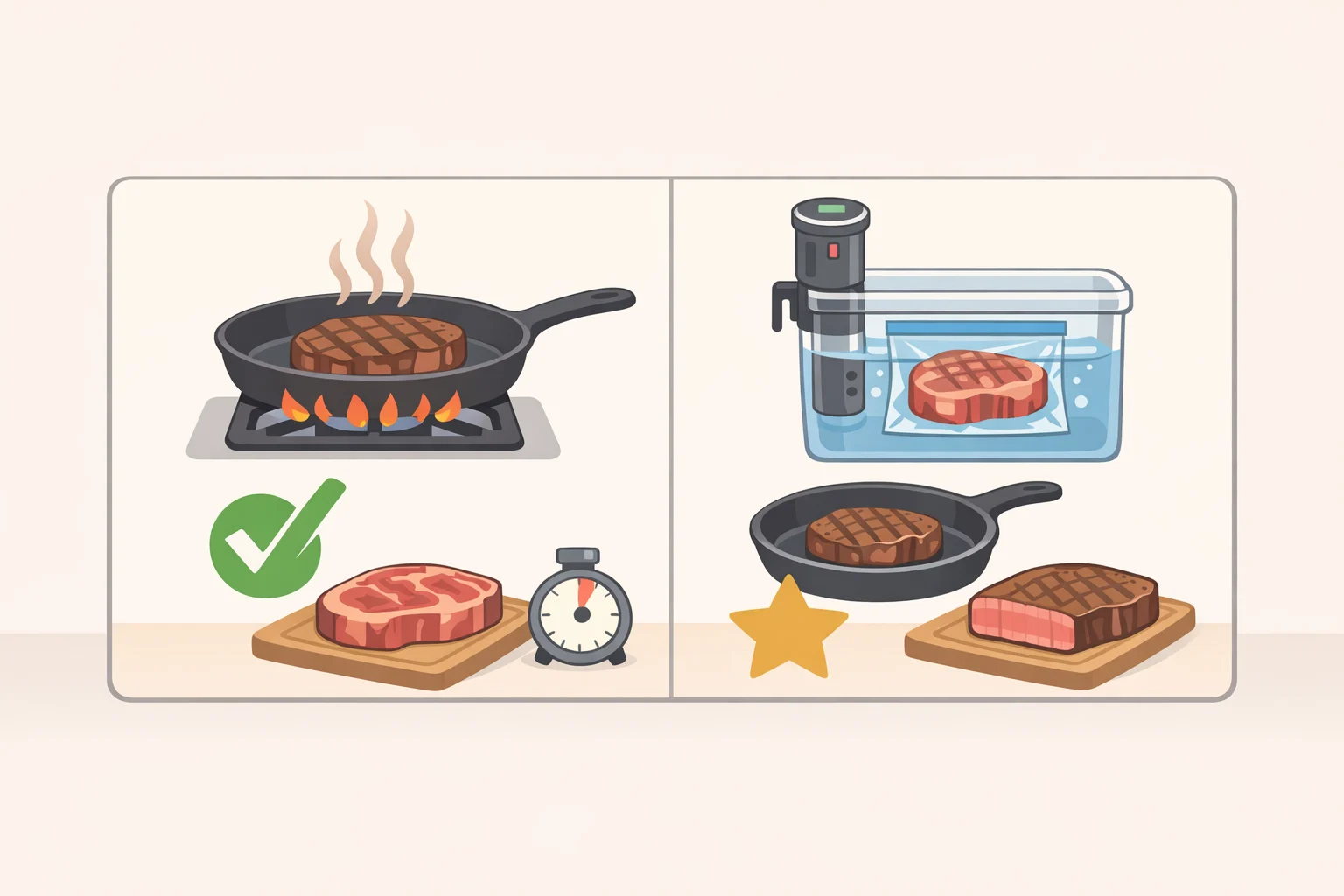
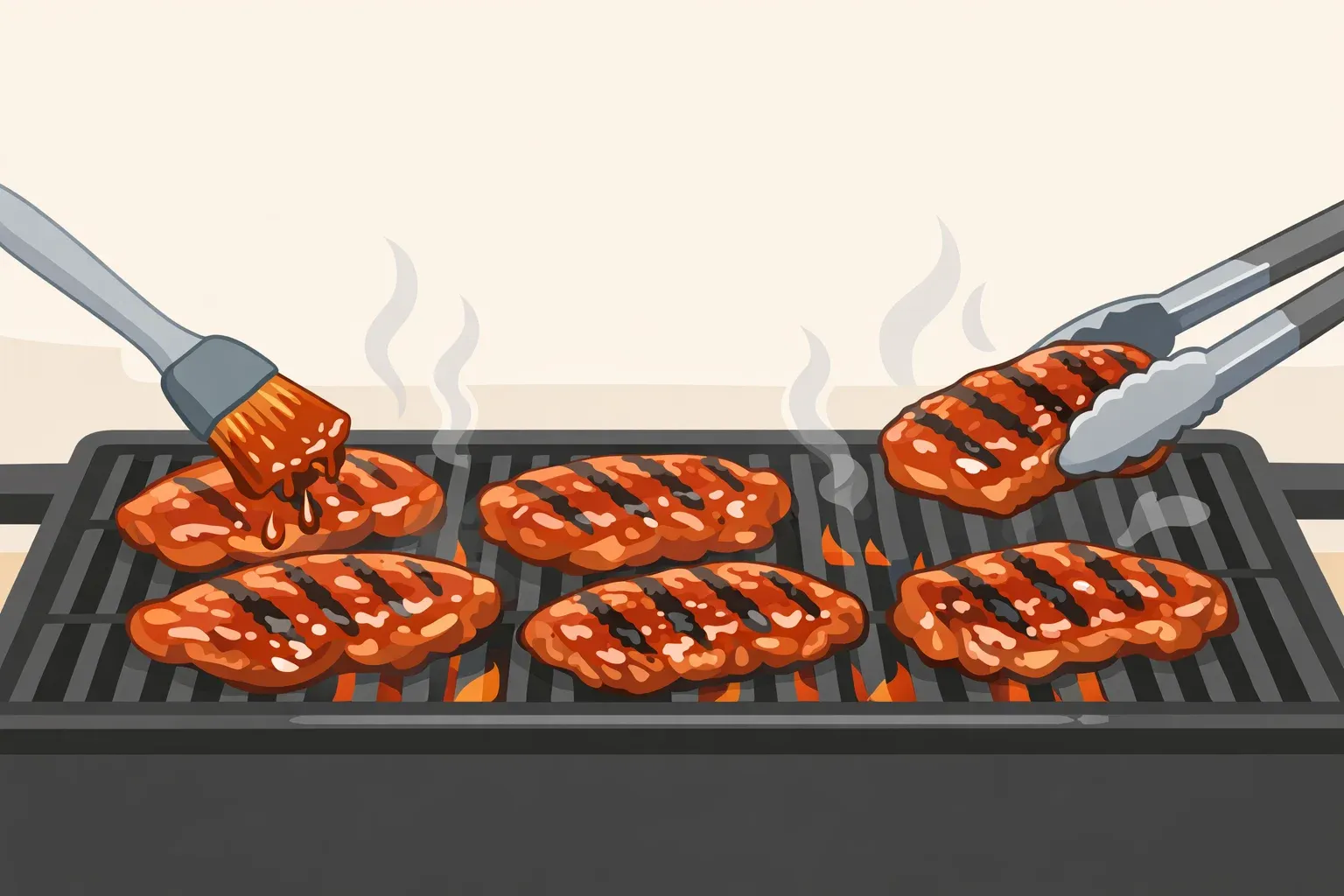
A well-marbled chuck eye: treat it exactly like a ribeye. Season with salt and pepper, cook over high heat to medium-rare, around 125°F internal, and rest before serving. The spinalis delivers, the fat renders, and the result compares favorably to what the rib section produces, according to Simply Recipes.
Chuck eye with visible connective tissue or uneven fat distribution calls for a different approach. Sous vide before searing gives the fat and connective tissue time to soften at a sustained low temperature before a high-heat sear builds the crust. It adds time but almost no additional skill. Simply Recipes recommends this specifically for chuck eye, noting it helps render fat and soften connective tissue for a more tender result.
One step that applies to both preparations: slice the steak before it reaches the plate rather than cutting it at the table. The denser shoulder musculature makes this more consequential here than with ribeye. Slicing against the grain shortens the muscle fibers and noticeably improves how the steak eats, as Simply Recipes recommends for this cut specifically.
When chuck eye is the right call, and when it isn't
Chuck eye earns the ribeye comparison through anatomy, not marketing. The shared spinalis, the shared rib section boundary, and the typically lower retail price make the value case credible, as Simply Recipes established in its coverage earlier this year. Credible isn't unconditional, though.
The cut works best when a full-service butcher counter is available, when the marbling in the case actually looks good, and when the price difference that week is meaningful enough to matter. The USDA ERS Meat Price Spreads data, updated last month, gives a national baseline for ribeye retail prices useful context for judging whether what's in the local case represents real savings or a negligible gap.
Ribeye is still worth the premium when consistency matters more than cost: a dinner party, a celebratory meal, any situation where evaluating the cut before buying it isn't practical. Ribeye's premium partly buys predictability. Chuck eye's discount partly reflects the variability the buyer absorbs. Knowing which situation you're in before reaching the counter is most of the decision.
When the conditions are right, the approach is straightforward: ask for chuck eye at the full-service counter, select for marbling, pass on anything with a visible connective tissue band or less than three-quarters of an inch of thickness, and cook to medium-rare. Sous vide first if the steak warrants it. Slice before serving. That's the complete framework and for a shopper willing to apply it, a strong case for the cut.






Comments
Be the first, drop a comment!