


Butter vs Oil for Cakes: How to Choose the Right Fat for the Result You Want
Five professional pastry chefs were asked which fat makes a better cake. Three said butter. But the more revealing part of their answers wasn't the preference count it was the conditions attached. Every chef qualified their choice by cake type, mixing method, or intended outcome, according to The Kitchn, which surveyed the chefs earlier this month.
That conditional answer is the real insight when it comes to butter vs oil for cakes. The question isn't which fat is better in the abstract. It's which fat matches the cake you're making, how you're mixing it, and when you plan to serve it.
Serious Eats tested fats across multiple baked goods last November and landed on the same conclusion: there's no universal winner. Butter is best when creaming is central to the structure; oil is best when lasting softness is the goal. The framework below is how to tell which situation you're in.
Butter vs oil for cakes: choose based on texture, flavor, and timing
Choose your fat based on what you want the cake to do.
Butter is the right choice when the recipe uses the creaming method, when flavor and browning matter most, and when the cake will be eaten the same day. Oil has the advantage when the cake needs to stay tender over multiple days, when it will be refrigerated, or when a strong primary flavor chocolate, spice, citrus shouldn't compete with the fat, per The Kitchn and Serious Eats.
A practical breakdown by cake category:
- Choose butter: pound cake, layered birthday cake, white or yellow cake, anything built on the creaming method. Chef Coen notes that pound cake would suffer without butter substituting oil would strip out the leavening and structure butter provides, and the richness would disappear with it, per The Kitchn.
- Choose oil: chocolate cake, carrot cake, red velvet, any cake that will be refrigerated or served the next day. Oil stays liquid inside the crumb at room temperature, resisting the staling process that causes butter cakes to firm up after cooling, per ada.cooking.
- Use both: when you want the tenderness of oil with the flavor of butter. Chef Palazzo adjusts the ratio, using oil as the base fat and adding a smaller amount of melted butter for richness. America's Test Kitchen endorses the same combination.
On oil selection: not all oils behave the same. Neutral oils canola, vegetable are the standard for most cake applications because they contribute no flavor of their own. America's Test Kitchen found that a quality olive oil can add appealing complexity to certain cakes where a mildly savory note works, but that's an intentional creative choice, not a general upgrade.
Why butter works and where oil actually wins
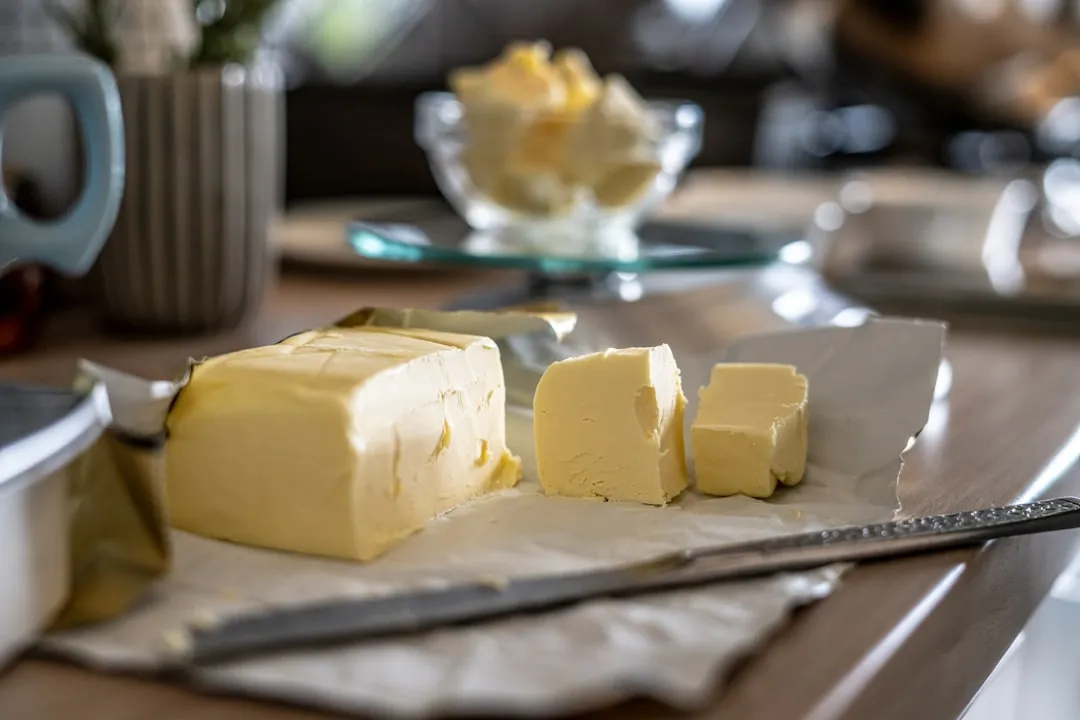
Butter's composition explains most of its advantages. It's roughly 80% fat, 15% water, and 5% milk solids, per ada.cooking. That small fraction of milk solids is responsible for nearly all the flavor. When heated between 120 and 150°C, the proteins and sugars in those solids undergo Maillard reactions, generating over 230 identified volatile flavor compounds including diacetyl, lactones, and butyric acid derivatives. "Butter flavoring" added to oils replicates perhaps three to five of those compounds at best, per the same source.
The structural advantage comes from a different property. Butter is solid at room temperature. Creaming cold butter with sugar traps air bubbles in the fat matrix; those bubbles expand during baking and produce the lift and fine crumb associated with classic layer cakes and pound cakes, per Serious Eats. Oil, being 100% fat and entirely liquid, cannot be aerated that way. Cakes built on oil rely on even fat distribution rather than entrapped air America's Test Kitchen describes them as "rustic" in character. That's not a knock; it's a different mechanism producing a different result.
Butter's water content adds another dimension. It creates steam during baking, contributing additional lift something oil, at 100% fat with no water, cannot replicate, per ada.cooking.
Oil's advantage is physical and persistent. Because it stays liquid at room temperature, it remains fluid inside the baked crumb long after the cake cools. Butter resolidifies as it drops below roughly 25–35°C, which is why an all-butter cake can feel noticeably firmer by the next day. Oil also bonds with starch in a way that slows retrogradation the natural staling process giving oil-based cakes a longer window of softness, per Serious Eats. The shelf-life difference is concrete: butter-based cakes peak within two to three days; oil-based cakes hold for four to five, per ada.cooking.
Oil's neutral flavor is a genuine asset in the right application. America's Test Kitchen notes that in chocolate cake, butter can mute cocoa's intensity oil allows the chocolate to come through more cleanly. For any cake where the dominant flavor should be the fruit, spice, or filling rather than the fat itself, that neutrality earns its place.
Chef McKibbin frames the whole debate cleanly: "Neither is 'better,' they just do different things. Butter adds a richer flavor, firmer structure, crisper edges, and air when creamed. Oil adds more moisture, softer texture, longer shelf life, and tender crumbs," per The Kitchn.
The clearest illustration of what happens when the wrong fat meets the wrong method: America's Test Kitchen swapped oil into a lemon Bundt cake designed for creamed butter. The oil version had less rise, a denser and coarser crumb, and a pale exterior. The butter version was lofty, with a finer crumb and a deep golden crust. That gap is entirely explained by method the creaming step was removed, so the structure it creates never formed.
Boxed mixes, substitutions, and when the swap doesn't work
The boxed-mix question splits cleanly, and both sides are right depending on what you're optimizing for.
The Kitchn's chefs recommend replacing the oil in a boxed cake mix with double the amount of melted butter. Chefs Palazzo and Paire both support this as a way to reduce the processed flavor and make the cake taste more homemade. Serious Eats' controlled test found the opposite result on texture: the oil-based boxed cupcakes were lighter, more tender, and held up significantly better after refrigeration the butter version turned dense overnight. Swap in butter if you're serving the cake the same day and want it to taste more homemade. Keep the oil if the cake needs to stay soft through the next day or after chilling.
Substitution math involves two distinct scenarios, not one formula. When replacing solid butter in a recipe designed for the creaming method, use approximately 75% as much oil by volume and add about 1 tablespoon of water per cup of butter replaced to compensate for moisture loss, per ada.cooking. When swapping oil for melted butter in a recipe that already uses liquid fat a quick-bread-method cake, for instance reduce the oil by roughly 15% to account for butter's water content, per Serious Eats. These are different problems requiring different math; neither ratio transfers to the other situation.
The one thing the math cannot fix: if a recipe relies on creaming, substituting oil doesn't just change the flavor it removes the structural mechanism entirely. America's Test Kitchen is explicit on this point. Creaming, reverse creaming, and the quick-bread method each produce specific textures, and swapping fats without respecting the intended method disrupts the result. The substitution ratios above apply to recipes where liquid fat is already part of the design. A creaming-method cake is built around butter in a way that no volume adjustment can rescue.
Which fat to use, and when
The chef consensus and test kitchen data point to a clean split: butter makes cakes that taste like something from a bakery deep flavor, golden crust, fine crumb but only when the recipe is built for it. Oil makes cakes that stay like something from a bakery over time: tender, soft, still good the next day straight from the fridge, per The Kitchn and Serious Eats.
The hybrid approach handles both at once. Using oil as the primary fat and adding a smaller amount of melted butter as Chef Palazzo does and America's Test Kitchen endorses captures oil's moisture retention and shelf life while adding the browning and flavor complexity that butter's milk solids produce. It's not a shortcut; it's how recipes are deliberately written when bakers want both qualities in the same cake.
The practical read is simple enough: if the recipe is built on creamed butter, use butter. If you want a cake that's still soft tomorrow, use oil. If you want both, find a recipe written that way or build one using the ratio as your starting point. As that hybrid approach becomes more common in both professional kitchens and home recipe development, the question "butter or oil?" may increasingly give way to "what ratio, and for which cake?" The evidence already supports asking the better question.

Comments
Be the first, drop a comment!