



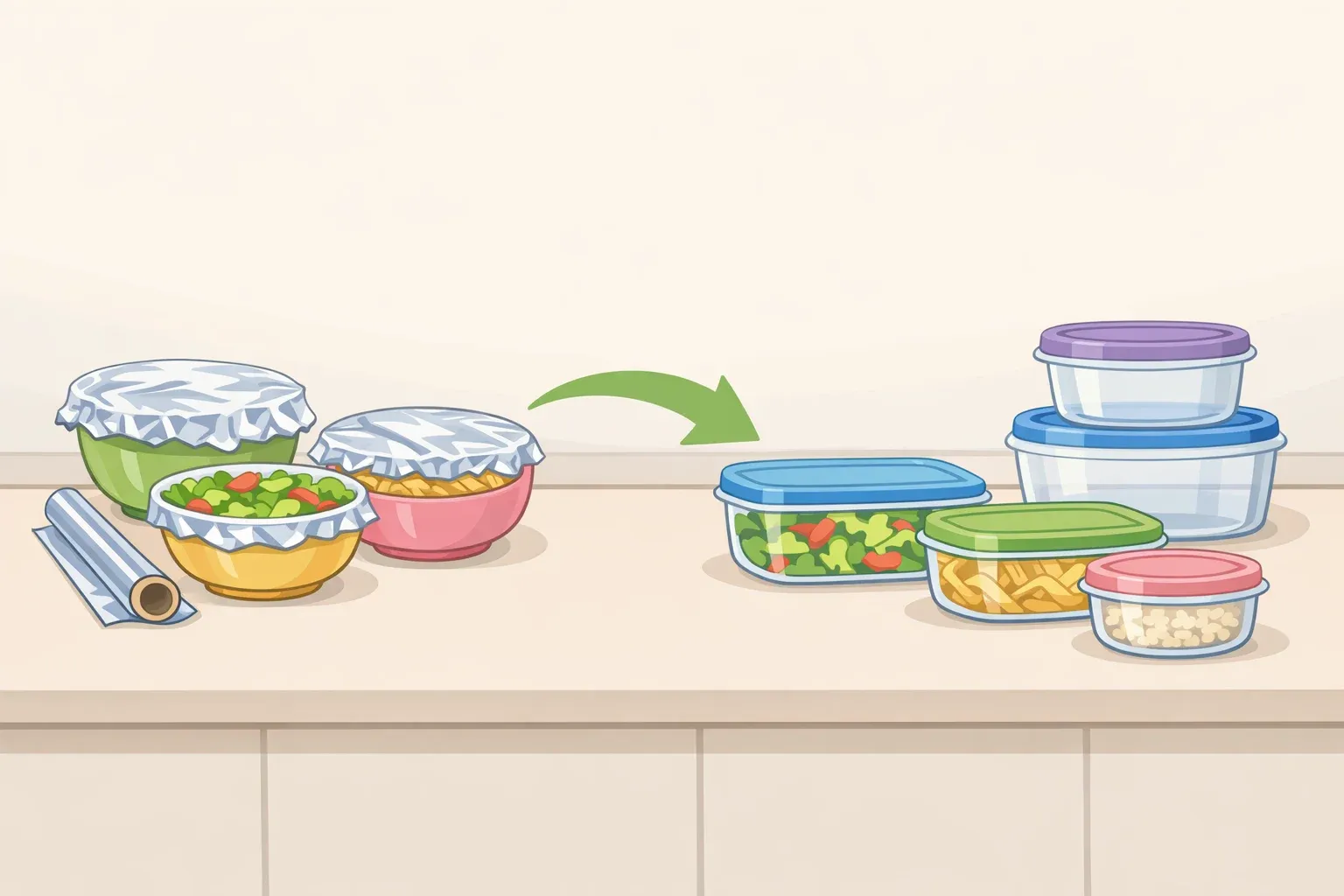
Foods You Should Never Wrap in Aluminum Foil: Safe Storage Tips
Aluminum foil covers leftovers in most kitchens by default. Grab a sheet, fold it over the bowl, done. For bread, roasted vegetables, or a plain piece of grilled chicken, that works fine. For a specific set of foods acidic dishes, heavily salted ingredients, marinated proteins, and warm moist leftovers foil is the wrong call, and knowing why makes the fix obvious.
The foods you should never wrap in aluminum foil break into two distinct problem categories: some react chemically with the metal, degrading both the foil and the food; others cool unsafely when wrapped, creating conditions for bacterial growth. Neither problem is catastrophic in a single instance, but both are easily avoidable with a container swap that takes seconds.
Two problems worth keeping separate
The first is chemistry. Acidic ingredients speed up oxidation when they contact aluminum, causing the foil to pit and weaken and leaving a faint metallic taste in the food, according to certified food scientist Jessica Gavin via Martha Stewart. Think of it the way vinegar slowly lifts rust from metal the reaction doesn't stop just because the food is sitting in a refrigerator. The amount of aluminum that transfers in home storage is typically low and considered safe, Gavin notes, but the flavor effect is real and worsens with prolonged contact.
Five factors determine how much metal moves from foil into food: acidity, salt content, temperature, fat content, and contact time. Low pH and high heat are the most significant accelerants, according to research published in late 2024. Salt compounds the problem in a similar way warm salty foods in contact with foil can cause small amounts of aluminum to leach into the food and alter its taste, Gavin explains via Martha Stewart.
The second problem is food safety, and it carries more urgency. Foil is closer to a loose drape than a seal. It doesn't block air exchange, doesn't prevent cross-contamination from other foods in the refrigerator, and its insulating properties actively work against safe cooling when food is still warm. Dr. Vanessa Coffman, director of the Alliance to Stop Foodborne Illness, puts it plainly via Martha Stewart: warm foods tightly wrapped in foil and left to cool slowly can remain in the temperature "danger zone" of 40-140°F long enough for harmful bacteria to multiply rapidly. Spore-forming bacteria like Bacillus cereus can survive the original cooking heat and then germinate during a slow cool-down exactly the kind foil encourages.
What foods should not be wrapped in aluminum foil
Acidic foods. Anything built on tomatoes, citrus, vinegar, or wine pasta sauces, braised proteins, citrus-dressed salads, wine-reduced dishes should go into a container for refrigerated storage, not foil. Brief contact isn't a serious concern, but prolonged storage will degrade both the food and the foil, Gavin explains via Martha Stewart. If foil is the only option, keep the contact time short; the guidance is a strong preference against extended storage, not a hard prohibition on ever touching acid to aluminum.
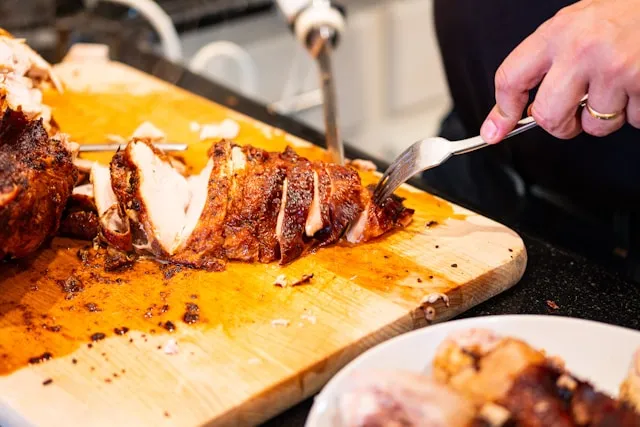
Heavily salted foods. Cured meats and aged cheeses carry the same storage risk as acidic foods. The same precautions apply, Gavin notes via Martha Stewart, and the concern intensifies when food is still warm at the time of wrapping warm salty leftovers are a particularly poor fit for foil storage.
Marinated meats. Raw or cooked, marinated proteins are the worst-case intersection because most marinades combine both acid and salt. That combination accelerates reactions with aluminum during storage, Gavin explains via Martha Stewart. Store them in a tightly sealed glass container during the marinating period as well, not just after cooking.
Warm moist leftovers. Cooked rice, potatoes, legumes, pasta, and vegetables all belong here. Foil traps heat and moisture, which can encourage spore-forming bacteria to grow if food cools too slowly, according to Dr. Coffman via Martha Stewart. Any warm leftover dense enough to hold heat falls into this category. Dividing leftovers into smaller portions before refrigerating helps move them through the danger zone faster, Coffman adds a shallow container loses heat in a way that a foil-wrapped mass simply cannot match.
High-heat cooking: a narrower but more serious concern
Everything above is about storage. A separate cooking scenario also deserves attention, because the research findings are more significant and the mechanism is different.
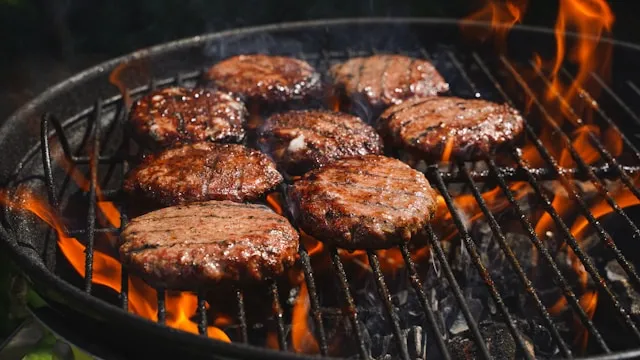
A 2024 study examined catfish wrapped tightly in aluminum foil with a sauce containing tomatoes, salt, pepper, and spices, then roasted at uncontrolled high temperatures for 15 to 20 minutes. Metal levels in the finished fish including aluminum, lead, and nickel exceeded safe thresholds. Aluminum concentrations ranged from 5.51 to 6.35 mg/kg, well above the WHO/FAO maximum allowable limit of 2 mg/kg. The single biggest driver of how much metal transferred was the surface area of foil in direct contact with the food.
This is not a generalization about all foil cooking. A loose sheet tented over a roasting pan is a fundamentally different situation from tight foil wrapping in direct contact with an acidic, salty sauce at high heat for an extended period. That specific combination activates every leaching factor at once. For anyone who regularly wraps proteins tightly in foil with an acidic sauce before high-heat oven cooking, switching to a covered baking dish or placing parchment between the food and the foil significantly reduces how much metal surface contacts the food directly.
What to use instead and where foil still belongs
For acidic, salty, marinated, and warm leftover foods, glass containers with tight-fitting lids are the best option across both problem categories. They don't react with acid or salt, seal properly, and their shallower designs help food cool more quickly and evenly in the refrigerator, according to Gavin and Dr. Coffman via Martha Stewart. A shallow sealed container is doing real work on both fronts chemistry and cooling that foil simply isn't built for.
Stainless steel and BPA-free plastic containers with secure lids are also solid short-term choices for acidic and salty foods; the essential properties are that they're nonreactive and airtight, Gavin explains via Martha Stewart. When containers aren't available, resealable storage bags with excess air pressed out work as a practical fallback. Whatever the container, prompt refrigeration at 40°F or below is what matters most, Dr. Coffman notes via Martha Stewart.
Foil still earns its place for dry, low-acid foods. Bread, plain roasted vegetables, baked goods, cooked meats without acidic sauce, cut avocado all are well-suited to short-term foil storage; it retains moisture, slows oxidation, and contains odors without triggering any chemical reaction, according to Martha Stewart. Lining baking sheets, tenting dishes in the oven, and covering food on the counter before serving are all appropriate uses. The issue is specifically prolonged refrigerated storage in contact with reactive foods, not foil as a material.
Putting the health risk in perspective
One small human study adds useful context. In a 2023 trial, 11 participants ate a diet heavily prepared using aluminum food-contact materials for 10 days. Their urinary aluminum excretion increased by about 8% above baseline a measurable but modest bump that fully reversed once the exposure ended. It was the first study of its kind to measure this under real-world conditions, and its conclusions were measured: the additional burden was real, small, and reversible.
That context shapes how to weigh the storage guidance. The practical case for switching acidic leftovers out of foil rests primarily on flavor quality and bacterial safety, not metal toxicity at typical home use levels. The high-heat cooking study is a more pointed finding, but it applies to a specific preparation method tight wrap, acidic and salty sauce, high heat, extended time not everyday foil use. The food safety concern around warm leftover cooling is the one that deserves the most attention in daily practice.
The one habit worth changing today
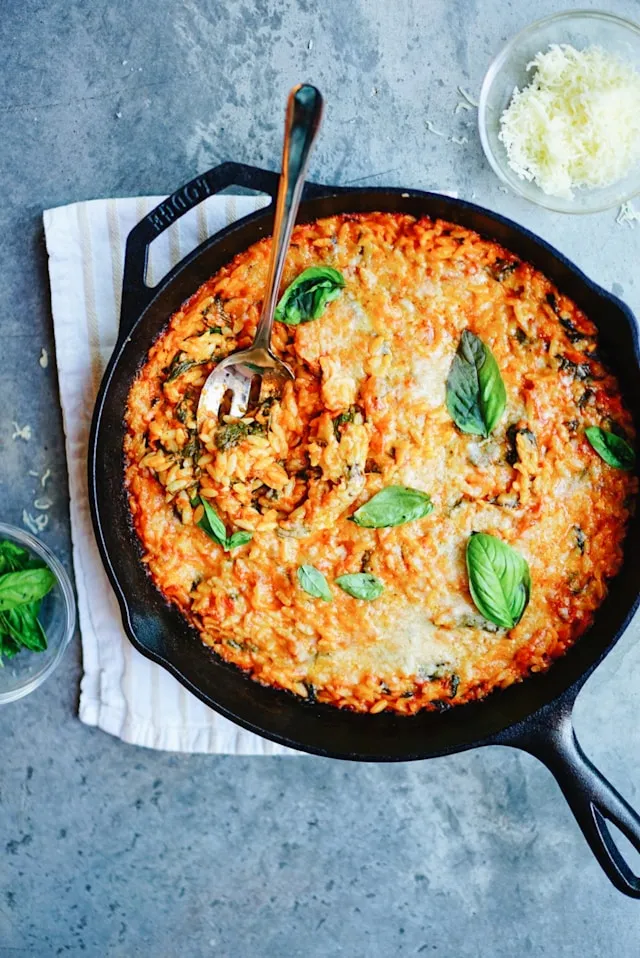
The foods that most often end up in foil by default leftover pasta with tomato sauce, marinated chicken, a pot of rice are exactly the ones that belong in a sealed container. Next time you reach for a sheet of foil to cover a bowl of leftover sauce, reach for the lid instead.



Comments
Be the first, drop a comment!