



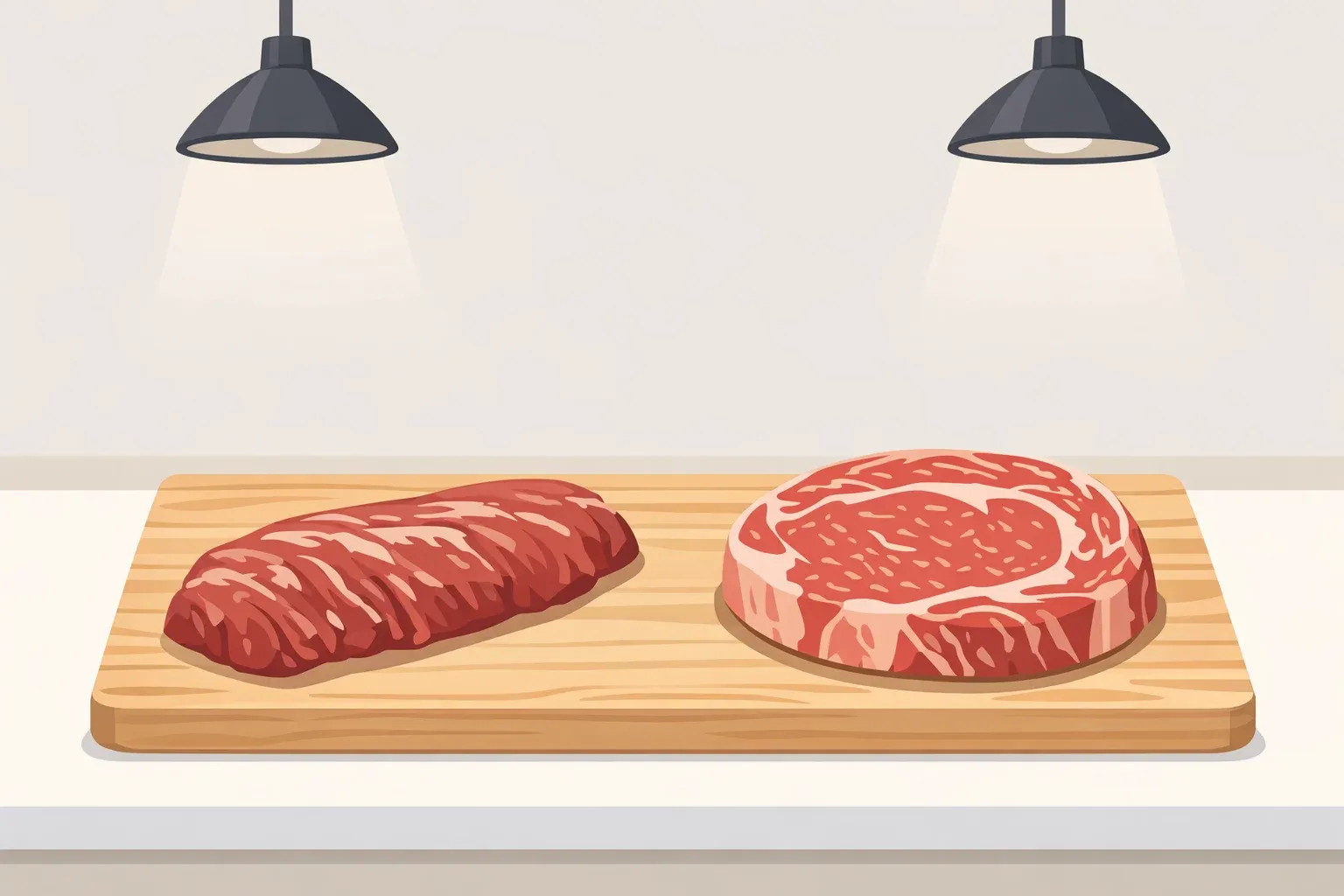
Hanger steak vs ribeye: flavor, price, and when to choose each
If ribeye prices have been making you hesitate at the butcher counter, there's a cut worth knowing. Hanger steak, also called hanging tender steak or onglet, is a single muscle suspended from the cow's diaphragm: tender, intensely beefy, and scarce enough that the people breaking down carcasses historically kept it for themselves, per Cooking on the Ranch. It's a genuine alternative to ribeye for specific preparations. Not a replacement. A smarter call when the situation fits.
One caveat before anything else: hanger steak is genuinely hard to find at mainstream grocery stores. Only one comes from each animal, which is why high-volume retailers rarely bother stocking it, per Cooking on the Ranch. Your local butcher or specialty meat market is the right starting point. That sourcing friction is real, and it shapes everything that follows.
On price: hanger is widely described as a value alternative to ribeye, and Serious Eats groups it among "classic, budget-friendly cuts with big flavor." But the USDA Economic Research Service, which tracks monthly national retail beef prices, doesn't include hanger steak as a discrete category, itself a reflection of how rarely it surfaces at mainstream retail. Before acting on the affordability premise, check current per-pound pricing at your actual butcher. The value proposition holds in many markets; whether it holds in yours requires a quick look at the case.
What is hanger steak, and where does its tenderness come from?
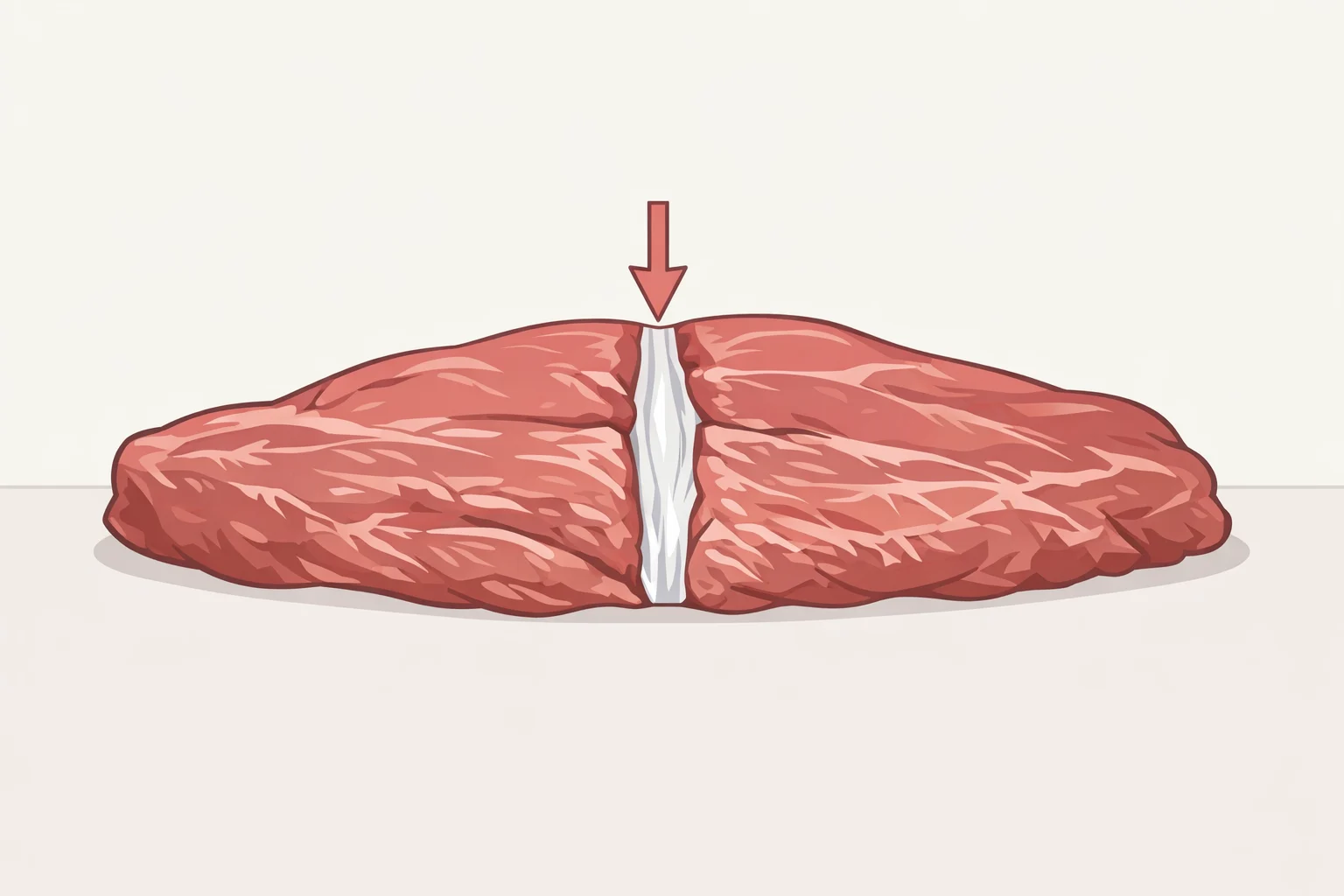
Hanger steak is a single muscle that hangs from the cow's diaphragm between the last rib and the loin. Because it supports internal organs rather than driving movement, it does almost no muscular work, and low-activity muscles stay tender. Each animal yields exactly one, typically running 1¼ to 1½ pounds, enough to feed two to four people depending on what it's served alongside, per Cooking on the Ranch.
Think of it as flank steak's more tender sibling. Same open grain and concentrated beef flavor, but with a softer bite because of where it sits on the animal. The USDA grades beef on intramuscular fat, with Choice accounting for about 75% of all graded beef sold in U.S. grocery stores, per Serious Eats. Hanger operates outside that premium-marbling equation entirely; its tenderness comes from anatomy, not fat content.
The cut arrives as a single piece with a thick band of silverskin running down the center. Silverskin is a tough connective-tissue membrane that doesn't break down with heat the way fat does. This structural detail shapes everything about how the steak is cooked and served: cook it whole, rest it, then remove the silverskin with a sharp knife before slicing. Leave it in and the steak turns chewy regardless of how well you managed the heat, per Cooking on the Ranch.
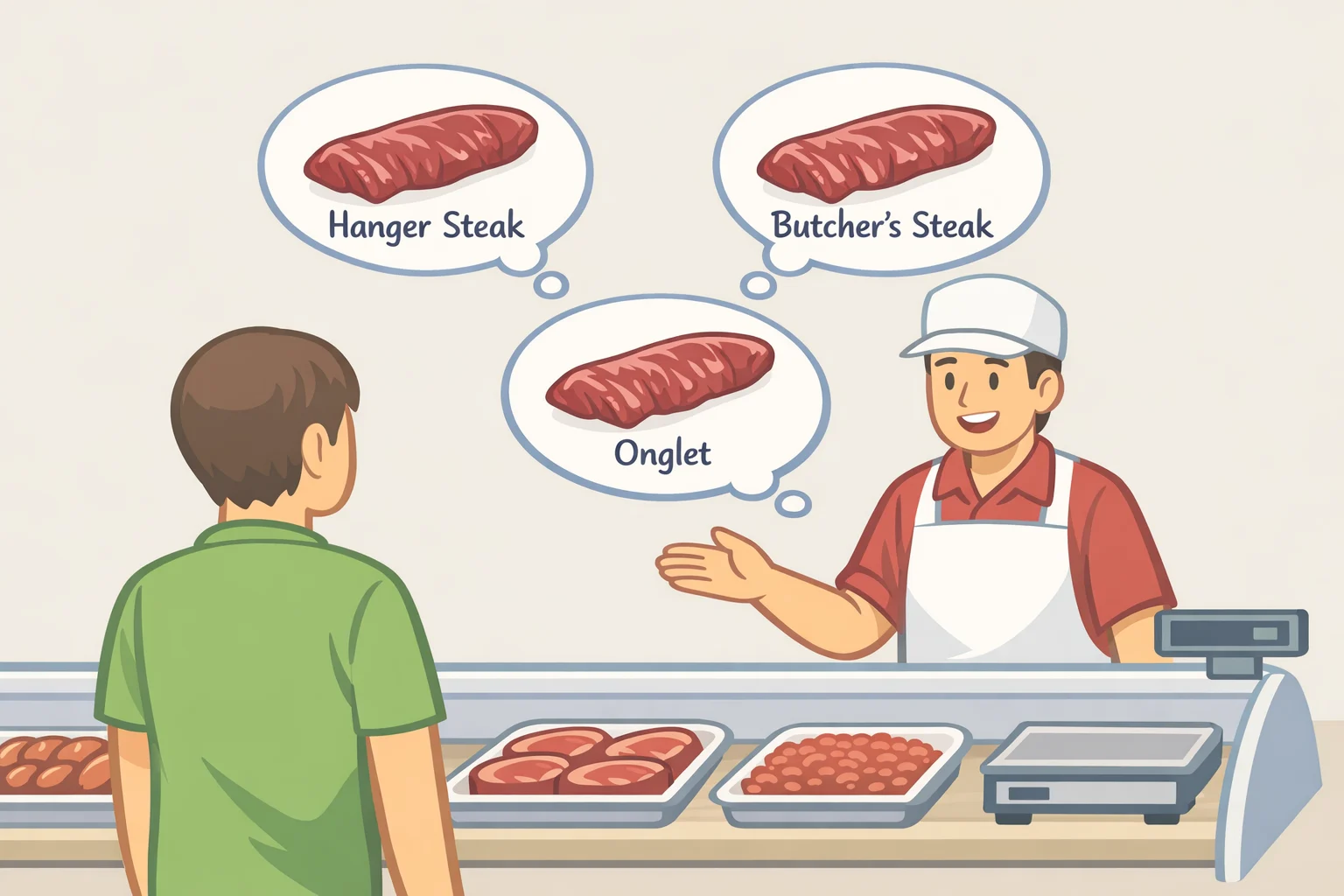
At retail it may be labeled hanger steak, hanging tender steak, or onglet. Three names, one cut, per Cooking on the Ranch.
Hanger steak vs ribeye: where each one wins
Where ribeye wins
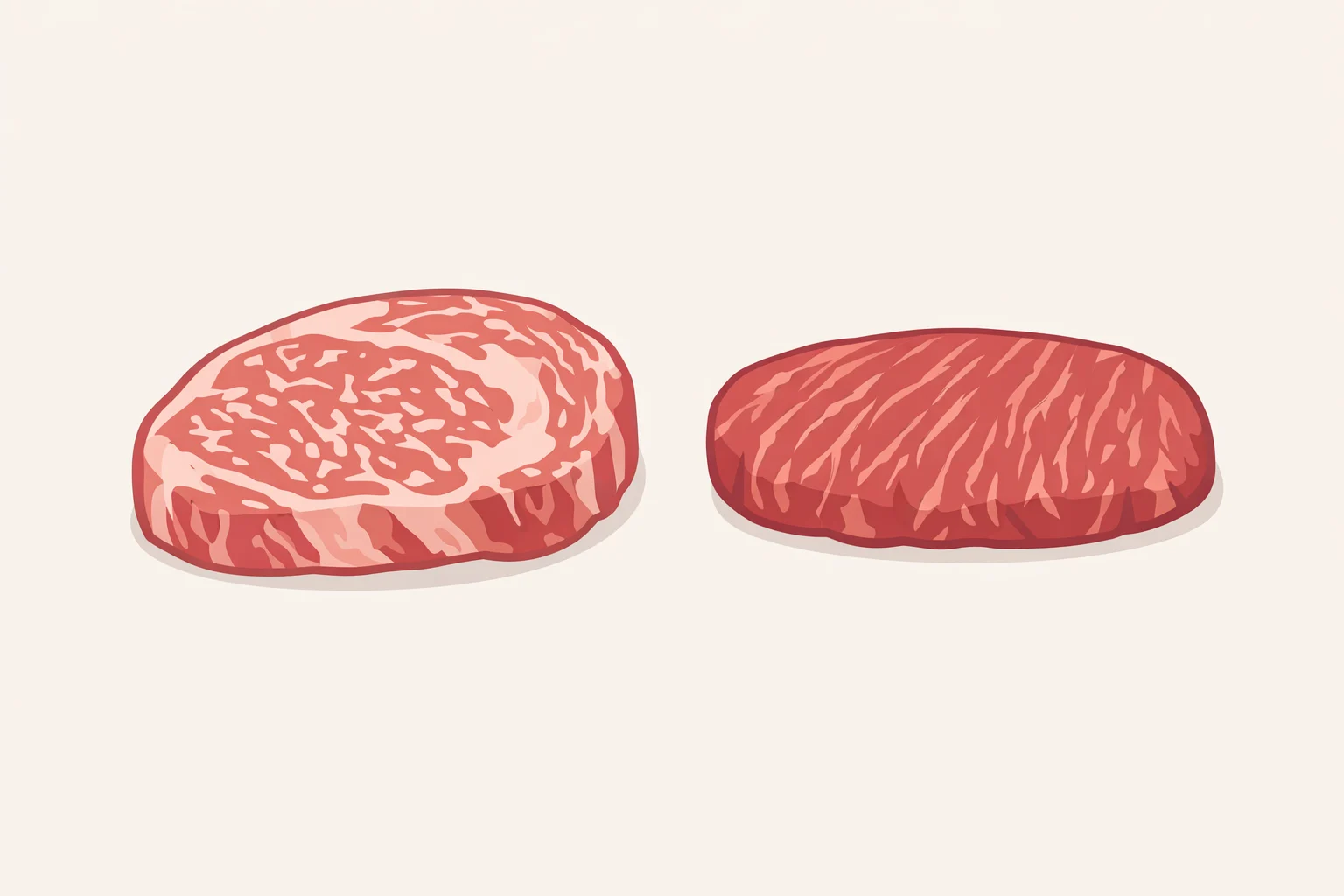
Ribeyes are cut from the rib section and carry abundant intramuscular fat, which renders during searing and produces that rich, almost buttery result most steak lovers are after. Tate Corliss, director of Red Raider Meats at Texas Tech University, is direct about it: "I'm going to pick the steak with more intramuscular fat every single time when you're searing, that fat is going to taste really good," per Serious Eats.
That fat also makes ribeye forgiving. A few degrees past medium-rare and it still delivers. Hanger has no such buffer; cook it past medium and the loose grain turns dry and chewy fast, per Cooking on the Ranch.
Where hanger steak wins
Hanger's flavor profile is more aggressive: deeper, minerally, intensely beefy in a way that a well-marbled ribeye, which tends toward buttery richness, doesn't match. For sliced preparations, steak tacos, carne asada, fajitas, a steak sandwich, that concentrated flavor is a better fit than fat-driven richness. Julian Rodarte, culinary director at Dee Lincoln Prime steakhouse, notes that any missing fat can be supplemented through preparation, finished with beef tallow or clarified butter, per Serious Eats.
Serious Eats explicitly groups hanger alongside skirt and flank as "classic, budget-friendly cuts with big flavor," secondary cuts that trade marbling for a more pronounced beef character.
The buyer's decision in plain terms
Choose ribeye when you want richness, fat, and a cook that forgives a few degrees of imprecision. Choose hanger when you want stronger beef flavor, you're serving it sliced, and you have a butcher who stocks it. Check current local pricing before assuming a significant gap; the cut has become more visible in recent years, and formerly obscure butcher's cuts have a documented pattern of going mainstream and rising in price.
How to cook hanger steak: the one rule that cannot be broken

The temperature ceiling is the whole game. Because hanger has a loose grain and relatively little fat, cooking it past medium produces a chewy, dry result. Pull it from heat at 125–130°F and rest for 5–10 minutes; carryover cooking brings the finished temperature to around 133°F, producing a rosy center with a developed crust, per Cooking on the Ranch. A digital instant-read thermometer is not optional on a lean cut with this little margin. Guessing doesn't work reliably here.
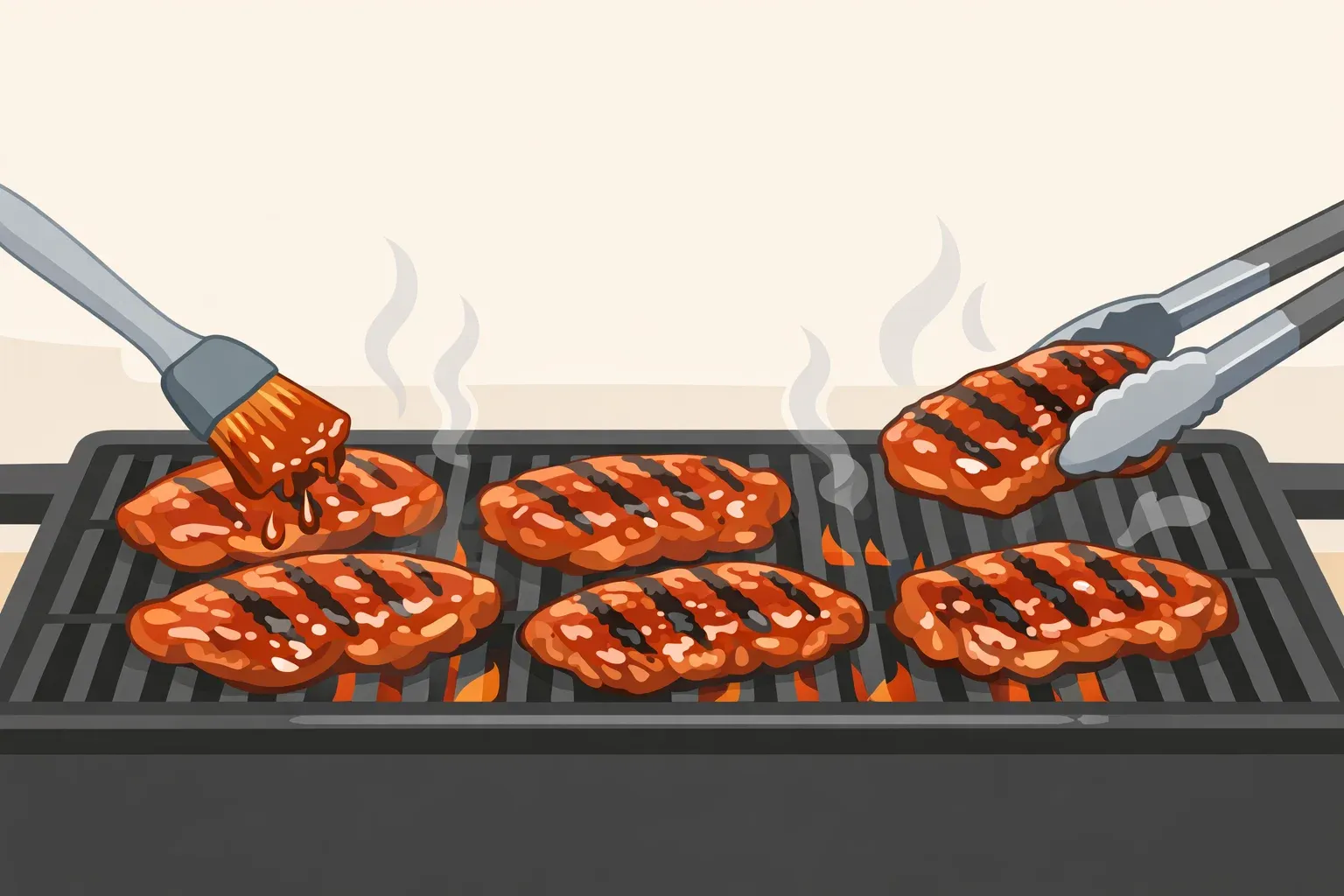
On a cast-iron skillet, heat a neutral oil until shimmering, lay the steak in, and cook roughly 5 minutes per side until a good crust forms and the internal temperature hits the target. On a grill, bring it to around 400°F, reduce to 350°F, and cook uncovered about 2–3 minutes per side, per Cooking on the Ranch. Both methods work; the doneness rule is identical either way.
Two finishing steps, neither optional. After resting, run a sharp knife along each side of the center silverskin and discard it. Then slice the two remaining pieces thin, against the grain, at an angle. Leaving in the silverskin or slicing with the grain are the two most common reasons people find this cut disappointing, per Cooking on the Ranch.
On seasoning: the cut has enough flavor on its own that salt, pepper, and neutral oil are sufficient. Cooking on the Ranch recommends skipping a marinade to experience the cut at its best. If you use one, cap it at 4–6 hours; the loose, open grain absorbs liquid quickly, and longer soaks can turn the texture mushy.
Where to find hanger steak, and what to ask for when you get there
Chain supermarkets are not a reliable source. With only one hanger steak per animal and limited mainstream consumer demand, high-volume grocers rarely carry it, per Cooking on the Ranch.
Local butcher shops, specialty meat markets, and ranchers who sell direct to the public are the right places to look. A butcher who processes whole or half carcasses will have access to it; ask them to set one aside rather than expecting to find it in the case. Serious Eats notes that asking a knowledgeable butcher for help is one of the most underused advantages home cooks have.
Know all three names: hanger steak, hanging tender steak, and onglet, per Cooking on the Ranch. Using the term "hanging tender" at a counter that processes whole animals tends to get faster results than a generic request.
When evaluating the cut at the counter, look for even, consistent coloring without gray or brown patches, and fat distributed within the muscle rather than sitting in large external caps. Corliss of Red Raider Meats puts it plainly: "fat on the inside of the meat is good, fat on the outside is not," per Serious Eats. Prefer vacuum-sealed packaging when a butcher offers it; the duller color is normal and the meat blooms back to bright red once opened, per Serious Eats.
Finding a reliable source is the real barrier. It's a one-time effort, and once solved, the rest is straightforward.
The honest case for hanger steak
Hanger steak earns its reputation not by matching ribeye on fat, but by beating it on flavor intensity in the applications where that matters most: sliced thin into tacos, sandwiches, or a platter for a group. Serious Eats places it on a short list of "classic, budget-friendly cuts with big flavor," secondary cuts that offer something different from a premium steak and, depending on what you're cooking, something more interesting.
The technique is specific but not difficult. Medium-rare is the ceiling, not just the preference. Pull at 125–130°F, rest 5–10 minutes, remove the silverskin, slice against the grain. Four steps, and the cut delivers.
Home cooks who get comfortable navigating a butcher's case, working through skirt, flat iron, bavette, and cuts like hanger, find that the premium-cut price list starts to matter less. The more you understand what secondary cuts demand in the kitchen, the more your options expand regardless of what beef costs that week. Knowledge is the actual use here, and a good butcher relationship is how you apply it.
Readers comparing hanger against other affordable alternatives should consult the full Serious Eats steak buying guide; readers interested in consistent sourcing can look into CSA beef shares or direct-from-ranch programs in their region as a reliable supply of secondary cuts.








Comments
Be the first, drop a comment!