




Sweetened Condensed Milk in Macaroni Salad: When and How to Use It
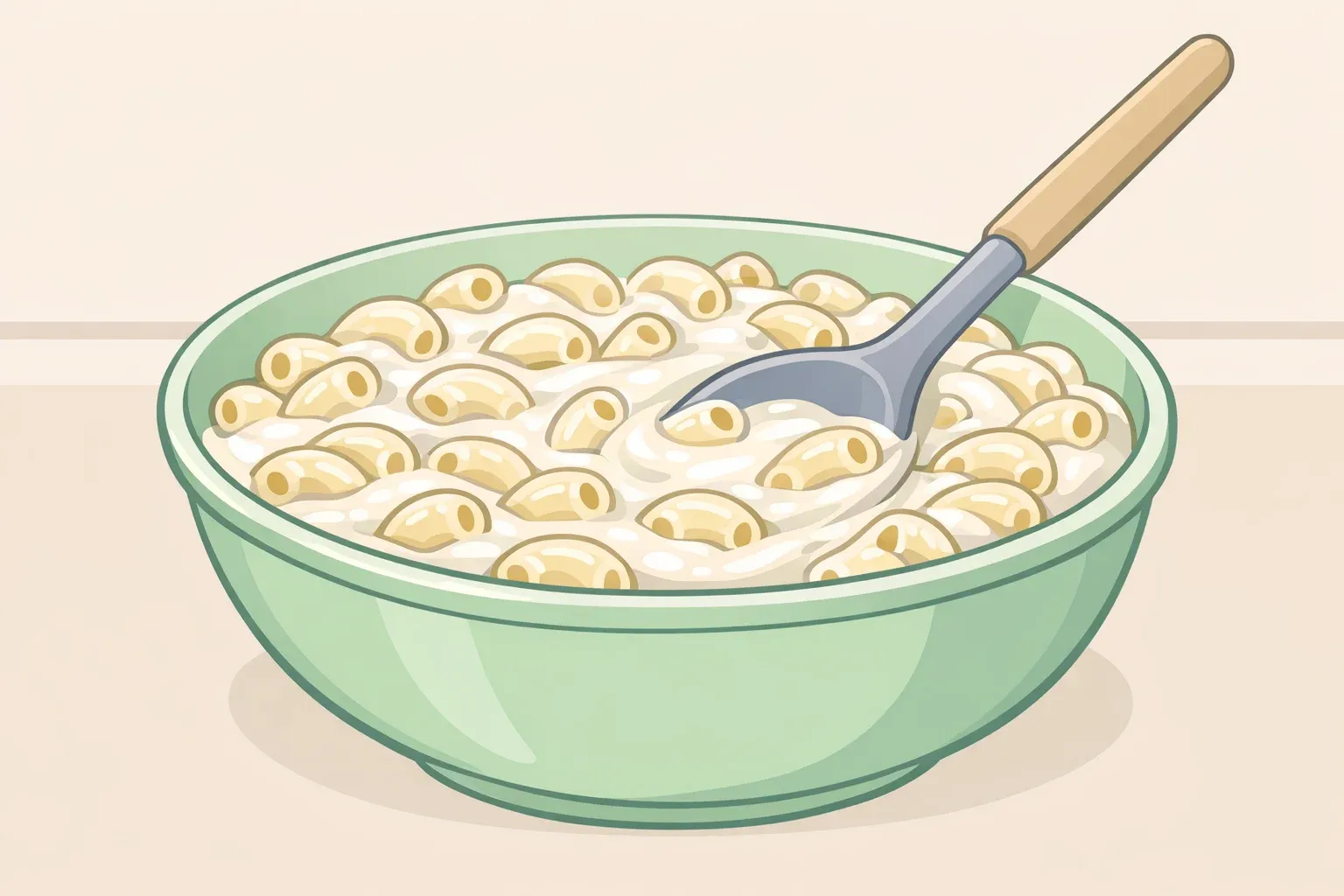
Some creamy macaroni salad recipes have two quiet jobs tucked into the dressing. A splash of milk thins and smooths the mayonnaise. A small amount of sugar helps the salad hold its own against salty, bold proteins. Using sweetened condensed milk in macaroni salad handles both at once, because the ingredient is already a dairy-sugar concentrate one spoonful covers what previously took two.
Anne Byrn documented Hawaii-style mac salad on her Substack in 2023, noting that the dressing uses 2 tablespoons of milk specifically to smooth the mayonnaise and 1 to 2 tablespoons of sugar so the salad pairs well with salty, spicy food. Two separate ingredients, two distinct jobs. Sweetened condensed milk whole milk reduced with sugar until thick and shelf-stable combines them, dissolving cleanly into the dressing without the occasional graininess of sugar that hasn't fully incorporated.
This piece covers why the swap works, which style of macaroni salad it suits, how to apply it in practice, and the pasta technique that determines whether any dressing upgrade actually lands.
What the swap is built for and where it doesn't belong
The substitution is specific. It belongs in creamy, sweet-leaning macaroni salads, the kind built to be rich and cooling alongside bold, savory food. Anne Byrn describes Hawaii-style mac salad as the "creamy counterpoint" to teriyaki chicken, kalbi ribs, hamburger steak, and other plate-lunch proteins. Filipino-style macaroni salad operates in the same flavor register.
Both live in a sweet-creamy zone, but they get there differently. Hawaiian mac salad uses milk and sugar as two separate dressing components; Filipino-style versions build that same balance with condensed milk from the start. The swap is essentially a matter of consolidation: one ingredient doing what two were already doing.
A good diagnostic is whether the dressing already calls for both milk and sugar. If it does, condensed milk is a natural replacement. Vinegar-forward or herb-driven pasta salads built around a sharp Italian-style dressing with little or no added sweetener are different animals. Adding condensed milk there will dull the acidity and drag the flavor toward sweet in a way that works against the recipe.
Sweetened condensed milk salad dressing: how the swap works
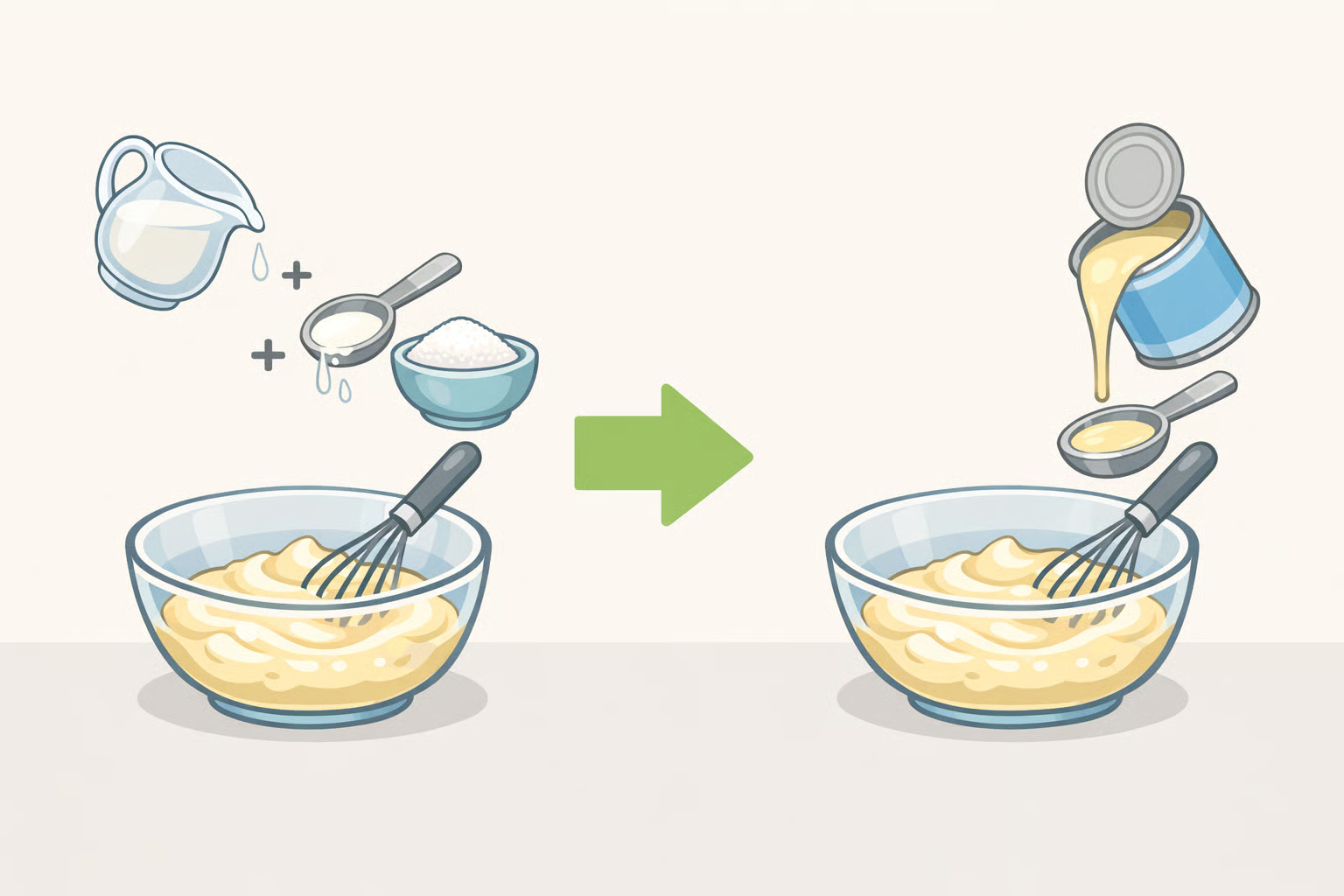
In traditional Hawaiian mac salad, milk and sugar exist for separate reasons. Anne Byrn explains that milk smooths the mayonnaise and sugar helps the salad pair with salty, spicy proteins. Those are two distinct roles. Sweetened condensed milk performs both simultaneously, thinning the dressing and sweetening it without requiring two separate measuring spoons.
Filipino-style macaroni salad is the clearest finished-recipe model for this approach. Riverten Kitchen describes the dressing as a blend of mayonnaise and condensed milk, about a third of a cup per batch, lightened with yogurt, with no additional sugar needed. The condensed milk handles sweetness and creaminess together. That's not an improvised shortcut; it's the original design.
For recipes where condensed milk is being swapped in rather than built in from scratch, start around 1 to 2 tablespoons as a trial replacement for the milk-and-sugar combination, then taste. The goal is creamy and subtly sweet, not dessert-forward. Rebalance with additional mayo for body and a splash of vinegar for acidity. Treat the first attempt as calibration the right amount shifts depending on how much mayo the base recipe uses and how sweet the original was intended to be.
One practical consideration that applies to any version: a mayo-based dressing tightens as it chills. Anne Byrn recommends reserving up to a half cup of extra mayo to loosen Hawaii-style mac salad before serving. Riverten Kitchen notes that a condensed milk-dressed macaroni salad keeps three to five days properly refrigerated. Both versions benefit from holding back a little dressing or mayo for a final stir right before the salad hits the table.
The pasta technique that makes the dressing matter
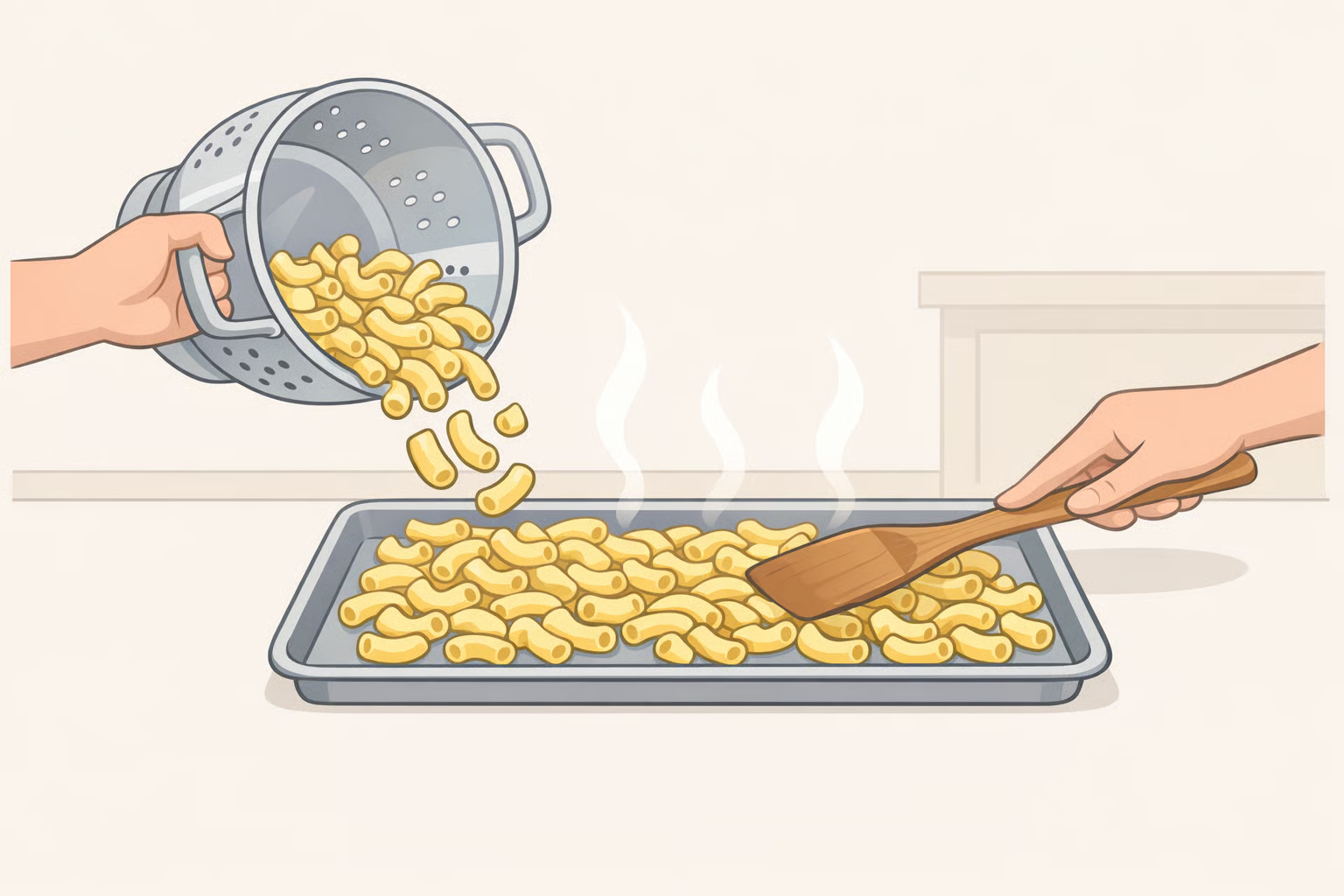
The condensed milk swap will not rescue badly handled pasta. The dressing upgrade is only as good as what it's coating, and cold pasta behaves differently from hot pasta.
Serious Eats puts it directly: pasta cooked to al dente and served hot is correct; the same pasta served cold turns unpleasantly firm as cooling tightens the starches further. The fix is to deliberately cook the macaroni about two minutes beyond al dente so it stays genuinely tender once cold. It feels wrong while the pasta is in the pot. The result is right once it's chilled.
Cooling method matters too. Spread drained pasta in a single layer on a sheet pan for about 15 minutes and let excess moisture evaporate rather than pool underneath the pile (Serious Eats). Pooled moisture thins the dressing and washes flavor off the pasta surface, precisely the problem a rich condensed milk dressing is trying to solve. Tender pasta that's been properly dried is also far better at absorbing and holding a creamy dressing than pasta that's cold, firm, and wet.
Dress the pasta in two stages. Toss warm pasta with roughly one-third of the dressing immediately after it's cooled slightly; warm pasta absorbs dressing into the surface rather than just wearing it as a coating. Once the pasta reaches room temperature, fold in the remaining dressing and the mix-ins (Serious Eats). That's the difference between a macaroni salad that tastes seasoned throughout and one that tastes coated on the outside.
The tradition behind the ingredient
Sweetened condensed milk in savory salad dressings isn't a novelty trick that turned up on social media. It has documented roots in multiple cooking traditions, which matters because it shows the ingredient was designed into these recipes rather than improvised around them.
Riverten Kitchen frames condensed milk as "what makes Filipino salad unique from other macaroni salads" a defining ingredient, not a workaround. The same principle runs through New Zealand cooking. Food & Wine reported last year that chef Vaughan Mabee of Amisfield describes the classic Kiwi formula as condensed milk, malt vinegar, salt, and Coleman's hot mustard sweet and sharp together, which maps onto the same underlying logic as a creamy macaroni salad dressing. Mabee calls it "a bit of a Kiwi icon" that appears "in most New Zealand household cookbooks."
Auckland chef Tom Hishon of Kinji and DAILY BREAD traces the tradition to postwar practicality. As Food & Wine reported last year, Hishon argues it "was born out of a postwar era where food supplies were extremely tight and colonial adaptations of English classics were created from ingredients that were both shelf-stable and cost-effective." His summary of the ingredient itself lands with the right amount of precision: "It really shouldn't work as well as it does but, it just does."
The practical call

Use sweetened condensed milk when the salad's job is to cool and soften a salty plate, when you want sweetness, richness, and cling in a single ingredient. Filipino-style mac salad offers the most complete framework, with condensed milk built into the original design rather than retrofitted (Riverten Kitchen). The Hawaiian-style formula provides the clearest baseline for understanding where those two separate dressing functions live in a more traditional recipe (Anne Byrn).
The dressing only delivers what the pasta underneath allows. Cook the macaroni two minutes past al dente, cool it spread out on a sheet pan, dress it in two stages. Skip those steps and the condensed milk's creaminess will be fighting stiff pasta or a diluted, watery base (Serious Eats).
When the salad should taste sharp, bright, or clean, this is the wrong move. But when soft, sweet, and creamy is the point, condensed milk is the more efficient path to get there.











Comments
Be the first, drop a comment!